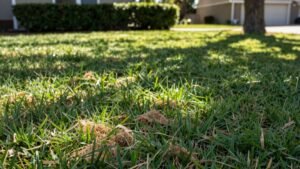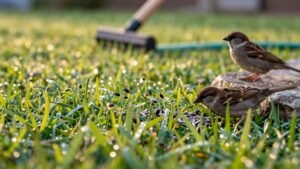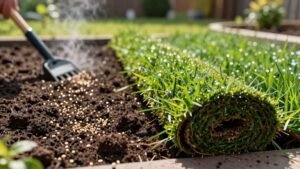

Leave the plugs in place so they release nutrients and keep soil aeration, then overseed with a compatible grass blend. Apply a high‑phosphorus starter fertilizer within 48 hours, spreading it evenly and raking lightly to embed granules in the holes. Water 0.5–1 inch right after, followed by daily 10‑20‑minute morning irrigations for two weeks, then shift to weekly inch‑deep soakings. Limit foot traffic until the grass reaches 3‑4 inches, adjust pH with lime if needed, and monitor for weeds and bare spots for a uniform, rapid recovery.
Leave the Plugs Alone: Here’s Why
Because the plugs contain organic matter and fertilizer, they naturally break down and recycle nutrients back into the soil; leaving them in place lets the lawn reap those benefits without extra effort. The plugs act as a vehicle for natural nutrient replenishment, gradually releasing nitrogen, phosphorus, and potassium as they decompose. Their organic matrix fuels microbial lawn enrichment, stimulating bacterial and fungal colonies that improve soil structure and nutrient availability. Water the area within 48 hours to accelerate the decomposition process and support root establishment. Avoid mowing for ten days to prevent stress on emerging shoots, and limit foot traffic while the cores melt into the turf. This practice eliminates extra labor, preserves aeration benefits, and promotes a healthier, more resilient lawn. Higher mowing heights can accommodate leaving the plugs on the ground without compromising a uniform cut. Proper timing of aeration enhances soil aeration and maximizes root growth. Spring aeration also helps the lawn recover from winter stress and prepares it for the upcoming growing season. Proper aeration improves water infiltration and reduces runoff, further supporting lawn health.
Overseed After Aeration for Maximum Germination
A few simple steps after aerating will dramatically boost seed germination. First, address seed selection considerations: pick a variety that matches your existing lawn, thrives in your climate, and tolerates local soil conditions. Use a high‑quality blend resistant to disease, drought, and weeds, and avoid mismatched species that cause patchy growth. Next, spread the seed evenly with a broadcast spreader, then lightly rake to embed kernels into the aeration holes for firm soil contact.
Aeration creates channels for oxygen and nutrients, enhancing root development.
Optimal watering timing follows immediately: keep the top 1.5 inches of soil consistently moist but not saturated. Water lightly 2‑4 times daily for 5‑10 minutes during the first week, then continue daily watering for the next 10‑14 days until seedlings emerge. This schedule maintains damp conditions, prevents washout, and maximizes germination. Properly preparing the soil by testing pH can further improve seed uptake and overall turf health.

SUN AND SHADE GRASS SEED: This combination lawn seed, grass fertilizer, and soil improver thrives in a variety of conditions

This pack of lawn seeds is ideal for new lawns, overseeding and lawn repair

LAWN BARE SPOT REPAIR: Scotts PatchMaster Lawn Repair Mix Sun + Shade Mix is a combination mulch, seed, and lawn fertilizer product specifically designed to provide all-in-one bare spot repair and grass patch repair for lawns
Apply Starter Fertilizer Within 48 Hours
After seeding, you should apply a starter fertilizer within the next 48 hours while the aeration holes are still open. Choose a high‑phosphorus NPK blend designed for new grass, avoiding weed‑and‑feed mixes. Follow label instructions and use a broadcast or drop spreader to lay an even layer, then lightly rake to press granules into the open channels. This timing maximizes nutrient uptake because the fertilizer reaches roots directly through the pores before they collapse. Acting promptly also minimizes the waiting period for germination, delivering nitrogen, phosphorus, and potassium exactly when seedlings need them. Keep the spread uniform to prevent burn and guarantee each seedling receives the same dose, supporting rapid, dense turf establishment. Applying seed before fertilizer ensures the soil is properly prepared and gives the seed the best chance to germinate, as outlined in the lawn preparation guidelines. The optimal first application typically occurs when soil temperatures reach 60 °F to promote active root growth. Proper soil testing before fertilization helps confirm nutrient levels and pH, ensuring the chosen blend matches lawn lawn’s needs.

High Phosphorus, High Potassium Lawn Food: If your lawn is showing symptoms of a Phosphorus and Potassium deficiency or if you want to maintain lawn vigor then this is the correct fertilizer for you!

Grows new grass 70% thicker, 35% quicker versus unfed grass

Speeds Root Growth - This grass fertilizer for lawn is a phosphorus fertilizer that helps roots establish quickly and grow deep and strong
Water Your Lawn After Aeration: Immediate & Ongoing Care
When you finish aerating and overseeding, water the lawn immediately to settle seeds into the fresh holes and provide the moisture they need to germinate. Apply 0.5‑1 inch of water in one hour per zone, keeping the surface moist but not flooded. For the first two weeks, manage irrigation timing with daily 10‑20‑minute morning cycles, adding a second pass if heat or wind dries the soil. Keep the seedbed continuously damp for 28 days. After germination, shift to three weekly soakings of 45‑60 minutes each, delivering roughly one inch per session to reach 2‑3 inches depth. This deeper watering reduces surface saturation, helping prevent soil compaction and encouraging robust root development. Continue with one‑inch weekly applications, adjusting for rain, to sustain the established lawn. The tuna can method can be used to verify that the correct amount of water is being applied. Proper irrigation timing also depends on soil type, as sandy soils drain faster and may require more frequent watering. Proper aeration promotes soil aeration which enhances nutrient uptake and root growth. Adjust watering frequency based on local evapotranspiration rates to avoid over‑ or under‑watering.

Smart Automatic Watering Control: The Orbit Programmable Digital Hose Watering Timer transforms a faucet into an automatic watering system using a reliable single outlet hose timer

Water With Precision: The Orbit 4-Station Outdoor Swing Panel Sprinkler System Timer provides reliable residential lawn watering with precise control of four zones

Intelligent Irrigation Control: The Orbit Smart Sprinkler Controller manages watering with a powerful smart sprinkler that supports a completely automatic watering system
Limit Foot Traffic to Protect New Seedlings
Keeping foot traffic to a minimum for at least one week—longer, up to a month if you’ve overseeded—prevents soil compaction that would otherwise choke the newly sown seedlings and impede root development. You should limit high traffic zones by installing temporary pathways, pavers, or stepping stones that divert foot traffic away from aerated sections. Restrict foot traffic on the lawn altogether until the grass reaches three to four inches, then allow only light, intermittent use. Mark the protected area with signage and keep pets on leashes to avoid accidental trampling. Monitor the turf for thin patches or stress signals; if they appear, reinforce the restriction and adjust the pathway layout. Maintaining these constraints facilitates optimal oxygen diffusion, water infiltration, and seed germination. Proper timing of aeration can also improve soil aeration and enhance root growth. Regularly inspect the lawn for uneven that to ensure the aeration process has evenly distributed the soil loosening. Improved seed‑to‑soil contact further accelerates germination and establishes stronger root systems.
Mow After Aeration: Timing & Height
Typically, you should wait at least one week before mowing a freshly aerated lawn, and often two to four weeks if the aeration was deep, until the grass reaches a height of 2–3 inches. Check moisture and temperature; if the soil is dry or hot, extend the pause. When you resume, set the mower to the ideal mowing height of 2½ to 3 inches for cool‑season grasses, using a sharp blade to protect seedlings. Mow less frequently during recovery—aim for a mowing frequency during recovery of once every 10‑14 days until the lawn has been mowed twice. Avoid mowing immediately after fertilizer application, and keep blades higher if growth spikes. This regimen preserves aeration benefits while encouraging strong root development. Avoid mowing when temperatures consistently exceed 90 °F to protect turf health. Using a garden fork can also help loosen compacted soil before you begin mowing. Proper blade balancing ensures a smooth cut and reduces wear on the mower.

3-In-1 mower blade for mulching, bagging and side discharging

【Compatible Models】 This mower blade is compatible with 14-inch lawn mowers C3208090-00 MO40B410 MO09B01 and MO14B00.
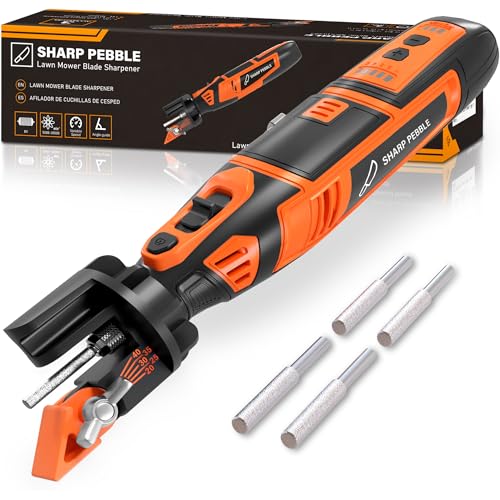
SHARPEN YOUR MOWER BLADE IN MINUTES: Blade removal is optional with this cordless lawnmower sharpener — many standard residential blades can be sharpened right on the mower, saving you the hassle of disassembly. Routine touch-ups take about 2–3 minutes per blade; badly worn edges take longer and are best done with the blade removed.
Manage Weeds Without Harmful Herbicides
After you finish mowing, turn your attention to weed control, because a freshly aerated lawn offers an ideal window for non‑chemical interventions. Spread corn‑gluten‑meal as a pre‑emergent powder; it fills the aeration cores, blocks seed germination, and adds nitrogen without harming existing grass. Apply a 2‑inch mulch barrier of wood chips or straw around edges and beds; the layer blocks sunlight, retains moisture, and decomposes into healthy soil supplements. Water deeply once a week, aiming for one inch, to force roots deeper and outcompete weeds. Hand‑pull any emerging seedlings while the soil is loose, and treat stubborn spots with boiling water or a 20 % vinegar solution. A natural weed‑killer using vinegar, salt, and dish soap can be sprayed directly on persistent weeds for an eco‑friendly boost. Repeat these steps seasonally to maintain a dense, weed‑resistant turf. Vinegar’s acidity can quickly desiccate shallow‑rooted weeds, making it a safe and effective natural herbicide for post‑aeration care. Visible wilting typically appears within 30 minutes to several hours after application, depending on concentration and weather conditions.
Adjust Soil pH With Lime When Needed
If your lawn’s soil is too acidic, applying lime after aeration lets the amendment sink directly into the freshly opened cores, raising the pH where roots can absorb nutrients most efficiently. First, conduct a soil test; a professional analysis every 1–2 years determines current pH and magnesium levels, guiding the lime application amount. For a pH of 5.4, typical recommendations range from 40‑50 lb per 1,000 sq ft, adjusted for soil texture and desired target pH. Use a drop spreader for pelletized lime or broadcast a ground‑lime mix, overlapping passes at 90‑degree angles to guarantee uniform coverage. Lightly water the lawn after spreading to activate the lime and promote deep penetration. Retest several months later to verify the pH shift before planning further amendments. Aeration creates deep holes that allow the lime to penetrate more effectively. Timing aeration in the cool-season period maximizes root recovery and nutrient uptake.
Monitor Growth: Spot Bare Patches Early
While the soil settles after aeration, you should begin daily visual checks to spot any uneven green‑up or exposed soil, because early identification of bare patches lets you intervene before the grass fully establishes. In the first two weeks, scan for a subtle green haze that signals germination; note any zones that remain brown. By week three to four, compare density across the lawn and track seed germination progress with photos or a notebook. Inspect soil moisture level each day, ensuring it stays consistently damp but not soggy; excess dryness often correlates with bare spots. If a patch shows no new growth after week four, schedule spot overseeding or topdressing. Continue weekly observations through week six to confirm uniform thickening and root development. Raking up the cores can improve lawn appearance while still allowing the soil to integrate the top dressing.
Seasonal Fertilizer Boosts for Long‑Term Health
Spotting bare patches after aeration tells you exactly where the lawn needs extra nutrients, so the next step is to schedule seasonal fertilizer applications. In spring, use a 20‑5‑10 blend to deliver a high nitrogen ratio that jump‑starts growth and restores winter‑depleted phosphorus and potassium. Summer calls for slow‑release formulas with elevated potassium applications, which retain moisture, curb heat stress, and prevent dry patches. In fall, apply a 5‑10‑5 or 5‑10‑10 mix, targeting 2‑2.5 lb of nitrogen per 1,000 ft², while balancing potassium to deepen roots and store carbohydrates for winter. Winterizer products should contain high nitrogen ratios and potassium to sustain root activity and freeze tolerance. Follow soil‑test recommendations, split applications 2‑3 times per season, and monitor for uniform coverage.

Provides key nutrients to keep grass healthy and promotes rich green grass.
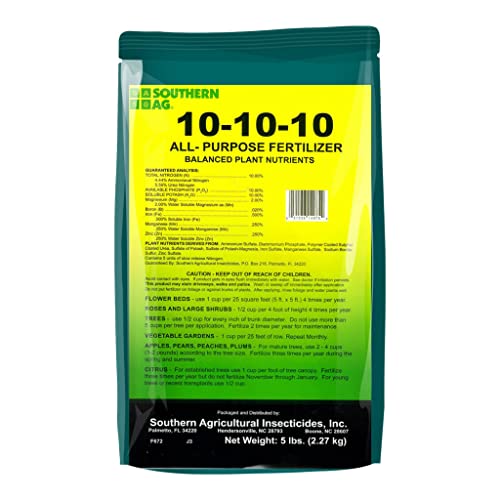

FALL LAWN FERTILIZER: Scotts Turf Builder WinterGuard Fall Lawn Food is a fertilizer that builds strong, deep grass roots for a better lawn next spring