
A string trimmer is a lightweight, rotary‑cutting device that spins a high‑speed nylon line to shear grass, weeds, and debris along edges and in tight spots where a mower can’t reach. It works by feeding a flexible line through a spinning head, creating a fast‑moving cutting vortex that slices vegetation cleanly. You’ll find gas, corded, and battery models, each with trade‑offs in power, weight, and runtime. Selecting the right head and line, plus mastering edge‑cut techniques, maximizes efficiency, and the maintenance routine keeps performance consistent. Continue for deeper insights.
What Is a String Trimmer and How Does It Work?
When you fire up a string trimmer, a high‑speed motor spins a flexible nylon line that slashes through upright vegetation by centrifugal force. You engage a clutch (gas) or a two‑speed controller (electric) to drive the shaft, which flings the line outward, delivering effective reach and efficient cutting. Single‑line spools feed crisp filament, while dual‑line configurations double throughput for dense overgrowth. Line diameters from 0.065 mm to 0.08 mm match material hardness; thicker stock handles tougher brush. Adjustable handles and telescoping arms let you position the cutter head near the ground, sweeping side‑to‑side to sever stems. Bump‑feed or EASYFEED mechanisms replenish line on demand, maintaining cutting continuity without manual reloading. Two‑cycle engines require a proper fuel‑oil mix to avoid engine seizure. Safety gear is essential to protect against debris and accidental cuts. The cutting head design determines the angle at which the line exits, influencing both reach and precision. Regularly inspect the trimmer’s spool tension to prevent line jams and ensure consistent performance.
When a String Trimmer Beats a Mower for Edge‑Heavy Yards
A string trimmer outperforms a mower in edge‑heavy yards because its lightweight, high‑speed spindle delivers a flexible nylon line that can infiltrate narrow, irregular perimeters where a 21‑inch mower deck can’t reach. You’ll exploit edge cutting versatility by pivoting the head 0‑360°, achieving 2‑3‑inch vertical cuts on sidewalks and driveways while the line’s 5,000‑8,000 RPM spin creates crisp, 4‑5‑inch turf reclamation. The perimeter focused workflow eliminates scalping: the trimmer skirts fences, foundations, and shrub bases without wheel slippage, handling slopes and uneven terrain effortlessly. Battery‑compatible units stay under 10 lb, enabling 15‑20‑minute sessions that cut hand‑trimming time 50‑70 %. Attachments add blades or brushes for heavy‑duty borders, consolidating trimming, edging, and weed control into a single, cost‑effective platform. Blade edger provides a deeper, cleaner cut for hard surface‑to‑lawn transitions. Understanding tool efficiency helps you match the right equipment to your lawn’s specific needs.

2 IN 1 TRIMMER & EDGER : Easily converts from a string trimmer to an edger lawn tool in just seconds.

5 Replaceable Blades for Multi-Scenario Yard Trimming: This cordless weed wacker comes with assorted blades to fit all garden tasks. Metal blades cut thick weeds and hedges, saw blades prune branches and shrubs, plastic blades work perfectly for soft, tender lawn grass. Swap attachments freely to tackle overgrown vegetation easily

3‑in‑1 Cutting System & Powerful Cutting Performance: Works as a string trimmer, weed eater and brush cutter all‑in‑one. Driven by a high‑speed 11,000 RPM motor, it delivers reliable power to cut through thick grass and tough weeds. Cord‑free design lets you move freely around your yard. Quick‑assembly and user‑friendly operation suit new gardeners perfectly
Gas vs. Corded vs. Battery Power Sources: Which Is Right for You?
Your edge‑heavy yard already shows why a string trimmer’s flexible line beats a mower, but the next decision hinges on how you’ll power that tool. Gas engines deliver endless runtime, high torque, and instantaneous RPM, ideal for expansive, dense vegetation, yet they impose pull‑starts, oil changes, emissions, and elevated noise. Corded units eliminate battery recharging cycles, offering constant voltage, instant start, and the lowest weighted cost comparisons; however, cord length caps mobility and necessitates proximity to an outlet. Battery‑powered trimmers provide push‑button ignition, lightweight ergonomics, zero emissions, and up to 90 minutes on high‑capacity packs, with brushless models achieving 40‑70 % more power than legacy gas units. Choose gas for large, demanding zones, battery for residential eco‑efficiency, or corded where unlimited runtime and minimal upfront expense outweigh portability constraints. The Works model is the lightest trimmer at 9.31 lb, making it especially easy to maneuver for extended use. Electric models also offer quieter operation, aligning with the low‑noise advantage highlighted for electric leaf blowers. Curved‑shaft designs provide greater torque for thick vegetation, complementing the power benefits of battery‑operated units.

Trimmer & Edger 2-in-1: The weed trimmer is easy to convert from weed trimmer to wheel edger, meet your multiple needs. The spacer guard can protect your plants, landscape features, and lawn ornaments

6200 RPM: The POWERDRIVE Transmission delivers more power from the motor to the cutting string so you can get the job done faster

This weed wacker cordless is equipped with a 9000RPM motor, designed to handle thick weeds, tall grass and stubborn vegetation. It features a 12-Inch cutting diameter for expanded coverage during use.The tool is constructed for durable yard maintenance and suitable for various outdoor trimming tasks
Choosing the Right Head and Line for Your Yard
If you need ideal cutting efficiency, start by matching head type to line diameter and feed mechanism—dual‑string heads outperform single‑string units, while automatic bump‑feed or Speed Feed 400 systems let you advance line without disassembly, and preloaded or quick‑load spools (e.g., DeWalt DWO1DT995) minimize downtime; choose universal replacement heads that accept 0.080‑0.095 in. line and fit 7‑10 mm adapters for Echo, Redax, or Troy‑Bilt platforms. For high‑density weeds, opt for a fixed‑feed or hybrid head like Shakespeare Ugly Head, which tolerates 15 ft of 0.095 in. line. If rapid reloads matter, prioritize quick‑load spool head replacements; the DeWalt DWO1DT995 cap‑twist system restores up to 6 in. of line in 30 seconds. Align feed mechanism—bump, Speed Feed 400, or no‑feed—with yard topology to preserve head durability and maintain consistent cut quality. The Shindaiwa 788933000 head features an upgraded Speed Feed 400 system for rapid tool‑free line reloading. Using the correct line thickness helps prevent premature wear and ensures a clean cut across various grass types. Selecting the appropriate power source can significantly affect overall performance and noise level.

Innovative design lets the user align, load, and twist line for faster reloading of trimmer head

Brand New Husqvarna Rapid replace trimmer head simplifies the trimmer line reloading processenuine Husqvarna 536205501 Easy Spooling RapidReplace String Trimmer Head...

This model does not include any adapters
String Trimmer Cutting Techniques for Clean Edges
When you set the trimmer head vertical with the deflector shield facing you, the line should sit at a 90‑degree angle to the ground and spin clockwise, so you’ll guide the cutter left‑to‑right, pushing soil and grass outward while maintaining a steady grip for a razor‑sharp edge. Align the handle for a level stance, then advance in controlled, bite‑sized passes to achieve uniform lawn trimming. For irregular surface edging, employ the U‑cut method: swing the head in a shallow U‑trajectory around obstacles, keeping the line’s tip just above the substrate to avoid contact damage. Maintain a constant speed, let centrifugal force dictate line tension, and direct debris away from walkways. This systematic motion yields crisp, vertical borders with minimal rework. Use the pinky finger to fine‑tune the throttle for smoother cuts. The Husqvarna models often feature longer battery life which can be advantageous for extensive yard work. Stihl’s gas engines provide the torque needed for dense, overgrown vegetation. Proper soil moisture is essential for seed germination and should be maintained at a consistent level during the pre‑germination phase.

[Compact Storage and Easy Maneuvering] Designed for modern living, the innovative shaft folds 180° in three ways for vertical storage in tight corners, apartments, or crowded garages and it’s highly space saving. Featuring a 90° adjustable head and 180° rotatable handle, you can effortlessly tackle slopes, under-bench areas, and hard-to-reach corners, making a uniformly tidy garden
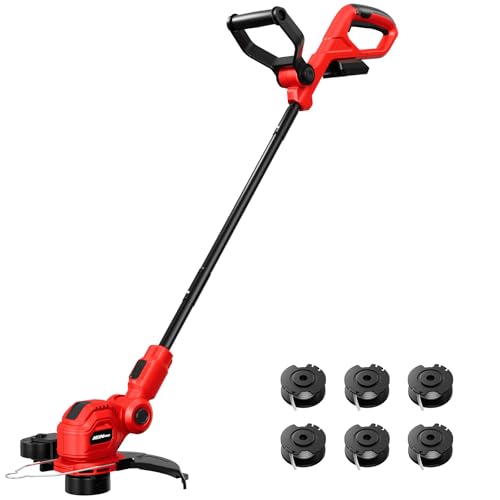
⚠️ NOTE: Battery and charger not included!
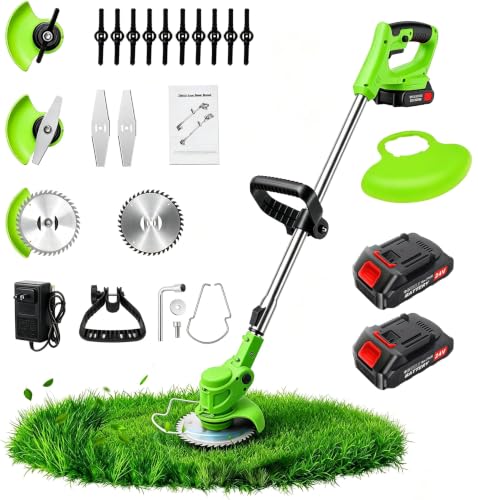
650W Pure Copper Motor & 3-in-1 Design: This cordless weed wacker powered by a upgraded 650W pure copper motor with up to 11,000 RPM no-load speed, this weed wacker delivers fast and clean cutting performance. It works perfectly as a string trimmer, weed cutter and brush cutter in one compact device. The cordless design offers free movement on lawns, gardens, patios and edges, greatly improving your gardening efficiency with no messy cords
Maintenance Tips to Keep Your String Trimmer Running Smoothly
The precision edging you just achieved will deteriorate quickly unless you keep the trimmer clean and its components in top condition. After each pass, brush off grass and grime with a steel bristle, then wipe the head with a soap‑water solution to dissolve grease. Hose down the entire unit seasonally, and dry all vents to prevent corrosion. Replace line every 20‑30 hours; soak it two hours prior to winding to maximize tensile strength. Inspect fuel lines, purge valve, and suction head for cracks; swap any compromised component. Clean or replace the air filter and spark plug every 90 days, and re‑grease the gear case at 50‑hour intervals. Store the battery in a warm, dry space, lubricate moving parts, and always choose high‑quality parts. Proper tool storage and routine checks guarantee consistent performance. Sharpening lawn mower blades at least once a season helps maintain a consistent cut and reduces strain on the trimmer. Choosing the right maintenance schedule can extend the life of both the trimmer and your lawn equipment. Keeping blades sharp improves grass health and reduces weed seed spread.

Original high quality brand new “HUZTL” parts, 100% tested before sending out. Please check for the details to make sure this part will fit

Air filter replaces OEM # 13031054130 & A226001410; fuel line kit compatible with 90097Y. Complete tune-up set designed to restore engine performance, improve fuel efficiency, and extend the service life of your Echo outdoor power equipment

For Stihl FS40C FS55R FS56R FS36 FS80 FS81 FS85 FS90 FS10 FS110 FS120 FS130 FS130R FS200 FS200R FS250 Sarlo SS-18.