
Aerating loosens compacted soil, letting water, nutrients, and oxygen reach deeper roots, which strengthens the grass and boosts drought tolerance. It creates channels that cut runoff, improve infiltration, and disperse fertilizer more efficiently, while breaking down thatch and encouraging beneficial microbes. The process also reduces compaction, eases foot‑traffic stress, and helps the lawn recover from heat and disease. If you keep going, you’ll uncover even more advantages and timing tips.
Why You Should Aerate Your Lawn
When soil becomes compacted, its density blocks the pathways that roots need to the water, air, and nutrients, so aerating your lawn removes small cores of earth to restore those channels and stimulate deeper, more vigorous root growth. You’ll notice immediate improvement in lawn appearance because the loosened soil structure lets roots penetrate farther, accessing moisture and nutrients more efficiently. The process breaks up hard layers, reducing runoff and puddling while increasing water retention in deeper zones, which extends irrigation intervals. Nutrient pathways open, allowing nitrogen, phosphorus, and potassium to reach the root zone, boosting fertilizer efficiency. Enhanced root depth yields thicker, greener turf, improves drought tolerance, and mitigates thatch buildup, resulting in a resilient, healthy lawn. Aeration also promotes better seed‑to‑soil contact for overseeding, ensuring higher germination rates and a denser lawn. Proper timing of aeration can significantly increase soil aeration benefits during the growing season.
How to Aerate Your Lawn: Step‑by‑Step Guide
After seeing how compacted soil hampers root growth, you’ll want to restore those pathways with a proper aeration routine. First, mow the lawn to the recommended height or one notch lower, then clear debris and dethatch any thatch layer. Water the area with an inch of water the day before to soften the soil, and mark all underground utilities. Choose a core aerator—rented for about $100 per day for larger lawns or a manual unit for small spaces—and run it in straight rows, overlapping slightly. Make a second pass perpendicular to the first, adding extra passes in high‑traffic zones. After aeration, leave plugs to dry, then break them up with a rake and disperse them for natural decomposition, which supports increased oxygen flow and soil amendment integration. Finally, water thoroughly, apply fertilizer, and overseed, keeping the soil moist for two weeks. Fall is the best time for annual aeration because it coincides with reduced weed germination and promotes root growth during the fall‑winter transition. Proper timing maximizes soil aeration benefits and overall lawn health. Regular aeration also encourages deeper roots that can better drought drought. Aerating once a year for cool‑season grasses or twice a year for warm‑season grasses aligns with the optimal timing recommendations for seasonal lawn care.

Stainless Steel Coring Plugs: Our 4 core aerator plugs uses sus 304 stainless steel material that will not rust or bend out of shape. Additionally, our rod is made from high-quality solid steel with a black powder coating on the surface to ensure long-term use of the tool.
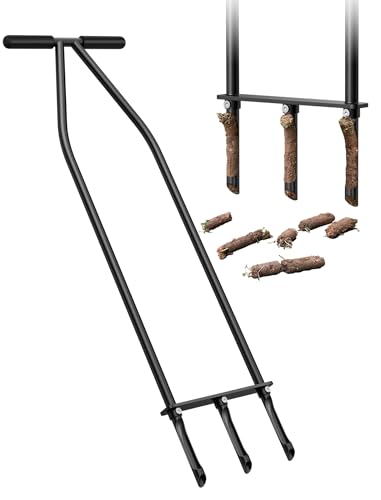
【Real Core Aerator】Our core aerator has 3 hollow tines to help loosen soil and reduce soil compaction. It can pull plugs of soil out of the ground and let air and water reach the roots for more nutrients and correct growing conditions. Kind Tip: This tool works best on moist grass.

Boosts Lawn Condition: Punches holes and extracts soil plugs to improve air, water, and nutrient absorption
How Aeration Relieves Compacted Soil Layers
A single pass of a core aerator can slice through 2‑4 inches of compacted soil, instantly carving channels that restore oxygen flow, water infiltration, and nutrient mobility. By extracting plugs, you break dense particle clusters, reducing mechanical resistance and creating a network of voids that foster improved soil structure. Those voids become conduits for gases, turning the profile into an oxygen rich environment that supports root respiration and aerobic microbes. Water now percolates deeper, bypassing surface runoff and delivering nutrients directly to active zones. Nutrient diffusion accelerates as the channels shorten travel distance, especially for immobile phosphorus. Simultaneously, the surface‑deposited cores decompose, enriching the medium with organic matter and further stabilizing the loosened layers. This immediate relief prevents compaction from foot traffic and rain, sustaining a healthier lawn. Aerating in early fall takes advantage of optimal root growth when temperatures are mild and moisture is abundant. Proper timing also maximizes soil recovery during the active growing phase. Proper aeration also encourages deeper root development, which improves drought resilience and overall lawn health.
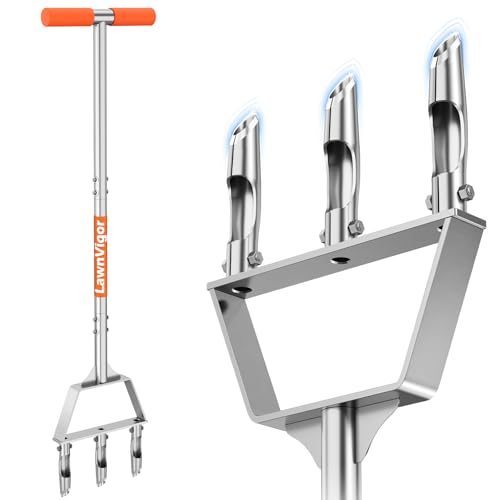
LAWN AERATOR FOR HEALTHIER LAWN GROWTH: Our manual lawn aerators promotes lush, green lawns by delivering essential air, water and nutrients deep into the soils. The lawn air aerator tool ensures healthier grass growth. (Note: Please water dry soil before use and do not rock, twist, or pry the tool side-to-side when it's in the ground.)

1.Reinforced Square-Tube Step Creates a Stable Power Point: The thickened square-tube foot bar offers a firm contact surface for applying concentrated downward force. Its rigid profile helps keep the aerator steady underfoot, giving you controlled leverage when penetrating compacted soil and dense lawn areas.

1.Pulls 4 Soil Cores for More Effective Lawn Aeration: Four reinforced hollow tines remove plugs from compacted ground instead of merely creating surface holes. The open channels help air, water and nutrients travel deeper into the root zone, supporting stronger roots, improved drainage and healthier grass growth.
How Aeration Boosts Root Depth & Strength
Because aeration loosens compacted soil, it instantly creates space for roots to push deeper and spread wider, turning a thin, fragile network into a robust, drought‑tolerant system. You’ll notice that the newly formed pores permit roots to penetrate stable moisture zones, fostering enhanced root branching and a denser architecture. Oxygen flow improves, so respiration efficiency rises, allowing fine roots to develop under stress and secure stronger anchorage. Simultaneously, the soil’s capacity for improved moisture distribution expands, delivering water uniformly across the profile and preventing localized drought. The cumulative effect is a thicker, more resilient root mass that resists foot traffic, heat, and disease, ultimately strengthening the turf’s overall vigor and longevity. Proper timing, such as early fall or spring, maximizes these benefits by aligning with the grass’s natural growth cycle and optimal seed germination. Aerating in the early fall takes advantage of warm soil temperatures that promote rapid root growth and recovery.
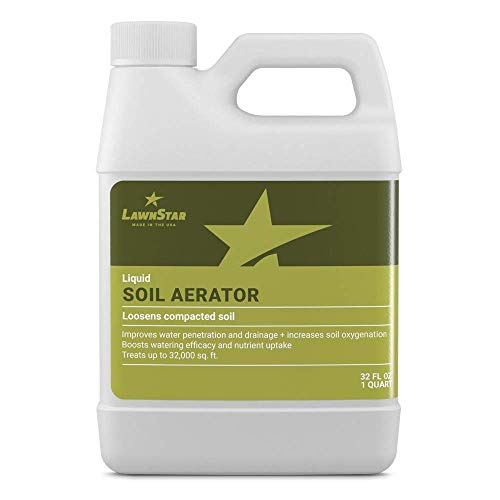
EASY-TO-USE ALTERNATIVE: Tired of mechanical aeration? So were we. Our liquid soil loosener takes all of the stress for you and provides a cost efficient alternative to core and mechanical aeration.

Liquid Soil Loosener: Can be used Alone or with Mechanical or Core Aeration, Aerating and Aerate Tools. Liquid Soil Loosener Conditions Compact Soil. Helps the Downward Movement of Water Allowing Vertical Drainage and Increased Water Infiltration.

Loosens Compacted Soil: A spray-on liquid formula that helps open up hard, clay-heavy ground so water, air, and roots can move freely - no core plugs, spikes, or rented machines required.
How Aeration Improves Water Absorption & Cuts Runoff
Compacted soil blocks water infiltration, forcing rain and irrigation to run off instead of soaking into the root zone. When you aerate, you pull short plugs that leave a network of microscopic tunnels. Those tunnels act as direct conduits, letting water bypass the dense surface layer and travel straight to the root zone. Aeration improves soil permeability by expanding pore space, so each drop spreads rather than pools. The increased porosity also reduces surface saturation, cutting runoff by up to 25 % and minimizing puddles after storms. As water moves deeper, roots access moisture more efficiently, enhancing drought resilience. By repeatedly creating these pathways, you sustain a healthier soil structure that continually supports ideal water absorption. Proper post‑aeration watering ensures the soil stays consistently moist, promoting seed germination and strong root development. Using a core aerator creates larger holes that allow deeper water penetration, which is especially beneficial for heavy clay soils. Regular hand aeration also helps distribute soil microbes more evenly throughout the root zone.
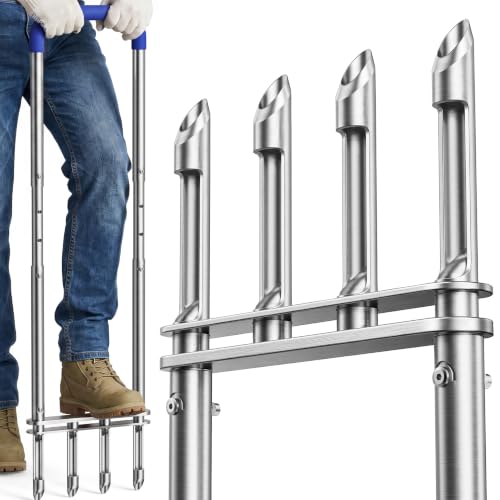
1.Adjustable Height for a More Comfortable Working Position: Extend the lawn aerator from 43.3 to 48.5 inches to match your height and preferred stance. The upright handle, open knee area and cushioned non-slip grip help make repeated lawn aeration more controlled and less demanding on your back.

【TRUE CORE AERATION FOR HEALTHIER LAWNS】This manual lawn aerator removes soil plugs to relieve compaction at the root level. By creating open channels beneath the surface, it improves airflow, water penetration, and nutrient absorption—supporting thicker and stronger grass growth over time

🌱【Upgraded Plug Aerator with Soil Storage Basket】To save you from cleaning the troublesome coring soil, our newest lawn aerator adds a thoughtful design—a soil storage box to captures extracted soil plugs during aeration. It saves you from cleaning the lawn, and also makes your lawn more tidy and beautiful!
How Aeration Increases Fertilizer Efficiency & Nutrient Uptake
Roughly 30 % of applied fertilizer never reaches the root zone when soil is compacted, but aerating the lawn creates a network of channels that let nutrients travel directly to where the grass can absorb them. By pulling plugs, you break up particle clusters, opening pathways that let fertilizer infiltrate deeper layers. This structural change encourages roots to explore a larger volume, increasing their contact with nutrients. Simultaneously, the added oxygen spikes aerobic microbial activity, reshaping microbial community composition and accelerating nutrient mineralization rates. The result is a more efficient conversion of applied nutrients into plant‑available forms, so each granule contributes to growth rather than lingering in a compacted matrix. Consequently, you see stronger, greener grass with less fertilizer waste. Aeration costs can vary widely depending on lawn size, equipment choice, and regional labor rates. Proper timing, such as mid‑April in spring, ensures the soil is moist enough for optimal plug removal and root expansion. Aerating at a soil temperature of 50–65 °F maximizes root penetration and recovery.
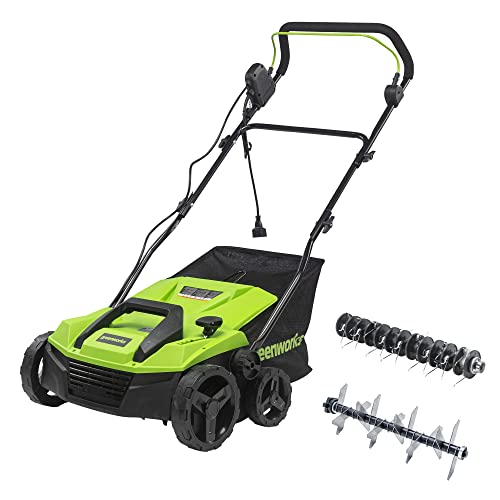
2-IN-1 DESIGN - 13A 14-Inch Dethatcher / Scarifer provides the power and versatility to keep your lawn healthy.No load speed : 3200 RPM

EFFECTIVE LAWN REVITALIZER : Achieve optimal turf health with our rolling lawn aerator. Its effective design promotes better air circulation, water absorption, and nutrient penetration into the soil for a lush, healthy lawn.

[Powerful 13 Amp Electric Motor]:Equipped with a 13 Amp copper motor, this electric dethatcher delivers a strong 3700 RPM, making it ideal for tackling tough lawn care tasks. It effortlessly removes thatch and debris, helping your lawn breathe better and promoting healthier grass growth.
How Lawn Aeration Reduces Thatch Build‑Up
While aeration boosts fertilizer efficiency by opening pathways to the root zone, it also tackles thatch buildup directly. By extracting core plugs, you physically remove 1‑3 % of thatch with small cores and up to 7.5 % with larger 3/4‑inch cores per pass. Repeating the process biannually yields roughly 15 % annual reduction, turning thatch removal from a passive to an active operation. The holes you create improve oxygen exchange, which stimulates microbial activity and accelerates thatch decomposition. Loosened soil also alleviates compaction, allowing water and nutrients to penetrate and further support microbes. Consequently, thick thatch layers break down more quickly, and future buildup is curbed, keeping your lawn healthier and more resilient. Aeration can also be combined with liquid thatch products for enhanced removal. Proper timing of dethatching ensures that the lawn can recover quickly, especially when followed by aeration to maintain optimal soil structure. Seasonal temperature shifts affect microbial breakdown rates, making spring dethatching particularly effective for rapid thatch decomposition.
How Lawn Aeration Increases Drought & Heat Resilience
When you aerate your lawn, the newly created channels let water infiltrate deeper and spread more evenly, cutting runoff and preventing surface puddles. The holes increase soil oxygen enhancement, allowing roots to respire efficiently and expand downward. This deeper root network taps subsoil moisture, raising drought tolerance and heat resilience while the aerated structure improves nutrient cycle optimization, delivering nutrients where roots can use them. Moisture retention rises as the turf thickens, insulating soil and curbing evaporation. Consequently, you’ll notice fewer watering cycles, greener grass during dry spells, and a lawn that endures high temperatures without stress. The combined effect of improved infiltration, oxygen, and nutrient dynamics creates a robust, climate‑adaptive turf. Aeration also helps break up compacted soil layers, promoting better root penetration and overall lawn health. This is especially beneficial for lawns with high foot traffic, where soil compaction can significantly hinder growth. Timing lawn aeration in the spring aligns with active growth phases, maximizing root development.
How Lawn Aeration Reduces Weed Pressure
Aerating not only boosts drought resilience but also curbs weed pressure by reshaping the soil environment. When you core‑aerate, you loosen compacted layers, allowing air, water, and nutrients to penetrate the root zone, which directly supports weed seed germination prevention. The holes disrupt thatch, reducing its barrier effect and exposing weed seeds to a less hospitable, drier micro‑climate. Simultaneously, the enhanced aeration promotes increased turf density, because healthier roots fill the gaps and crowd out bare spots where opportunistic weeds would otherwise establish. Over time, a thick, vigorous lawn creates a physical shield that blocks sunlight and limits resources for weeds, turning your yard into a self‑regulating ecosystem that naturally suppresses unwanted growth.
When to Aerate: Timing & Frequency
A well‑timed aeration schedule hinges on grass type, climate, and soil conditions. For cool‑season grasses, target early spring or late summer to early fall—periods that satisfy soil moisture requirements and support rapid recovery. Warm‑season lawns benefit from late spring through early summer when growth spikes, aligning with climate adaptation strategies that mitigate heat stress. Frequency depends on soil texture and traffic: clay or heavily compacted areas usually need twice‑yearly treatment, while loam or sandy soils may suffice with a single annual pass. Monitor foot traffic and patchiness; increased compaction signals a need for more frequent aeration. Always aerate during active growth phases to guarantee plug fill‑in and minimize stress, and adjust timing to local climate patterns for ideal root development. Core aeration is crucial for lawn health.