
Start fertilizing as soon as soil temperature hits the species‑specific threshold—about 55 °F for cool‑season grasses and 65 °F for warm‑season types—using a high‑phosphorus starter blend at 0.5–1 lb N per 1,000 sq ft. Water thoroughly right after application and keep the soil consistently moist for the first week, then reduce to 1–2 daily waterings. Follow up 4–8 weeks later, and align subsequent feeds with temperature cues: 45 °F day/40 °F night for early‑spring cool‑season, 65 °F for late‑spring warm‑season, and avoid applications above 85 °F. Stick to 0.75–1 lb N per 1,000 sq ft of slow‑release nitrogen, and incorporate pre‑emergents or micronutrients as needed. Proper timing and moisture management will boost root development and prevent burn, and the next sections will guide you through seasonal schedules and regional adjustments.
When to Fertilize a Newly Seeded Lawn
When should you fertilize a newly seeded lawn? Begin with a starter fertilizer application immediately before or after seeding, matching grass type: cool‑season grasses in fall, warm‑season grasses in late spring to early summer. Ensure soil temperature reaches the species‑specific threshold to promote nutrient uptake. Apply the starter at a higher phosphorus ratio, then water thoroughly to achieve nutrient penetration into soil and drive the nutrients to the germinating seeds. After germination, maintain two to four daily ten‑minute waterings for the first week, then reduce to one or two daily sessions as seedlings develop. Schedule the first follow‑up fertilization 4–8 weeks later, adjusting to 4 weeks in sandy soils or when using liquid starter. Switch to regular fertilizer after the 6–8‑week establishment period. Potassium enhances overall health and disease resistance. Proper timing aligns with the seasonal fertilization schedule to maximize growth. Soil testing helps determine the correct nutrient balance for optimal lawn development.
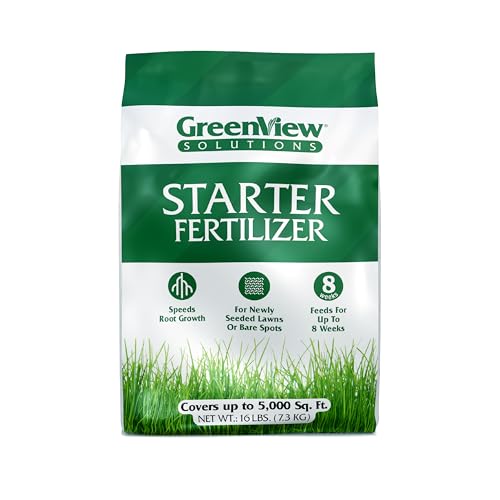
Speeds Root Growth - This grass fertilizer for lawn is a phosphorus fertilizer that helps roots establish quickly and grow deep and strong

FERTILIZER FOR NEW LAWNS: Scotts Turf Builder Starter Food for New Grass is a specially formulated starter fertilizer for grass seed that is designed to be used when planting new grass

Grows new grass 70% thicker, 35% quicker versus unfed grass
How to Choose the Right Fertilizer for Young Grass
After you’ve timed the first fertilization to match your grass’s seasonal window, the next step is picking a fertilizer that supplies the nutrient balance young seedlings need. Choose starter fertilizer formulations with a high‑phosphorus middle number—ratios such as 20‑27‑5 or 24‑25‑4—because phosphorus drives root development. Ascertain that nitrogen rates fall between 0.5 and 1 lb per 1,000 ft² to promote leafy growth, and include modest potassium for stress resilience. Consult local soil tests for nutrient deficiency remediation; if deficiencies are identified, supplement with targeted micronutrients or specialty formulations. Opt for products universally compatible with cool‑ and warm‑season grasses, and consider integrated seed‑fertilizer mixes to simplify application and guarantee even distribution. Use a broadcast or rotary spreader set to 3 ¼ for consistent coverage. The 23% nitrogen content in Vigo starter fertilizer gives a strong early top growth boost. Proper soil moisture after fertilizing helps nutrients dissolve and reach the root zone efficiently. Properly pre‑water the lawn before applying fertilizer can improve nutrient uptake and reduce burn risk.

Starter fertilizer formulated to use when establishing new turf

The information below is per-pack only

Premium Starter Fertilizer for New Lawns (15-20-10): High-phosphorus formula designed for fast root development, stronger germination, and quick establishment of new grass seed or sod. Perfect for seeding, overseeding, or repairing stressed lawns.
Early‑Spring Fertilization Timing for New Cool‑Season Lawns
If soil temperature reaches about 45 °F during the day and 40 °F at night, that’s the cue to apply your first spring fertilizer to a new cool‑season lawn. At this dormancy juncture, aim for a slow‑release nitrogen rate of 0.75–1 lb per 1,000 sq ft, applied in a single pass. Use a pre‑emergent integration to block weeds while delivering nitrogen. Test soil for phosphorus and potassium, then blend those nutrients if deficiencies appear. Avoid exceeding 1 lb N per 1,000 sq ft to prevent weak root development and excessive early growth. Apply when the lawn shows initial green‑up, typically mid‑March through early April, and follow with a mowing height that encourages deeper rooting. This timing maximizes shoot density, prepares the turf for summer, and minimizes environmental loss. Lawn density benefits from the added nitrogen. Proper watering after fertilization helps the nutrients soil into the root zone. Applying fertilizer during the optimal temperature range ensures maximum nutrient uptake.
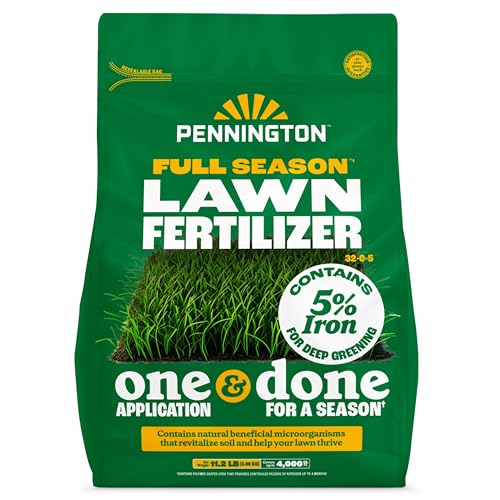
This spring lawn fertilizer is one application and done for a season

28-0-0 Liquid Lawn Food: High Nitrogen lawn fertilizer. Nitrogen helps in the formation of chlorophyll where plants get their green pigment. The addition of Nitrogen can encourage plant vigor for a thicker, greener, and more attractive lawn
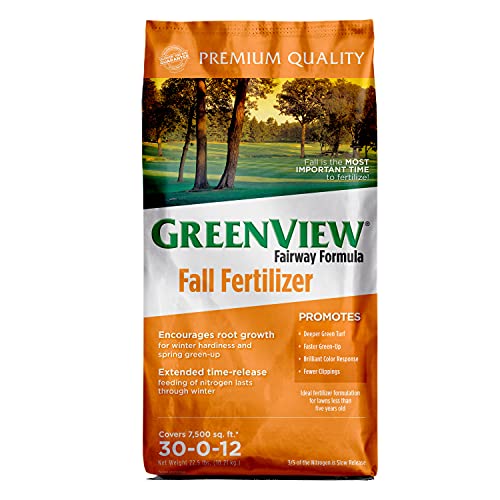
For Lawns: This grass fertilizer for lawns encourages deep root growth, brilliant lawn color, and thick lush growth
Late‑Spring and Summer Feeding Schedule for New Warm‑Season Lawns
A typical late‑spring feeding for a new warm‑season lawn starts once soil temperature consistently reaches 65 °F and the grass shows full green‑up, usually in May or early June. Apply 0.5–1.0 lb nitrogen per 1,000 sq ft or 32 lb Milorganite per 2,500 sq ft, then water thoroughly. Continue feeding every 4–6 weeks through late summer, aiming for 2–3 applications based on monitoring grass condition. Adjust application rates each cycle, using lighter doses (½ lb per 1,000 sq ft) if growth slows or heat intensifies. Apply in the early morning or late afternoon, avoiding the hottest part of the day. Increase mowing height in July to reduce evaporation and support root development. This schedule sustains vigorous growth, improves drought tolerance, and limits weed competition. Milorganite should be applied after the last frost when daytime temperatures consistently stay in the 70s.

You don’t have to worry about streaks, stripes, or accidentally burning your lawn when you use Milorganite fertilizer!

WHERE TO USE: Lawn fertilizer for grass can be used on any grass type

Super-fine particles provide even distribution, with twice the number of particles per square foot
How Soil Temperature Determines Fertilizer Application Dates
When soil temperature consistently reaches 55 °F and stays there for three days, you can start fertilizing because the microbial activity needed to convert nutrients becomes active and the grass exits dormancy. Use a soil thermometer or probe for soil temperature monitoring; record readings at 2‑inch depth each morning. If the average stays at or above 55 °F for three consecutive days, apply a balanced nitrogen‑phosphorus‑potassium blend. For cool‑season lawns, target the 55‑65 °F window to maximize root uptake; for warm‑season varieties, wait until soil reaches 65 °F before the first spring dose. Schedule fall fertilizer timing when temperatures dip back toward 55 °F, ensuring nutrients support recovery and winter hardiness without promoting pre‑winter growth. Avoid applying fertilizer when soil temperatures exceed 85 °F, as this can cause nutrient burn, reduced uptake, and stress to the grass. Optimal temperature range is crucial for effective lawn care. Grass seed germination also thrives within a 55‑70 °F window, promoting rapid and uniform establishment.
Pre‑Emergent Weed Control vs. Fertilizer Timing Explained
Timing pre‑emergent herbicide applications with fertilizer schedules hinges on soil temperature—once the ground consistently reads 55 °F for several days, you can apply the herbicide to block weed seed germination, then follow with a light, balanced fertilizer to support turf growth without interfering with the dormant barrier. Choose a pre‑emergent product selection that matches your grass type and regional climate; label directions will specify the pre‑emergent application rate, usually 0.5–1 lb per 1,000 sq ft for granular formulas. Apply the herbicide first, water in 0.5 inches within 21 days, and wait 24–48 hours before spreading fertilizer. Use a balanced N‑P‑K blend (e.g., 13‑0‑10) at a light rate to avoid excess nitrogen that could weaken the barrier. Monitor soil temperature daily to ascertain timing accuracy. Applying pre‑emergent before soil temperature reaches 55 °F ensures maximal weed control. For best results, consider the weed life‑cycle timing to target the most vulnerable stages of seed germination. Understanding pre‑emergent mechanisms helps you select the right product for your weed spectrum. Apply herbicides when rainfall is minimal to prevent runoff and protect nearby water sources.
Ideal Weather Conditions and Post‑Application Watering Tips
If the air stays between 60 °F and 75 °F and the soil is above 55 °F, you’re in the ideal window for fertilizing; apply the product in the early morning or late evening, then water lightly enough to moisten the top inch of soil without creating runoff. Maintain excellent soil moisture by checking that the surface feels damp but not saturated before you begin. Use a calibrated spreader for proper fertilizer application, ensuring uniform coverage and avoiding clumping. After spreading, water the lawn with ¼‑½ inch of water within 30 minutes to activate nutrients and prevent burn. Avoid heavy rain forecasts for the next 24 hours; if rain is imminent, postpone until conditions stabilize. This approach maximizes nutrient uptake while minimizing leaching and stress. Adjust watering frequency based on soil type to prevent over‑ or under‑watering. Proper irrigation after fertilizing helps the nutrients dissolve and reach the root zone efficiently. For lawns with sandy soil, consider shorter watering cycles to reduce deep percolation and maintain moisture where roots can access it.
Common Timing Mistakes to Avoid on New Lawns
A common pitfall on new lawns is applying fertilizer at the wrong stage of growth, which can stunt root development, cause burn, or waste nutrients. You must wait 4‑8 weeks after seeding or about one month after laying sod before the first feeding; premature application triggers improper nutrient ratios and can scorch tender shoots. Avoid fertilizing during dormancy or extreme heat, because the grass lacks active uptake and top growth will outpace delayed root establishment. Do not over‑apply; excess nitrogen or iron draws moisture from cells, producing yellowing and stunted roots. Skip fertilization during drought or after a recent rain‑free period, and never apply without a pre‑watering soak. Follow these precise windows to promote healthy, balanced growth. Apply fertilizer only to dry grass to prevent runoff and burning. Store fertilizer in a cool, dry place to maintain its nutrient potency and avoid degradation. Over‑fertilizing can lead to nutrient burn, which damages the grass blades and weakens the root system.
Adapting the Fertilizer Calendar to Your Regional Climate
Because soil temperature and daylight length differ across regions, you must tailor your fertilizer calendar to the local climate zone. First, test soil pH and nutrient levels in early spring or fall; aim for optimum soil pH (6.0‑7.0) to maximize nutrient uptake. In cool‑season zones, apply slow‑release nitrogen when soil reaches 55 °F, timing early‑spring applications to avoid late frosts and early‑fall feeds to strengthen roots before dormancy. In warm‑season regions, wait until soil hits 70 °F, then schedule monthly low‑rate nitrogen applications through September, adjusting for regional windows. For intermediate zones, use balanced formulas in March‑April with pre‑emergents, then switch to nitrogen‑rich feeds in May‑June and potassium‑rich products in early summer. Throughout, practice nutrient deficiency management by adjusting rates based on test results and avoiding excess that could leach during heavy rain. Applying fertilizer before the lawn is 80‑100% green can set the lawn back and benefit weeds instead.

Feel Proud of Your Lawn: Slow release fertilizer packed with 65% granular nitrogen - this spring lawn fertilizer feeds up to 110 days for deep green grass and lush growth you’ll love coming home to
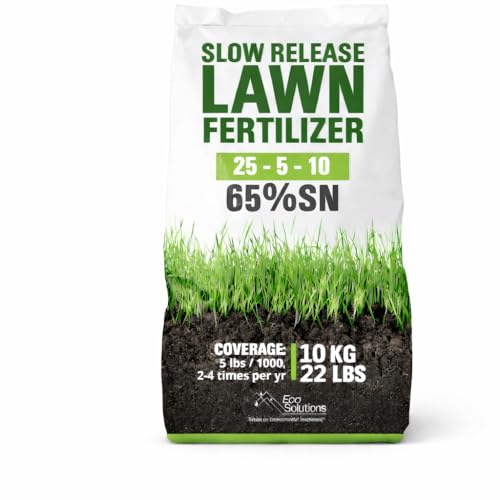
Feel Proud of Your Lawn: Slow release fertilizer packed with 65% granular nitrogen - this spring lawn fertilizer feeds up to 110 days for deep green grass and lush growth you’ll love coming home to
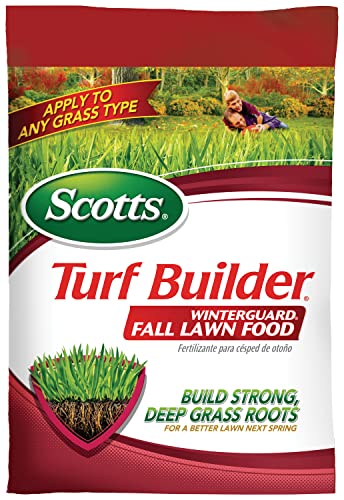
FALL LAWN FERTILIZER: Scotts Turf Builder WinterGuard Fall Lawn Food is a fertilizer that builds strong, deep grass roots for a better lawn next spring
Quick Reference: Full Year‑Long New Lawn Fertilization Schedule
Tailoring your fertilizer calendar to local climate sets the stage for a full‑year schedule that hits every growth window. In early spring (Feb‑Apr), apply a starter blend with high nitrogen to meet nutrient requirements and support germination; follow with a regular balanced fertilizer at first mowing (Mar‑May). Six to eight weeks later, in late spring (May‑Jun), use a 25‑0‑5 slow‑release product to sustain growth and curb broadleaf weeds. Summer (Jul‑Aug) calls for MAG‑I‑CAL Plus or a 25‑0‑5 formulation, applied mid‑late July to guarantee pH balance and continued nutrient supply. Early fall (Sep‑Oct) requires a slow‑release 25‑0‑5 or 32‑0‑6 mix to promote root development and winter survival. Finally, in November, apply a 32‑0‑6 winter fertilizer, and plan overseeding considerations after the last mowing to facilitate uniform establishment. Proper nutrient balance is essential for a lawn to withstand stresses like weeds, heat, and drought, ensuring a lush, green appearance throughout the season. Nutrient balance is critical for optimal lawn health.