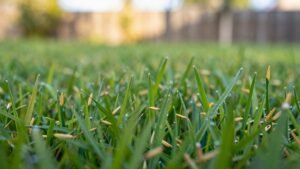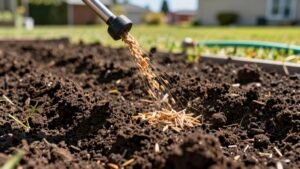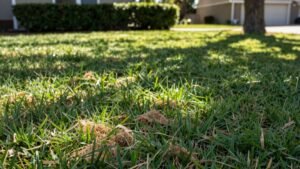

Aerate your lawn when the grass is actively growing—late August‑early November for cool‑season varieties, May‑July for warm‑season types. Mow to 1.5‑2 inches a day or two before, water 1 inch 24‑48 hours prior, and flag sprinkler heads. Choose core aeration for clay or compacted soil and spike for sandy loam, spacing rows 4‑6 inches apart and overlapping 2‑3 inches for a criss‑cross pattern. Immediately water to saturate the top 1‑2 inches, apply starter fertilizer, and overseed; follow‑up steps will boost root health and turf density.
When’s the Best Time to Aerate Your Lawn?
When should you aerate your lawn? Identifying ideal aeration conditions hinges on seasonal growth cycles and soil moisture. For cool‑season grasses, target the last week of August through the first week of November, when temperatures drop and active growth peaks. This window maximizes root expansion and nutrient uptake. For warm‑season grasses, aim between May and July, aligning with peak root development. Recognizing lawn health indicators—such as compacted soil, reduced water infiltration, and thinning turf—signals the need for aeration. Guarantee the soil is moist but not saturated, ideally the day after rain or a light irrigation. Conduct multiple passes over high‑traffic zones to achieve uniform core removal, then keep the lawn damp for two to three weeks to support germination and recovery. Aeration improves air circulation to the roots. Proper timing also helps prevent soil compaction from worsening during extreme weather. Regular aeration can also enhance nutrient absorption by creating pathways for fertilizers to reach deeper root zones. This practice also increases water infiltration which reduces runoff and promotes healthier soil structure.

Manual Lawn Aerator for Healthier Grass - This manual lawn aerator strengthens turf health by improving soil airflow and nutrient absorption. Its hollow tine design gently extracts compacted soil plugs, allowing air, water, and nutrients to penetrate deeper into grassroots for thicker, greener growth. For best results, water dry areas 24 hours before use, always push & pull the tool vertically without sideways twisting, and avoid prying motions when tines are underground.
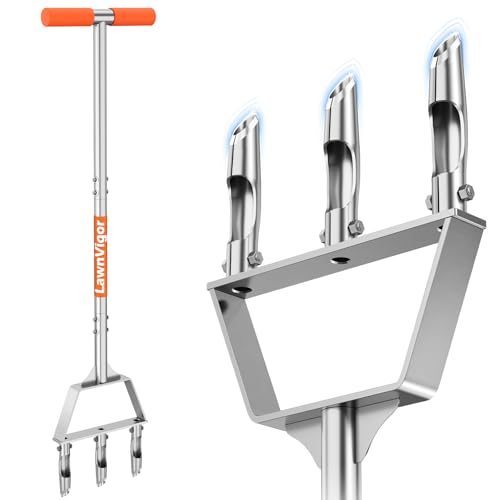
LAWN AERATOR FOR HEALTHIER LAWN GROWTH: Our manual lawn aerators promotes lush, green lawns by delivering essential air, water and nutrients deep into the soils. The lawn air aerator tool ensures healthier grass growth. (Note: Please water dry soil before use and do not rock, twist, or pry the tool side-to-side when it's in the ground.)

1.Pulls 4 Soil Cores for More Effective Lawn Aeration: Four reinforced hollow tines remove plugs from compacted ground instead of merely creating surface holes. The open channels help air, water and nutrients travel deeper into the root zone, supporting stronger roots, improved drainage and healthier grass growth.
Prepare Your Lawn for Aeration: Mow, Water, and Mark Sprinklers
If you cut the grass to 1.5‑2 inches a day or two before aerating, the tines will glide smoothly and pull clean plugs without shredding the turf. Mow to the one‑third rule, bag or compost clippings, and guarantee the surface is free of debris. Water the lawn with roughly one inch of moisture 24–48 hours prior; the soil should be damp but not saturated, allowing tines to penetrate to depth without bogging down. Mark every component of the preexisting irrigation system, valve boxes, and drainage lines with wire flags placed directly on the objects. Perform complete lawn furniture removal, including toys and garden tools, to give the aerator an uninterrupted path across the entire area. This preparation maximizes plug quality and aeration efficiency. Regular aeration also reduces soil compaction which improves root penetration. Soil testing should be performed 2‑3 weeks before aeration to confirm optimal pH and nutrient levels. Proper timing of aeration can also enhance nutrient absorption by allowing fertilizers to reach deeper soil layers. For cool‑season grasses, aim for a single aeration in early spring or fall, while warm‑season grasses benefit from twice‑yearly aeration to support vigorous root growth.
Pick Core or Spike Aeration for Your Yard
Although both methods create holes, spike aeration merely pierces the soil with solid tines while core aeration extracts cylindrical plugs, and the choice hinges on soil type, compaction level, and long‑term lawn health goals. You evaluate soil type factors first: sandy or loamy lawns tolerate spike’s shallow perforations, whereas clay or heavily compacted grounds demand core’s deeper removal of soil plugs. Aeration equipment considerations follow—spike tools are inexpensive, often a simple fork or tine bar, but they leave no voids and can increase long‑term compaction. Core machines, though pricier and bulkier, extract plugs that permanently relieve compaction and improve root penetration. For moderate to severe compaction, select core; for mild compaction on small, low‑traffic areas, spike may suffice, but avoid spike on heavy clay or thick thatch. Core aeration also reduces the need for dethatching dethatching reduction. The soil aeration benefits include enhanced nutrient absorption and stronger root systems.
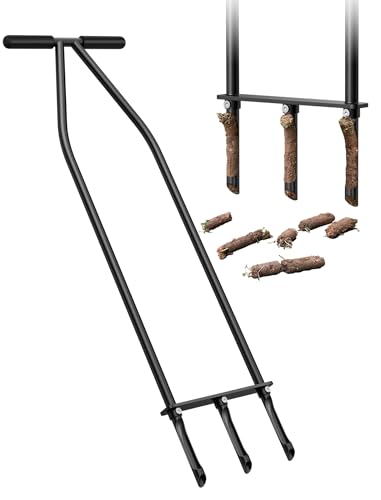
【Real Core Aerator】Our core aerator has 3 hollow tines to help loosen soil and reduce soil compaction. It can pull plugs of soil out of the ground and let air and water reach the roots for more nutrients and correct growing conditions. Kind Tip: This tool works best on moist grass.

1.Reinforced Square-Tube Step Creates a Stable Power Point: The thickened square-tube foot bar offers a firm contact surface for applying concentrated downward force. Its rigid profile helps keep the aerator steady underfoot, giving you controlled leverage when penetrating compacted soil and dense lawn areas.
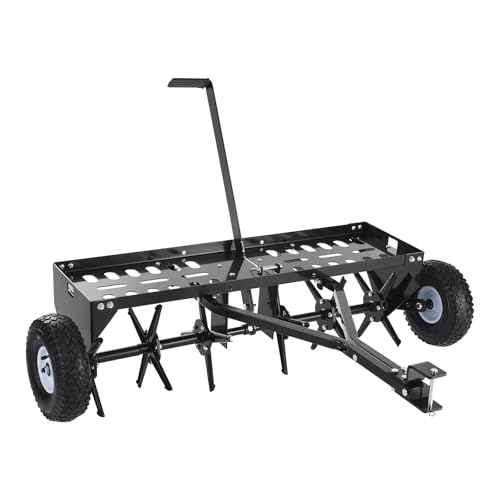
40-Inch Extra-Wide Working Width: This tow-behind core aerator features an ultra-wide 40-inch coverage, allowing you to aerate larger areas in fewer passes. Easily towed behind a lawn tractor or riding mower, it improves soil airflow and drainage to help your lawn recover faster
Aerate Your Lawn: Row Patterns, Depth, and Passes
A typical lawn aeration session uses a straight‑line row pattern spaced 4–6 inches apart, overlapping each pass by 2–3 inches to eliminate gaps, then repeats the pass at a right angle for a criss‑cross layout that guarantees full coverage. You should aim for 24‑40 holes per square foot, using hollow tines that achieve 2‑3 inch core penetration. For moderate compaction, keep rows 4‑6 inches apart; for heavy zones, tighten spacing to 2‑3 inches and add a third pass. Overlap each strip by 2‑3 inches to prevent missed spots, and include an outer edge strip for machine turns. After the criss‑cross, you can broadcast soil amendments directly into the freshly opened channels, ensuring they reach the root zone efficiently. Regular aeration creates ideal conditions for overseeding by allowing seeds to make direct contact with soil. Aeration also improves water infiltration by reducing surface runoff and allowing moisture to reach deeper root zones.

SUPERIOR HOOK-AND-LOOP FASTENERS - Our versatile lawn aerator tool feature durable, strong fasteners for a secure fit, ensuring stability during use on any surface, from lawns to epoxy floors.

【Comfortable Aerator Shoes with Thickened Metal Base】 Built with a heavy-duty 5mm metal bottom that is 70% thicker than standard models and paired with a wider footrest, our lawn aerator shoes provide superior stability and durability. They allow you to apply downward force more effectively for deeper soil penetration, making them the ideal aeration shoes for lawn care and yard maintenance.

Metal Base, Built to Last: Reinforced with a 3MM thickened metal sole that helps reduce breaking and bending issues often found in plastic alternatives. Our aerator shoes for grass maximize body weight transfer for deeper soil penetration while providing excellent stability and durability for lawn care and yard maintenance. Built as dependable yard aerator shoes, they help make regular lawn maintenance easier
Post‑Aeration Care for Your Lawn: Water, Fertilize, Overseed
After you finish the criss‑cross aeration, the next step is to water, fertilize, and overseed while the soil is still open. Begin watering immediately to saturate the top 1‑2 inches; aim for one hour per zone, adjusting for clay or sand. Keep the surface inch moist but not soaked, using morning cycles to reduce evaporation. Conduct soil moisture checks every few hours and water 2‑3 times daily (10‑20 min) until germination, then taper to 2‑3 times weekly (45‑60 min) for deep root development. Apply a starter fertilizer at the same time as overseeding, selecting a balanced formula for the first four weeks. Lightly fertilize according to the 10‑21‑day germination window, then resume regular schedules after 28 days. This regimen constitutes essential post‑aeration maintenance. Keep the seedbed damp for 28 continuous days to ensure full germination. Maintain the soil consistently moist during the early germination period to prevent the seeds from drying out. Proper timing of irrigation is critical for seed germination. Adjust watering frequency based on local climate and soil type to optimize water use.

Grows new grass 70% thicker, 35% quicker versus unfed grass

GREAT FOR SEEDING & SODDING - Veri-Green Lawn Food for Seeding & Sodding is formulated to get new grass seedlings off to a great start. It helps your lawn grow strong roots and grow faster and thicker when seeding, overseeding, and laying sod.

WHEN TO APPLY: Apply pre-emergent weed killer plus lawn fertilizer to a dry lawn when temperatures are consistently between 60°F and 90°F for best results
Lawn Aeration Troubleshooting: Compaction, Thatch, Timing
Wondering why your lawn still looks tired after aeration? If you see puddling, thin yellow patches, or a surge in weeds, compaction persists. Test soil with a screwdriver; resistance beyond a few inches signals dense layers. Heavy foot traffic, repeated mowing patterns, and clay‑rich soils exacerbate this. Address thatch by core‑aerating 2‑3 inch plugs every 2‑4 inches, then top‑dress with sand to break the organic mat. Hydrophobicity often follows thatch buildup, causing water to bead and runoff. Schedule aeration when soil is damp—24‑48 hours after rain—and avoid over‑aerating, which disrupts aggregates. High‑traffic zones may need quarterly sessions, while low‑traffic areas suffice annually. Use weed identification to differentiate stress‑induced weeds from normal species, guiding targeted control. Aeration improves soil structure which enhances root growth and nutrient uptake. Aeration also promotes improved water infiltration, helping the lawn recover more quickly after dry periods.