
You’ll save $80‑$180 per 1,000 sq ft and get deeper, drought‑resistant roots by seeding, but you must water daily, control weeds, and wait 2‑4 months for usable turf. Sod costs $300‑$800 for the same area, installs in 2‑3 weeks, and instantly protects against erosion, yet its shallow root mat limits long‑term stability and requires intense early watering. Choose seed for budget‑conscious, long‑term health, or sod for rapid coverage and erosion control—continue to identify which grass varieties and maintenance steps suit your climate.
Budget & Timeline: How Seed vs. Sod Compare
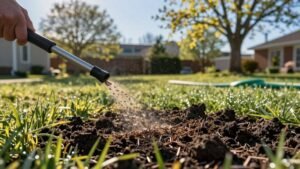
When you compare budget and timeline, seed is markedly cheaper but slower, while sod costs far more but delivers a ready‑to‑use lawn in weeks. For a 1,000‑sq‑ft plot, seed’s upfront investment ranges $80–$180, versus $300–$800 for sod. Professional seed installation adds $0.07–$0.23 per square foot, whereas sod installation costs $1.70–$2.60 per square foot, inflating sod’s upfront outlay to $1.29 per square foot on average. Seed establishment takes 2–4 months, demanding daily watering and frequent weed control, which raises ongoing maintenance costs. Sod achieves usable coverage in 2–3 weeks, requiring intensive watering only for two weeks, then moderate care, resulting in lower ongoing maintenance. The cost differential widens when scaling; seed saves thousands on large areas, but sod’s predictable, faster rollout may justify its higher upfront investment for time‑sensitive projects. Properly calculating seed quantity using a grass seed calculator ensures you purchase the right amount and avoid waste. Understanding seeding rates helps you adjust the amount of seed needed based on soil conditions and desired lawn density. Soil preparation is essential for both methods to promote healthy root development.

LAWN BARE SPOT REPAIR: Scotts PatchMaster Lawn Repair Mix Sun + Shade Mix is a combination mulch, seed, and lawn fertilizer product specifically designed to provide all-in-one bare spot repair and grass patch repair for lawns

Establishes quickly

Kentucky 31 Tall Fescue is the original turf for your home
Seed vs. Sod: Best Grass Varieties for Your Climate
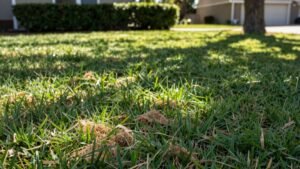
Choosing the right grass variety hinges on matching species to your climate, so you’ll want to compare cool‑season options like Kentucky Bluegrass, perennial ryegrass, tall fescue, and fine fescue for northern regions with warm‑season candidates such as bermudagrass, zoysia, centipede, St. Augustine, and bahiagrass for southern zones. In the North, Kentucky Bluegrass offers dense, self‑repairing turf and moderate disease resistance, while tall fescue adds drought tolerance and shade tolerance; fine fescue reduces mowing frequency due to its slower growth rate. In the South, bermudagrass provides superior heat tolerance and disease resistance, but requires frequent mowing to maintain ideal height; zoysia balances dense coverage with lower mowing needs, and centipede offers low‑maintenance, disease‑resistant performance on sandy soils. Understanding soil‑type compatibility helps ensure the selected blend thrives in your specific environment. Pennington Smart Seed offers region‑specific mixes that simplify selection. Selecting the appropriate grass seed also depends on soil preparation practices that promote germination and root development.
Seed vs. Sod: Which Offers Immediate Erosion Protection
If you need to stop erosion right away, sod is the clear winner because it blankets the soil instantly and its dense root mat begins anchoring the ground the moment it’s laid. Sod’s pre‑grown root network stabilizes slopes immediately, eliminating the bare‑soil exposure that seed endures. Proper anchor placement on steep grades secures the turf, preventing washout while roots mature over 2‑3 weeks. In contrast, seed leaves soil vulnerable to rain and wind; it requires erosion blankets or mulch to achieve comparable protection, and heavy storms can displace seeds, causing patchy germination. For rapid soil stabilization and long‑term lawn sustainability on erosion‑prone sites, sod delivers immediate, measurable control, whereas seed offers only delayed, conditional benefits. Always wear protective gear when handling a sod cutter to prevent injuries. Sod cutter is designed to cut clean, uniform strips of turf for efficient removal. Use a hydraulic jack to safely lift the mower before any maintenance.

Products made in the USA Since 1888!

Non-galvanized allows staple to dissolve into ground in 2-5 years; varies with soil condition.
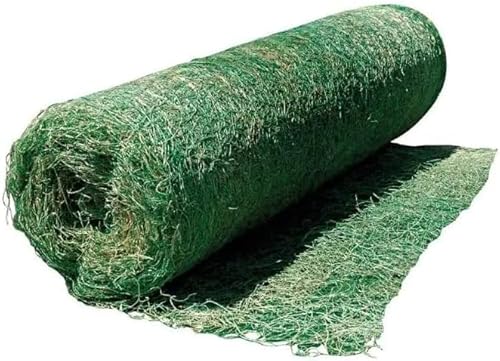
100% Biodegradable - The top of each blanket is covered with photo-degradable or biodegradable netting. The blankets are naturally seed-free and contain no chemical additives. The Dimensions of this product depending on shipping are 7.5' x 112.5'.
Seed vs. Sod: Watering & Early‑Stage Maintenance Guide
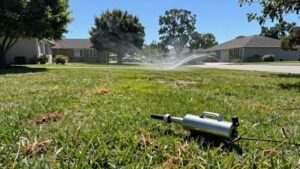
Sod still reigns supreme for immediate erosion control, but once the soil is stabilized the focus shifts to watering strategy and early‑stage maintenance. For seed, follow ideal watering schedules that keep the top 1.5 inches of soil constantly moist. Water two to four times daily for 5–10 minutes, delivering ⅛–¼ inch per day, until the seeding germination timeline reaches emergence. After sprouting, cut back to one daily session at weeks 3–4, add a second on hot days, and change to every‑other‑day 30‑minute soaks by week 5. Sod demands a sponge‑like moisture level for the first 2–3 weeks; water thoroughly each morning and repeat 1–3 times daily, checking a corner peel for soil dampness. Both methods converge to deep, infrequent irrigation once roots establish. Avoid peak sunlight hours between 10:00 a.m. and 4:00 p.m. to reduce evaporation. Maintaining soil moisture during the first two weeks is critical for seed germination. The first mower pass should wait until the grass reaches at least 2‑3 inches in height.

Effortless Watering Automation: The Orbit Mechanical Water Timer helps manage lawn and garden irrigation with a reliable mechanical water timer design and hose faucet timer control

【Easy Programming Program】Through the Sprinkler Timer to program, you can set the Start Time, Watering Duration is 1min-3h59min, Watering Frequency from 1h to 12h or 1 day to 7 days, so you can customize your watering time, and can be more accurate.

Smart Automatic Watering Control: The Orbit Programmable Digital Hose Watering Timer transforms a faucet into an automatic watering system using a reliable single outlet hose timer
Seed vs. Sod: Root Development & Long‑Term Lawn Health
When you seed a lawn, the roots grow directly from the germinating seedlings, allowing the system to develop deep, undisturbed networks that can reach several inches below the surface; in contrast, sod brings a pre‑established, shallow root mat that must penetrate the underlying soil within two to three weeks before it can access deeper moisture and nutrients. Seeded roots extend gradually, fostering superior soil adaptation and a robust tap‑root structure that enhances drought tolerance. Sod’s shallow mat establishes quickly but remains confined, limiting long‑term stability. Over a full growing season, a properly maintained seeded lawn attains disease resistance comparable to sod, as the absence of a thick thatch layer reduces pathogen habitats. Ultimately, seeded turf delivers deeper, more resilient root systems, while sod offers immediate coverage with less long‑term root depth. Successful germination also depends on soil temperatures reaching at least 50 °F for cool‑season grasses. Proper storage of seed can preserve viability for several weeks to months, especially when moisture is managed through occasional misting or protective mulch. Adding organic matter such as compost can improve water retention and provide essential nutrients for both seed and sod establishment.