
Aerate cool‑season lawns in early fall—mid‑August through mid‑October—when soil is 50‑70 °F and moist but not soggy; warm‑season lawns need aeration late spring to early summer, roughly late May to early July, with soil at 65‑75 °F and air 80‑95 °F. Water the lawn 1‑3 days beforehand so tines cut clean 0.75‑inch cores 2‑4 inches deep. After aeration, hydrate deeply, leave plugs for 10‑14 days, and test soil before chemicals. Continue for explore how to optimize post‑aeration care.
When to Aerate Cool‑Season Lawns for Maximum Growth
When should you aerate a cool‑season lawn for peak growth? Target the early‑fall window from mid‑August to mid‑October, aligning with the ideal soil temperature range of 50‑70 °F. In northern and central zones, begin in mid‑August; in southern zones, extend through mid‑October to accommodate warmer soils. Aeration during this late summer timing exploits the change from shoot to root growth, fostering deeper, stronger roots before winter. Ensure the soil is moist but not saturated—ideally a day or two after rainfall—to allow core penetration without compaction. Pair aeration with overseeding if soil temperature falls below 65 °F to maximize germination. This schedule reduces thatch, improves nutrient uptake, and prepares the lawn for vigorous spring recovery. Avoid aerating dry clay soil by waiting 1‑3 days after heavy rain. Proper timing also helps enhance water infiltration by loosening compacted soil layers. Improved root respiration further supports overall lawn health. Adjusting the spray pattern of a sprinkler head can optimize water distribution across the newly aerated area.
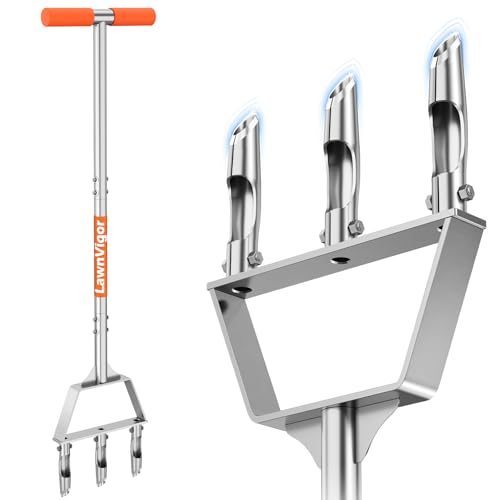
LAWN AERATOR FOR HEALTHIER LAWN GROWTH: Our manual lawn aerators promotes lush, green lawns by delivering essential air, water and nutrients deep into the soils. The lawn air aerator tool ensures healthier grass growth. (Note: Please water dry soil before use and do not rock, twist, or pry the tool side-to-side when it's in the ground.)


Adjustable Size: The 11.5* 5 inch Aerator Shoes fit for women's shoe size 6-10, men's shoe size 6-9, with 3 adjustable Velcro straps wrapped around your heel and attach with hook-and-loop fasteners, no slipping and loosing.
When Should You Aerate Warm‑Season Lawns?
Most warm‑season lawns achieve ideal aeration results when you target the late‑spring to early‑summer window, typically from late May through early July, once soil temperatures consistently sit between 65 °F and 75 °F and daytime air reaches 80 °F–95 °F. During this period, grasses such as bermudagrass, zoysiagrass, and St. Augustine are emerging from dormancy and entering vigorous root growth, which maximizes recovery and turf thickening. Adjust the timing for your specific region; Texas lawns may extend into September, while cooler zones should stay within the May‑July core. Choose fitting equipment selection—prefer a hollow‑tap or core‑drill with adjustable depth—to penetrate the compacted layer without excessive resistance. Align aeration with regional climate considerations to guarantee soil moisture is adequate and temperatures remain within the target range for greatest results. Proper aeration also enhances water infiltration and reduces soil compaction, supporting healthier root systems.

1.Reinforced Square-Tube Step Creates a Stable Power Point: The thickened square-tube foot bar offers a firm contact surface for applying concentrated downward force. Its rigid profile helps keep the aerator steady underfoot, giving you controlled leverage when penetrating compacted soil and dense lawn areas.

【Deep Core Aeration】Our 48"tow behind plug aerator uses 32 rust-proof knives to pull soil plugs,relieving compacted clay soil for healthier lawn growth.
【Deep Core Aeration】Our 48"tow behind plug aerator uses 32 rust-proof knives to pull soil plugs,relieving compacted clay soil for healthier lawn growth.
Why Soil Moisture Matters Before You Aerate
The timing you just set for warm‑season lawns only works if the soil is properly hydrated; otherwise the aerator’s tines will struggle to penetrate and the plugs will be too small or uneven. Ideal soil moisture lets the tines cut clean, 0.75‑inch‑wide cores 2–4 inches deep, creating channels that improve water, air, and nutrient flow. When soil is dry, tines bounce off, producing shallow, irregular holes that limit infiltration and encourage compaction. Conversely, if you aerate in overly saturated ground, the plugs cling to the tines, the machine stalls, and oxygen exchange drops, suffocating roots. To achieve preferred results, water the lawn 1–3 days before aeration, aiming for a moist‑but‑not‑wet profile, and always avoid wet conditions that compromise plug removal and root health. Proper aeration also enhances soil microbial activity by allowing beneficial organisms to access deeper layers. Regular aeration improves root development by reducing compaction and increasing oxygen availability. Maintaining a balanced pH level the nutrient uptake during aeration further supports a resilient lawn.
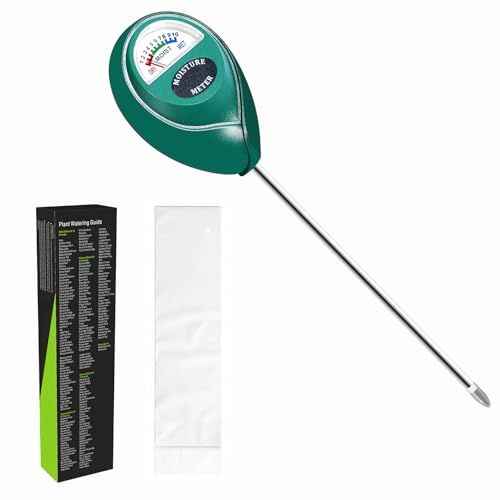
Trusted Since 2015: Become one of the many plant lovers who rely on the proven accuracy of XLUX. Established in 2015, our soil moisture meter has earned over 60,000+ verified ratings for its consistent performance. While many many newer brands come and go, we provide the long-term reliability and quality that American households have trusted for over a decade.

Kindly NOTE: This soil tester can not be applied to test pH value of any other liquid. If the soil is too dry the indicator will not move, and water it before testing.
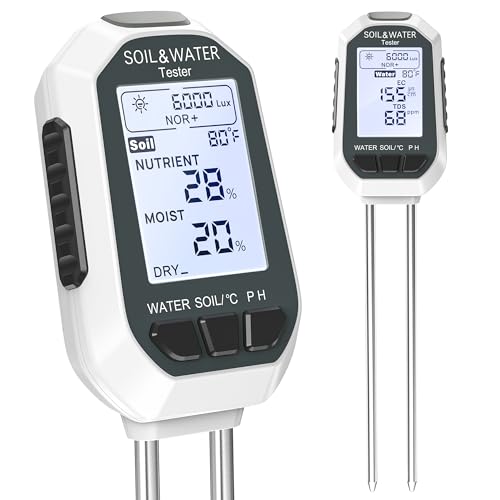
【7-in-1 Features】This is a 7-in-1 multi-function soil tester. Our soil tester quickly measures soil moisture, pH, temperature and light intensity, and its fertility function helps you take better care of your plants. With this device you can measure the soil moisture, pH, temperature and light intensity for your plants and with the EC and TDS functions you will know when it is time to water the soil.
What to Do After Aeration: Water, Break Up Plugs, Test Soil
Need you just finished aerating, your next steps are critical: hydrate the soil right away, let the plugs sit to decompose, and assess the substrate before any further treatment. Water within 48 hours, delivering enough moisture to reach at least six inches deep; apply short, frequent cycles three to four times weekly to keep the loose matrix from drying. Leave the plugs undisturbed; microorganisms will break down the debris over 10‑14 days, returning nutrients and softening thatch. Before any chemical applications, conduct a soil test to verify pH and nutrient levels, ensuring that starter fertilizer or phosphorus‑rich blends are correctly timed. Avoid raking or removing plugs, as this disrupts the natural nutrient release and can impair subsequent fertilization. Overseeding after aeration further boosts turf density and accelerates recovery. Using a garden fork can help manually loosen compacted soil in small, targeted areas. Incorporating regular soil aeration improves root penetration and overall lawn resilience.

Chapin Garden Sprayer: Complete lawn care and basic cleaning tasks faster with the 1‑gallon translucent funnel‑top tank that allows quick, easy, spill‑free refills and fluid checks
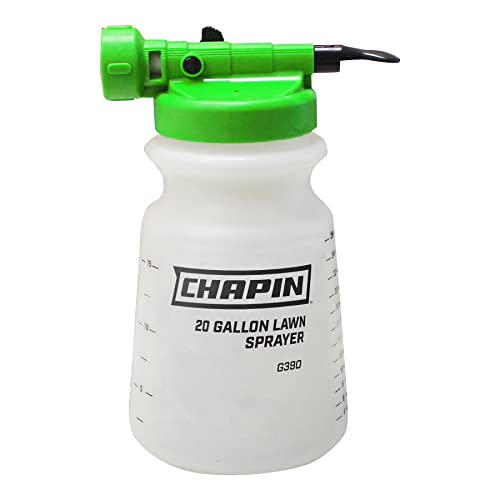
Efficient chemical coverage – 32‑ounce chemical-resistant poly concentrate tank handles water-soluble pesticides and lawn chemicals, spraying up to 20 gallons per fill l

Designed for homeowners and professionals: reduce mess and speed up lawn care with a wide‑mouth, translucent 48‑ounce tank that makes refilling and fluid‑level checks simple. The seals and gaskets work with all common lawn and garden, weeds and pest chemicals
How Frequently Should You Aerate Your Lawn?
If your lawn’s soil type, traffic load, and climate dictate the stress it endures, you’ll need to adjust aeration frequency accordingly. Heavy clay or compacted soils generally require two aeration events per year, preferably in spring and fall, while well‑drained loam or sandy soils can often be aerated once annually. High foot or pet traffic doubles the need, so a twice‑yearly schedule helps prevent thatch buildup and compaction. Regional climate matters: Texas lawns follow a bi‑annual pattern; Oregon lawns prefer a single fall treatment; Iowa cool‑season grasses benefit from September and April aeration. Older lawns with established root systems may tolerate every‑other‑year aeration, whereas younger lawns or those showing significant thatch accumulation should receive at least yearly treatment to maintain ideal drainage and root health. Aeration can be performed as often as every 3 years without harming the turf. For optimal root growth, schedule aeration during the early spring or fall when temperatures are mild. Core aerators create larger holes that improve deep soil oxygenation, which is especially beneficial for lawns with compact soil.

1.Pulls 4 Soil Cores for More Effective Lawn Aeration: Four reinforced hollow tines remove plugs from compacted ground instead of merely creating surface holes. The open channels help air, water and nutrients travel deeper into the root zone, supporting stronger roots, improved drainage and healthier grass growth.
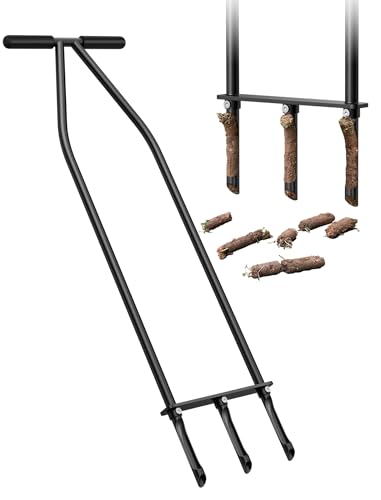
【Real Core Aerator】Our core aerator has 3 hollow tines to help loosen soil and reduce soil compaction. It can pull plugs of soil out of the ground and let air and water reach the roots for more nutrients and correct growing conditions. Kind Tip: This tool works best on moist grass.

Deeper Aeration: The lawn aerator features angled coring tines that cut through hardened soil, pulling out 3-in deep soil plugs. Wide side slots help prevent clogging. Deeper aeration delivers oxygen, water, and nutrients to the roots