
If your lawn has light, sandy soil and only mild compaction, a spike aerator will give you a quick airflow boost without major structural change. For heavy‑compaction, clay‑rich or dense soils, a core aerator is superior—its plugs create permanent channels, raising infiltration by 30‑40 % and improving oxygen and microbial health. Spike tools are easy to handle and cheap, while core machines require more effort or professional service but deliver lasting benefits. Keep going to ascertain which equipment and cost options fit your yard best.
When to Use Core vs. Spike Aerators
One key decision hinges on the soil’s compaction level: use a spike aerator for mild compaction and a core aerator for heavy compaction. When you monitor lawn condition indicators—such as surface firmness, thatch depth, and traffic density—you can match the tool to the data. Spike aerators excel on light, sandy soils and small, high‑traffic spots because they create 1–2 inch perforations without removing material, preserving surface integrity and allowing frequent use. Core aerators, by contrast, extract plugs, relieving severe compaction in clay or dense soils and delivering superior effectiveness on slopes where drainage depends on deep aeration. Choose spikes for quick, low‑impact fixes; opt for cores where heavy footfall or long‑standing compaction demands measurable, lasting improvement. Core aeration is especially beneficial for lawns with heavy thatch because the plugs act as a natural top dressing. Proper timing of aeration, such as during the growing season, maximizes soil oxygen exchange and promotes healthier root development. Aeration also enhances water infiltration by creating pathways for moisture to reach deeper root zones. Regular aeration supports soil microbial activity by allowing air and nutrients to penetrate deeper layers.
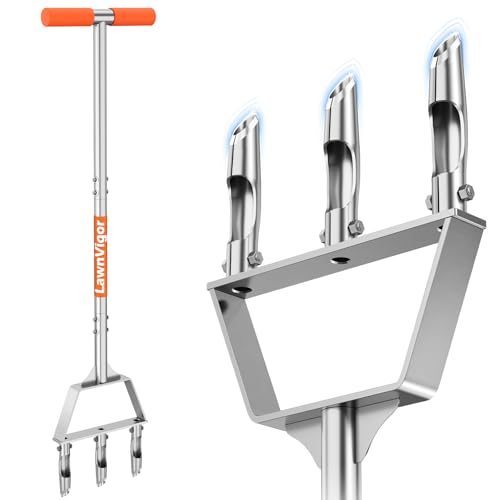
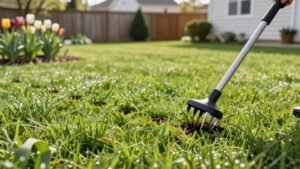
LAWN AERATOR FOR HEALTHIER LAWN GROWTH: Our manual lawn aerators promotes lush, green lawns by delivering essential air, water and nutrients deep into the soils. The lawn air aerator tool ensures healthier grass growth. (Note: Please water dry soil before use and do not rock, twist, or pry the tool side-to-side when it's in the ground.)

Deeper Aeration: The lawn aerator features angled coring tines that cut through hardened soil, pulling out 3-in deep soil plugs. Wide side slots help prevent clogging. Deeper aeration delivers oxygen, water, and nutrients to the roots

Liquid Soil Loosener: Can be used Alone or with Mechanical or Core Aeration, Aerating and Aerate Tools. Liquid Soil Loosener Conditions Compact Soil. Helps the Downward Movement of Water Allowing Vertical Drainage and Increased Water Infiltration.
How Soil Compaction & Drainage Influence Core vs. Spike Aerators
After matching your lawn’s compaction level to the appropriate aerator, the next factor to ponder is how that compaction reshapes drainage and airflow. Compacted soil cuts pore space by up to 50 %, limiting infiltration and oxygen diffusion. Core aerators eject plugs, instantly restoring channels that reduce runoff, prevent pooling, and enhance water percolation. This directly counters soil structure degradation, promoting deeper root systems and improved lawn drought resistance. Spike aerators merely compress soil around narrow holes; those voids collapse within days, offering negligible long‑term permeability gains. Consequently, in high‑compaction zones, core aeration yields measurable increases in infiltration rate (often 30‑40 % higher) and sustained oxygen supply, whereas spike aeration provides only a temporary surface relief without addressing underlying drainage deficits. Aerating before seeding also improves seed‑to‑soil contact and accelerates germination. Proper timing of aeration aligns with the lawn’s growth cycle, maximizing recovery and health. Regular aeration also supports soil microbial activity which further enhances nutrient cycling.
Core vs. Spike Aerators – Long‑Term Benefits vs. Quick Fixes
When you compare core and spike aerators, the data show that core aeration delivers lasting structural improvements while spike aeration offers only fleeting surface relief. Core plugs create permanent channels that meet soil oxygen needs, reduce deep compaction, and sustain microbial activity, leading to deeper roots and denser turf over multiple seasons. Spike holes close quickly, providing a brief airflow boost without altering bulk density, so they serve as short‑term touch‑ups in lightly compacted loam. Aerator selection metrics—soil type, compaction depth, and desired longevity—favor core methods for clay or heavy soils, where the long‑term benefits outweigh the higher upfront cost. Spike tools may be useful for quick relief on sandy soils, but they cannot replace the enduring health gains of core aeration. Core aeration also moderately thatch buildup by breaking down organic layers, enhancing soil biology. Proper timing in early spring maximizes root growth by aligning aeration with the season’s natural growth surge. Regular dethatching helps prevent excessive thatch buildup, ensuring that aeration can work more effectively.
Core & Spike Aerator Equipment – Manual, Powered, or Tractor‑Mounted
If you’re deciding between manual, powered, or tractor‑mounted aerators, the data show that manual units dominate the current market, offering concrete specifications such as 1/2‑inch‑diameter, 3‑½‑inch‑deep plugs (Yard Butler) or 5‑inch‑long tubes (Jardineer) for core aeration, and 2.8‑inch‑deep, 15‑spike configurations (JEVOR) for spike work. Manual tools deliver repeatable hole patterns that align with soil science research on root zone oxygenation, and their low price ($30‑$70) fits seasonal lawn maintenance budgets. Rolling models like the Amick Rollaerator produce 200 two‑inch‑deep holes per minute, while VEVOR’s 42‑spike drum offers robust spike penetration without cleaning. Powered and tractor‑mounted options lack published specs, implying higher cost and uncertain performance. Choose manual equipment for data‑backed, reliable aeration. Manual aerators are also preferred because they can access difficult areas where machines cannot. Proper post‑aeration watering helps the grass recover quickly. Regular aeration improves soil compaction and promotes healthier root development. For cool‑season grasses, aerating in early fall maximizes root growth.
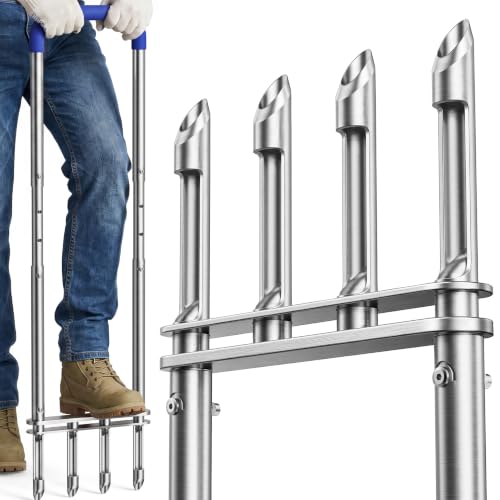
1.Adjustable Height for a More Comfortable Working Position: Extend the lawn aerator from 43.3 to 48.5 inches to match your height and preferred stance. The upright handle, open knee area and cushioned non-slip grip help make repeated lawn aeration more controlled and less demanding on your back.

Stainless Steel Coring Plugs: Our 4 core aerator plugs uses sus 304 stainless steel material that will not rust or bend out of shape. Additionally, our rod is made from high-quality solid steel with a black powder coating on the surface to ensure long-term use of the tool.

1.Pulls 4 Soil Cores for More Effective Lawn Aeration: Four reinforced hollow tines remove plugs from compacted ground instead of merely creating surface holes. The open channels help air, water and nutrients travel deeper into the root zone, supporting stronger roots, improved drainage and healthier grass growth.
Cost, Effort, and Maintenance – What to Expect for Each Aerator Type
While evaluating aerators, you’ll find that cost, effort, and maintenance differ sharply between core and spike options. Core aeration professional services average $94–$230, while spike services range $60–$225. Rental costs for a core unit sit at $97–$108 per day plus a $150 deposit; spike rentals stay under $100 per day with $75–$150 deposits. Per‑square‑foot pricing falls between $0.19 and $0.45. DIY core work demands significant strength and equipment handling, whereas spike devices require only a simple pitchfork‑like tool and multiple passes for comparable coverage. Maintenance impact favors core aeration, which removes soil plugs and cuts future upkeep, while spike aeration offers basic penetration. Over time, professional core services can save money by reducing repeat treatments. The overall expense also hinges on regional price variations that can shift the total cost by up to 30 %. Selecting the right tool depends on soil compaction level to achieve optimal lawn health. Performing aeration during the optimal seasonal window maximizes root recovery and long‑term lawn resilience.

1.Reinforced Square-Tube Step Creates a Stable Power Point: The thickened square-tube foot bar offers a firm contact surface for applying concentrated downward force. Its rigid profile helps keep the aerator steady underfoot, giving you controlled leverage when penetrating compacted soil and dense lawn areas.

【TRUE CORE AERATION FOR HEALTHIER LAWNS】This manual lawn aerator removes soil plugs to relieve compaction at the root level. By creating open channels beneath the surface, it improves airflow, water penetration, and nutrient absorption—supporting thicker and stronger grass growth over time

Revive Soil with Less Effort: The Yard Butler Manual Lawn Coring Aerator improves airflow and nutrient absorption using dual plugs and a versatile foot bar for strong leverage