
You’ll pay roughly $0.07–$0.27 per square foot or $104–$195 per job, with steep slopes, prep work, and add‑ons pushing the price up. A 1/4‑acre lawn typically costs $75–$250 for a one‑time service and $150–$500 annually if you do it twice a year. Flat‑rate pricing can be cheaper for larger properties, while square‑foot rates suit small lawns. Core, spike, and liquid aeration each have distinct price ranges, and overhead adds 13–22 % to the bill. Continue for deeper details.
How Much Does Lawn Aeration Cost?
Wondering how much lawn aeration will cost you? You’ll typically pay $107–$202 for an average yard, with regional averages ranging $104–$195. Pricing scales by size: $35–$63 for 500 sq ft., $53–$175 for 1,000 sq ft., $75–$118 for 1/8 acre, $116–$191 for 1/4 acre, and $162–$250 for 1/2 acre. Core aeration runs $94–$230, spike $62–$225, liquid $90–$145; single‑pass core $70–$125, double‑pass $95–$185. Professional services start at $90, while DIY rentals cost $100 day⁻¹ plus a $75–$150 deposit. Add mulching costs and soil amendments to the budget, as they often accompany aeration to improve nutrient distribution and lawn health. Properly timing aeration in the cool-season helps maximize root growth and nutrient uptake. Regular aeration also promotes soil aeration which reduces compaction and enhances water infiltration. Aeration performed during the optimal seasonal window yields the best long‑term turf resilience.

Boosts Lawn Condition: Punches holes and extracts soil plugs to improve air, water, and nutrient absorption

【Heavy-Duty Carbon Steel Construction】: Crafted from premium carbon steel with professional welding, this lawn aerator is built to last. The sturdy structure resists bending and breaking in dense soil. Its weighted design provides the necessary downward force, making it a reliable tool for professional-grade lawn care season after season
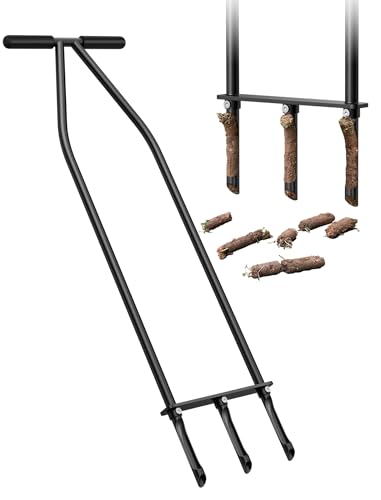
【Real Core Aerator】Our core aerator has 3 hollow tines to help loosen soil and reduce soil compaction. It can pull plugs of soil out of the ground and let air and water reach the roots for more nutrients and correct growing conditions. Kind Tip: This tool works best on moist grass.
What Pricing Model Saves You Money: Square‑Foot vs. Flat‑Rate?
You’ve seen the typical cost range for lawn aeration, now let’s compare the two pricing structures that determine those numbers. Square‑foot pricing charges $0.07–$0.27 per sq ft, making it ideal for yards under 1,000 sq ft. A 500‑sq ft lawn costs $35–$63, while a 1,000‑sq ft lawn ranges $53–$175. Flat‑rate models use size tiers; the national average is $104–$195, and a 1/8‑acre tier is $107–$202. For small properties, flat‑rate minimums often start at $97, exceeding square‑foot totals. As yard size grows, flat‑rate caps (e.g., $160–$250 for ½ acre) become cheaper than linear square‑foot scaling, which can reach $392–$550 for an acre. Choose the model that aligns with your customer expectations and pricing preferences, using the 1/8‑acre threshold as a decision point. Renting an aerator in fall can further reduce costs for small businesses. Effective budgeting helps you decide which pricing model maximizes profit while staying competitive. Proper soil aeration also improves water infiltration and root health. Improved soil structure enhances nutrient uptake and promotes a denser, greener lawn.
Core vs. Spike vs. Liquid Aeration: Lawn Aeration Cost Differences
Any lawn owner can see that core, spike, and liquid aeration differ sharply in cost structure. Core aeration typically runs $104‑$195 per professional treatment, while DIY rentals cost $97‑$108 per day and purchases start at $300. Spike aeration costs less; you can use inexpensive hand tools, and rentals are rarely needed, making it a budget‑friendly alternative for small yards. Liquid aeration offers lower upfront prices—$10‑$50 per DIY application and $20‑$60 for a sprayer—but requires 2‑4 applications annually, pushing total cost to $180‑$580. Service quality comparisons show core provides deeper soil relief, spike offers speed and repeatability, and liquid delivers quick nutrient infusion. Choose based on your budget, desired frequency, and performance expectations. Aerating in early spring maximizes root development for cool‑season grasses. Proper aeration also improves soil oxygen levels which supports healthier root growth and nutrient uptake. Hand aeration can be especially effective when using a garden fork to manually create holes in compacted soil.
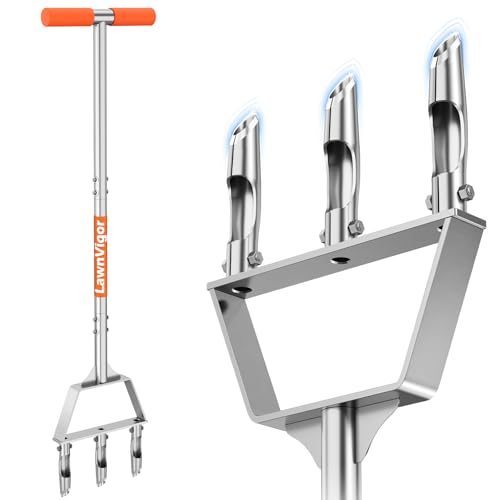
LAWN AERATOR FOR HEALTHIER LAWN GROWTH: Our manual lawn aerators promotes lush, green lawns by delivering essential air, water and nutrients deep into the soils. The lawn air aerator tool ensures healthier grass growth. (Note: Please water dry soil before use and do not rock, twist, or pry the tool side-to-side when it's in the ground.)
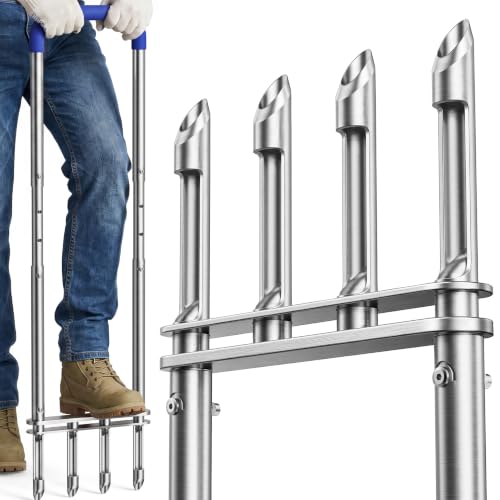
1.Adjustable Height for a More Comfortable Working Position: Extend the lawn aerator from 43.3 to 48.5 inches to match your height and preferred stance. The upright handle, open knee area and cushioned non-slip grip help make repeated lawn aeration more controlled and less demanding on your back.

EFFECTIVE LAWN REVITALIZER : Achieve optimal turf health with our rolling lawn aerator. Its effective design promotes better air circulation, water absorption, and nutrient penetration into the soil for a lush, healthy lawn.
How Slope, Prep, and Existing Services Raise Aeration Costs
A steep slope can instantly push your aeration bill upward, because professionals must spend extra time traversing the terrain and often charge hourly rates for the added difficulty. You’ll see a 20‑50 % increase over base rates, and the premium is higher for commercial vs. residential rates due to larger equipment and insurance. Contractor travel expenses also rise when the job is remote or requires multiple trips to the site. Prep work—raking, debris removal, or mowing—adds $40‑$70 per hour and typically costs an extra 1‑2 hours. Adding services such as overseeding, fertilizing, or dethatching bundles costs, raising the average from $140 to $200+. When slopes, prep, and add‑ons combine, quotes often exceed $300, with custom estimates topping $350 for complex lawns. Proper timing, such as mid‑April to early May, maximizes soil moisture and grass recovery after aeration. Aeration also improves root growth and helps the lawn better withstand drought conditions. Performing aeration during the optimal fall window further enhances recovery and long‑term lawn health.

5 Star-Shaped Penetrate Soil: Suchtale Push Spike Aerator with unique 5 steel tines star with 8” diameters, each feature 10 spike uneven tips so that can penetrate compacted soil up to 2” in depth, rotates independently, allowing water, seed, and nutrients to reach the roots. Our lawn aerators are mainly composed of strong steel tubes and sharp steel teeth, which are designed to resist bending and function effectively even in compacted soil, while also exhibiting good rust resistance.

【EFFECTIVE MANUAL LAWN AERATOR TOOL】: Walensee spike lawn aerator helps loosen soil and create small channels so air, water, and nutrients can reach grass roots more easily. It is a practical lawn care tool for preparing small lawn areas before seeding, watering, or fertilizing, helping your yard, garden, or patio lawn stay greener and better maintained.
What Drives Regional Lawn Aeration Cost Differences?
Why do prices for lawn aeration vary so dramatically across the country? Labor force availability drives the biggest swing: urban regions with higher wages and tighter labor pools, as in New York, push fees to $133–$255, while Southeast markets with abundant, lower‑cost workers keep rates near $97–$180. Market competition also reshapes pricing; dense competition in Atlanta depresses costs, whereas limited providers in Seattle raise them to $123–$235. Equipment scarcity adds another layer—rural areas that must rent core machines see higher charges, while zones with abundant gear can offer spike or liquid options at $60–$225. Soil type and local regulations further tailor expenses, but the core determinants remain labor force availability and market competition. Proper timing of aeration, such as spring aeration, maximizes root growth and soil aeration. Aerating when soil temperature reaches 50–65 °F ensures optimal grass recovery. Aeration improves nutrient uptake by allowing water and fertilizer to penetrate deeper into the soil.
How Much Does Aeration Cost in the Northeast, Southeast, Midwest, Northwest, and Southwest?
Across the United States, aeration costs vary by region, reflecting labor wages, competition, and local soil conditions. In the Northeast, expect $107‑$255, with Boston and New York at the high end due to elevated labor rates. The Southeast offers the most competitive range, $94‑$180, as seen in Orlando and Dothan. Midwest prices sit between, $106‑$228, with Chicago and South Bend reflecting moderate labor costs. The Northwest aligns with national averages, $99‑$194, while terrain and lawn condition considerations influence pricing in Salem and Missoula. Southwest rates are $101‑$209, with Phoenix and Las Vegas showing slight premium for desert or high‑altitude lawns. Across all regions, variable service factors—soil compaction, lawn size, and equipment type—adjust the final quote. Core aerators create larger holes that improve root growth and water infiltration. Choosing the right tool can also depend on whether you need to address soil compaction or simply prepare a seedbed. Proper timing of aeration can enhance grass recovery and reduce weed invasion.
What’s the Cost Difference Between One‑Time, Annual, and Bi‑Annual Aeration?
One‑time aeration typically costs $75‑$250 for a ¼‑acre yard, while an annual plan—usually two services—rises to $150‑$500 total, and a bi‑annual schedule doubles the visits, pushing the bill to $200‑$1,000 depending on lawn size. A single service saves 40‑50 % versus annual, but you for one‑time soil relief. Annual aeration spreads the expense across two visits, averaging $268 nationally, and adds value through repeated compaction reduction. Bi‑annual work roughly doubles the cost of annual, ranging $200‑$500 for a ¼‑acre and $600‑$1,000 for larger yards, though multi‑visit discounts can narrow the gap. DIY aeration challenges—equipment rental, labor intensity, and inconsistent penetration—often push homeowners toward professional plans. Align the schedule with Average household budgets for aeration to avoid overspending while maintaining lawn health. Properly using a hand aerator can achieve sufficient soil penetration when machine access is limited. Assessing soil thickness helps determine if dethatching is needed before aeration.

1.Pulls 4 Soil Cores for More Effective Lawn Aeration: Four reinforced hollow tines remove plugs from compacted ground instead of merely creating surface holes. The open channels help air, water and nutrients travel deeper into the root zone, supporting stronger roots, improved drainage and healthier grass growth.

Efficient 16 Sharp Spikes Lawn Aerator: Grenebo Yard aerator features 16 sharp spikes in a stable 4×4 layout, creating more holes per step to save time and effort. The manual lawn aerator has 3.1-inch spikes that provide deep soil penetration, helping you achieve a lush, healthy lawn.

Perfect for Small Yards & Targeted Spot Aeration: Designed specifically for small lawns, lawn edges, garden borders, and tight areas, this four-row spike lawn aerator is ideal for spot aeration, overseeding, reseeding, lawn repair, and precise soil preparation without disturbing large lawn sections.
Why Do Contractors Add 13‑22 % Overhead to Your Aeration Bill?
Because landscaping firms must cover a range of indirect expenses that don’t appear on a line‑item invoice, they typically tack a 13‑22 % overhead surcharge onto your aeration bill. This overhead markup justification reflects industry benchmarks of 20‑35 % total overhead, with 13‑22 % as a conservative slice integrated into each bid. Overhead expense components include non‑billable labor (8‑12 %), office rent and utilities (3‑5 %), insurance and licensing (2‑4 %), vehicle and equipment costs (5‑10 %), and software or administrative subscriptions (1‑3 %). By allocating these costs per billable hour, contractors protect profit margins, cover admin salaries, equipment maintenance, and prevent revenue lag from unaccounted expenses, ensuring sustainable pricing for your project. Total billable hours are used to spread the overhead cost across all employees.
How Do Multi‑Acre Jobs Get Bulk Discounts on Lawn Aeration?
When you schedule aeration for more than one acre, contractors typically apply bulk discounts that shrink the per‑acre price by 15‑30 % and cut travel and equipment overhead by up to 25 %. Bulk pricing works by flattening the per‑acre rate—core aeration drops from $700 to roughly $490‑$595, while spike or liquid options fall even further. Job scheduling across adjacent lots lets crews avoid repeated mobilizations, achieving travel overhead reduction of about 25 % and equipment‑rental savings near 20 %. Contractors often lock in a flat fee per 1,000 sq ft, turning a $15‑$18 charge into $10‑$13 for multi‑acre projects. Always ask for the bulk rate when your property exceeds one acre to capture these efficiencies.

Maintaining Lawn Health: This rolling aerator lawn tool effectively addresses soil compaction and promotes lawn root growth. This manual lawn aerator penetrates and loosens the soil. This will help break down thatch and improve the flow of air, water and nutrients to your lawn's roots. The end result is a fertile, beautiful and healthy lawn. The core aerator is also ideal for a variety of soils
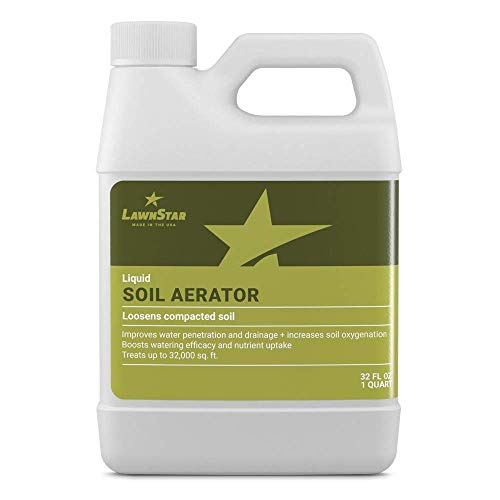
EASY-TO-USE ALTERNATIVE: Tired of mechanical aeration? So were we. Our liquid soil loosener takes all of the stress for you and provides a cost efficient alternative to core and mechanical aeration.

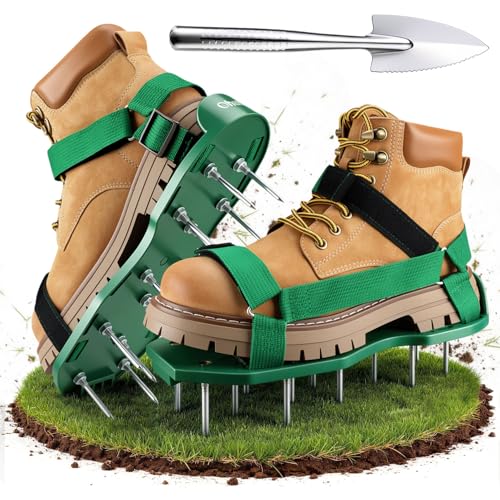
🌱【Preparation Before Lawn Aeration】Before using the lawn aerator, mow the grass to an appropriate height and check the soil moisture. If the soil is dry and compacted, water it 1-2 days in advance to soften it, as hard soil will make penetration difficult. If the soil is overly wet and muddy, wait a few days until the moisture level is moderate. The ideal soil condition should be moist and loose , allowing the aerator to penetrate smoothly for optimal results.
How Adding Seeding Affects Your Lawn Aeration Cost?
Bulk discounts shrink the per‑acre price, but adding seeding to an aeration job pushes the cost up because the service now includes seed, starter fertilizer, and extra labor. A combined aeration‑and‑seeding package typically runs $50–$60 per 1,000 sq ft, versus $25 for aeration alone, so a 10,000‑sq ft lawn jumps from $250 to $500‑$600. Professional crews bundle slit seeding and fertilizer, reducing material waste and guaranteeing germination, which improves the return on investment of professional vs. DIY lawn aeration. DIY you’d rent an aerator ($97‑$108/day) and buy a spreader ($50‑$100), then spend extra time applying seed and fertilizer. Routine annual aeration, with or without seeding, maintains soil structure, enhances root depth, and prevents compaction, delivering long‑term health benefits that justify the higher upfront cost.