
You’ll get a denser, more resilient lawn by matching the seed type to your climate and equipment. Coated seed’s moisture‑retaining, pathogen‑blocking layer shines in harsh, variable conditions, but its inert filler cuts viable seed content and can delay germination, so you must adjust spreader settings and expect slower emergence. Uncoated seed delivers nearly 100 % viable seed, spreads evenly, and germinates faster in stable, well‑managed soils, though it needs more irrigation and protection from birds. If you keep going, you’ll uncover how to fine‑tune rates, costs, and equipment for each option.
Coated vs Uncoated Grass Seed: Key Differences
Most gardeners notice that coated grass seed looks larger and feels heavier than its uncoated counterpart, and the difference isn’t just cosmetic. The coating adds 30‑50 % weight, so a 10‑lb bag contains only 5‑7 lb of viable seed. That reduction cuts coverage per pound in half, forcing you to adjust the proper seed quantity to achieve the same lawn density. However, the protective layer retains moisture, shields against birds and pathogens, and often includes a fungicide that boosts seed germination efficiency, especially in poor soils. Uncoated seed delivers nearly 100 % seed content, letting you spread more seeds per pound and fine‑tune planting rates without equipment recalibration. Choose coated seed for challenging sites; pick uncoated when you can control moisture and need maximum coverage per dollar. The coating may delay germination because it must break down before the seed can sprout. Proper soil pH and nutrient balance also significantly accelerate germination when using coated seed. Maintaining the optimal temperature range during germination further improves success rates. Seed viability can persist for several weeks without water if stored under cool, humid‑controlled conditions.

Grows new grass 70% thicker, 35% quicker versus unfed grass

Sun and shade grass seed for use in full sun to medium-shaded areas

Kentucky 31 Tall Fescue is the original turf for your home
How Coating Ingredients Influence Germination?
Coating ingredients act like a micro‑environment that directly governs seed hydration, nutrient availability, and pathogen protection, shaping germination speed and uniformity. Super‑hydrating polymers and the HydraLoc component create moisture retention benefits by wicking water through capillary action, keeping the seed coat supple and delivering concentrated micronutrients. Nitro‑Coat® balances hydrophilic and hydrophobic phases, absorbing rain while preventing premature sprouting, which introduces germination timing tradeoffs—delayed emergence is more moisture events are brief. Biological inoculants such as Myco Seed Treat and Rhizobium add nitrogen‑fixing microbes protected by calcium carbonate, fostering root development once the coating dissolves. Integrated fungicide carriers extend disease protection, while uniform hygroscopic layers facilitate consistent germination across the lawn, achieving >85 % emergence under favorable conditions. A simple paper towel germination test can verify seed viability before planting, and the results help decide whether to discard old seed or proceed with sowing. Applying a thin peat moss layer of ¼ to ½ inch over the seeded area can further improve moisture retention and protect the coating during early growth.
When Coated Seed Helps in Tough Conditions?
When you plant coated seed in arid or variable climates, the moisture‑retentive clay layer acts like a wick, pulling and holding water long enough for the embryo to stay hydrated and germinate. This moisture retention strategy lets you reduce irrigation frequency while still achieving reliable emergence. In harsh winter‑spring zones, the coating buffers temperature swings, keeping seedlings moist during sudden thaws or freezes. Fungicide additives protect against pythium and phytophthora, lowering loss rates when wet conditions favor pathogens. The nutrient‑rich coating supplies early nitrogen and phosphorus, delivering soil fertility enhancement where native fertility is low. Additionally, the heavier seed improves seed‑to‑soil contact, ensuring consistent placement even with suboptimal equipment. Together, these mechanisms make coated seed a practical choice for tough environments. Proper seed depth is essential for optimal germination, and using a seed drill can help achieve uniform placement. Understanding seed‑to‑soil contact helps maximize germination success.
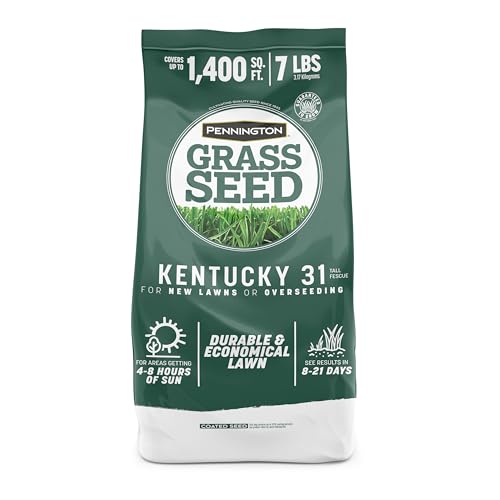
A grass seed for lawns that grows thick blades of grass that stand up to hot summers and heavy rains
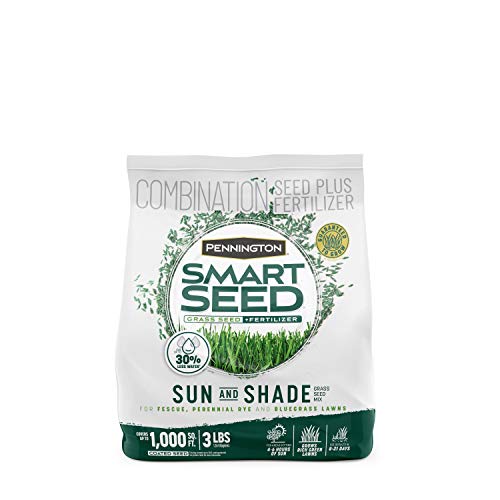
This grass seed and fertilizer all in one pack is for areas getting 4 to 6 hours of sunlight
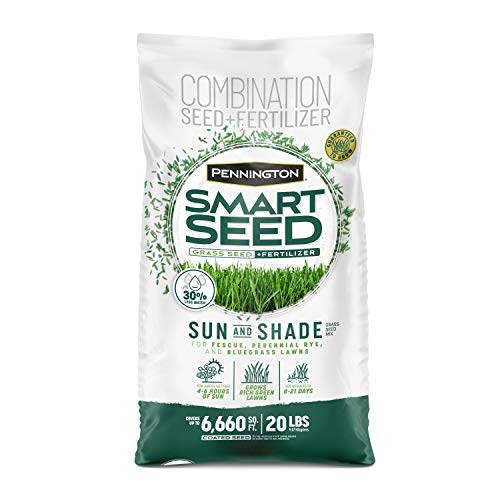
This grass seed and fertilizer all in one pack is for areas getting 4 to 6 hours of sunlight
When Pure Uncoated Seed Outperforms Coated?
Even though coatings help in harsh climates, pure uncoated seed often beats it under stable, well‑managed conditions. You’ll find that uncoated seed delivers almost 100 % pure seed per bag, while coated varieties contain 50 % or more inert filler. This purity translates into lower economic factors: you spend the same price for half the viable seed with coated products, so you must double the seeding rate to match pure seed density. In addition, the smaller, lighter uncoated particles spread more evenly, reducing waste and improving germination time in consistently moist soil. Without synthetic polymers, the seed relies on its own vigor, which speeds emergence and supports organic certification. When moisture, pest pressure, and soil quality are controlled, the uncoated option provides faster, more cost‑effective lawn establishment. Coated seed often contains up to 50 % inert matter, reducing the proportion of live seed. The presence of essential micronutrients in uncoated seed can further enhance early root development. Properly securing the jumper cables in the correct order helps prevent accidental sparks during battery maintenance.

SPREADER APPLICATION RATE: Use a grass seed spreader to apply grass seeds at a rate of 4.6 lbs. seed/1,000 sq. ft. when establishing a new lawn and 2.3 lbs. seed/1,000 sq. ft. when overseeding an existing lawn
SPREADER APPLICATION RATE: Use a grass seed spreader to apply these tall fescue grass seeds at a rate of 8 lbs. seed/1,000 sq. ft. when establishing a new lawn and 4 lbs. seed/1,000 sq. ft. when overseeding an existing tall fescue lawn
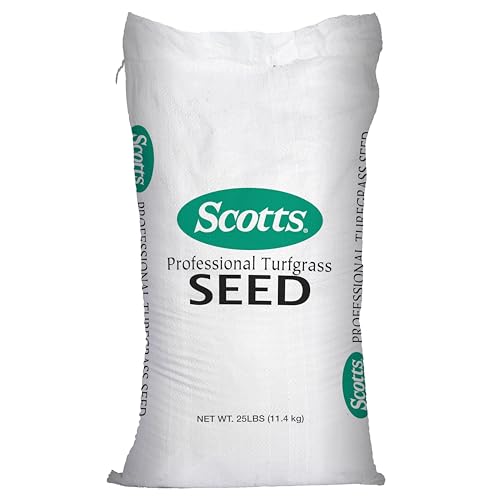
FOR BERMUDAGRASS LAWNS: Scotts Professional Turfgrass Seed Bermudagrass grows to fill in bare spots, creates a durable lawn, thrives in full sun, and stands up to scorching heat and drought
Equipment Settings to Adjust for Coated Seed?
A handful of adjustments are essential when you switch from uncoated to coated grass seed. because coated granules are bulkier and absorb water, the spreader’s numeric settings must be increased—typically by one to two units above the uncoated recommendation—to deliver the same seed‑per‑square‑foot rate. Begin by calculating the 100‑sq‑ft amount: divide 100 by the bag’s coverage, multiply by bag weight, then load that mass into the spreader. Mark a 10 × 10 ft test zone, run a pass, and check for gaps. If coverage is uneven, adjust spreader settings upward in small increments. Use coated seed application techniques such as a criss‑cross broadcast pattern, walking slowly, and limiting the coat depth to 1/8 inch. Re‑calibrate for each model—Scotts broadcast, Earthway Tuff Play, or EasyGreen—following the manufacturer’s coated‑seed guidelines. Overseeding improves lawn health and promotes thicker, greener grass. Proper storage of coated seed can prevent degradation and maintain germination rates. Ensuring adequate soil moisture is critical for germination in sandy soils.

OPERATION: Adjustable arm support on this seed, salt and fertilizer spreader helps provide maximum comfort

NO ASSEMBLY REQUIRED: Scotts spreader comes pre-calibrated and ready-to-use with a fold-down handle for easy storage; use it year-round including as an ice melt spreader or salt spreader for snow

64-OUNCE BOTTLE: high-capacity poly bottle with a wide opening and easy screw top, quickly remove the lid to add your preferred seed, salt, fertilizer, etc. and simply screw back into place
Calculating True Seeding Rates for Each Seed Type
Calculating the true seeding rate for each seed type means converting the bag’s labeled coverage into the actual amount of viable seed you’ll plant. First, determine the Pure Live Seed (PLS) percentage by multiplying the pure‑seed fraction by the germination rate. An uncoated tall fescue bag with 96.84 % pure seed and 85 % germination yields roughly 82 % PLS, whereas a coated bag at 51.32 % pure seed drops below 44 % PLS. Next, adjust the label’s coverage (e.g., 5,000 sq ft per 12‑lb bag) by the PLS factor to guarantee the true coverage. For overseeding requirements, apply the same reduction; a 1,000‑sq ft patch may need twice as many coated bags. Include seeding time considerations—early spring or fall—because germination rates can shift, affecting the final viable seed count. This method ensures you purchase the correct bag quantity for both initial planting and overseeding. A visual reference to grass seed appearance can help confirm you are using the right seed type. Understanding zone requirements helps match seed varieties to your local climate.
Grass Seed Cost‑Per‑Pure‑Seed Value: What to Expect?
When you compare seed prices, the real metric to watch is cost per pure‑live seed (PLS), because a $5‑per‑pound bag that’s only 50 % viable costs twice as much per usable pound as a $7‑per‑pound bag that’s 90 % pure. Calculate seed cost percentage by converting the PLS percentage to a decimal and multiplying by the listed price per pound. For tall fescue at $3 / lb with 70 % purity, the PLS cost is $2.10 / lb. Apply the seeding‑rate formula (percentage × rate) to determine lbs / acre of live seed, then divide the total cost by that amount for pure live seed pricing. This method lets you compare Kentucky bluegrass at $12 / lb, 85 % purity, to Zoysiagrass at $30 / lb, 60 % purity, and choose the most economical option for your lawn. The high price of premium genetics is driven by intensive breeding and rigorous testing for purity and germination rates. Understanding the naturalPoll where grass species evolve helps explain why certain seeds thrive in specific climates, seed origin can be a key factor in selecting the right variety. Proper soil preparation, including pH balancing, maximizes germination success.
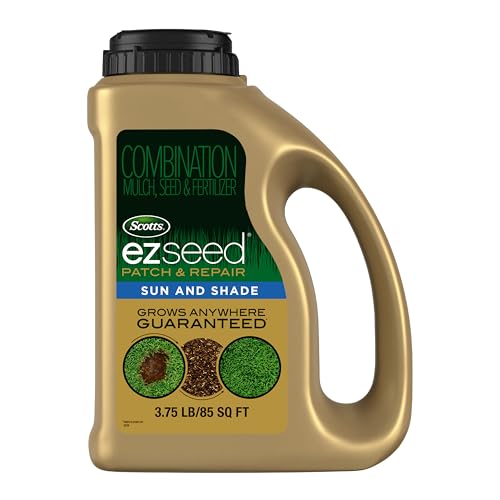
WHEN TO APPLY : This lawn seed mix of Kentucky bluegrass seed, perennial ryegrass, and fine fescue grass seed germinates best when daytime temperatures are between 60°F and 80°F with no danger of frost

LAWN BARE SPOT REPAIR: Scotts PatchMaster Lawn Repair Mix Sun + Shade Mix is a combination mulch, seed, and lawn fertilizer product specifically designed to provide all-in-one bare spot repair and grass patch repair for lawns

Establishes quickly
Checklist: Choose Coated or Uncoated for Your Lawn?
Weighing the pros and cons of coated versus uncoated grass seed helps you match the product to your lawn’s specific conditions. First, assess moisture availability; if irrigation is irregular, coated seed’s wick‑like layer improves retention and boosts germination rates. Next, evaluate soil texture and seed‑to‑soil contact—coated varieties compensate for suboptimal seed conditions, while uncoated seed thrives under ideal soil conditions with consistent moisture. Check pest deterrent factors: coated seed includes bird‑repellent and rodent‑deterring compounds, reducing predation, whereas uncoated seed lacks these safeguards. Finally, consider equipment calibration—coated seed weighs about one‑third more, so adjust flow rates to avoid over‑seeding. Use this checklist to align seed type with your lawn’s climate, soil, and wildlife pressures. Over‑fertilizing can cause nutrient burn and brown patches, which may be confused with seed‑related issues. Proper storage in a cool, dry place can extend seed viability for up to five years. Understanding optimal watering frequency helps ensure that both coated and uncoated seeds receive the right amount of moisture for successful germination.