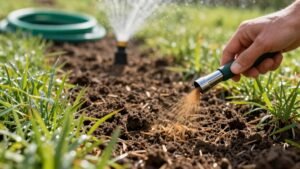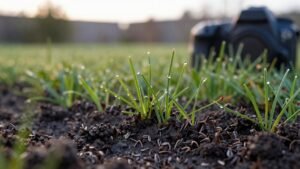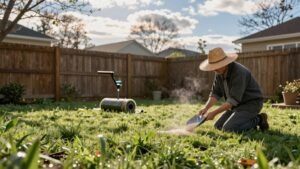

You should seed Zoysia in late spring to early summer, right after the last frost, once daily temperatures stay consistently above 65 °F (ideally 65‑72 °F). Aim for at least three to four hours of daily sunlight and verify the soil moisture is adequate but not waterlogged. In USDA zones 5b‑11a this window runs roughly April‑June, with regional variations. Prepare a firm seedbed, adjust pH to 6‑7, and use a calibrated spreader for even coverage. If you follow these steps, the next sections will show you how to fine‑tune watering, mowing, and weed control for a thriving lawn.
Determine Your Optimal Zoysia Seeding Window
When should you plant Zoysia? Aim for late spring to early summer, after the last frost and when soil consistently exceeds 65 °F. In USDA zones 5b‑11a, this window runs roughly April‑June, with regional tweaks: Arkansas favors May 15‑July 1, while southern Illinois targets June 18‑July 1 for 90 % cover by October. Choose Zoysia seeding techniques that match your climate; early‑season seeding maximizes warm days before winter, reducing competition from bluegrass and weeds. If you prefer Zoysia propagation options, consider sod or plugs in cooler zones, but seed only when temperatures stay above 60 °F for at least 60 days before the first frost. This timing guarantees rapid germination, robust root development, and ideal winter survival. Proper soil preparation, including soil testing and amendment, further enhances seed‑to‑grass conversion rates. Selecting a high‑quality seed blend can improve germination rate and overall lawn density. Applying a thin layer of peat moss over the seed helps retain moisture and protect seedlings.
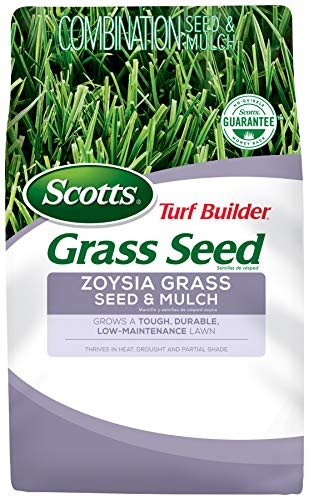
Zoysia grass seed & mulch is designed for full sun and light shade

Premium Zoysia Emerald Grass Variety: Produces a dense, fine-bladed turf with a rich green color and soft texture. Ideal for creating a luxurious, carpet-like lawn that is visually appealing and comfortable underfoot.

WHERE TO USE: This zoysia grass seed mix is guaranteed to grow in tough conditions with proper care, including in full sun and partial shade, in heat and drought, in high traffic areas, and even on slopes
Check Zoysia Soil Temperature and Moisture Before Planting
After pinpointing your ideal seeding window, verify that the soil temperature and moisture meet Zoysia’s requirements before you sow. Use a garden‑center soil thermometer, insert it at planting depth, and confirm the reading stays above 60 °F; guarantee germination occurs between 65 °F and 70 °F. Check the same spot after irrigation to ascertain the soil holds moisture without waterlogging—sufficient dampness promotes seed‑soil contact and root development. Record these measurements as part of your soil testing requirements, then compare them against seasonal timing considerations. If temperatures lag or the soil dries out, postpone seeding until mid‑spring or early summer when thresholds are reliably met, avoiding the risks of delayed rooting or winterkill. Optimal seed‑to‑soil depth varies by grass type, with most cool‑season grasses thriving at ¼‑½ inch and warm‑season varieties like Zoysia preferring ¼‑⅜ inch. Maintaining soil temperature within the ideal germination range accelerates root emergence and improves overall lawn vigor. Conduct a simple paper towel germination test to confirm seed viability before planting.
Prepare the Site, Raise Temperature, and Adjust pH for Zoysia
If you clear the seedbed, amend drainage, and verify at least three to four hours of daily sunlight, you’ll set the stage for Zoysia to germinate quickly once soil temperatures reach 65‑72 °F. Till the soil to achieve firm seed‑soil contact, then add a soil amendment such as a garden‑landscape mix to improve texture and confirm proper drainage. Remove weeds, debris, and thatched material before planting, and aerate in late spring to boost water and nutrient flow. Plant after the final frost when daily highs stay in the 70s and soil temperature consistently reads 65‑72 °F. Test the pH; if it falls below 6.0, apply lime, and if above 7.0, use sulfur. Adjusting pH to the 6‑7 range maximizes Zoysia establishment. Proper aeration also soilcompaction and enhances water and nutrient absorption, supporting healthier root growth. Incorporating timed irrigation after seeding helps maintain consistent moisture for optimal germination. For most cool‑season grasses, seed should be placed at a depth of ¼‑½ inch to ensure adequate contact with soil and moisture.

Includes 20000 seeds for medium lawn coverage

Thrives in full sun and performs well with partial sun in warm growing

You will receive 80000 Zoysia grass seeds, ideal for covering small to medium garden areas
Select the Proper Zoysia Seeding Rate and Planting Method
How much seed should you spread and which method will give the most uniform stand? For a new lawn, aim for 1–2 lbs pure live seed (PLS) per 1,000 sq ft; coated seed needs 2–3 lbs for the same area. Calculate PLS by multiplying germination percent by purity; chemically scarified seed can exceed 90 % germination, so 1 lb of Zenith Zoysia yields good coverage in 2–3 months. If rapid establishment isn’t critical, reduce to 0.5 lb PLS per 1,000 sq ft to cut costs. Use a calibrated broadcast spreader for even distribution, then lightly roll to press seed into soil without covering. For thin spots, perform overseeding preparation with a 5‑lb bag covering 665 sq ft, ensuring seed storage quality remains high until planting. Store seed in a cool, dry environment to preserve viability. Proper soil preparation enhances germination and leads to a denser, more resilient lawn. Including protein in the seed composition supports early root development and overall vigor.

Dark green blades with a medium texture
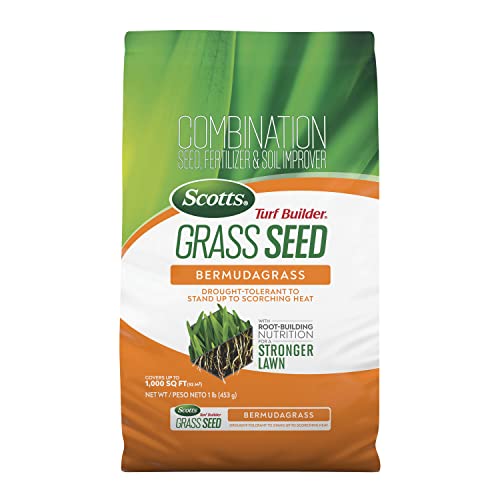
The redesigned Scotts Turf Builder Grass Seed Bermudagrass is drought-tolerant to stand up to scorching heat and features Root-Building Nutrition for a stronger lawn
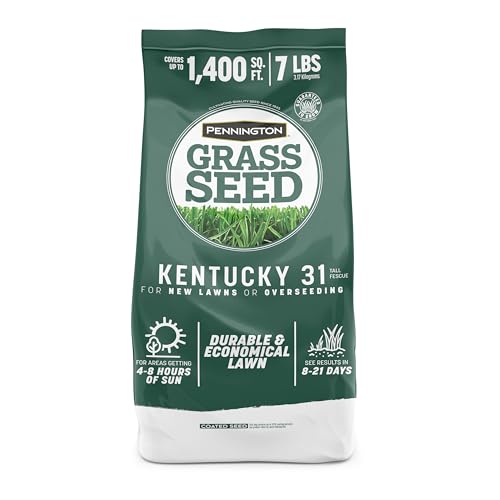
A grass seed for lawns that grows thick blades of grass that stand up to hot summers and heavy rains
Water Zoysia to Maintain Moisture During Germination
Consistently keeping the soil surface moist is the single most critical factor for successful Zoysia germination. You should water lightly 2–3 times daily during the first three weeks, aiming for a five‑minute application that wets the top three inches without runoff. In hot weather increase the water schedule adjustment to 3–4 times daily, still using short bursts to avoid soggy conditions. Maintain consistent soil moisture for the first 14 days, then continue light watering until seedlings appear. Early‑morning applications minimize evaporation and fungal risk; avoid late‑afternoon watering. Once seedlings emerge, reduce frequency to once daily, keeping the top layer moist through weeks 4–12. This regimen guarantees a steady moisture level while preventing overwatering. Light frequent watering helps keep the soil consistently moist without saturating it. Proper post‑mowing watering also reduces stress on the grass, supporting faster recovery. Adjust watering frequency based on soil type to avoid under‑ or over‑watering.
Mow, Fertilize, and Control Weeds for Early‑Season Zoysia
When spring arrives and your Zoysia first turns green, you should mow it low—using a rotary or reel mower set to 0.5–1.5 inches—to remove dormant tissue and reduce thatch, then bag the clippings to prevent disease. After the buzz‑cut, raise the height to the same 0.5–1.5‑inch range and mow regularly, never cutting more than one‑third of the leaf blade at once. Delay nitrogen fertilization until the lawn shows no circular tan patches; a light spring feeding supports recovery as temperatures rise. Apply thatch removal techniques, such as raking or core aeration, to keep the thatch layer under half an inch, which aids disease prevention. Keep the mower dry, avoid mowing wet grass, and monitor for early‑season weeds, treating them promptly with pre‑emergent herbicides if needed. Frequent mowing helps prevent the turfgrass from becoming too tall. Understanding grass growth cycles ensures you time mowing and fertilizing for optimal health. Mowing at the optimal growth interval reduces stress and promotes a denser, more resilient lawn. Follow the cutting height guideline to maintain vigorous growth throughout the season.

Hand-push reel mower with 16" cutting width, 7-blade ball bearing reel, and 10" composite wheels; Durable steel side plate design
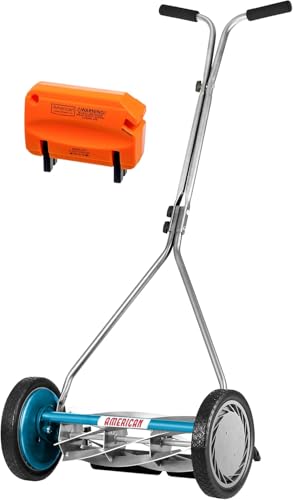
Precision 7-Blade Reel: Designed for fine-textured grasses like Bentgrass, Bermuda, and Zoysia for a clean, professional-quality cut.

The 16-inch cutting width and 7-blade reel deliver a clean, precise cut for a well-maintained lawn
Troubleshoot Common Zoysia Seeding Problems
Seed your Zoysia carefully, because dormancy, timing, weeds, shade, and disease can all sabotage establishment. If you notice low emergence, test seed quality; untreated seed often stays dormant, yielding under 10 % germination. Treat seeds with a potassium‑hydroxide scarification to push rates to 90 %. Plant after May 15 when soil and air are warm enough; early sowing invites bluegrass competition, while late summer leaves little cover before frost. Control perennial weeds before renovation and suppress summer annuals afterward—unchecked weeds consistently cut seedling vigor. Avoid shaded spots; germination drops sharply at 60 % solar irradiance because cooler soils stunt growth. Monitor for brown patch and leaf spot, especially after heavy spring nitrogen, and maintain disease resistance by limiting thatch and applying balanced fertilization. Keep seed moisture above critical threshold during storage to preserve viability. For an inexpensive, natural weed control option, consider using vinegar to target unwanted seedlings without harming the Zoysia.