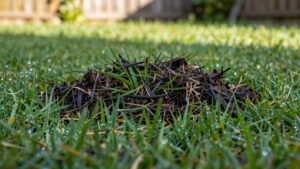

First, test the soil’s compaction and nutrient levels, then clear debris and rake to a uniform 4‑6‑inch depth. Aerate the compacted ground, pulling out 2‑3‑inch plugs, and till until the texture is powdery. Mix in 1‑2 inches of compost (20‑30% of the volume) and sprinkle starter fertilizer, working it into the topsoil. Spread seed evenly with a criss‑cross pattern, lightly rake, and apply a ¼‑inch mulch layer. Moisten the top inch, mist the seeds, and water lightly 2‑3 times daily for two weeks, then shift to deeper, less frequent watering as roots establish. Continue for to uncover the next steps.
Check Soil Compaction and Nutrient Levels Before Seeding
Before you spread seed, make sure the soil isn’t compacted and that nutrients can reach the roots; a quick probe test—pushing a wire flag into moist ground until it bends—will tell you if you can reach at least 12 inches, indicating a healthy, aerated profile. You then verify the soil profile with a penetrometer, noting depth at 300 psi; deeper readings confirm low compaction. Complement this with field density checks—sand‑cone or nuclear gauge—to calculate percent compaction against Proctor MDD. Once structural integrity is assured, conduct a nutrient analysis to spot deficiencies. Balanced nitrogen, phosphorus, and potassium levels are essential for root proliferation; amend with organic compost or targeted fertilizers to restore fertility before seeding. Proper aeration also enhances water infiltration and reduces surface runoff, creating a more resilient lawn. Aeration improves soil health by increasing oxygen availability for root systems.
Remove Debris and Level the Ground for Proper Drainage
First, clear away any surface debris, weeds, or lingering grass roots—raking, hand‑spading, or using a sod cutter will leave a clean canvas and prevent unwanted regrowth. Water the area a few days before removal to soften hard soil, then dig out stubborn roots with a sharp spade or sod cutter, hauling the material away in a wheelbarrow. After debris removal, rake the soil to a uniform depth of four to six inches, then make a second pass at two to three inches to avoid surfacing dormant weed seeds. Use a lawn‑leveling tool to smooth undulations, distributing roughly one inch of topsoil evenly. This creates a level seedbed that promotes proper drainage, prevents herbicide damage, and allows you to apply fertilizer mix without interference. Proper soil preparation is essential for successful seed germination, so be sure to remove weeds before planting. Identifying spurge early helps prevent it from establishing in newly prepared beds. Consider using a selective herbicide to target persistent weeds while preserving the desired grass species. Applying the herbicide at the optimal timing maximizes effectiveness while minimizing stress on the new grass.
Aerate Compact Soil to Prepare for Grass Seed
When the soil feels hard and dense, core aeration loosens it by pulling out 2‑3‑inch plugs, creating pathways for air, water, and nutrients to reach the grassroots. You should target favorable soil compaction by using a core aerator—whether rented, manual, or professional—to extract cylindrical cores at a depth beyond the typical 1‑2‑inch root zone. Ideal aeration timing is late summer when temperatures drop and the soil is moist but not soggy, ensuring the plugs break apart easily and the surrounding earth stays tender. Manual aeration can be done with a garden fork or hand aerator for small lawns. The resulting holes improve seed‑to‑soil contact, enhance infiltration, and reduce thatch, fostering a resilient, aesthetically pleasing lawn while respecting ecological balance. Rake the dry cores, overseed promptly, and water consistently. Sand can fine grit sand into soil compaction compact sand helps break up heavy clay and improves drainage. Proper timing of aeration can also increase oxygen availability to roots, promoting stronger growth. Aeration also reduces soil compaction that can otherwise limit root expansion.
Till Soil to a Powdery Consistency for a Seed Bed
Three to four inches of loosened soil is the sweet spot for a healthy seed bed, and achieving a powdery texture within that depth maximizes seed‑to‑soil contact and moisture retention. First, clear debris and let the ground dry for a week after weed removal. Use a thatch rake—its fine tines fragment clods into a half‑inch‑thick, fluffy layer—while avoiding aggressive rotary tillers that over‑expose the soil to oxygen. Perform one light pass; if the area is bare, a single scratch suffices. This gentle tilling creates a powdery seed bed that holds water without forming hydrophobic crusts, and it preserves nitrogen by limiting microbial oxidation. Balance the till depth (3‑4 in) with minimal disturbance to protect soil structure and sustain germination. Apply a non‑selective herbicide before tilling to eliminate any remaining weeds. Incorporating regular soil testing helps monitor nutrient levels and ensures the tilling process supports long‑term soil health. Proper seed‑to‑soil ratio calculation ensures even coverage and reduces waste.
Add the Right Amount of Compost and Starter Fertilizer
With the powdery seed bed ready, you now enrich it by mixing 1–2 inches of compost into the top 6–8 inches of soil and adding a starter fertilizer that’s balanced for rapid germination. Use a metal rake to blend the material to a 3‑inch tilled depth, keeping compost dosage at 20‑30 % of the total volume to preserve soil structure while boosting moisture retention. The compost versatility lets you adjust pH, improve aeration, and supply organic matter without overwhelming the seed. Sprinkle the starter fertilizer evenly, then work it into the compost‑soil matrix, ensuring each particle contacts the seed zone. Lightly water to settle the mix, avoiding runoff, and let the nutrient‑rich environment support vigorous root development. Proper soil testing can reveal nutrient deficiencies that may otherwise hinder germination. Understanding the origin of grass seeds helps you appreciate the natural processes that contribute to healthy lawns. Adding a thin layer of topsoil improves seed‑to‑soil contact and helps retain moisture, which is essential for lawn establishment.
Spread Grass Seed Evenly Using a Criss‑Cross Technique
A well‑balanced approach to seeding starts by halving the seed bag and laying the first half in a north‑south line, keeping a steady pace so the granules fall evenly across the prepared soil. Calibrate your broadcast spreader to the package rate, test on a small patch, then walk the north‑south axis, slightly overlapping edges to prevent thin spots. When the first pass is complete, turn east‑west and repeat with the remaining seed, creating a criss‑cross pattern that guarantees even coverage and ideal seed distribution. Maintain a consistent stride, watch the granules land ¼–½ inch apart, and adjust the spreader if gaps appear. This dual‑direction method fills voids automatically, reduces clumping, and respects the soil’s fragile structure while promoting sustainable germination.
Lightly Rake and Mulch to Protect New Lawn Seed
Lightly raking the seedbed creates a fine, even surface—about 1/8 to 1/4 inch deep—so each grain of grass seed makes solid contact with the soil while excess debris is swept away. You then spread a thin, uniform layer of mulch; aim for roughly 1/4 inch thickness and about 25 % mulch coverage of exposed soil. Choose a sustainable mulch composition—certified weed‑free straw, recycled newspaper‑corn fiber pellets, or light peat moss—each balances moisture retention with breathable airflow. The mulch forms a protective micro‑climate, limiting wind displacement and erosion while allowing light to reach emerging seedlings. Apply it gently with a rake or hand, ensuring even distribution without smothering the seed. This precise, eco‑friendly step maximizes germination and early root development. Aerating improves soil aeration and removes thatch, creating an optimal seed‑to‑soil contact. Using a lawn roller after mulching can enhance seed‑soil contact by gently pressing the mulch and seed into the soil surface. Incorporating a core aerator before seeding can further improve root penetration and water infiltration.
Water Properly From Pre‑Sowing to Established Lawn Roots
Before you seed, dampen the top inch of the hard soil just enough to moisten it without creating puddles; this thin moisture layer lets the seed make solid contact while preserving soil structure. After sowing, apply a light mist to avoid washing seeds away, then spray gently for 5‑10 minutes to saturate the top 1‑2 inches. Water 2‑3 times daily during the first two weeks, using early‑morning or late‑afternoon sessions of 10‑15 minutes to maintain soil moisture and minimize evaporation. Check absorption with a screwdriver; soil should clench without pooling. Once sprouts appear, cut back to every other day, then shift to deeper, less frequent watering as roots establish. Continue to monitor water absorption and keep the medium evenly moist until the lawn is fully established. Adjust watering frequency based on temperature and soil type to avoid over‑watering and promote healthy germination. Proper irrigation timing can also help prevent soil compaction and improve root penetration. Grass seed can remain viable for several weeks without water if stored in a cool, dry environment, but timely moisture after sowing is critical for germination.
Troubleshoot Issues and Keep Your Lawn Healthy
When your lawn shows signs of stress—patchy growth, uneven color, or slow germination—addressing underlying soil conditions is essential. Diagnose compacted zones by probing with a screwdriver; if resistance is high, core‑aerate before reseeding. Loosen hard layers with a rototiller to 3‑5 inches, mixing in compost for drainage and nutrients. Avoid improper mowing habits: keep blades sharp, cut no more than one‑third blade height, and stagger patterns to prevent soil compaction. Limit excessive foot traffic on newly seeded patches; use stepping boards or temporary walkways until roots establish. Apply a thin wheat‑straw mulch to retain moisture, then top‑dress with starter fertilizer. Regularly monitor for uneven color, adjust watering, and repeat aeration annually to sustain a resilient, aesthetically pleasing lawn. Manual methods require multiple passes with a thatch rake to create a fine, powdery soil texture. Incorporating dethatching before aeration can further improve soil aeration and nutrient penetration. Performing aeration in the optimal seasonal window maximizes root growth and overall lawn health.