
You should check your thatch each year and dethatch whenever it tops half an inch. For cool‑season grasses, aim for early spring or early fall; for warm‑season grasses, target late spring when the soil’s moist and temperatures stay below 95 °F. If thatch stays under the threshold, a biennial schedule works, but exceed it and go annual. Pair the process with aeration for best results, and you’ll uncover more about measuring thatch and post‑care tips.
How Often Should You Dethatch? Quick Answer
If you’re wondering how often you should dethatch, the quick answer is: check the thatch layer each year and act when it exceeds half an inch. Your lawn condition evaluation should note depth, grass species, and regional climate factors. Cool‑season grasses need early spring or early fall treatment, while warm‑season varieties wait until late spring. When thatch stays under 0.5 in, a biennial schedule suffices; once it reaches 0.5 in, plan a single annual pass. If depth climbs to 1.5 in, schedule two removals—spring and fall—to keep roots breathing. Heavy thatch buildup, common in Kentucky bluegrass or bermudagrass, may demand yearly work. Align dethatching with active growth, avoid drought or extreme heat, and allow at least 45 days of favorable conditions for recovery. Proper timing enhances soil aeration and promotes healthier root systems. Regularly inspecting the lawn for compaction helps you decide if additional aeration is needed after dethatching. Aeration also improves water infiltration by creating channels for moisture to reach deeper root zones.

LIFT OUT DEAD GRASS & THATCH - The 15-inch head with 19 sharp steel tines pulls up matted thatch. Use this manual dethatching rake for small lawns, spot cleanup, and clearing dead patches before reseeding.

【Efficient Lawn Revival Tool】This dethatcher rake is designed to quickly remove thick layers of thatch, moss, and dead grass. Improve airflow, water absorption, and nutrient penetration with this powerful lawn dethatcher, helping your grass grow greener and healthier.

Smooth-Rolling Wheels for Ease of Use: The dethatching rake equipped with high-quality wheels, the rake glides smoothly across your lawn—cutting down on bending and reducing the effort of lawn care. The thatch rake's rollers boost thatch-clearing efficiency while preventing unnecessary physical strain.
What Is Thatch and Why It Matters
When a spongy layer of dead and living grass stems, roots, and crowns builds up between the soil surface and the green canopy, it’s called thatch. This organic matrix, rich in lignin, cushions roots, moderates temperature, and conserves moisture—benefits you’ll notice in thin layers under half an inch. However, when thatch exceeds an inch, it becomes a barrier, blocking water, nutrients, and air, suffocating roots, and inviting pests. To keep your lawn resilient, integrate lawn aeration benefits that disrupt compaction and promote microbial breakdown. Pair aeration with thatch prevention strategies such as balanced fertilization, proper mowing heights, and selecting low‑lignin grasses. These practices sustain soil health, reduce moisture loss, and preserve the aesthetic vigor of your turf. Regular annual aeration helps keep thatch under control. Performing aeration during the optimal seasonal window maximizes root recovery and soil aeration. For cool‑season grasses, scheduling aeration in early fall aligns with the optimal timing for root growth. Dethatching in early spring can also boost grass recovery by removing excess thatch before the growing season peaks.
How to Measure Thatch Depth Accurately
Begin by mowing your lawn to half its usual height, then extract a small wedge of turf with a garden trowel or bulb planter so you can see the yellow‑brown thatch layer between the grass blades and the soil. Use the wedge to identify the spongy, brown matting and peel away surface grass for a clean cross‑section. Measure the thatch depth directly with a ruler, noting any half‑inch or greater zones; ¾‑inch signals excess, while 1–2 inches indicates severe buildup. Apply accurate thatch measurement techniques by sampling at several points, ensuring each cut stays within ½ inch to avoid distortion. Verifying thatch depth consistency across the lawn reveals uniformity and guides sustainable dethatching decisions. Excessive thatch can prevent water, air, and nutrients from reaching the soil. soil health is compromised when thatch exceeds 0.5 inches. Proper scarification also improves soil aeration by creating channels for root growth. Aerating the lawn after dethatching enhances root penetration and promotes overall turf vitality.

DUAL-SIDED 19-TINE HEAD: This 15-inch dethatcher rake features 19 curved steel tines. One side lifts dead grass and surface buildup; flip the head to loosen topsoil and cultivate the lawn surface. The wide head covers more ground with each pass.

Do you know how to repair grass? This tool will help you repair the lawn more professionally. This Grass Gauge can help track growth and a great reminder for when it's time for a trim

Promote Lawn Health and Neatness: This thatch rake is designed to clear away thatch buildup, dead grass, fallen leaves, and small debris across lawns and garden areas. By removing compact layers on the surface, it allows air, water, sunlight, and nutrients to reach the soil and roots, supporting steady turf growth. With a total length of 74 inches, it helps reduce bending and supports seasonal lawn maintenance tasks.
Tools & Tips for Measuring Thatch
A handful of reliable tools let you gauge thatch quickly and accurately, from the simple ruler method to a dedicated soil probe. You start with a ruler, placing it on the turf surface to read depth; it’s non‑destructive and aligns with Zoysiagrass research standards. For deeper insight, insert an AMS soil probe to extract a plug, revealing a clean cross‑section that distinguishes thatch from soil and debris. When diagnosis demands precision, perform a wedge cutting analysis: slice a 2‑inch wedge, then measure the intact mat to expose the thatch‑soil interface. Complement these with a compression instrument evaluation—press the surface sod, record resistance, and compare it to ruler and probe data. Finally, a heavy‑duty thatch rake can verify visual estimates while preparing the lawn for overseeding, all with minimal ecological impact. Aerating your lawn improves soil aeration and root growth, further enhancing lawn health. The channel recently organized videos into playlists for easier navigation. Proper seed‑to‑soil contact is essential for germination, and using a seed‑contact roller can dramatically improve success rates.

Smooth-Rolling Wheels for Ease of Use: The dethatching rake equipped with high-quality wheels, the rake glides smoothly across your lawn—cutting down on bending and reducing the effort of lawn care. The thatch rake's rollers boost thatch-clearing efficiency while preventing unnecessary physical strain.
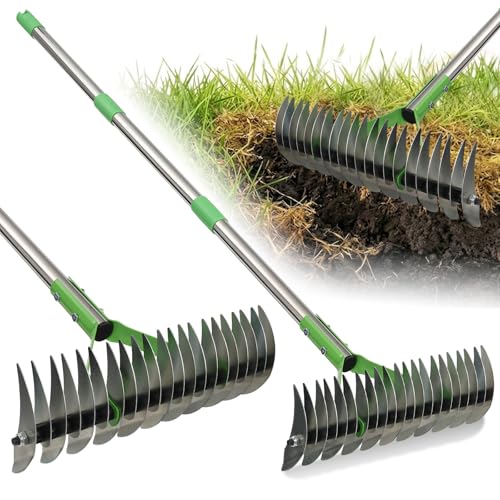
Deep Dethatching to Help Revive Thinning, Matted Lawns - This thatch rake features a 13" wide head with 21 sharp carbon steel tines and 0.6" spacing to pull up thick thatch, dead grass, moss, and compacted debris more effectively. It helps open the lawn surface so air, water, and nutrients can reach the soil more easily-especially useful for spring lawn cleanup, patch repair, and overseeding prep.

Efficient Thatch Removal: This Thatch Rake is designed to effectively remove thatch and improve soil aeration. It helps clear dead grass, leaves, and debris, promoting a healthier lawn. This heavy-duty garden rake is perfect for lawn maintenance, allowing your grass to absorb sunlight and nutrients, keeping your lawn neat and healthy.
Cool‑Season Grass: Best Dethatching Timing
Why wait for the perfect moment? For cool‑season lawns, your ideal dethatching schedule lands in late summer to early fall, beginning in August, or in early spring right after the second mow, before temperatures top 75 °F. Align this timing with turfgrass species considerations—Kentucky bluegrass, fine fescue, and perennial ryegrass thrive when you work while they’re actively growing but not heat‑stressed. Choose a mild, sunny day with moderately moist soil; wait a couple of days after rain so the ground isn’t waterlogged. Guarantee you finish at least three to four weeks before the first frost, giving the grass 45 + days of favorable growth to recover. Avoid summer heat, drought, or cold snaps, and limit dethatching to every one to three years for sustainable health. Regular dethatching improves air and water penetration, supporting stronger root development. Proper soil aeration after dethatching further enhances root oxygenation and nutrient uptake. Aeration can also help relieve soil compaction that builds up over time.

Ergonomic Design - Featuring an innovative wheeled structure, this dethatching rake helps reduce back fatigue by up to 70% compared with standard rakes. It lets you maintain an upright, comfortable posture during long lawn-care sessions, so you can work efficiently without straining your back.

【Completely Eliminate Thatch, Revitalize Your Healthy Lawn】Say goodbye to the hassle of dead grass buildup! Our thatch rake features a 15-inch head with 21 double-spacing tines. They penetrate deep into the turf (up to 5”) to powerfully remove stubborn thatch, moss, and weed roots. This not only instantly cleans your lawn but also dramatically improves soil aeration and drainage. Whether it's spring renewal or fall maintenance, this thatcher for lawn is your go-to tool for revitalizing your lawn

Keep Your Lawn Healthy and Tidy: versatile thatching rake alloy steel tines can pull up the thatch, leaves, dead branches and other debris from your lawn, allowing more air, water, sunlight and nutrients into the soil, which will keep your grass healthy. This adjustable thatch rake can give you a tidy and beautiful lawn
Warm‑Season Grass: Ideal Dethatching Window
When the lawn has just turned green in late spring and the second mow of the year has passed, you should schedule dethatching for warm‑season grasses. Target the window from late May through early July, when soil is moist but not soggy and temperatures sit between 80‑95 °F. This period aligns with peak grass texture development and ideal sun exposure, allowing the turf to heal quickly after the mechanical removal of thatch. Choose a mild day, wait a couple of days after rain, and avoid any forecasted heat spikes above 95 °F. Dethatching during this growth surge lets the roots expand, improves water infiltration, and supports sustainable microbial activity that naturally breaks down excess organic matter. Tool rental can be a cost‑effective option for homeowners who need a high‑capacity dethatcher for this limited window. Properly timing the work can also reduce the risk of soil compaction during the critical growth phase. Always wear protective gear to prevent injury while operating the equipment.
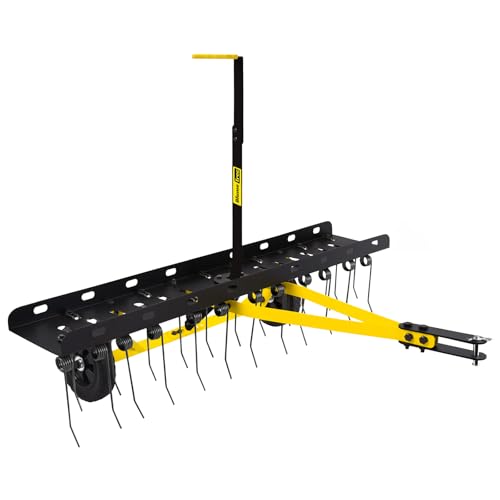
Durable Structure with 24 Spring Tines: BlumeTrec tow behind lawn rake is built with a heavy-duty carbon steel frame and 24 heat-treated, rust-proof spring tines that are flexible and replaceable for years of reliable use. These durable tines effectively lift and loosen thatch, dead grass, and compacted soil to improve lawn health. With a wide 48-inch working width, it covers more ground in less time, making it ideal for large yards. Tips: Clean the working part from any soil residue after use.

⚠️This electric dethatcher and scarifier has a maximum machine width of 22 inches and a working width of 14 inches.

2-in-1 Quick Release Blade: This electric dethatcher and scarifier comes with both dethatching and scarifying blades. The snap-on system allows tool-free switching, avoiding the need for multiple tools and saving time and effort in yard work
When Thatch Exceeds ½‑Inch, Adjust Your Schedule?
If your thatch layer has grown beyond half an inch, you’ll need to shift the dethatching schedule to address the buildup before it compromises root health. First, verify the thickness with multiple ruler readings to counter thatch measurement inconsistencies; sample three‑inch wedges across the lawn, dig a two‑inch deep pie‑shaped wedge, and average the depths. When the average exceeds ½ inch, plan a seasonal dethatching preparation that aligns with your grass type’s growth cycle. For fast‑accumulating warm‑season varieties, schedule a single intensive pass this spring; for cooler‑season blends, aim for a late‑summer session. Pair the dethatch with core aeration if compaction appears, and avoid the procedure during dormancy or peak heat to sustain soil biology and water efficiency. Proper dethatching also promotes improved nutrient uptake by allowing fertilizer to reach the root zone more effectively. Aerating before seeding improves soil aeration and enhances seed‑to‑soil contact for a thicker, healthier lawn. Adjusting watering frequency based on soil moisture helps maintain optimal turf health after dethatching.
High‑Traffic Areas: Annual or Biennial Dethatching?
High‑traffic zones often demand a more aggressive schedule, so you’ll typically opt for annual dethatching when footfall accelerates thatch buildup. In these compacted strips, you’ll check thatch depth each spring; if it exceeds half an inch, you’ll dethatch and follow with core aerification to promote durable turf recovery. Warm‑season grasses such as Bermudagrass and Zoysiagrass, plus Kentucky bluegrass, accumulate thatch quickly, so an annual cycle aligns with their growth rhythm. For cooler climates, you may stretch to a biennial plan only when monitoring shows limited buildup and you integrate pest management practices that keep fungal pressure low. Mow shorter before treatment, avoid dormancy periods, and synchronize aeration in late summer to sustain a resilient, aesthetically pleasing lawn. core aerator removes soil plugs that improve water penetration and root growth. Properly adjusting blade height after dethatching ensures an even cut and prevents additional thatch formation.
Soil, Fertilizer & Weather That Speed Thatch Build‑Up
After tackling the timing of dethatching in high‑traffic zones, you’ll notice that soil health, fertilizer choices, and weather patterns drive thatch formation just as power. Excessive synthetic nitrogen spikes nutrient balance, flooding microbes with fast‑release N, which slows decomposition while accelerating litter buildup. Salt‑based fertilizers further cripple beneficial bacteria, especially in compacted or clay‑rich soils where aeration is already limited. Poor drainage creates waterlogged zones, reducing oxygen and fostering thatch accumulation. Acidic or mis‑pH soils impair microbial enzymes, prolonging decay. Organic amendments revive microbial vigor, balancing nutrient inputs and mitigating snow mold risk in winter. Selecting low‑chatter grass species and maintaining proper pH and aeration keep the thatch layer thin and the lawn resilient.
Post‑Dethatching Care: Moisture, Mowing & Recovery
You’ll want to water the lawn thoroughly right after dethatching, guaranteeing moisture deep into the root zone to jump‑start recovery and promote healthy root growth. Apply a deep soak for 15‑20 minutes each morning for 10‑14 days, letting water infiltrate without runoff. Keep soil consistently moist, but avoid saturation that fuels fungi. Mow short before dethatching, then hold off for three weeks to let new shoots emerge; when you resume, adopt a proper mowing frequency of once every 7‑10 days, using a mulching blade to recycle clippings and prevent future thatch. Monitor regrowth; bare spots persisting beyond two weeks signal a dethatching error. Pair watering with balanced NPK, occasional aeration, and overseeding to safeguard a resilient, aesthetically pleasing turf.