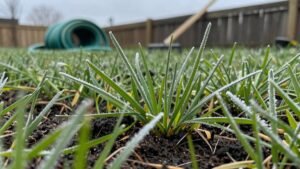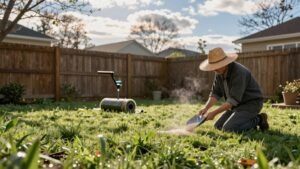

You should sow Bermuda grass seed when the soil at 4 inches depth stays at 65‑70 °F, which is usually 1–2 months after the last hard freeze. In Texas, aim for late February‑March in the south and April‑May in the north; in New England wait until late May‑early June. Keep the seedbed firm, weed‑free, and moist (60‑70 % field capacity) and water lightly 2‑4 times daily for the first week. After emergence, switch to a low‑phosphorus, slow‑release fertilizer and later to nitrogen‑rich formulas. Follow these steps and you’ll master the seasonal timing, while the next sections reveal deeper details.
Ideal Soil Temperature for Bermuda Grass Germination
Why does soil temperature matter for bermudagrass germination? You need at least 65 °F at 4‑inch depth for reliable sprouting; below that, germination slows dramatically. Aim for 65‑70 °F to trigger rapid seedling emergence, and keep the soil within 65‑75 °F if you’re using hulled seed, which tolerates a slightly broader range. Monitor temperature with a calibrated thermometer, placing it horizontally into the soil at the sowing depth and shielding it from direct sun to avoid false highs. Pair this with ideal soil moisture levels—about 60‑70 % field capacity—to maintain the seed stays moist without waterlogging. Consistently preserving these conditions for several days will give the seed the metabolic boost it needs to break dormancy and begin robust growth. Proper soil preparation ensures good seed‑to‑soil contact, which further improves germination rates. Aerating in late spring helps loosen compacted soil, allowing roots to access the optimal temperature and moisture needed for strong establishment. Maintaining a steady temperature within the target range is essential for uniform germination.
Identify Your Region’s Planting Window: From Texas to New England
Understanding that soil temperature must stay above 65 °F for bermudagrass to germinate, you can now map those thermal requirements onto regional calendars. In Texas, the planting window opens in late February‑March for sprigs and early May for seed, but you should avoid mid‑June onward when heat and drought spike. South Texas reaches ideal 70‑95 °F soil temps earlier, allowing March seedings; north Texas needs April‑May. Contrast this with New England, where soil rarely hits 65 °F until late May, pushing seedings to early June and limiting sprigs to July‑August. Climate adaptation demands you adjust dates for local heat‑stress trends, while soil texture considerations—sandy loam versus clay—affect moisture retention and germination speed. Align your schedule with these data to maximize establishment success. Vertically aerate the lawn to prevent compaction before planting. Proper core aeration also improves root growth and nutrient uptake. The germination window typically spans 7 to 14 days under optimal warm temperatures and adequate moisture. Regular soil testing helps verify nutrient levels and pH before you begin.
How to Time Planting After the Last Frost?
When the last hard freeze has passed, you should wait 1–2 months before sowing Bermuda grass seed, ensuring soil temperatures have risen to at least 65 °F and daytime highs stay between 70 °F and 80 °F. Determining proper planting timing hinges on monitoring a soil thermometer daily; once the soil consistently reads 65 °F, you can proceed. Evaluating local frost risks means consulting county extension data for the latest frost dates and confirming that no late‑season freezes are forecast for the next 30 days. In USDA zones 7–10, plant between March and August, aiming for at least 90 days before the first fall frost. This schedule maximizes germination within 7–10 days, promotes vigorous root development, and avoids frost damage to seedlings. Spring is the optimal season for warm‑season grasses because they require soil temperatures of 65‑70 °F for rapid germination. Selecting a variety with strong drought tolerance can further reduce irrigation needs during the early establishment phase. Understanding the soil temperature threshold helps ensure the seed germinates efficiently. Proper timing also aligns with the turf’s peak nutrient uptake period, supporting dense root growth.
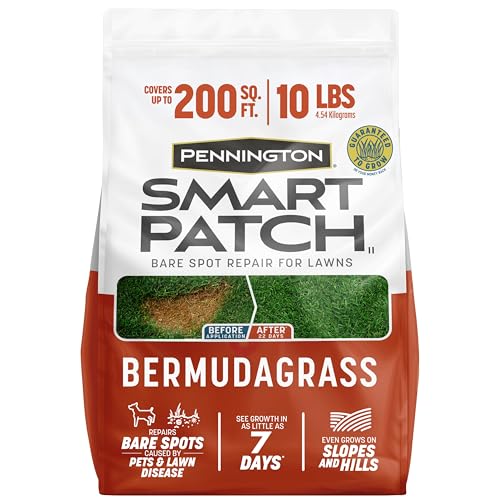
Contains microbials that prevent disease and improve overall health of lawns for lawn care

LAWN THICKENER: Scotts Turf Builder Thick'R Lawn Bermudagrass helps turn weak, thin grass into a thicker, greener lawn with stronger roots; with just one easy application, overseed your bermudagrass lawn to help repair and restore your turf
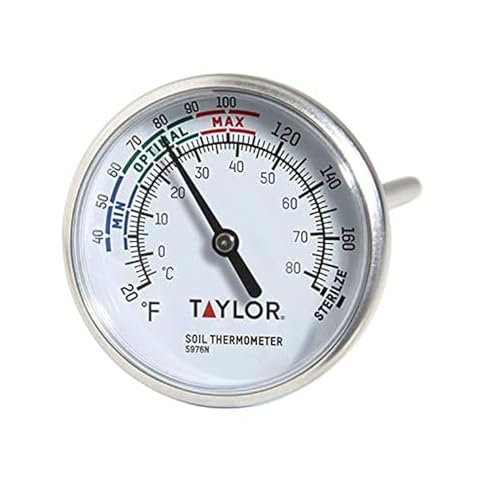
PRECISE SOIL TEMPERATURE READINGS: Measures soil temperatures from 20 degrees F to 180 degrees F (0 degrees C to 80 degrees C) with a large, easy-to-read analog dial face - no batteries or digital screens needed for reliable results every time
How to Prepare a Firm, Weed‑Free Seedbed for Bermuda Grass Planting
You’ll need a clean, firm, and weed‑free seedbed before laying Bermuda grass seed, and achieving that starts with eliminating existing vegetation and stabilizing the soil surface. First, mow the existing turf low, then apply a non‑selective herbicide or cover the area with black plastic for two weeks to kill weeds. After the herbicide clears, rototill the soil three to four times at a 4‑8‑inch depth, letting it dry slightly between passes to avoid compaction. Follow each till with a light cultipack to firm the surface. Incorporate compost and a calibrated nitrogen rate, then adjust pH to 6.0‑7.5. Finally, perform soil moisture monitoring and maintain a damp but not soggy seedbed to support seedling depth control and uniform germination. Adding a soil amendment such as lime can help achieve the desired pH range. Using a targeted moss killer can also prevent moss from re‑establishing in the seedbed. Proper cultural timing ensures that spurge weed is less likely to compete with new Bermuda grass.

ACCUSHOT REFILL: For use with the AccuShot Continuous Power Sprayer (sold separately with Spectracide Weed & Grass Killer)
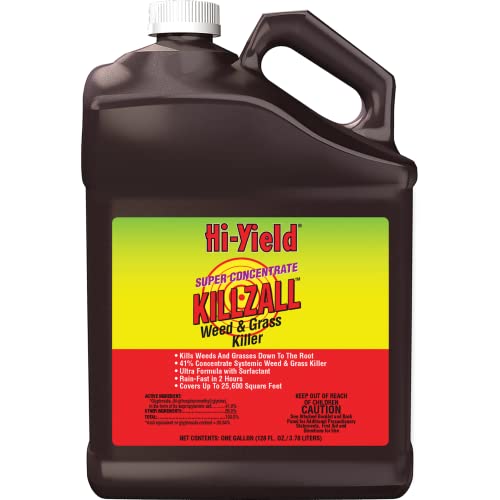
Weed killer controls grasses, broadleaf weeds and woody brush species. Do not use on lawns.
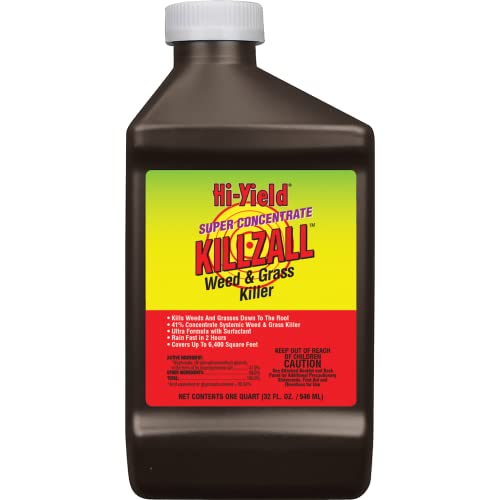
Weed killer controls grasses, broadleaf weeds and woody brush species. Do not use on lawns.
Which Seeding Method Is Best for Your Lawn?
Which seeding method fits your lawn depends on budget, timeline, and desired lawn density. For large areas where seed cost savings matter, use a broadcast spreader with a 1 lb PLS per 1,000 ft² rate, mixing seed with dry sand and applying half lengthwise, half crosswise. Cover with a light rake to embed seed 0.25 in deep, then lightly drag soil to a 1/8‑in depth. This approach yields uniform germination within 7–10 days once soil reaches 65 °F, though full density may require a full growing season and possible reseeding. If you need instant visual results, choose sod; its tightly placed pieces provide immediate coverage and superior sod durability, but the upfront cost is substantially higher. High‑quality seed should be purchased online to avoid cheap, undesirable common varieties. Understanding the role of soil pH can further improve germination success. The seed’s oval shape makes it easy to recognize in close‑up photographs. Proper seed‑to‑soil ratio ensures optimal coverage and reduces waste.
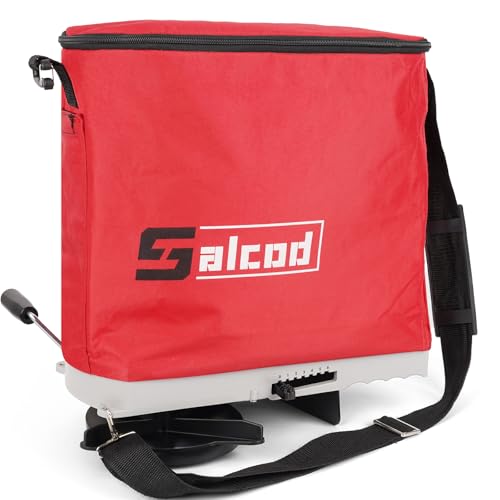
25LB Large Capacity Seed Spreader: Holds up to 25 pounds of grass seed or fertilizer, reducing refills and improving efficiency for larger spreading tasks

Broadcast Spreader: Experience precise and even distribution with the EarthWay 2750 25lb Nylon Bag Seeder and Spreader. This durable and water-resistant broadcast spreader is ideal for seed and fertilizer applications, ensuring a lush, healthy lawn.
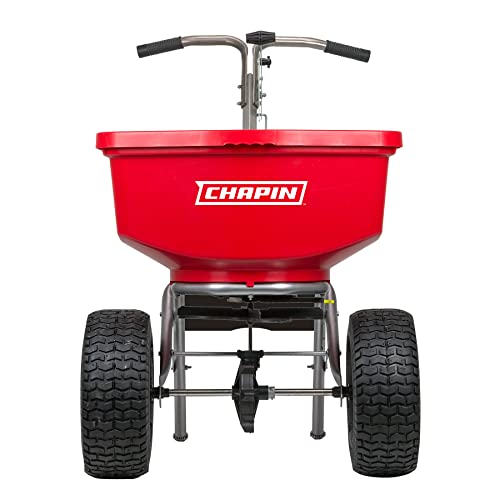
100-POUND CAPACITY HOPPER: weather and rust-resistant, red, 1-piece poly is supported on a stainless steel frame; enclosed gearbox products it from weather and a grease fitting minimizes friction; rain cover and hopper grate are included
Watering Schedule & Moisture Checks for Rapid Germination
If you keep the soil surface consistently moist, Bermuda grass seed will germinate within a week or two, and the key is frequent, short‑duration watering that avoids pooling. Follow an optimized watering schedule: water 10–15 minutes three times daily the first week, then 5–10 minutes two to four times daily until seedlings appear. Target early‑morning windows (4 a.m.–10 a.m.) and avoid midday heat; a second evening session after 7 p.m. helps on hot, windy days. Maintain the top 1 inch of soil moist, aiming for ⅛–¼ inch water per day (3–4 inches weekly). Use soil moisture monitoring tools—a screwdriver probe or moisture meter—to verify saturation without pooling. Once germination occurs, cut back to one deep daily watering, then shift to every three days by week three. Avoid overwatering to prevent waterlogged soil and fungal growth. Consistently moist soil encourages rapid root development without the risk of seed rot. Proper storage of unused seed can extend its viability for several weeks, especially when kept in a cool, dry environment with occasional misting to maintain seed dormancy. Conduct a germination test before planting to confirm seed viability.
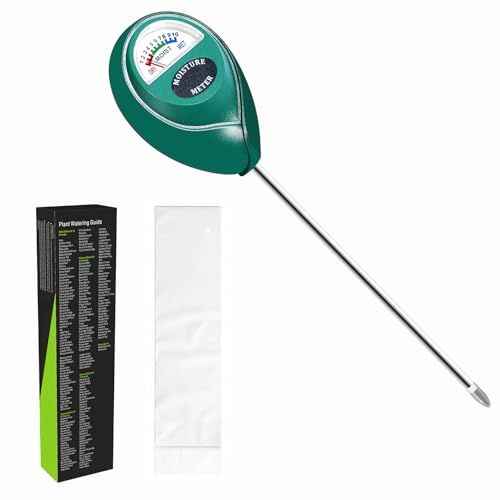
Trusted Since 2015: Become one of the many plant lovers who rely on the proven accuracy of XLUX. Established in 2015, our soil moisture meter has earned over 60,000+ verified ratings for its consistent performance. While many many newer brands come and go, we provide the long-term reliability and quality that American households have trusted for over a decade.

Accurate Soil Moisture Detection: The XLUX Soil Moisture Meter can tell you if the soil deep inside your pot or garden is dry, moist or wet; whereas your eyes and fingers can only determine the moisture level of the soil surface. The probe is 5.5 inches (14 cm) longer than regular styles, allowing it to measure the soil moisture at the bottom of larger and deeper flower pots.

【4 in 1 function】This is a 4-in-1 multifunctional soil tester.Our soil tester fastly to measure soil moisture, pH, temperature and sunlight to help you take better care of flowers and plants.You can know when you need to water your soil by measuring moisture and pH & Temperature value of the soil and sunlight level of plants with it.
Starter Fertilizer and Ongoing Nutrient Plan After Emergence
Three to five pounds of starter fertilizer per 1,000 sq ft give Bermuda seed the phosphorus boost it needs for rapid root development, so apply a high‑phosphorus blend (e.g., 4‑6‑4, 10‑20‑10, or 18‑24‑12) while incorporating the top 2–4 inches of soil before or immediately after seeding. Use the recommended application rates and guarantee proper timing—incorporate the blend on the day of seeding, broadcast around the perimeter, then overlap passes for even coverage. After emergence, switch to a low‑phosphorus, slow‑release fertilizer 4‑8 weeks later, then shift to nitrogen‑rich formulas such as 18‑1‑8 for shoot growth. Apply liquid feeds every 2‑3 weeks in spring, extending intervals to 4‑6 weeks as the stand thickens, and avoid weed‑and‑feed products that could damage seedlings. Conduct a soil test before fertilizing to confirm pH and nutrient levels. Seed density should be adjusted according to the desired lawn thickness and soil fertility.
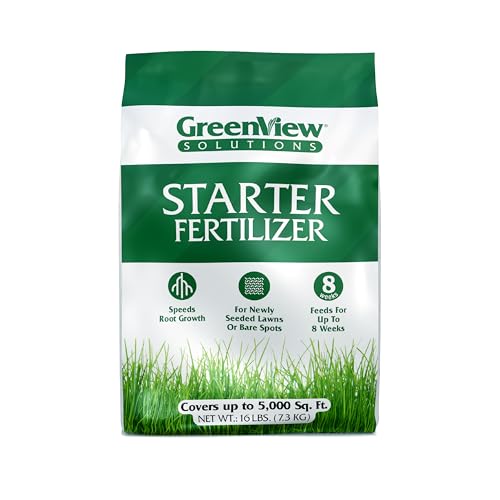
Speeds Root Growth - This grass fertilizer for lawn is a phosphorus fertilizer that helps roots establish quickly and grow deep and strong

( 1 pound ) high in phosphorous for more roots & flowers great for transplanting & bedding plants

FERTILIZER FOR NEW LAWNS: Scotts Turf Builder Starter Food for New Grass is a specially formulated starter fertilizer for grass seed that is designed to be used when planting new grass
Why You Should Skip Mid‑June Seeding?
After applying starter fertilizer and establishing a nutrient plan, you’ll find that mid‑June seeding poses several avoid. Heat stress quickly scorches tender seedlings before roots develop, especially when air temperatures exceed 90 °F. The soil dries in minutes under intense sun and windy conditions, so maintaining consistent moisture becomes a logistical nightmare—city watering restrictions often limit the frequent light irrigations seedlings need. Simultaneously, the threats of weed competition surge: crabgrass and other summer annuals germinate aggressively, outcompeting immature Bermuda seedlings for light, water, and nutrients. Over‑watering to combat drought can drown seeds and invite fungal disease, while under‑watering dries them out. Given these challenges from heat stress and weed pressure, postponing seeding to a cooler, less competitive window dramatically improves establishment success. Moist soil is essential for seed germination, and pre‑soaking the seed can accelerate this process in hot, dry conditions. Using a lawn roller after seeding can help press seeds into the soil and improve seed‑to‑soil contact.
Post‑Plant Care for Bermuda Grass: Establishment, Dormancy, and Maintenance
Establishing Bermuda grass hinges on a disciplined post‑plant routine that balances watering, fertilization, and mowing while anticipating seasonal shifts toward dormancy. Water lightly 2–3 times daily for the first two weeks, then shift to deep watering every 2–3 days through week six to spur root depth. After six weeks, provide 1 inch per week, adjusting for rain, and reduce frequency as fall cools. Apply high‑nitrogen fertilizer every 6–9 weeks until mid‑fall, and a potassium‑rich, slow‑release dose before August 15 to boost dormancy resilience. Mow at 1–2 inches, removing no more than one‑third of leaf tissue each pass; increase frequency in summer for uniform density. Address core aeration needs early to prevent compaction, and prioritize thatch removal importance to improve water infiltration and disease resistance. Limit foot traffic in winter, rake debris, and avoid fertilizing during dormancy until spring green‑up.