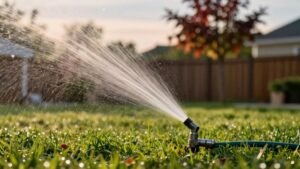

You should wait 30‑60 minutes after mowing before turning on the sprinkler, because fresh cuts need time to seal and form a protective barrier that blocks fungal invasion and maximizes root uptake. Immediate watering re‑opens pores, creates a damp micro‑environment, and can saturate the thatch, encouraging mold growth. Early‑morning or late‑evening irrigation lets cut edges seal first, while deep, measured pulses promote resilient roots. Follow these guidelines and you’ll uncover more about timing, weather, and mower height impacts.
Should I Water Right After Mowing?
If you water right after mowing, the freshly cut blades can absorb moisture that speeds recovery from cutting stress, but the same timing also leaves the thatch and leaf surfaces damp long enough to invite fungal pathogens. You must weigh mid‑afternoon watering considerations against the risk of disease. Immediate irrigation saturates the thatch, reducing airflow and fostering mold growth, especially on sand‑based soils that drain quickly. Instead, aim for early‑morning or late‑evening watering, allowing cut edges to seal before water contacts the surface. Maintain an adequate thatch layer—about one to two inches—to buffer moisture fluctuations and protect roots. By timing irrigation correctly and preserving thatch integrity, you promote nutrient uptake, prevent shallow rooting, and minimize fungal threats while supporting blade recovery. Proper watering also helps the lawn achieve the recommended infiltration rate for its soil type, ensuring water reaches the root zone efficiently. Consistently moist soil during the early growth stage encourages deeper root development, which is why light frequent watering is essential for newly seeded areas. Adjusting watering frequency according to the local climatic conditions can further optimize water use and turf health.

BRASS INLET & OUTLET: 2026 Newly upgraded water hose timer with pure brass water inlet and outlet metal thread, strong and durable, can withstand up to 116psi. Built-in metal filter gaskets can effectively prevent sediment and other larger particles from entering the irrigation system. The body shell adopts heavy-duty weatherproof construction and UV-resistant materials, which is perfect for outdoor garden watering.

【Dual Independent Programmable Zones】This sprinkler timer features two separate outlets, allowing each zone to be independently programmed with customizable watering times, frequencies, and durations. It efficiently meets the irrigation needs of different plants and lawns, ensuring even watering and optimal hydration.

【Easy Programming Program】Through the Sprinkler Timer to program, you can set the Start Time, Watering Duration is 1min-3h59min, Watering Frequency from 1h to 12h or 1 day to 7 days, so you can customize your watering time, and can be more accurate.
Why the 30‑Minute Rule Matters
The 30‑minute rule matters because grass blades need roughly half an hour to seal the microscopic cuts created by mowing, and that sealing process forms a protective barrier against pathogens in warm, humid conditions. When you wait, the cut edges close, forming a waxy layer that blocks fungal spores and bacterial entry. A lawn maintenance professional will tell you that immediate watering re‑opens those pores, fundamentally undoing the natural healing. Proper mowing techniques—like the one‑third rule and higher deck settings—reduce stress, but they don’t eliminate the need for a post‑mow pause. By delaying irrigation 30–60 minutes you let the plant’s defense system activate, lowering disease risk, preventing scorching, and supporting healthier root development. This timing aligns with other best practices, ensuring a resilient, disease‑resistant lawn. Avoid mowing when temperatures consistently exceed 90 °F as it can increase stress and reduce the effectiveness of the healing period. When soil moisture is low, drought‑induced stress can further delay the sealing of cut edges. Adding a thin layer of organic mulch after mowing helps retain moisture and protect the newly sealed grass.
How Early‑Morning Watering Helps Cut Grass
Because the coolest hours of the day coincide with peak root activity, watering your lawn between 4 a.m. and 10 a.m. maximizes water uptake while minimizing evaporation and wind‑driven loss. In this window, lower air temperature and higher humidity allow water to percolate to a six‑inch depth, delivering moisture directly to active roots. This timing encourages improved nutrient absorption because solutes travel farther before drying, and it protects the root zone from the rapid temperature swings that cause minimized damage. You’ll notice grass blades dry quickly, reducing fungal risk and preparing the canopy for afternoon heat stress. Apply a deep, measured pulse—adjusting for soil type—to promote resilient root systems and consistent cut quality without overwatering. Morning watering also reduces the likelihood of disease by preventing moisture from lingering overnight. Avoid operating a wet mower, as moisture can cause electrical hazards and damage the engine.
What Risks Come With Immediate or Midday Watering?
Watering right after you mow or during the heat of midday can quickly turn a fresh cut into a breeding ground for problems. Immediate moisture coats cut blades, creating a damp micro‑environment that fuels fungal pathogen proliferation, especially brown patches and dollar spots. Surface water evaporates fast under scorching sun, leaving only a thin film that spreads spores while the soil remains dry, so roots receive little hydration. Overwatering in this window saturates the top inch of soil, suffocating roots, leaching nutrients, and encouraging root rot. Additionally, the sudden influx of water can overwhelm the turf’s capacity for water runoff mitigation, causing runoff that carries clippings and spores to lower areas, where they form mats that block sunlight and airflow, further increasing disease risk. Properly capping sprinkler heads can significantly reduce runoff and improve water distribution across the lawn. Ensuring that sprinkler heads are securely fastened prevents rotation failure that can otherwise lead to uneven watering and increased runoff. Selecting the appropriate timer type can optimize watering efficiency and reduce waste.
How Can I Tell My Lawn Needs Water After Mowing?
When you finish mowing, the first clue that your lawn still craves moisture is a visual shift: the grass dulls to a gray‑blue tone instead of staying vibrant green, and yellowing or a bluish‑gray cast often appears on the blades. You then scan for severe damage indicators: blades curl tightly around the central vein, edges fold, and the turf feels brittle underfoot. Press a screwdriver 3‑4 inches into the soil; if it meets resistance and the extracted core is dry, moisture is lacking. Walk across the lawn; lingering footprints or mower tracks that don’t rebound signal dehydration. Combine these observations with a quick rehydration recommendation—apply a deep, slow‑release irrigation just enough to wet the root zone without runoff, restoring vigor before stress escalates. Properly adjusted sprinkler heads can enhance water distribution and prevent the uneven drying that triggers these warning signs. Selecting the appropriate sprinkler type—whether spray, rotary, or drip—ensures optimal water efficiency for your garden’s specific needs. Regularly checking spray patterns helps identify inconsistent coverage before it harms the grass.
Deep vs. Shallow Irrigation: Which Is Better After Cutting?
If you’ve just spotted the gray‑blue dullness and brittle blades that signal post‑mow dehydration, the next decision is how to re‑hydrate the turf. Deep irrigation delivers 1‑2 inches of water to a 10‑inch profile, forcing roots past the thatch layer and encouraging longer, denser networks. This method maximizes thatch reduction by leaching organic buildup and promotes enhancing root penetration, which improves drought tolerance and heat resilience. In contrast, shallow watering saturates only the top 1‑3 inches, keeping moisture trapped above thatch, limiting root depth, and fostering weak, surface‑bound turf vulnerable to pests and stress. Apply water in a single, extended session after mowing, waiting 30‑60 minutes to let cuts seal, and avoid frequent light sprays that waste water and stunt root development. Deep watering promotes root growth beyond the thatch layer, creating a more resilient lawn.
How Weather Influences Post‑Mow Water Timing
Typically, cooler mornings slow evaporation, so watering right after mowing lets the cut grass absorb moisture before the day heats up. You’ll notice that early‑morning dew and lower ambient temperature create a narrow window where water penetrates the root zone without rapid loss. When seasonal temperature fluctuations push midday heat above 80 °F, postpone irrigation until before 10 a.m. or after sunset to keep evaporation low and prevent scorching. Check recent precipitation; if soil moisture remains adequate, skip the post‑mow soak to avoid overwatering. For sandy soils, increase frequency but keep each event brief, focusing on deep infiltration. Monitor real‑time forecasts, adjust timing, and maintain precise soil moisture management to sustain grass recovery and root development. Proper post‑mow watering also helps the fertilizer dissolve evenly, ensuring nutrients reach the root zone for optimal uptake. Understanding sprinkler head spacing can further improve water distribution efficiency. Consistently applying soil moisture thresholds helps prevent both drought stress and waterlogging.
How Does Mowing Height Change Water Needs?
Because taller grass blades shade the soil, they lower surface temperature and cut evaporation, so a higher mowing height directly reduces the amount of water the lawn needs. When you raise the cut to 2.5–3 inches, the canopy acts like a thermal blanket, slowing evapotranspiration and preserving soil moisture for longer periods. Deeper roots develop under taller cuts, accessing moisture deeper in the profile and diminishing irrigation frequency. The thicker leaf layer also improves nutrient management by allowing slower, more uniform uptake, while the increased litter promotes thatch reduction, preventing water‑logging and enhancing infiltration. Conversely, low mowing exposes soil, raises temperature, and accelerates drying, forcing you to water more often to avoid stress and weed invasion. Higher mowing height also helps protect centipede grass from drought stress by providing a thicker canopy that shades the soil. Maintaining a proper mowing height can also increase soil organic matter which further enhances water retention. Aerating the lawn before seeding improves soil structure by creating channels that facilitate water movement and root growth. Proper mowing timing aligns with the grass’s active growth phase, supporting dense turf development.
How Do I Test Sprinkler Penetration Depth?
Higher mowing heights keep the soil cooler and moister, which means you can assess water penetration more reliably when you test your sprinkler system. Set up identical shallow cans—tuna‑type—at 1.5–2 feet from each head, at the spray edge, and at several mid‑range points to evenly distribute coverage. Run the zone for 15 minutes, watching for puddling; stop early if runoff appears and note the actual run time. Turn the water off, measure each can’s depth with a ruler, then pour all water into one container and calculate the average depth. Divide that average by three to obtain the 15‑minute delivery rate. Use the result to adjust heads or nozzles, ensuring uniform application and proper penetration. Test at different distances regularly to maintain efficiency. Proper trench depth of 8 inches is recommended for water line installation. Adjusting the spray pattern can be done with a simple screwdriver, and the sprinkler head adjustment ensures even coverage.
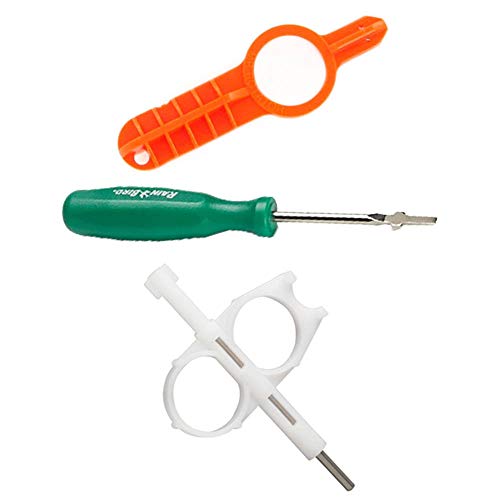
Hunter Key


The Hunter adjustment wrench consists of a 3/32 allen key, two convenient finger loops for gripping
Common Mistakes to Avoid When Watering After Mowing
Watering right after mowing is a common pitfall that can undermine lawn health, because freshly cut grass still has open cuticles and a delicate root zone that need time to recover before absorbing moisture. You’ll often oversaturate soil if you spray immediately; this suffocates roots, leaches nutrients, and promotes fungal disease. Avoid oversaturating soil by waiting 30–60 minutes and applying a measured amount that reaches 6–8 inches deep, not just the surface. Recognize seasonal watering needs: in hot summer months deep, infrequent irrigation beats frequent shallow watering, while cooler seasons permit lighter doses. Also, skip evening or night watering to reduce fungus risk, and adjust schedules for rain, wind, and temperature to prevent runoff and waste. Deep watering encourages roots to grow deeper into the soil, improving drought resilience.