

Mow your lawn every 5‑7 days during peak growth, never cutting more than one‑third of the blade’s height to keep roots vigorous and disease‑free. In spring, aim for two cuts a week at 2.5‑3.5 inches for cool‑season grasses; in summer, space cuts to 5‑7 days, maintaining 1‑2.5 inches for warm‑season varieties. Adjust the schedule for heat, drought, or rain by raising mower height and mowing less often, and always sharpen blades for a clean cut. Follow these cues and you’ll uncover a full seasonal mowing calendar.
Mowing Frequency & the One‑Third Rule
One‑third rule, your guiding principle for healthy mowing: never cut more than a third of the blade’s height in a single pass. You apply this by checking growth; when a 3‑inch lawn reaches 4.5 inches, you trim to 3 inches, preserving two‑thirds of leaf tissue. This mowing height flexibility safeguards root vigor, maintains photosynthesis, and curbs disease. Proper clipping management follows naturally—short clippings decompose quickly, reducing thatch and allowing water, air, and nutrients to reach roots. USDA studies confirm that exceeding the one‑third threshold halts root growth, so you schedule cuts based on growth rate, typically every four to six days during peak growth. Consistent, measured cuts keep the turf lush, resilient, and environmentally sound. Seasonal growth patterns also influence mowing intervals, with cooler months requiring less frequent cuts due to slower grass development. Avoid mowing during extreme heat to protect the lawn from stress and dehydration. Schedule mowing before high‑temperature spikes to prevent heat‑related turf damage.

Oregon Replacement Deck Leveling Gauge

Efficient & Versatile Mowing - Our 21-inch lawn mower features 3-in-1 steel deck with mulching, side discharge and rear bagging and provides an extensive mowing path for efficiency. No choke, no primer design make it easy to start.

Easy Start Engine: The144cc 4-stroke OHV engine delivers a reliable balance of high performance and ease. Equipped with auto choke for easy start, and primer structure for better starting.
Cool‑Season Grass Mowing Frequency by Season
Kick off your lawn care plan by syncing mowing frequency with the seasonal growth rhythm of cool‑season grasses. In spring, aim for at least two cuts a week when temperatures sit between 65‑75 °F, following the one‑third rule to avoid scalping. Apply cultivar specific guidelines: tall fescue and Kentucky bluegrass thrive at 2.5‑3.5 inches, so mow when they exceed one‑third of that height. Summer calls for a relaxed schedule—once weekly—while raising heights to 3‑4 inches for tall fescue and 2‑3.5 inches for Kentucky bluegrass; keep blades sharp and mulch clippings. Fall returns to regular cuts, gradually lowering heights in September‑October and delivering a final, slightly lower mow to deter snow mold. Throughout, respect seasonal height adjustments and mulch to sustain soil health. Soil temperature is a key indicator for when to begin spring mowing, as grass becomes active once it reaches around 55 °F. Proper seed timing in early fall can also boost root development and improve lawn resilience. To avoid over‑seeding, calculate the exact amount of seed needed using the lawn’s square footage and the recommended seeding rate per grass type.
Warm‑Season Grass Mowing Frequency in Summer
How often should you mow your warm‑season lawn in summer? You’ll mow every 5‑7 days, keeping the blade height between 1 and 2.5 inches. Apply the one‑third rule: never cut more than a third of the blade to preserve optimal suitable summer heat tolerance. For Bermuda, Zoysia, and Centipede, weekly cuts sustain dense turf that resists weeds and stress. When temperatures peak, growth accelerates, so stick to the 5‑7‑day interval; as heat eases, you may stretch to 10‑14 days. Raise the mower height slightly during hot, dry spells to protect root systems. This routine supports an ideal seasonal change, balances aesthetic vigor, and promotes sustainable lawn health. Deep watering infrequently encourages deeper root growth and improves drought resilience. Bermuda seed typically begins to sprout within 7‑14 days under optimal warm conditions. Proper soil pH adjustment before planting can enhance seed germination rates.
Adjusting Mowing Frequency for Heat, Drought & Rain
Adjusting your mowing schedule to match heat, drought, and rain guarantees the lawn stays resilient while conserving resources. In scorching weather you’ll cut less often, keep blades at the highest recommended height, and never remove more than one‑third of the leaf. Let the grass shade the soil, water deeply at dawn, and choose drought resistant lawn species that thrive on taller cuts. During droughts, mow high—3‑4 inches for tall fescue—sharpen blades, and only water when wilt appears. After rain, increase frequency but mow only on dry ground; schedule lawn aeration timing to improve drainage and avoid compaction. Throughout, maintain the one‑third rule, mulch clippings, and gradually return to normal heights as conditions improve. Always wear protective gear and perform a pre‑use inspection to prevent accidents. Mowing on wet grass can cause soil compaction and increase the risk of slipping, so it’s best to wait until the surface is dry. Keep the mower’s electrical components dry to prevent electrical hazards and engine damage.

Includes 2 blades that fits many 42-in cut Poulan, Husqvarna, and Craftsman mowers - Please Match Current Blade OEM Number to Confirm it fits your Mower

【Replacement Part Number】------ 942-0616, 742-0616, 942-04126, 742-04126, 942-04126-X, 942-0616-X, 942-0616A, Windsor 51-4440, 942-04308-X, MTD 942-04308-X, Troy Bilt 942-04308-X

Designed to Fit Which Blade Models: Mower Blade Replace number for Cub Cadet, Troy Bilt,Craftsman, MTD with 42 inch Deck. Replace OEM model including: 942-04308, 942-04308A, 942-04312, 942-04312A, 942-0656, 742-04308, 742-04308A, 742-04312, 742-04312A, 742-0656, 742-05177, 742P05177,490-110-M108, 490-110-C108, 490-110-C109, OCC-742-04312, OEM-742-04308, CMXGZAM110108
When Your Lawn’s Mowing Frequency Needs Adjusting
When the grass starts to outgrow its current height, you’ll need to tweak the mowing schedule to keep the one‑third rule intact and protect the lawn’s health. Begin with a lawn health assessment: measure blade length, check for browning, and note any wilting. If growth spikes—often after heavy rain or during early spring—reduce the interval to 5‑7 days, especially for warm‑season varieties like Bermuda that thrive on frequent cuts. Conversely, when moisture monitoring shows prolonged dryness or heat‑induced slowdown, extend mowing to 10‑14 days to avoid stress. Adjust mower height upward in hot periods to preserve root moisture. By syncing frequency with real‑time growth and moisture data, you sustain a dense, resilient turf while minimizing water waste. Understanding climate zone influences helps you fine‑tune timing for each month. Different soil types affect water retention, so consider soil water capacity when planning mowing intervals. Incorporating organic mulching can suppress weed seeds and improve soil structure, further supporting healthy lawn growth.
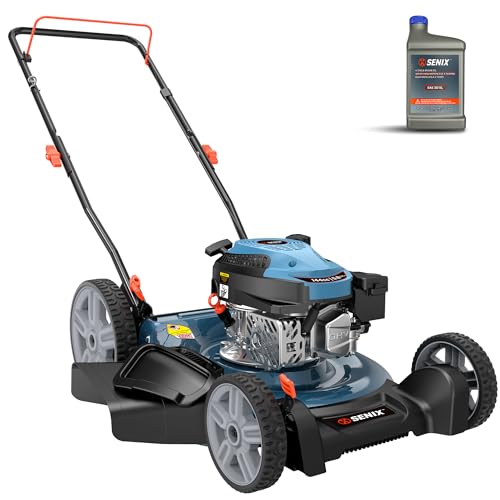
【POWERFUL 144cc 4-CYCLE ENGINE FOR TOUGH LAWNS】 Tackle thick grass, weeds, and gentle slopes with confidence using our high-torque 144cc 4-stroke gas engine. Unlike underpowered mowers that stall in dense turf, this engine maintains steady RPMs under load, so you can finish large yards (up to ½ acre) in one pass—no more stopping to clear clogs or restart the machine. Perfect for homeowners who want reliable power without the hassle of electric cords or battery swaps.

Efficient & Versatile Mowing Solution This 21-inch self-propelled lawn mower features a durable 3-in-1 steel deck with mulching, side discharge, and rear bagging options. The wide cutting path maximizes efficiency, while the no-choke, no-primer design ensures hassle-free starting—no manual adjustments needed.

Keep Your Lawn Spotless: Unlike most lawn sweepers, our lawn sweeper has thickened and densified brushes to increase the overall sweeping force and prevent deformation. With a sweeping width of 21"/53.5 cm, it can pick up 80% of the debris in one pass.
Quick Checklist to Build Your Seasonal Mowing Calendar
If you map each season’s growth patterns to a simple calendar, you can keep your lawn healthy while conserving water and energy. Start March with a cool‑season mowing pattern: cut every 5‑10 days, keep heights 2.5‑3 in., and consider mulch mowing to return nutrients. In April, increase frequency; by May, aim for 2‑3 cuts weekly. Shift to warm‑season patterns in June‑July, mowing once or twice a week at 3‑4 in., using the second‑highest blade and continuing mulch mowing. September resumes cool‑season heights of 2‑3 in., tapering to weekly cuts in October. Winter requires no mowing; service equipment in February and clear debris only. Adjust all dates for drought or rain, never removing more than one‑third of blade length. Proper soil aeration during early spring can further improve root health and nutrient uptake. Understanding grass growth cycles helps you anticipate when to modify mowing frequency as temperatures change. Incorporating core aeration after the first mowing of spring promotes deeper root growth and enhances nutrient absorption.

Includes 1 mulching blade for many 21 in. cut MTD, Cub Cadet, Troy-Bilt, and Craftsman mowers. Must Match Current Blade OEM Number to insure exact fit.

Includes 1 universal replacement for 21 in. cut mowers

Includes 1 commercial mulching blade for many 22 in. cut Toro recyclers