
Dethatching boosts water infiltration, nutrient flow, and root depth while lowering pest and disease risk, giving you a healthier, more uniform lawn. It also encourages deeper roots and better oxygen access. However, it can be labor‑intensive, especially on large yards, and it stresses grass temporarily, so you’ll need proper timing, possibly reseeding, and ongoing maintenance to prevent thatch buildup. If you keep going, you’ll uncover the best timing, methods, and how to avoid common pitfalls.
What Is Thatch and Why Dethatching Matters for Your Lawn?
When thatch builds up, it creates a dense, spongy mat of living and dead grass material that sits between the green blades and the soil surface. This layer consists of stems, leaf sheaths, crowns, and roots, about 25 % lignin, the rest cellulose and hemicellulose. A thin thatch (<½ in) functions as organic mulch, aiding soil moisture conservation and buffering temperature fluctuations, while still permitting water, nutrients, and air to reach roots. Excessive thatch (>1 in) blocks those pathways, traps excess moisture, and creates dry spots that stress the lawn. It also shelters pests and pathogens, increasing disease risk. Maintaining a thin, well‑decomposed thatch layer preserves lawn health, improves wear tolerance, and supports consistent growth. Thatch acts like a sponge and can prevent fertilizers and preventatives from reaching the soil. Proper scarifying also promotes soil aeration by creating channels that improve root oxygenation. Regular dethatching helps prevent soil compaction and encourages deeper root systems. Performing dethatching in the optimal seasonal window maximizes recovery and minimizes stress on the grass.

LIFT OUT DEAD GRASS & THATCH - The 15-inch head with 19 sharp steel tines pulls up matted thatch. Use this manual dethatching rake for small lawns, spot cleanup, and clearing dead patches before reseeding.

【Efficient Lawn Revival Tool】This dethatcher rake is designed to quickly remove thick layers of thatch, moss, and dead grass. Improve airflow, water absorption, and nutrient penetration with this powerful lawn dethatcher, helping your grass grow greener and healthier.

Smooth-Rolling Wheels for Ease of Use: The dethatching rake equipped with high-quality wheels, the rake glides smoothly across your lawn—cutting down on bending and reducing the effort of lawn care. The thatch rake's rollers boost thatch-clearing efficiency while preventing unnecessary physical strain.
How Do I Know My Lawn Needs Dethatching?
If you notice a spongy, bouncy feel underfoot, water pooling on the surface, or patchy, weak grass despite regular care, those are clear signs that thatch has built up beyond the healthy threshold and your lawn needs dethatching. Test the turf by pressing a foot down; a springy bounce indicates a thick thatch layer, especially in high‑traffic zones. Check for visible thatch exceeding ½ inch using a wedge or trowel; a brown, matted mat confirms accumulation. Observe water behavior—if runoff occurs and puddles form, thatch is disrupting drainage and preventing root absorption. Scan for uneven growth, yellowing, or bare spots that persist after fertilization; these suggest thatch influencing pest activity and nutrient blockage. Together, these metrics give you a precise, actionable diagnosis. Proper timing aligns with the seasonal lawn care calendar to maximize recovery. Incorporating soil aeration after dethatching further improves root health and nutrient uptake.

【Efficient Lawn Revival Tool】This dethatcher rake is designed to quickly remove thick layers of thatch, moss, and dead grass. Improve airflow, water absorption, and nutrient penetration with this powerful lawn dethatcher, helping your grass grow greener and healthier.

Effortless, Ergonomic Lawn Thatch Removal: Professional thatch rake features a heavy-duty head and an extended, adjustable stainless steel handle. This design drastically reduces back-breaking bending and strain, allowing air, water, and nutrients to penetrate deep to the roots for a lush, healthy lawn all year round

Smooth-Rolling Wheels for Ease of Use: The dethatching rake equipped with high-quality wheels, the rake glides smoothly across your lawn—cutting down on bending and reducing the effort of lawn care. The thatch rake's rollers boost thatch-clearing efficiency while preventing unnecessary physical strain.
When Is the Best Time to Dethatch Cool‑ and Warm‑Season Grasses?
Ever wondered why your lawn’s recovery varies after dethatching? For cool‑season grasses, aim for the ideal dethatching periods in late August through September, or mid‑April after the second mow. This aligns with peak growth, giving you 3‑4 weeks before frost to recover. Warm‑season grasses need optimal dethatching conditions in May‑June, once the spring green‑up is complete and temperatures sit between 80–95 °F. In northern zones, stick to the cool‑season windows; in southern zones, the warm‑season window is your best bet. Guarantee the soil is moist but not waterlogged, and choose days with mild weather to avoid heat or frost stress. Timing wrong can stress dormant lawns, cause damage, and may require reseeding. Proper timing also supports soil aeration for healthier root systems. Regular aeration helps improve water infiltration and reduces compaction, enhancing overall lawn health.
Which Dethatching Method Is Best for Your Yard?
Which dethatching method suits your yard depends on lawn size, thatch thickness, and how much stress you can tolerate. For a small lawn with less than an inch of thatch, a manual dethatching rake works well; it’s cheap, low‑stress, and lets you gauge the job by raking at 90‑degree angles. If you have moderate thatch and a larger area, rent a power rake; it lifts thatch efficiently but demands you evaluate equipment quality and guarantee the motor’s tines are sharp. Severe thatch layers call for a vertical mower (verticutter) or electric scarification—both cut deep and remove roots, so you must understand DIY limitations and safety precautions. For organic‑focused care, apply top dressing to break down thatch gradually, accepting slower results. Aeration also helps by improving soil oxygen and promoting healthier root systems. Late‑season dethatching can still be effective if the grass is actively growing and soil moisture is adequate. Core aerators create larger holes that enhance water infiltration and root growth.

[Powerful 13 Amp Electric Motor]:Equipped with a 13 Amp copper motor, this electric dethatcher delivers a strong 3700 RPM, making it ideal for tackling tough lawn care tasks. It effortlessly removes thatch and debris, helping your lawn breathe better and promoting healthier grass growth.

2-IN-1 DETHATCHER AND SCARIFIER: The TaskStar lawn dethatcher includes scarifying and dethatching cylinders. The scarifier loosens soil for root growth; the dethatcher removes dead grass and thatch to improve airflow. Quick-release switch, no tools needed-also works as a dethatcher rake for routine lawn maintenance
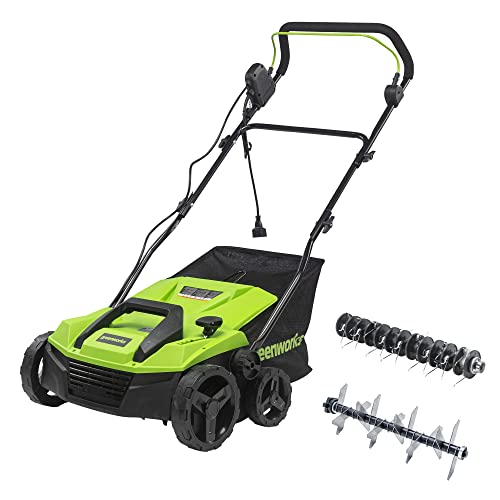
2-IN-1 DESIGN - 13A 14-Inch Dethatcher / Scarifer provides the power and versatility to keep your lawn healthy.No load speed : 3200 RPM
Step‑by‑Step: How to Dethatch Your Lawn Effectively
Getting your lawn ready for dethatching starts with proper preparation and tool selection: clear away rocks, sticks, and toys; set irrigation to keep the soil just moist; and gear up with gloves, eye protection, and sturdy shoes. First, mow the grass to half its normal height—3‑4 in for cool‑season, 2‑3 in for warm‑season varieties—and bag the clippings. Choose a manual rake for small patches or a power rake for larger zones, matching the blade type to your grass. Set the rake depth to about ¼‑½ in, start high, then lower until you hit the sweet spot for achieving ideal dethatching depth. Run the rake in a criss‑cross pattern, adding a second pass only where thatch is thick. After each pass, rake up debris, compost it, and keep the area clear. Finally, water the lawn thoroughly and begin monitoring post‑dethatching recovery, watching for bare spots and reseeding as needed. Dethatching fluffs up living grass for better growth. Regular dethatching also improves air circulation within the soil, helping roots breathe and absorb nutrients more efficiently. Properly aerated soil enhances water absorption and reduces compaction, supporting healthier root systems after dethatching.

【Efficient Thatch Removal】: The .170 in. replacement line cuts through dense thatch and removes built-up grass debris with ease. It improves air circulation, water penetration, and nutrient access

【Compatible with Arnold Power Rake】These .170" replacement nylon lines are compatible with Power Rake Universal 6-in-1 Dethatching Blades, models 490-100-0056 and 490-100-0083

Promote Lawn Health and Neatness: This thatch rake is designed to clear away thatch buildup, dead grass, fallen leaves, and small debris across lawns and garden areas. By removing compact layers on the surface, it allows air, water, sunlight, and nutrients to reach the soil and roots, supporting steady turf growth. With a total length of 74 inches, it helps reduce bending and supports seasonal lawn maintenance tasks.
Why Removing Excess Thatch Improves Water, Nutrient, and Root Health
After you’ve cleared the lawn and set the rake to the proper depth, the next step is to understand why removing excess thatch matters. Thick thatch forms a waterproof barrier, causing water to run off instead of soaking into the root zone. By dethatching, you restore improved oxygen flow, letting water penetrate deeper, reducing runoff, and conserving moisture. Nutrients also reach the soil directly, so fertilizers act more efficiently and waste less. Roots, no longer trapped in thatch, grow into the soil where they receive consistent water, nutrients, and air. This exposure stimulates quicker microbe activity, accelerating organic breakdown and enriching the soil. The result is a resilient lawn with deeper roots, better hydration, and stronger nutrient uptake. Aerating before seeding can further improve soil compaction and promote healthier root systems. Core aeration also creates channels that help distribute water and nutrients more evenly across the lawn. Properly timed watering after dethatching maximizes water infiltration and reduces waste.
Potential Risks of Dethatching and How to Avoid Them
When you dethatch, timing, soil type, equipment, grass species, and post‑procedure steps can all turn a beneficial practice into a liability. Over Dethatching Risks appear if you use a power verticutter on a thin thatch layer; the aggressive blades tear crowns, especially on cool‑season grasses in early spring or during dormancy. Dormancy Dethatching Damage also stems from working wet, cool soil that invites fungal infection, and from exposing sandy, low‑organic soils that dry out quickly, causing nutrient loss. Choose a raker or low‑speed machine, match the season to active growth, and water promptly after the job. Avoid fertilizing immediately, skip pre‑emergent herbicide overlap, and reseed bare spots to prevent weeds and stress. Avoid dethatching when grass is wet with dew or recent rain.irrigation. Mowing after treatment should be delayed according to the specific waiting periods recommended for herbicides, insecticides, and fertilizers to protect the lawn’s health. Proper aeration can also soil compaction and promote deeper root development.
Dethatching vs. Aeration: Quick Decision Guide for Low‑Thatch Lawns
If you’ve already mitigated the timing and soil‑type risks of dethatching, the next question is whether to dethatch or aerate a lawn that’s barely got thatch. For low‑thatch turf, aeration usually prevails because it relieves compaction without disturbing the thin thatch layer. Core aerators pull ½‑inch‑wide, 2‑3‑inch‑deep plugs, creating channels that boost oxygen, water, and nutrient flow—core lawn health benefits. Apply aeration annually, or every 2‑3 years on sandy soils, and increase frequency in high‑traffic zones. Dethatch only if thatch exceeds ½ inch; otherwise, aeration’s minimal stress and microbial breakdown of existing thatch preserve root depth and turf density. Align work with cool‑season early‑spring or fall windows for favorable results. For best outcomes, consider using a hand aerator to manually create holes in compacted spots. Hand aeration also allows you to target specific areas where soil moisture is low, improving overall soil health. Using lawn aerator shoes can provide light, parallel aeration that enhances oxygen penetration in thin lawns.

SUPERIOR HOOK-AND-LOOP FASTENERS - Our versatile lawn aerator tool feature durable, strong fasteners for a secure fit, ensuring stability during use on any surface, from lawns to epoxy floors.

Adjustable Size: The 11.5* 5 inch Aerator Shoes fit for women's shoe size 6-10, men's shoe size 6-9, with 3 adjustable Velcro straps wrapped around your heel and attach with hook-and-loop fasteners, no slipping and loosing.

【Comfortable Aerator Shoes with Thickened Metal Base】 Built with a heavy-duty 5mm metal bottom that is 70% thicker than standard models and paired with a wider footrest, our lawn aerator shoes provide superior stability and durability. They allow you to apply downward force more effectively for deeper soil penetration, making them the ideal aeration shoes for lawn care and yard maintenance.