
A lawn scarifier is a tool that slices through compacted thatch, dead stems, and debris with steel tines or rotating blades, opening the soil for water, air, and nutrients. It looks like a push‑mower with a vertical cylinder that cuts 2‑3 mm deep, loosening the spongy layer that blocks root growth. You’ll use it in early spring or late summer when the turf shows matting, moss, or patchiness. Manual, electric, or petrol models differ in power and effort, but all aim to restore a healthy, well‑aerated lawn—keep reading to uncover the exact steps and post‑scarifying care that will keep your grass thriving.
Understand What a Lawn Scarifier Is – Why Your Grass Needs One
When a lawn’s thatch layer thickens beyond a few millimetres, it blocks water, nutrients and air from reaching the soil, suffocating the roots and stunting growth. You’ll notice spongy footing, surface sogginess, and invasive moss where healthy soil balance should exist. A lawn scarifier, resembling a push‑mower with a vertically‑rotating cylinder, cuts through compacted thatch, dead stems, and debris. Its blade‑like teeth penetrate deep enough to aerate the root zone, restoring ideal moisture levels and nutrient exchange. By removing dense thatch, the scarifier re‑establishes airflow, sunlight, and water pathways, preventing weed and fungal encroachment. The result is a resilient turf that can sustain vigorous growth throughout the season. Regular dethatching also helps to improve soil aeration and promotes healthier root development. Proper timing of scarification maximizes soil compaction relief and enhances overall lawn health.

[Powerful 13 Amp Electric Motor]:Equipped with a 13 Amp copper motor, this electric dethatcher delivers a strong 3700 RPM, making it ideal for tackling tough lawn care tasks. It effortlessly removes thatch and debris, helping your lawn breathe better and promoting healthier grass growth.
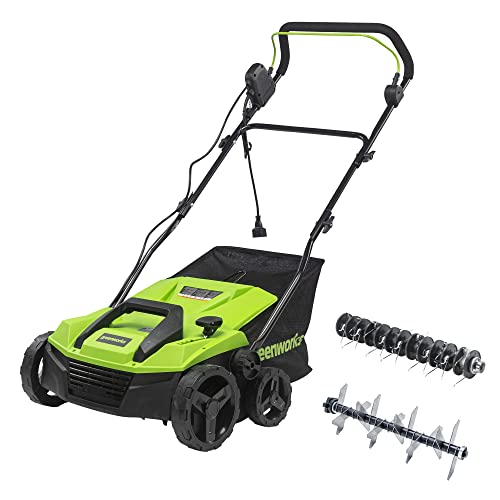
2-IN-1 DESIGN - 13A 14-Inch Dethatcher / Scarifer provides the power and versatility to keep your lawn healthy.No load speed : 3200 RPM

High-Performance Machine: Equipped with a powerful 13-amp motor that effectively removes tough thatch, aerates your lawn, and revitalizes grass for healthier, greener growth.
Learn How a Lawn Scarifier Works – From Teeth to Tines
If you want to restore a lawn’s health, you need to understand how a scarifier’s teeth and tines actually work. The blade design determines whether you get rigid steel tines that tear thatch or rotating blades that slice it into fine strips. On powered models, a vertically‑rotating cylinder drives teeth‑like blades into the turf, while a horizontal axle carries fixed blades that skim 2‑3 mm deep. This soil penetration loosens compacted layers, exposing microbial activity and enhancing nutrient diffusion. Manual scarifiers rely on a push‑pull motion; their sharp tines act like a high‑powered rake, scoring the surface and dislodging dead matter. Adjust depth settings to match thatch thickness, then run the unit lengthwise and crosswise for uniform aeration and debris removal. For best results, scarify when the lawn is actively growing and soil moisture is moderate. Proper timing also helps avoid soil compaction that can hinder root growth. Regular aeration promotes improved root development and a denser turf.
When to Use a Lawn Scarifier – Seasons and Signs of Thatch?
Understanding the mechanics of teeth and tines sets the stage for timing your scarification. Follow the ideal scarifier usage schedule by targeting early‑to‑mid‑spring (April‑May) after three to four weeks of regular mowing, when soil stays above 10 °C and grass is in vigorous growth. Perform the first pass after your season’s initial fertilisation, and avoid March unless conditions are warm enough. In autumn, aim for late August through October, at least six weeks before the first frost, to exploit cooler soil that encourages root development and deeper thatch removal. Watch for tell‑tale signs: a matting layer, moss, thin or patchy turf, slow drainage, and reduced vigor despite care. Conduct the best pre scarification lawn preparation—mowing, watering, and light aeration—before you engage the scarifier. Scarification removes the dead thatch layer which blocks water, air, nutrients from reaching the roots. Late‑season dethatching can still be effective if the grass is actively growing and moisture levels are adequate.
Compare Manual and Powered Scarifiers – Which Fits Your Yard
While a manual scarifier relies on your own strength to pull or push tines through the turf, a powered scarifier uses an electric or combustion motor to rotate blades or tines, dramatically reducing effort and increasing coverage. If you own a compact lawn under 100 m², a handheld rake‑type or wheeled manual unit offers eco‑friendly, silent operation and low purchase price, but it demands consistent physical exertion and limits speed. For medium yards (100‑500 m²), an electric corded or cordless battery scarifier delivers consistent torque, adjustable depth, and built‑in debris collection, aligning with home ownership considerations such as time efficiency and noise restrictions. Larger properties or compacted soils benefit from a petrol model’s high horsepower, though it incurs fuel cost, emissions, and higher maintenance. Your gardener expertise will guide whether you prioritize simplicity, portability, or power when selecting a scarifier. Proper use of a scarifier can prevent excessive thatch buildup, which otherwise hampers water infiltration and nutrient absorption. Regular maintenance of the irrigation system can also reduce the risk of leaks caused by faulty valves when the sprinkler heads are turned off. Consider enrolling your old mower in a local recycling program to ensure metal components are responsibly reclaimed.

2-in-1 Quick Release Blade: This electric dethatcher and scarifier comes with both dethatching and scarifying blades. The snap-on system allows tool-free switching, avoiding the need for multiple tools and saving time and effort in yard work

Electric Lawn Dethatcher: 12.6-inch corded electric dethatcher and scarifier with 8-gallon removable collection bag, ideal for small to mid-sized lawns to remove thatch and boost grass growth
Step‑by‑Step Scarifying Process for Best Results
You’ll start by mowing the lawn to a uniform 3‑4 cm height, then lower it to 2 cm with the mower’s minimum setting to expose the thatch layer while keeping the soil slightly moist but not hard. Next, clear stones and collect clippings, then set the scarifier blades to a 2‑3 mm working depth, testing on a corner strip. Adjust to 6‑9 mm only for heavy clay, never exceeding 4 mm to protect roots. Run the machine in straight lengthwise lines, then crosswise, creating a checkerboard pattern; lift the roller when turning. Rake the loosened thatch immediately, removing all debris to prevent re‑compaction. Inspect for bare spots, confirm thatch depth stays under 1 cm, and verify even aeration for soil quality maintenance. Apply seasonal timing adjustments to align scarifying with ideal growth periods. Regular watering after scarifying helps the grass recover faster. Understanding how weeds compete for nutrients can further motivate timely scarifying. Dethatching timing varies by region and grass type, so plan your scarifying in early spring or fall for best results.

【EFFICIENT 2-IN-1 LAWN CARE SYSTEM】 Transform your lawn with professional versatility. This electric scarifier and dethatcher includes two interchangeable carbon steel blades. Use the dethatcher blade to clear dead grass and moss, or switch to the scarifier blade to loosen compacted soil, promoting deep root growth and nutrient absorption for a lush, vibrant yard.
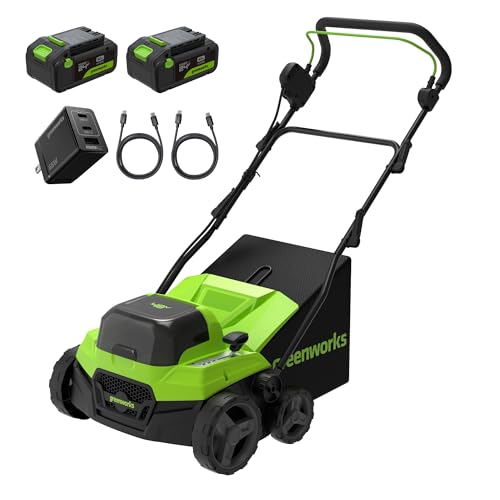
Powerful Brushless Motor : (2) 24V batteries combine to deliver 3600 RPM for high-efficiency lawn grooming, tackling thick grass, weeds, and uneven turf with ease.

2-in-1 Quick Release Blade: This electric dethatcher and scarifier comes with both dethatching and scarifying blades. The knob design allows tool-free switching, avoiding the need for multiple tools and saving time and effort in yard work
What to Do After Scarifying – Seed, Water, and Protect
After you’ve cleared the lawn of thatch, stones, and any lingering weeds, the next step is to restore the turf by seeding, watering, and protecting the new growth. First, aerate the soil with a garden fork, creating a network of channels that enhance oxygen diffusion and root penetration. Then, broadcast a seed blend that matches the existing species, brushing the granules into the aeration holes for ideal seed‑soil contact. Immediately follow with a balanced fertilizer application, selecting a high‑nitrogen, high‑phosphate formula appropriate for the season to stimulate germination and early vigor. Water the area lightly but consistently—daily for the first week, then taper to a regular schedule if rainfall is insufficient. Finally, implement protecting seeding measures such as a light topdressing and a temporary mulch barrier to shield seedlings from desiccation, predation, and temperature extremes while the root system establishes. Mowing helps to even out the surface before these steps. Aeration improves soil health by relieving compaction and promoting better water infiltration. Adjust mowing frequency as temperatures drop to avoid cutting the grass too short, which can damage the turf during winter dormancy periods. Proper seed‑soil contact is essential for maximizing germination rates.

NO ASSEMBLY REQUIRED: Scotts spreader comes pre-calibrated and ready-to-use with a fold-down handle for easy storage; use it year-round including as an ice melt spreader or salt spreader for snow

Liquid Soil Loosener: Can be used Alone or with Mechanical or Core Aeration, Aerating and Aerate Tools. Liquid Soil Loosener Conditions Compact Soil. Helps the Downward Movement of Water Allowing Vertical Drainage and Increased Water Infiltration.
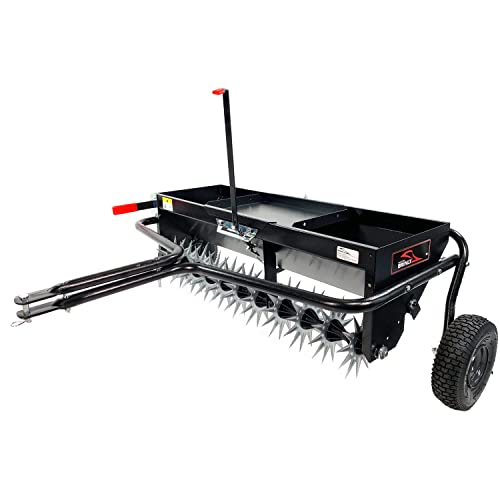
2-in-1 design: The combo aerator spreader drops seed, fertilizer or lime while you aerate to expedite your time in the lawn and ensures material enters the soil.
Top 5 Scarifier Mistakes That Damage Your Lawn
If you scarify under the wrong conditions—such as during dormancy, in waterlogged soil, or right after applying a pre‑emergent herbicide—you’ll invite disease, compaction, and weed pressure, and you’ll delay the lawn’s recovery. First, improper lawn preparation like scarifying on soggy ground crushes soil aggregates, leading to compaction and reduced aeration. Second, setting blades too deep removes excessive thatch and disrupts root zones, demanding prolonged regrowth. Third, inconsistent direction—random passes without a 45° cross‑pattern—creates uneven thatch removal and localized stress. Fourth, aggressive, repeated passes strip protective organic matter, exposing turf to desiccation and brown patches. Finally, inadequate lawn post treatment such as neglecting proper watering or overseeding after scarification hampers recovery and invites weeds. Avoid these errors to preserve turf vigor. Checking tine depth after the initial pass helps prevent over‑scarifying. Proper timing, such as aerating during the growing season for cool‑season grasses, maximizes root health and soil nutrient uptake. Aerating in the spring also takes advantage of the period when soil temperature is optimal for microbial activity.
Maintain Your Lawn Scarifier for Long‑Term Performance
When you keep your scarifier clean, lubricated, and inspected after each use, you prevent rust, wear, and mechanical failure, ensuring the tool remains efficient for years. Remove soil, thatch, and moss from the deck, blades, and collection chamber; dry every component before you store it. Apply a thin film of oil to blade pivots, axles, and motor shafts, and grease pivot points to stop seizing during inactivity. Inspect blades for dullness, tighten belts, and test safety switches before each season. Follow storage requirements: place the machine in a dry basement or garage, elevate it off the floor, and cover it loosely to keep dust out. Perform seasonal maintenance—clean, lubricate, and run a test—during spring and autumn to preserve performance and prolong lifespan. Always wear protective gear, such as goggles and gloves, when handling sharp blades and debris. Regular blade inspection helps catch wear early and extends the life of the scarifier. Sharpening blades once a season ensures optimal cutting efficiency and reduces strain on the motor. Properly angle your blade during sharpening maximizes cutting performance and reduces wear.

2-IN-1 FUNCTIONALITY: Switch between scarifying and dethatching with a powerful 3,400 RPM* motor and a 7.4-gallon collection bag for optimal lawn health.

[PRECISE OEM COMPATIBILITY] Replacement dethatcher tines Part #29272 perfectly fit for GREENWORKS 10 Amp 14" corded dethatcher models 27022 and 2500600G. Guaranteed seamless installation as direct lawn scarifier tines replacement.

2-in-1 Dual Blade Function: Work as both a dethatcher and scarifier, this electric dethatcher and aerator features interchangeable carbon steel blades for versatile lawn care. The thatcher blade clears dead grass and excess thatch, while the scarifier blade loosens compacted soil. It enhances root respiration and nutrient absorption, helping you build a thicker, healthier lawn with one single power rake tool.