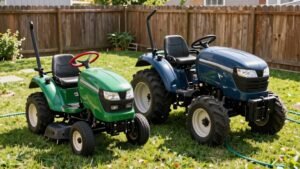

Turn off the mower, let it cool, and disconnect the spark‑plug lead. Use a 14 mm socket and ratchet to loosen the plug, then pull it out gently. Inspect the insulator nose—gray‑white is healthy, black soot or oily deposits mean it’s fouled. Measure the electrode gap with a feeler gauge and adjust it to the manufacturer’s spec. Ground the plug against the engine and watch for a strong, blue spark with a tester. Follow these steps and you’ll quickly know whether to clean or replace the plug, and the next section shows the full maintenance routine.
How to Identify Bad Spark Plug Symptoms on Your Mower
One of the quickest ways to spot a failing spark plug is to watch how the mower starts and runs. You’ll notice hard‑starting symptoms when the starter cord requires multiple pulls or the electric starter cranks longer than usual. Rough idling appears as irregular engine speed, shaking, or surging between RPMs without throttle input. Misfires manifest as occasional pops, power loss, or continuous rough running that can stall the engine. Poor acceleration is evident when the mower bogs down and throttle response lags. Excessive fuel consumption shows up as rapid fuel depletion and oily deposits on the cylinder head. To confirm, conduct testing spark plug resistance with a multimeter and perform evaluating combustion chamber deposits to detect carbon, oil, or corrosion buildup. Inspect for carbon buildup on the plug tip to gauge wear. Regularly check spark plug gap with a feeler gauge to ensure proper clearance before reinstallation. Properly torque the new plug to avoid over‑tightening which can damage the cylinder head.


Includes (2) RC12YC Spark Plugs.

Inspect the Plug Visually: Healthy vs. Faulty
When you pull the spark plug out, inspect its insulator nose, electrodes, and shell for color, deposits, and wear; a healthy plug shows a grayish‑white or grayish‑yellow nose, light brown or gray‑tan deposits on the side electrode, and even wear without carbon or oil. Look for fouled spark plugs: black oily or dry soot layers on the insulator tip, terminal, or electrodes signal oil or carbon fouling, while dry sandy deposits suggest valve‑seal leaks. Examine electrode erosion—excessive wear, melted or cauliflower‑like shapes, or uneven removal indicates overheating or aggressive fuel additives. A clean, intact shell with no orange coating confirms proper operation. If you spot any of these faults, replace the plug before further diagnosis. The presence of a spotlessly clean spark plug can indicate coolant intrusion into the cylinder. Regularly checking the plug’s condition can also help you assess whether the mower’s blade is correctly sharpened for optimal performance.
Tools You’ll Need for a Quick Spark Plug Inspection
If you want a fast, reliable spark‑plug inspection, gather a ratchet wrench with the appropriate socket extension, a 14 mm spark‑plug socket, a gap gauge, a spark tester, and a multimeter. First, attach the socket to the ratchet and use the extension to reach the plug without stripping the boot. Loosen the plug gently, then clean the surrounding area to keep debris out. Use the gap gauge to verify electrode spacing against the manual; adjust if needed. Connect the spark tester, ground the plug to the engine block, and observe spark intensity measurement for any irregularities. Finally, employ the multimeter for plug diagnostics, checking resistance and confirming the plug’s health before reinstallation. This systematic kit guarantees a quick, accurate assessment. Replace annually to prevent wear‑related spark loss. Continuity testing ensures the coil is operating within proper electrical parameters. Inspect for corrosion before starting any electrical tests.

High quality: Made of high quality chrome vanadium steel with a polished finish, it is resistant to wear and corrosion, easy to use, 360-degree rotation for maximum flexibility.

360° SWIVEL SPARK PLUG SOCKET: Spark plug socket features a 360° rotating joint, which enhances the spark plug socket’s flexibility, allowing you to easily access hard-to-reach areas for superior flexibility and efficient, especially in tight engine bays. This design significantly improves work efficiency, making spark plug removal and installation much easier and more convenient, particularly in confined spaces. Built-in rubber protective cover to protect the ceramic body

❏ SUPERIOR QUALITY - Our 3/8 inch spark plug socket is forged from integral heat-treated superior CRV steel, high hardness, high torque, polished surface, not easy to rust and deform, and can be used for a long time without damage, we are proud of its quality, it is the ideal professional tool for replacing spark plugs in cars.
Safely Remove the Spark Plug Without Damaging the Engine
Before you start, park the mower on a level surface, let the engine cool completely, and disconnect the spark‑plug lead to prevent accidental starts. Put on safety gloves, brush away dirt around the plug, and inspect for corrosion. Spray penetrating oil on the base, let it soak 15‑30 minutes (longer if stuck). Choose a snug spark‑plug socket with rubber boot, attach it securely, and use a ratchet or torque wrench for controlled counter‑clockwise pressure. If the plug resists, apply gentle heat with a gun or run the engine briefly, then rock the plug back and forth, tapping lightly if needed. Turn slowly to achieve gentle spark plug removal, protecting threads and engine integrity. After extraction, clean the threads, apply anti‑seize, and follow proper plug installation techniques for reassembly. Over‑tightening can cause thread galling, making removal difficult. For a quick fix, you can also inspect the recoil spring to ensure it isn’t seized before tackling the plug. Freeing a stuck starter cord often requires a similar approach of lubrication and careful manipulation. Remember to dispose of used oil according to local regulations after draining the mower’s oil.

360° SWIVEL SPARK PLUG SOCKET: Spark plug socket features a 360° rotating joint, which enhances the spark plug socket’s flexibility, allowing you to easily access hard-to-reach areas for superior flexibility and efficient, especially in tight engine bays. This design significantly improves work efficiency, making spark plug removal and installation much easier and more convenient, particularly in confined spaces. Built-in rubber protective cover to protect the ceramic body
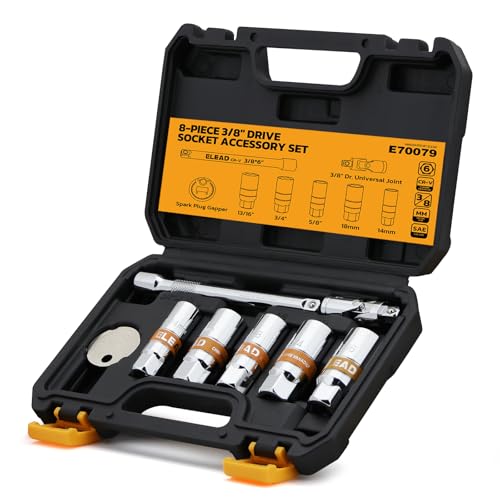
PREMIUM CR-V - Built from heat-treated chrome vanadium steel, this spark plug socket set offers exceptional durability and corrosion resistance. The mirror polish finish ensures easy cleanup and a professional appearance.

Universal Compatibility: This spark plug socket tool is designed to work with a wide range of vehicles, including cars and motorcycles, making it a versatile addition to any toolkit.
How to Check and Adjust the Electrode Gap to Manufacturer Specs
Check the electrode gap with a feeler gauge or a dedicated spark‑plug gap tool, then compare the measurement to the manufacturer’s specification before making any adjustments. Use reliable gap measurement techniques: slide a single gauge blade between the electrodes, feeling for slight resistance, or stack gauges for a thicker probe. If the tool passes freely, the gap is too wide; if it won’t enter, it’s too narrow. For the proper adjustment process, first bend the ground electrode outwards with light pressure using needle‑nose pliers, adding increments of 0.001‑0.002 inches. To narrow, press the electrode inward gently with the tool’s saddle or a flat surface. Re‑measure after each tweak until the gap matches the spec, then re‑install the plug. Proper gap ensures optimal ignition of the air‑fuel mixture. Keeping the blade sharp improves cutting efficiency and reduces wear on the mower. A clean cut is achieved when the mower blade is sharp enough to slice grass fibers rather than tearing them.

Wide range of professional automotive specialy tools

Accurate Measurement: This spark plug measuring tool provides accurate gap measurements from 0.020 to 0.100 inches, ensuring precise spark plug adjustments for improved combustion efficiency and consistent engine performance. The clearly marked scale makes it easy to measure and adjust

CTA Tools 3238 Spark Plug Gap Gauge - 9-Wire is designed to accurately measure spark plug gaps. The sizes range from 0.025, 0.030, 0.035, 0.040, 0.044, 0.045, .0.050, 0.055 and 0.060-inches. Heavy-duty construction allows for strength and durability. California Prop 65 - Warning, This product contains chemicals known to the State of California to cause cancer, birth defects or other reproductive harm.
Quickly Test Spark Plug Resistance With a Multimeter
After setting the electrode gap, you can verify the plug’s health by measuring its resistance with a multimeter. Set the dial to the 20 kΩ range (or 10–20 kΩ if 20 kΩ isn’t available). Touch the probes together first; the display should zero out, confirming proper function. Place one probe on the metal thread end and the other on the copper‑core center electrode, reaching fully inside without touching the side. A reading between 4 kΩ and 8 kΩ (displayed as 4–8) means the plug is good; 5–15 kΩ also indicates functionality. Readings below 1 kΩ or above 15 kΩ suggest failure. Clean contacts before testing, compare to a new plug’s spec, and note that resistance checks aid understanding electrode damage and testing plug heat range. Multimeter adjustment is essential for accurate measurements.
How to Test Spark Strength by Grounding the Plug
If you’ve already removed the plug and inspected it, you can now gauge its spark strength by grounding the metal shell to a clean spot on the engine block and briefly turning the ignition on. Use insulated pliers to hold the plug by its insulated end, keep the metal part pressed firmly against the block, and have an assistant engage the ignition without cranking the engine fully. Observe the electrode gap; a bright blue‑white arc that clears spark visibility constraints indicates proper spark quality. A weak, yellow, or absent spark signals a problem. Record the arc’s consistency, then re‑tighten the plug half to two‑thirds turn, ensuring it stays away from fuel lines. Document the result for future reference. The resistance of a spark plug can be measured with a multimeter to confirm it falls within the normal range. Using a right‑hand thread ensures the blade stays secure during operation. Regularly checking the fuel filter can prevent clogs that affect spark performance.
When to Brush or Replace a Spark Plug
When should you brush versus replace a spark plug? If the plug shows light carbon buildup, a quick wire‑brush or sandpaper pass will restore performance and support plug longevity. Scrape off any soft deposits, then spray a cleaner and brush again; if the electrode remains intact and the porcelain is uncracked, you can keep the plug for the season. Replace the plug when you see blackened, pitted, or melted electrodes, cracked porcelain, or deposits that a brush can’t eliminate. Heavy‑use yards or engines that run rich may require replacement every 25‑30 hours. Store spare plugs in a dry container, keep them upright, and avoid moisture—these plug storage tips further extend plug longevity. Use a socket to remove the old plug before inspecting it. Always disconnect the spark plug wire before any blade‑related maintenance to protect the engine from accidental sparks. Maintaining the blade angle is essential for safe and efficient mower operation.

You can depend on Honda for quality and reliability

Spark Plug MPN: For NGK BPR6ES 7131,For Torch F6RTC F6TC, For Champion RN9YC RN10YC For Honda 98079-56846 98079-56855 For MTD 951-10292 751-10292 951-10292A For Bosch WR6DC WR7DC

Reinstall the Spark Plug Properly to Avoid Future Issues
A clean, properly seated spark plug is the foundation for reliable engine performance, so after brushing or replacing it, you must install it with exacting care. First, hand‑thread the plug clockwise until the threads catch; this cross‑threading prevention step aligns the threads and protects the engine’s cylinder head. Next, use a spark‑plug socket with a rubber insert, tighten by hand until snug, then apply a quarter‑turn after resistance—never exceeding 15 ft‑lb. Watch the bottom washer compress as the torque indicator. Verify the electrode gap with a gauge, adjusting to .030 in if needed. Finally, push the ignition wire boot onto the tip until it clicks, confirming a secure connection. Following these steps maximizes spark plug longevity. Regularly clean the deck to prevent debris buildup that can affect engine performance. Maintaining proper oil level ensures the engine runs smoothly and reduces wear. Balancing the blades helps maintain even cutting and reduces vibration.
Spark Plug Maintenance Schedule for Your Mower
Need to know when to check or replace your mower’s spark plug? Follow a strict schedule: inspect every 25 hours of use or at the start of each mowing season, whichever comes first. For homeowners, a safe default is an annual check; for heavy‑use situations, review every 100 hours or yearly, whichever arrives first. Replace the plug once a year, at season start, or after 100 hours. If you notice a no‑start, corrosion, or fouling, intervene immediately. Uncommon usage patterns—like daily mowing of large lawns or dusty terrain—demand more frequent checks. Professionals inspect plugs by removing them, examining electrode wear, gap integrity, and carbon buildup, then cleaning or swapping as needed. Always use the manufacturer‑specified type and gap, and record each inspection to stay on track. Primer bulb usage ensures the carburetor receives fuel before the first pull. Regular oil changes are essential because oil condition directly impacts spark plug performance.