
You’ll find reel mowers give a razor‑thin, uniform cut that keeps blades intact, reduces disease, and leaves a crisp edge—perfect for fine‑textured lawns and low‑height stripes. Rotary mowers handle taller, coarser grass, work faster, and are better for uneven terrain, but they tear the foliage, create ragged edges, and can compact soil. Reel units are lighter, need less maintenance, and promote healthier soil, while rotary models consume more fuel and produce more noise. Keep reading to see which mower matches your lawn’s needs.
How Do Reel and Rotary Mowers Cut Grass?
Reel mowers slice grass with a rotating reel of blades that scissor against a stationary cutter bar, delivering a clean, uniform cut, while rotary mowers spin a single high‑speed blade above the deck, tearing the grass with blunt impact and producing a ragged edge. You’ll notice the reel’s precision of cut: each blade meets the cutter bar at a single point, shearing grass like scissors and leaving fine mulching clippings that disperse evenly. The rotary’s single blade relies on centrifugal force, chopping grass in a broad sweep that creates a ragged edge and ejects larger clippings. Reel systems keep the grass blade intact, reducing disease risk, whereas rotary action produces frayed ends and a coarser grass clipping discharge. This contrast defines their performance on low, uniform lawns versus taller, uneven terrain. Proper reel‑to‑bed‑knife adjustment ensures a clean cut and prevents uneven mowing. A sharp mower blade promotes healthier grass by preventing tearing and disease spread.

Compatible with all American Lawn Mower, Great States, Earthwise, and Scotts reel mowers

【Wide Compatibility】 Lawn Mower Blade Sharpener compatible with many brand Manual Push Reel Lawn Mowers

【Wide Compatibility 】:Our reel mower sharpener is compatible with American Lawn Mower/ Earthwise / Great States / Scotts and most standard manual push reel lawn mowers. Designed to fit the SK-2 standard size, it does NOT work with ROTARY lawn mowers, ensuring a precise match for your reel mower maintenance needs.
Which Mower Gives the Cleanest Grass Edge?
You’ll find that a reel mower delivers the cleanest grass edge, because its scissor‑like blades shear the turf uniformly, leaving a crisp, tear‑free line. Its sharp blades cut evenly, giving superior edge appearance on fine turf under eight inches. You’ll notice no torn strips or clumping, just a manicured border that mirrors professional grooming. In contrast, a rotary mower’s high‑speed blade creates rougher, uneven edges, often leaving shredded material that hampers edge maintenance. While rotary can handle taller overgrowth, it sacrifices finesse. If you prioritize a pristine, consistent trim, the reel mower outperforms rotary tools, ensuring tidy, sharp boundaries with minimal post‑cut cleanup. The existing edge can be refined more easily with a reel mower’s precise cut. Sharp blades also reduce fuel consumption by cutting more efficiently. Proper blade balance prolongs mower life and maintains cut quality. Using the correct edging angle helps achieve a uniform line and prevents turf damage.
How Do Reel vs. Rotary Mowers Affect Soil Health?
Because reel mowers slice grass with scissor‑like precision, they leave clean cuts that reduce plant stress and keep the soil’s nutrient cycle intact, whereas rotary mowers’ high‑speed, tearing action injures blades and can disrupt root health. You’ll notice that reel clippings drop back as a fine mulch, boosting mulch nutrient cycling and feeding microbes. Rotary mowers can shred clippings, but the benefit depends on mulching settings and often isn’t as natural. Reel units are lighter, so they exert minimal ground pressure, limiting soil compaction impact. Gas‑powered rotary models are heavier and can compact soil, especially on damp ground, which hinders root growth. By choosing a reel mower you preserve soil structure, reduce compaction, and enhance nutrient recycling. A well‑maintained reel mower also promotes healthier soil microbiome. Self‑propelled mowers further reduce user fatigue on larger or uneven lawns. Proper dethatching before mowing can improve grass health and enhance nutrient retention.
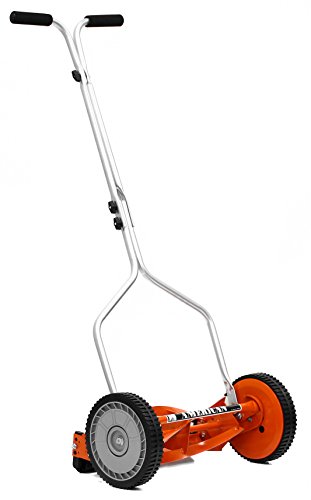
4-blade reel mower with a cutting width of 14” and durable 8.5” polymer wheels for maximum maneuverability. Lightweight at only 19 pounds. Reel Lawn Mowers are great for small lawns..Deluxe hand-reel mower ideal for most turf grasses.
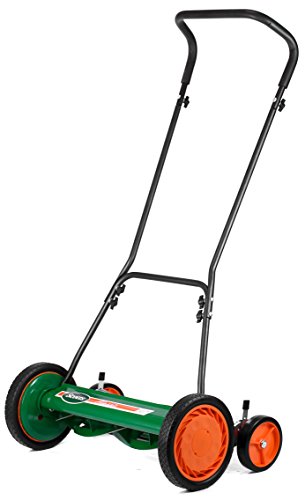
Classic Scotts 20 inch push no-motor manual reel rotary lawn mower features 20" cutting width, 5-blade ball bearing reel, and 10" dual tracking wheels

Scissor-Like Cutting High Efficiency:The Walensee Push Reel Lawn Mower features 5 precision blades and a 20-inch cutting width for clean, efficient cuts. Its scissor-like action slices grass instead of tearing it, helping maintain a healthier, more vibrant lawn. Walensee Mower cuts faster and with less effort than many others. For best results,we recommend clearing large twigs, stones, and debris from the lawn before mowing to prevent jamming or interrupted cutting.
What Lawn Height and Grass Types Favor Reel or Rotary?
Choosing the right mower hinges on the grass height you keep and the species you grow. Reel mowers excel at low cuts—10‑20 mm with a 10‑blade reel, 20‑40 mm with six blades, and 25‑45 mm with five. They work best on fine‑textured grasses such as Kentucky bluegrass, creeping bentgrass, and annual ryegrass, where frequent lawn mowing frequency (often 1‑4 times a week) and high maintenance intensity keep the surface smooth. Rotary mowers handle taller, coarser stands—3‑4 inches for Bermuda, 4 inches or more for ryegrass—and tolerate uneven ground and lower lawn mowing frequency. They suit dichondra, taller ryegrass varieties, and any grass that benefits from reduced maintenance intensity and less precise, higher‑cut mowing. Warm‑season grasses thrive best in warmer climates, influencing mower selection. Zero‑turn mowers offer superior maneuverability that can further reduce labor time on complex landscapes. Proper edging with a dedicated trimmer can enhance the clean lines of both mower types. Selecting the appropriate blade type also depends on the soil compaction level, as compacted soils can impede blade performance.
When Should I Choose a Reel Mower for Stripe‑Perfect, Low‑Cut Lawns?
When you need razor‑thin, stripe‑perfect lawns, a reel mower beats a rotary because its scissor‑like blades cut cleanly at 0.5–1.5 inches, preserving fine‑textured turf such as Bermuda, Zoysiagrass, and Kentucky bluegrass. Choose a reel mower when you regularly mow at 0.5–1.5 inches, want crisp, uniform stripes, and have a smooth, even surface. Its seven‑blade or five‑blade designs keep blades engaged for consistent cuts, while the heavy deck and large rear wheels handle slight bumps without sacrificing stability. You’ll enjoy minimized maintenance requirements because the blades stay sharp longer and need only occasional sharpening. Easy maneuverability around landscaping lets you trim close to trees and flower beds, delivering a manicured look without extra effort. The inertia drive system in some models further reduces effort by allowing the mower to glide smoothly across thick lawns. Properly blade balancing ensures uniform wear and optimal cutting performance. Maintaining optimal blade sharpness is crucial for achieving a clean cut and extending the life of the mower.

SCISSOR-LIKE CUT: No ripping or tearing of grass blades for a better and healthier lawn

5-Blade reel with a cutting width of 16” and durable 10” polymer wheels for maximum maneuverability

WIDE 18-INCH CUTTING PATH – The five-blade reel and 18-inch cutting width cover more lawn with each pass while providing a clean, scissor-like cut on regularly maintained grass.
When Is a Rotary Mower Better for Tall or Uneven Turf?
A rotary mower outperforms a reel mower whenever your lawn is tall, uneven, or littered with debris, because its high‑speed blades slice through grass up to 8 feet high and handle slopes of 30°–37° without jamming. You’ll notice the difference on thick weeds, saplings, or after a storm that leaves sticks and rocks scattered. The self‑propelled, all‑terrain tires keep traction on mud and bumps, while the 3‑speed transmission lets you adjust power for steep grades. Adjustable cutting height from 3.5 to 7.5 inches gives you flexibility, and the steel frame offers corrosion resistance for long‑term durability. Blade maintenance stays simple—just sharpen or replace as needed—so you spend less time fixing and more time mowing. The machine’s 20 HP engine provides ample power for demanding terrain. Hydraulic pressure ensures smooth, consistent cutting force, reducing wear and improving efficiency. Front‑wheel‑drive designs also enhance traction on uneven ground, allowing the mower to stay stable on slopes and rough patches. For larger properties, a zero‑turn design can dramatically cut mowing time.
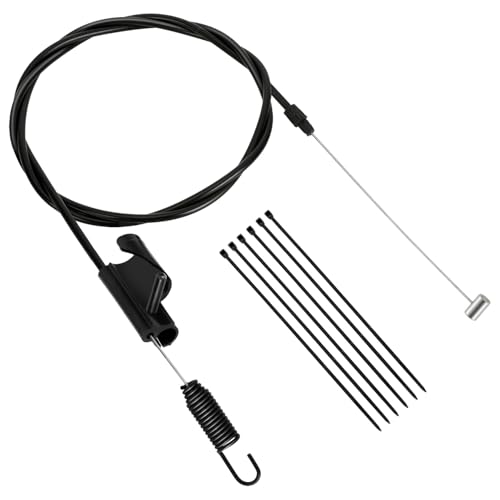
Replacement Part Model: 946-04728A, 946-04728, 746-04728, 746-04728A

Spring Information:285-544 Clutch Springs, Compatible with Snapper Mowers, with your purchase you will receive 2 brand new 285-544 Clutch Replacement Springs, a perfect match for your mower!

OEM Part Number: 946-04728A, 946-04728, 746-04728, 746-04728A
Reel vs. Rotary: Sharpening, Alignment, and Engine Care?
Keeping a reel mower sharp and its bedknife aligned demands more hands‑on work than maintaining a rotary, but the payoff is a scissors‑like cut on fine turf. For reels, you’ll grind or backlap each blade, equalizing diameters and setting a five‑degree relief angle; shiny edges and light contact confirm bedknife sharpening. Tighten one side of the bedknife and loosen the other to keep the helical blades scissoring the stationary knife—misalignment causes waviness and requires further grinding. Rotary blades need simpler sharpening, but high‑speed impact still demands annual blade work to avoid frayed tips. Engine maintenance is more involved on reels, where precise settings affect efficiency; rotaries use a straightforward engine with fewer adjustments. Both require yearly engine care, yet rotaries stay easier overall. The mounting points on fairway mowers are wider than those on greens mowers, allowing for better stability during pull‑behind operation. Regular oil changes prevent engine wear and keep the mower running smoothly.
How Loud Are Reel and Rotary Mowers in a Neighborhood?
Most neighborhoods hear a reel mower at about 60‑70 dB—roughly conversation level—while a gas‑powered rotary pushes the noise up to 85‑90 dB, comparable to heavy traffic or a jackhammer. You’ll notice the manual reel stays at the low end, making it ideal for noise‑pollution considerations in dense housing. Gas‑powered reels remain quieter than most rotaries, but they still require more physical effort and regular blade tension checks. Electric rotaries sit in the 75‑80 dB range, offering a moderate compromise; they’re louder than reels but quieter than gas rotaries, and they demand battery care and occasional motor servicing. Gas rotaries hit 85‑90 dB, often forcing neighbors to wear ear protection, and they bring higher fuel‑type maintenance. Choose the mower that fits your neighborhood’s noise tolerance and your equipment‑maintenance requirements. Reel mower can achieve lower cutting heights than rotary mowers, allowing for a finer, more precise cut. Understanding decibel impact helps you comply with local noise ordinances. Wear protective gear to reduce the risk of injury while operating any mower.
What’s the Real Cost of Reel vs. Rotary Mowers?
So, how do the true costs of reel versus rotary mowers stack up? A push reel costs under $600, while a residential rotary runs $600‑$800, and powered reels start at $1,500 and can exceed $3,000. Commercial rotaries climb to $14,000, but commercial reels like Toro Reelmaster stay lower. Reel mowers last decades with minimal parts, so their total lifetime cost often undercuts a rotary that needs blade replacements and occasional engine rebuilds. Maintenance on reels is precise but cheap; rotaries need cheap blade sharpening but more frequent service. Fuel efficiency benefits are clear: manual reels eliminate fuel entirely, and powered reels use far less gasoline than gas rotaries, which consume millions of gallons annually. Ultimately, reels offer higher upfront spend but lower ongoing expenses, while rotaries stay cheap initially but accrue higher fuel and replacement costs over time. Selecting the right mower also depends on lawn size and terrain. Proper maintenance schedule can significantly extend the lifespan of both mower types.

14-INCH CUTTING WIDTH – Five heat-treated alloy-steel blades provide a scissor-action cut, while 10-inch polymer wheels support maneuverability around smaller lawn areas.

SCISSOR-LIKE CUT: No ripping or tearing of grass blades for a better and healthier lawn

TOOL-FREE BLADE ADJUSTMENT SYSTEM: Unlike traditional reel mowers that require tools to adjust blade tension, the Lawnworld reel lawn mower features convenient adjustment knobs on both sides. Easily fine-tune blade tension by hand to achieve smoother operation and improved cutting performance
Decision Checklist: Match Your Lawn Goals to the Right Mower
While the cost analysis shows reels save money over time, the real decision hinges on your lawn’s characteristics. First, assess grass type: if you have fine‑textured Bermuda, Zoysia, or Bentgrass and prefer a clean, striped look for superior lawn aesthetics, a reel mower fits. For coarse, tall warm‑season grasses or mixed species, a rotary offers versatility and better cost effectiveness. Next, consider size and terrain. Reel mowers excel on flat, even areas under 5,000 sq ft.; rotary mowers handle larger spaces, slopes, and obstacles without scalping. Finally, weigh maintenance effort. If you enjoy frequent sharpening and precise cuts, choose reel; if you need low‑maintenance, quick coverage, go rotary. Match these factors to your goals for the ideal mower.