
Pick a blade that matches your deck length, center‑hole size, and mounting pattern, then choose the lift profile and material based on your grass type and terrain. Standard blades give fast, clean cuts on level lawns with low torque. Mulching blades use a dual‑cross design and domed decks to recycle nutrients, but they need frequent mowing. High‑lift blades boost bagging for wet, dense grass, while low‑lift blades save power on dry or sandy ground. Gator (Atomic) blades offer extra durability for heavy‑duty use. Keep reading to find the best fit for your yard.
Key Decision Factors for Picking a Lawn Mower Blade
Choosing the right lawn‑mower blade hinges on three core factors: size and fit, lift profile, and material durability. You must match blade length to the deck—21 in for push models, 42 in for residential riding, 46 in for mid‑size tractors, 54 in for larger units—while confirming the center‑hole diameter and mounting pattern to avoid wobble and safety hazards. For multi‑blade lawn mowers, verify each blade’s tip‑to‑tip spacing to keep the assembly balanced. Select a lift profile that suits your grass: high‑lift for thick, dense turf; medium‑lift for average lawns; low‑lift for thin or sandy conditions, remembering that high‑lift demands more engine power. Finally, choose heat‑treated alloy or high‑carbon steel of appropriate thickness; thicker steel resists wear but can strain RPMs, whereas stamped steel dulls quickly and may tear grass, compromising both cut quality and safety. An unbalanced blade can cause uneven wear and increase fuel consumption, so regularly checking blade balance helps maintain optimal mower performance. Sharp blades are also crucial for a clean cut because they reduce tearing and promote healthier regrowth, which is why monitoring blade sharpness should be part of routine maintenance. Following a proper blade removal procedure ensures safety and prevents damage to the mower’s spindle.
Standard Lawn Mower Blades – Fast, Simple Cutting for Level Lawns
Standard lawn‑mower blades—often called 2‑in‑1 or medium‑lift blades—deliver fast, straightforward cutting on level, well‑maintained lawns. Their straight design with a slight edge curve creates just enough lift to discharge clippings cleanly, while the aerodynamic shape minimizes drag for efficient power use. You’ll find them as OEM equipment on most modern mowers, available in lengths from 20‑in to 42‑in decks and with 1‑inch or 5/8‑inch star‑hole mounts. Because they require less engine torque than high‑lift models, they help you achieve consistent lawn quality with quieter operation and reduced wear on mower components. To keep performance ideal, schedule routine blade maintenance—inspect for dullness, clean debris, and tighten mounting bolts before each mowing season. High‑lift blades excel on tall, thick grass where a clean, even cut is essential. Sharp blades reduce fuel consumption by allowing the engine to work more efficiently.

Convertible Design: The removable wheeled deck allows quick transformation into a small lawn mower for versatile yard care

942-0741A 21 inch Lawn Mower Blade (Mulching)OEM: CC-742-0741, 742-0741, 742-0741A, 942-0741, 942-0741A
Mulching Lawn Mower Blades – Boost Lawn Health While Eliminating Bagging
Mulching mower blades—curved, often paired in a cross‑wise configuration—cut grass into fine particles repeatedly so the clippings fall back onto the turf, delivering nutrients and moisture while eliminating the need for a bag. The dual‑blade, cross‑plus design maximizes mulching efficiency by repeatedly re‑cutting clippings until they’re small enough to disperse evenly. Paired with a domed deck, the system traps moisture, reduces evaporation, and keeps soil temperature stable. As the fine material decomposes, soil microorganism activity spikes, accelerating nutrient release—up to 25 % of fertilizer requirements. For ideal performance, mow every three to four days, avoid wet or overly long grass, and swap blades swiftly when switching to bagging or discharge modes. The high‑lift airflow of standard blades can be useful for clearing tall grass, but mulching blades focus on recutting clippings for fertilizer. Understanding soil nutrient cycling helps you appreciate the long‑term benefits of mulching.

Includes 1 mulching blade for many 21 in. cut MTD, Cub Cadet, Troy-Bilt, and Craftsman mowers. Must Match Current Blade OEM Number to insure exact fit.

Includes 1 universal replacement for 21 in. cut mowers

Includes 1 commercial mulching blade for many 22 in. cut Toro recyclers
High‑Lift vs. Low‑Lift Blades – Which Suction Suits Your Grass?
After mastering mulching, the next decision is whether a high‑lift or low‑lift blade best matches your lawn’s suction needs. High‑lift blades have a 1‑in. to 1‑3/16‑in. upward curve that creates strong airflow, boosting bagging performance and lifting grass upright for a clean cut. They excel on wet, tall, dense grass but demand more horsepower, raising power consumption and wear. Low‑lift blades stay under 3/4 in., generating gentle airflow that reduces suction, noise, and dust while preserving engine load. They’re ideal for sandy or dry terrain, side‑discharge, and prolonging equipment life. Choose high‑lift for superior bagging and precise cuts; pick low‑lift for lower power consumption and less debris intake. Higher lift blades require more engine power, which can strain mowers with limited horsepower. Reel mowers, which use a scissor‑like cutting action, often benefit from low‑lift blades to maintain their quiet, efficient operation. Regular blade inspection can reveal uneven wear before it impacts mower performance. Properly calibrating mower speed ensures optimal cutting efficiency and prevents uneven wear.

Replaces OEM Parts: Husqvarna 138971, 127843, 138971X431, 532138971, 532127843, 532138498, 134149, 532134149, 138498, 531005085, 424752, 532424752, Craftsman 138971, 532138971


[Who is 942-04308 Blades for?]: Designed for homeowners with Riding Mower/ RZT Mowers/Lawn Tractors/Zero-Turn Mowers with a 42-inch Cutting Deck, (1997 - ).Brands:Cub Cadet Troy-Bilt, MTD, Craftsman, MTD Gold, Bolens, White Outdoor, Yard Machines, Yard Man and Huskee
Gator (Atomic) Lawn Mower Blades – A Tough, All‑Rounder for Heavy Duty
When you need a blade that can tackle dense clumps and heavy‑duty mowing without sacrificing mulching quality, the Gator (Atomic) design delivers. Its multiple cutting edges break grass into fine particles during discharge, reducing clumping and boosting mulch consistency. You’ll find 18‑inch and 24.5‑inch lengths for compact and larger decks, each with a 5/8‑inch, six‑point star center hole that fits a wide range of Toro models. The aggressive geometry addresses design engineering challenges such as maintaining structural integrity under high‑torque loads while preserving sharpness. In commercial settings, blade performance in commercial applications is proven on Z Master and Grandstand series, where durability and discharge uniformity meet demanding mowing schedules. Proper model verification and OEM part numbers guarantee correct fit and satisfactory results. Using sharp OEM blades improves cut quality and reduces engine strain. A sharp blade also promotes clean cuts that help the grass recover faster and stay healthier. Regular sharpening, ideally once per season, ensures the blade retains its cutting efficiency throughout the year. Following a proper safety protocol, such as wearing protective gloves, minimizes the risk of injury while handling the blade.

MODEL COMPATIBILITY: Specifically designed for Wild Badger Power 18-inch Electric Lawn Mower

Blade Width - 3.00"

18-Inch Heat Treated Steel Mower Blade
Material & Shape Choices – Steel Types, Center Holes, and Hand‑Cut Preferences
The Gator (Atomic) blade’s aggressive geometry demands a steel that can absorb high‑torque loads without cracking, so selecting the right material and shape becomes the next step. You’ll likely choose advanced steel alloys such as PM‑V11 for balanced hardness, or high‑carbon steel treated to 38‑42 RC for durability. If you need impact resistance, consider boron‑enhanced or MARBAIN alloys; for easy hand‑sharpening, O1 offers low chromium and quick edge renewal, while A2 provides longer retention at the cost of brittleness. Verify center hole specifications against your mower’s OEM number; mismatched diameters cause vibration or damage. Shape selection follows terrain: low‑lift for sandy, dry lawns; high‑lift for thick, wet grass; straight or shredding for mulching. Hand‑cut preferences favor softer 1040/1045 steel to avoid shattering during impact. Proper blade sharpening can significantly improve cutting efficiency and prolong blade life, especially when using a bench grinder for a consistent edge. Always wear protective eyewear to shield your eyes from metal sparks during the grinding process.


2-Pack of Toro Part 137-1999-03
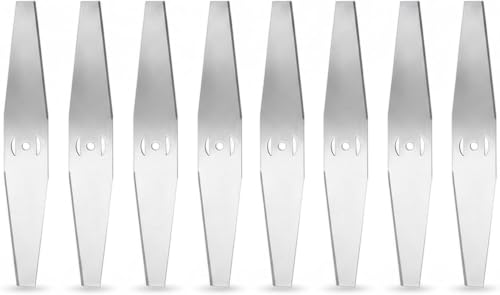
AISI 1050 Carbon Steel Construction – Each 20cm diamond blade is made from genuine AISI 1050 high-carbon steel in its economical as-rolled condition. This provides reliable strength for regular residential mowing tasks.