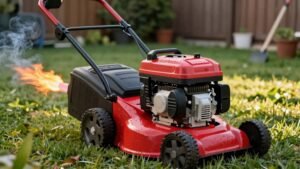

A residential mower usually lasts 500‑1,500 operating hours, which translates to about 6‑10 years for most homeowners who mow 20‑30 times a year. Zero‑turn models hit the high end of that range, while regular deck sizes fall nearer the middle. Proper storage, timely blade sharpening, oil changes every 50 hours, and seasonal air‑filter swaps add the most life. Rough terrain, extreme temperatures, and wet grass accelerate wear. If you keep up with these practices, you’ll uncover more details on extending your mower’s service life.
What Is the Typical Hour Lifespan of a Residential Lawn Mower?
If you own a residential zero‑turn mower, expect roughly 500–1,500 operating hours before performance noticeably declines. You’ll see cut quality drop after about 1,000 hours, especially if you neglect lawn mower storage conditions such as temperature extremes, moisture, and exposure to sunlight. Proper storage preserves engine seals and battery life, extending usable hours. Grass type also matters: dense, coarse grasses demand more torque and cause faster blade wear, while fine, cool‑season grasses impose lighter loads. Track your annual usage—typically 20–120 hours—to forecast when maintenance must intensify. Regular oil changes, air‑filter swaps, and blade sharpening counteract wear, pushing the mower toward the upper end of its 1,500‑hour expectancy. Adjust mowing frequency as temperature drops to prevent over‑cutting and maintain healthy grass during seasonal transitions. Zero‑turn mowers excel in tight spaces thanks to their independent wheel pivot system, delivering a tight turning radius that outperforms conventional riding mowers. Front‑wheel‑drive models provide better traction on uneven terrain, reducing wheel slip and improving stability.

Replaces OEM Part: Toro 119-8820, Exmark 119-8820-SL Deck Belt for 50-Inch Mower Decks

Compatible with Bad Boy Zero Turn Mower MZ ZT CZT Outlaw Pup Fits all Cub Cadet Zero Turn Mowers RZT42 RZT50 RZT54

Replaces OEM Part: Bad Boy 041-1650-00, Bad Boy B165 041165000
How Do Mowing Frequency and Acreage Convert Hours to Years for Your Lawn Mower?
Typical homeowners mow 20–30 times a year, translating to roughly 20–120 operating hours annually; you convert those hours to years by dividing total hours by the mower’s expected hourly capacity (500–1,500 h). For a 21‑inch deck at 3 mph, one acre takes 1 h 55 min; a 36‑inch deck at 3.3 mph needs 61 min; a 48‑inch deck at 3.3 mph requires 46 min. Multiply the per‑acre time by your yard size and weekly mowing weeks (≈32) to obtain annual hours. If you average 64 h/year, the mower falls within a 6‑10‑year lifespan. Higher mowing frequency or larger acreage raises annual hours, shortening service years. Optimize mowing efficiency and maintain a stable storage environment to approach the upper hour range. Clear debris before each session to prevent blade damage and ensure an even cut. Understanding grass height helps you adjust speed and deck width for consistent results. Proper cutting height ensures the lawn stays dense and resilient.
Which Maintenance Tasks Add the Most Hours to a Lawn Mower’s Life?
Regular maintenance tasks that consume the most operating hours are blade upkeep, oil changes, air‑filter replacement, undercarriage cleaning, and proper storage with fuel management. You should sharpen blades at a blade sharpening frequency of every 25 hours or weekly, then balance them to eliminate vibration. Oil change intervals of 50 hours or once per season keep the engine lubricated and prevent component wear. Replace the air filter each season or after 25 hours to maintain airflow and fuel efficiency. After every cut, clean the undercarriage, scrape debris, rinse if allowed, and dry thoroughly to avoid rust and performance loss. Finally, empty the fuel tank or add stabilizer for off‑season storage, keep the mower covered, and conduct a pre‑season professional tune‑up. These actions directly extend operational life. Properly file the blade at the correct angle ensures a sharp, even cut and reduces strain on the mower. Blade dullness can also cause uneven mowing and increased fuel consumption. A clean cut promotes healthier grass and reduces weed seed spread.

Brushless Motor for Powerful Performance: SporGain mower blade sharpener tool is equipped with a high-performance brushless motor, this lawn mower blade sharpener provides stronger power, lower noise, and longer lifespan than traditional motors, delivering smooth and efficient sharpening for lawn mower blades
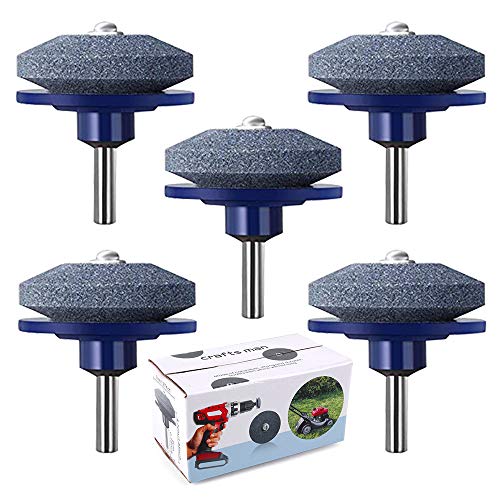
Lawn Mower Blade Sharpener : The new version of the Lawn Mower Blade Sharpener is Made of corundum, it solves the base wear caused by the excessive speed of grindstone, and effectively prolongs the service life and improves the use effect of the product. Our lawn mower blade sharpener is provided by the original factory, and it is guaranteed.

VERSATILE – The most versatile sharpener in the market to sharpen and hone both single and double beveled blades including knife, mower blade, pruner, loppers, hedge shears, axe, machete, hatchet, scissors, edged tool, etc.
How Do Terrain and Weather Speed Up Wear on Your Lawn Mower?
After sharpening and oil‑changing on schedule, the next factor that determines how long your mower will last is the environment in which you operate it. Hot dry weather raises pavement temperature, lowering tire pressure and stability, while airborne dust clogs air filters and accelerates engine wear. Rough terrain forces uneven loads on tires, causing tread thinning, cracks, and punctures from rocks or glass; overloading on hills exceeds weight limits and strains the frame. Wet grass clogs decks, increases discharge weight, and tears blades, demanding sharper edges. Abrasive soils such as sand dull blades weekly, and temperature extremes expand and contract rubber, prompting UV‑induced cracks. Over mowing and under maintenance amplify these effects, and improper storage conditions further degrade components, shortening service life. Regularly checking protective gear ensures operator safety and reduces accident risk. Proper oil level monitoring prevents engine overheating and prolongs mower lifespan. Additionally, a faulty solenoid can prevent the starter from engaging, leading to premature wear on the engine.

Universal Fit:Lawn mower blade removal tool fits all walk-behind and riding lawn mowers, compatible with both single and twin blade models, and works with mower decks up to 42 inches. Perfectly compatible with leading brands such as for Troy-Bilt 490-850-0005, for MTD 490-850-0005, for Yard Machines 490-850-0005, and for Cub Cadet 490-850-0005

ECOVACS Goat Robot Lawn Mower Blades Kit for O1000 RTK/A2500 RTK/A3000 LiDAR
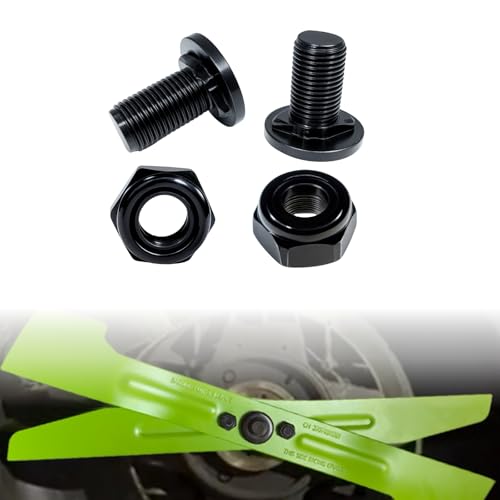
【Mower Blade Bolts and Nuts Kit】Lawn mower replacement parts include 5640321002 blade bolts and 5630351002 lock nuts,compatible with EGO LM2130, LM2133, LM2130SP, LM2135SP, LM2150SP & LM2156SP 21" mowers(Blades Not Included)
Which Brands and Build Qualities Deliver the Longest Service Life for a Lawn Mower?
Which brands truly outlast the rest? You’ll find that Toro’s steel decks, Briggs & Stratton engines, and large back wheels combine for a decade‑plus service life, especially when you practice proper mower storage. Ego’s Power+ 1000 LM2236SP delivers high‑current battery power and self‑propulsion; its lab‑tested endurance makes it a leading electric option, provided you store the battery at moderate temperature. Troy‑Bilt’s TB110 relies on a proven Briggs & Stratton motor and rugged chassis, yielding decades of use under commercial grade mowers’ stress. Greenworks MO60L419 offers a lightweight, 40 V design with a four‑year warranty; its runtime supports typical sessions without excessive fatigue. Across all models, commercial grade mowers benefit most from regular maintenance, timely oil changes, and proper mower storage to maximize lifespan. The fabric grass bag improves airflow and reduces fill rate slowdown. Selecting the right cutting width for your yard size can further extend mower longevity by reducing strain on the engine. Hydraulic lawn mowers provide consistent cutting pressure that helps maintain blade performance over time. Toro’s reputation for powerful engines and advanced mulching technology makes it especially suitable for larger or tougher lawns.
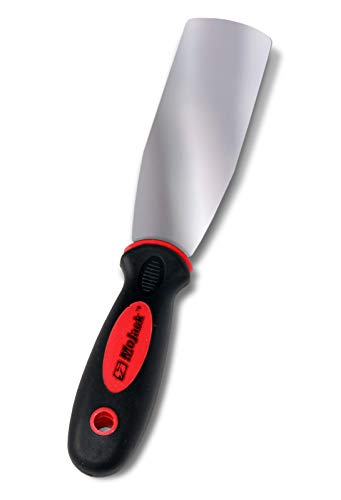
Industrial deck cleaning tool: Engineered to remove compacted grass, dirt, and debris from under lawn mower decks

【Fit For】Lawn mower deck washout port compatible with Husqvarna 2246 LS,2346 XLS,2348 LS,2348 LS,2748 GLS,2754 GLS ride mower,LGT2554 lawn tractor etc.

20-Inch mower blade compatible with GreenWorks 20-inch mowers