
You should aerate before seeding because it breaks up compact soil, opening pathways for water, nutrients, and oxygen that let seed reach the root zone and germinate faster. Aeration also reduces competition from existing grass, improves moisture absorption, and encourages beneficial microbes, all of which boost nitrogen availability and seedling vigor. The timing depends on your grass type—cool‑season grasses thrive when aerated in early spring or early fall, while warm‑season varieties prefer late spring to early summer. Proper prep, the right aerator, and post‑aeration care will maximize results, and the sections below explain how to avoid common mistakes and when you might skip aeration altogether.
Why Aerate First for Better Seed Germination
Why should you aerate before seeding? Aeration breaks up compact soil, creating pathways that let water, nutrients, and oxygen reach root zones. By pulling cores, you lower compaction and establish proper soil conditions for seed germination. The holes you create become direct channels for seeds, ensuring they settle into fertile soil rather than lingering on thatch. This direct contact improves moisture absorption and nutrient uptake, boosting nitrogen availability and fertilizer effectiveness. Aeration also reduces competition from existing grass, giving new seedlings a clearer resource pool. Enhanced oxygen flow supports deeper root development and beneficial microbes, leading to stronger, more resilient turf. In short, aerating first maximizes germination success while avoiding compaction and maintaining ideal soil health. Proper aeration also encourages the growth of beneficial soil microbes that further enhance nutrient cycling. Aerating during the optimal season ensures the soil is warm enough for rapid seed germination. This practice also helps to improve water infiltration by creating channels that reduce runoff and promote even moisture distribution.
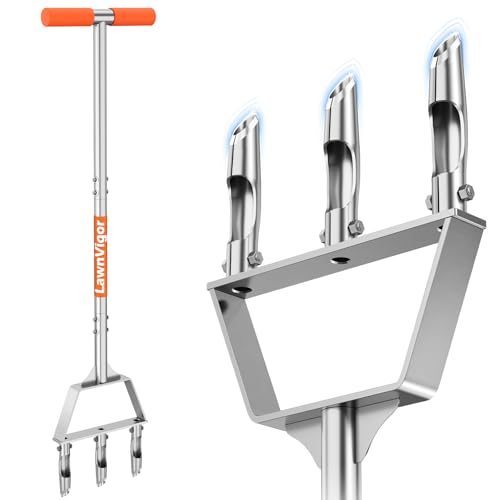
LAWN AERATOR FOR HEALTHIER LAWN GROWTH: Our manual lawn aerators promotes lush, green lawns by delivering essential air, water and nutrients deep into the soils. The lawn air aerator tool ensures healthier grass growth. (Note: Please water dry soil before use and do not rock, twist, or pry the tool side-to-side when it's in the ground.)

Liquid Soil Loosener: Can be used Alone or with Mechanical or Core Aeration, Aerating and Aerate Tools. Liquid Soil Loosener Conditions Compact Soil. Helps the Downward Movement of Water Allowing Vertical Drainage and Increased Water Infiltration.

Deeper Aeration: The lawn aerator features angled coring tines that cut through hardened soil, pulling out 3-in deep soil plugs. Wide side slots help prevent clogging. Deeper aeration delivers oxygen, water, and nutrients to the roots
Best Seasons for Aerating Different Grass Types
After breaking up compact soil, you’ll want to coordinate aeration timing to the grass’s growth cycle. For cool‑season grasses, target early spring (soil 50‑65 °F) or, preferably, mid‑August to mid‑September. This window maximizes soil amendment benefits and aligns with the primary growth surge. Warm‑season grasses require late spring to early summer; once soil exceeds 65 °F, aerate through May‑June for Bermudagrass, Zoysia, and St. Augustust, extending through July in southern zones. Border areas may use a May‑June slot for cold‑tolerant warm‑season varieties. Heavy clay or high‑traffic lawns merit a second pass in early spring or late summer. Maintain moist, not saturated, soil to facilitate tine penetration and speedy recovery. Aeration also disturbs the surface layer, bringing weed seeds to the surface. Proper timing helps soil aeration enhance root development and nutrient uptake. Aeration frequency should be adjusted based on the amount of foot traffic and soil compaction. Aeration can also improve oxygen diffusion in the root zone, promoting healthier growth.

Adjustable Size: The 11.5* 5 inch Aerator Shoes fit for women's shoe size 6-10, men's shoe size 6-9, with 3 adjustable Velcro straps wrapped around your heel and attach with hook-and-loop fasteners, no slipping and loosing.

Preparation Before Aerating: Before using aerator lawn tool, trim the grass to an appropriate height and check soil moisture. If the soil is dry and compacted, the tool may struggle to operate or fail to penetrate the soil. Water the area and wait several days. If the soil is excessively wet and muddy, wait several days until moisture levels moderate. Ideal soil conditions should be moist and loose, ensuring the aerator penetrates smoothly for optimal results.

DOUBLE SPRING DESIGN: Patent Pending. Featuring an innovative dual-layer spring design, the RIFPOD Lawn Aerator addresses the common hassle of manually removing soil and dried leaves after aeration. It ensures a smooth, efficient, and time-saving loosening process, promoting optimal lawn growth without compromising soil integrity
Step‑by‑Step Prep for Aeration & Overseeding
When you prep for aeration and overseeding, start by testing the soil’s pH and nutrient levels, then apply a fertilizer matched to your grass type and any necessary amendments before you even mow. Schedule soil sample timing early in the season to capture baseline data; amend based on results. Mow low, bag clippings, and dethatch to expose a clean surface. Flag utilities, sprinkler heads, and buried lines, calling 811 if needed. Water 1 inch 48 hours prior, achieving damp but not soggy conditions. Set your aerator for a core hole depth of 2‑3 inches, ensuring uniform penetration. Immediately after aeration, broadcast seed, lightly rake to settle it into the holes, and keep the area moist until germination. Proper moisture management is crucial for seed germination and promotes strong root development. Aeration also improves water infiltration by relieving soil compaction, allowing rain and irrigation to reach deeper root zones.

OPERATION: Adjustable arm support on this seed, salt and fertilizer spreader helps provide maximum comfort

NO ASSEMBLY REQUIRED: Scotts spreader comes pre-calibrated and ready-to-use with a fold-down handle for easy storage; use it year-round including as an ice melt spreader or salt spreader for snow

64-OUNCE BOTTLE: high-capacity poly bottle with a wide opening and easy screw top, quickly remove the lid to add your preferred seed, salt, fertilizer, etc. and simply screw back into place
Choosing the Right Aeration Method
Which method suits your lawn’s size, soil type, and compaction level? If you have under 1,000 ft² and light soil, a manual aerator gives precise depth control without motor power. For 1,000‑5,000 ft², a push‑behind unit—gas or electric—covers medium lawns efficiently; rental equipment costs are modest and the machine removes 2‑3‑inch plugs, delivering core aeration benefits such as reduced compaction, improved nutrient flow, and rhizome activation. Larger than 5,000 ft², attach a tow‑behind aerator to a tractor; this handles extensive areas quickly and often integrates seeding. Spike aeration, cheaper and lighter, creates holes without extracting soil, but it may increase compaction and offers fewer core aeration benefits. Choose the tool that matches your area, soil density, and budget for ideal aeration. Proper aeration also breaks up compacted soil caused by high foot traffic. Core aerators enhance root growth by allowing deeper penetration of water and nutrients. Performing aeration in the optimal season maximizes recovery and long‑term lawn health. Understanding the soil structure differences helps you pick the most effective aeration technique.

5 Star-Shaped Penetrate Soil: Suchtale Push Spike Aerator with unique 5 steel tines star with 8” diameters, each feature 10 spike uneven tips so that can penetrate compacted soil up to 2” in depth, rotates independently, allowing water, seed, and nutrients to reach the roots. Our lawn aerators are mainly composed of strong steel tubes and sharp steel teeth, which are designed to resist bending and function effectively even in compacted soil, while also exhibiting good rust resistance.

Revive Your Lawn: This lawn aerator tool features upgraded spikes that penetrate deep into hard soil, creating clear pathways for air, water, and fertilizer to reach the roots. The solid spike won't clog with mud. No frequent stops to clean

32-Inch Extra-Wide Working Width: This tow-behind core aerator features an ultra-wide 32-inch coverage, allowing you to aerate larger areas in fewer passes. Easily towed behind a lawn tractor or riding mower, it improves soil airflow and drainage to help your lawn recover faster
Post‑Aeration Seeding, Watering & Fertilizing
Choosing the right aeration method sets the stage for immediate seeding, watering, and fertilizing. After you finish aerating, spread premium turf‑type grass blend—preferably the recommended seed varieties for Tall Fescue—directly into the holes using a cross‑hatch pattern. Lightly water the area to keep the soil moist, applying 0.5‑1 inch per section for about an hour, and start a daily light‑watering schedule that continues for 21‑28 days. Within 24‑48 hours, broadcast a starter fertilizer with a balanced NPK formula, using a slow‑release source to match soil nutrient deficiencies and avoid overfertilization. Monitor soil temperature impacts; ideal germination occurs when temperatures stay within the species’ range. After the first 28 days, reduce watering to 1‑1.5 inches weekly in two to three sessions and delay mowing until the new grass reaches three inches. For best results, ensure the holes are 2‑3 inches deep and spaced 4‑6 inches apart. Proper aeration also improves soil oxygen penetration which supports healthier root development. Regularly inspect the lawn for compacted soil to target future aeration efforts effectively.

WHEN TO APPLY: Apply pre-emergent weed killer plus lawn fertilizer to a dry lawn when temperatures are consistently between 60°F and 90°F for best results

FERTILIZER FOR NEW LAWNS: Scotts Turf Builder Starter Food for New Grass is a specially formulated starter fertilizer for grass seed that is designed to be used when planting new grass

WHEN TO APPLY: Apply pre-emergent weed killer plus lawn fertilizer to a dry lawn when temperatures are consistently between 60°F and 90°F for best results
Top 5 Mistakes That Ruin Aeration & Overseeding
Mistakes that ruin aeration and overseeding usually stem from timing, equipment, technique, soil moisture, and seed selection, and each error can dramatically reduce germination and root development. First, aerate at the wrong season; early spring frost or midsummer heat kills seeds and prevents maximizing soil nutrient access. Second, use spike aerators or spiked shoes, which increase compaction instead of identifying soil compaction levels. Third, operate the machine improperly—uneven holes, failure to disengage tines on turns, and damaging underground utilities create patchy aeration and hinder water flow. Fourth, aerate when the soil is dry; dry, compact ground resists penetration and leads to uneven seed placement. Fifth, overseed with the wrong grass type or rate, or apply fertilizer too early, which burns tender seedlings and reduces establishment. Consider aerating when the soil temperature is between 50–65 °F for optimal root growth. Proper timing also aligns with the seasonal dethatching schedule to ensure the lawn is free of that and that buildup before aeration. Regularly check the thatch thickness to confirm it is below ½ inch before proceeding.
When Skipping Aeration Is Okay and What to Do Instead
After outlining the common aeration pitfalls, it’s worth noting that you can skip core aeration when the soil is already loose, the thatch layer is thin, and the terrain is flat. In those conditions, low‑maintenance solutions such as liquid aeration work best. Apply a nutrient‑rich liquid in spring or fall; it chemically loosens compacted particles, penetrates thin thatch, and sustains root growth without creating holes. Pair this with targeted overseeding: spread seed uniformly, water lightly, and let the liquid medium improve seed‑soil contact. For mildly sloped lawns, liquid treatments conserve water and avoid runoff issues. Avoid mechanical plugs, monitor moisture, and expect comparable germination rates to traditional aeration while reducing labor and recovery time. Even seed can achieve dense coverage when spread at the recommended rate. The acetic acid in the liquid can also help suppress weed growth by damaging young plant tissue. Additionally, integrating a drip irrigation system can further enhance water efficiency and promote uniform moisture distribution.