
First, grab a flat‑head screwdriver or the Rainbird Rotor Tool, plus gloves and a pull‑up tool. Pull up the pop‑up head, turn the turret counter‑clockwise until the left stop hits the furthest spray boundary, then lock it in place. Using the adjustment key, turn clockwise to widen the arc (up to 360°) or counter‑clockwise to narrow it (down to 40°) and listen for the ratcheting click. Finally, twist the nozzle screw to swing the pattern left or right and adjust the radius screw for the proper throw distance. Continue, and you’ll uncover how to test and fine‑tune everything for flawless coverage.
Which Rain Bird Sprinkler Is Right for Your Yard?
Choosing the right Rain Bird sprinkler starts with evaluating your yard’s size, shape, and traffic. For small‑to‑medium lawns, pop‑up spray heads give 15‑foot coverage, even distribution, and low‑height clearance—perfect for low‑traffic zones. If you have a medium‑to‑large area, gear‑drive rotors reach 20‑50 feet, offer adjustable arcs, and use Rain Curtain nozzles to cut wind‑blown overspray, helping meet water‑conservation factors. Impact sprinklers handle high‑traffic spots with larger droplets and 360° patterns, reducing mist. Rotary nozzles excel in efficiency, delivering matched precipitation rates for customized watering schedules across varied patterns. Match nozzle flow to arc width, consider pressure, and select the model that balances coverage with water‑saving goals. The new short‑throw nozzle offers a 2.5‑meter range, ideal for tight spaces. Debris buildup can also cause rotation problems, so regular cleaning is essential. Properly assess water distribution before adjusting ensures uniform coverage across the entire lawn.

Approved for sale/meets pressure regulation legislation requirements in: CA, CO, HI, VT, MA, ME, NY, OR, RI, WA, and Washington DC
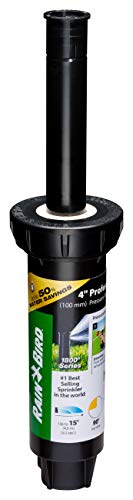
Approved for sale/meets pressure regulation legislation requirements in: CA, CO, HI, VT, MA, ME, NY, OR, RI, WA, and Washington DC
Essential Tools & Safety Gear for Adjusting Rain Bird Sprinklers
One of the most important steps before you start tweaking a Rain Bird sprinkler is gathering the right tools and safety gear. First, select appropriate rotor adjustment tools: a flat‑head screwdriver or the Rain Bird Rotor Tool for 3500, 32SA, and 5000 series, and the universal rotor tool for other models. Keep a pull‑up tool handy to raise pop‑up heads without hand strain. Use pliers with a wrench to tighten or loosen heads, and a spray‑head pull‑up tool for nozzle access. For safety, wear gloves that give you a firm grip on wet heads and protect your hands while you turn the turret. Avoid metal contact with the riser stem, insert tools carefully into rubber‑covered slots, and listen for the click that signals arc limits. The radius adjustment screw allows you to change spray distance up to 35% without swapping the nozzle. spray pattern assessment helps you determine the optimal arc and radius before making adjustments.

Rainbird Rotor Adjustment Tool

The Rainbird Rotor Adjustment Tool is used to adjust and lift Rainbird rotors including 3500, 5000, 5000 Plus, 5500, Falcon 6504, 7005, 8005, EAGLE 351B, 32SA, 42SA and 52SA series
Hunter Key
Set the Fixed Left Edge on Rotors for Consistent Starting Points
If you want every watering cycle to start from the same spot, set the rotor’s fixed left edge before anything else. Pull the turret up, then turn it counter‑clockwise until the left trip point clicks into the fixed left stop. Align this stop with the furthest left spray boundary; this location adjustment prevents sprinkler interference with neighboring zones. Rotate the entire case to lock the edge in place, but if the turret resists, turn clockwise first to release tension. For Rain Bird 5000 heads, adjust the left stop before the right stop, hand‑turning the body as needed. Test the slip clutch by moving the turret back and forth; guarantee the left edge stays fixed during rotation. Verify that the left stop halts counter‑clockwise travel and eliminates overspray beyond the yard edge. Check water pressure before making adjustments to ensure consistent flow. Adjust the radius to fit the specific garden layout, ensuring the spray does not reach the house. Properly calibrating the spray arc helps achieve uniform coverage across the lawn. Selecting the proper sprinkler head type is essential for matching the system’s flow rate and pressure to the desired coverage area.
Adjust Rotor Head Arc: 40°‑360° Coverage for Rain Bird Rotors
When you need to tailor a Rain Bird rotor’s spray to a specific area, start by holding the turret at the fixed left stop and insert the adjustment tool into the head’s socket. Turn the tool clockwise to increase the arc, each full turn adds 90°, and counter‑clockwise to decrease it. Listen for the ratcheting click; it signals you’ve hit the 40° minimum or 360° maximum. Keep the turret locked at the left stop throughout to prevent mis‑alignment. Use this adjustment for targeted landscaping—shrink the arc to avoid driveways or expand it for full‑lawn coverage. Remember seasonal considerations: a wider arc in summer maximizes watering, while a narrower arc in winter reduces runoff and conserves water. Stop adjusting as soon as the ratcheting sound occurs. The 3504‑PC’s arc is adjustable from 40 to 360 degrees using the same tool. Proper head selection ensures the sprinkler can deliver the required spray radius for uniform coverage. Understanding flow rate is essential for matching head capacity to zone size. consistent lawn coverage is achieved by checking water pressure before making adjustments.


Handy pull-up tool makes easy work of lifting retracted geared rotor stems

Use to adjust a variety of lawn sprinklers from Rainbird and other brands
Fine‑Tune Spray Head Direction and Nozzle Distance for Rain Bird Spray Heads
Need to nail the spray head’s direction and distance? Grab your Rain Bird adjustment key or a flat‑head screwdriver and locate the nozzle screw on top of the head. Turn the screw clockwise to swing the pattern right, counter‑clockwise to swing left, aligning the arrow parallel to the driveway or flower bed edge. Next, fine‑tune the radius: the plus/minus‑marked screw controls distance. Turn clockwise to shrink the throw, counter‑clockwise to extend it. Watch the stream as you adjust—stop when you’ve optimized spray pattern for flower beds without drenching sidewalks. If you see a fine mist, tighten the radius screw slightly to correct excessive water misting. Use a small wrench only if you need a micro‑adjustment, and avoid overtightening to protect the rotor. Replace the nozzle to change the throw pattern if needed. Properly adjusting the head can also prevent water runoff and soil erosion on sloped lawns. Regularly check the deck for even cutting to maintain consistent coverage. Adding a cap to the sprinkler head can further conserve water and reduce over‑watering on the lawn.

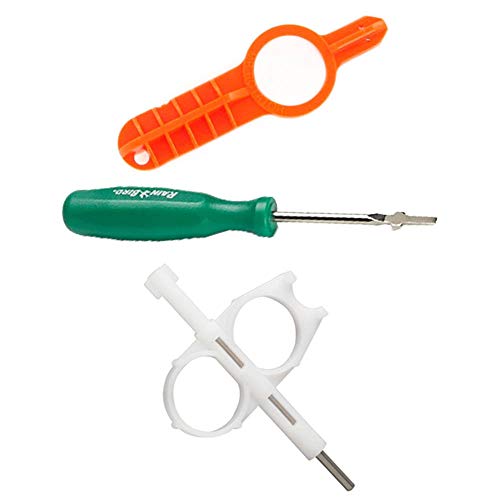
3 Pack of Rain Bird Rotor Tool (Rotor Screwdriver / Pull-up Tool)

⭐【8 PACK SPRINKLER TOOL KIT】This 8 pack sprinkler head tool set includes everything you need for lawn irrigation maintenance: 1 pc rotor adjustment screwdriver, 1 pc spray head pull up tool, 3 pcs rotor nozzles tool, 3 pcs PGP adjustment tool. Designed compatible with Rain Bird and compatible with Hunter, this sprinkler head adjustment tool kit helps you easily adjust rotor heads, replace nozzles, and maintain your sprinkler system with one convenient set

Universal Compatibility Mastery: Effortlessly fine tune your irrigation system with a kit are compatible with Rain Bird 5000 series and compatible with Hunter PGP rotors. This 4 piece set ensures your lawn receives precise hydration without the hassle
How to Test Your Adjustments and Fix Common Issues
Now that the spray head’s direction and radius are set, run each zone for a short cycle and watch the water. Observe dry spots, overspray onto walkways, and pooling around heads; these clues tell you if you need to tweak radius or arc. If you spot pooling, you’re likely troubleshooting clogged nozzles—clean the nozzle and rotor with a wrench or the Rain Bird tool, then rinse away debris. Verify that each rotor head rotates steadily and delivers an even spray pattern. Adjust the “+” or “‑” radius screw in small increments, retesting after each turn until coverage is uniform. Finally, run a full‑cycle test to confirm you’ve achieved optimal water distribution and eliminated common issues. Regular maintenance helps prevent future clogs and ensures consistent performance. Remember to depressurize the system before any adjustments to avoid accidental spray.

✅【2 PACK SPRAY HEAD SPRINKLER TOOL KIT】This 2 pack sprinkler head tool set includes spray head pull up tool and rotor adjustment screwdriver. Designed compatible with Rain Bird and compatible with Hunter, this sprinkler head adjustment tool kit helps you easily adjust rotor heads, replace nozzles, and maintain your sprinkler system

---US Patent Pending---

⭐【4 Pack Sprinkler Key Tool Set】This 4 pack sprinkler head tool set includes 1 pc rotor adjustment screwdriver and 3 pcs rotary sprinkler tool. Designed compatible with Rain Bird and compatible with Hunter, this sprinkler head adjustment tool kit helps you easily adjust rotor heads, replace nozzles, and maintain your sprinkler system with one convenient set