

First, map your lawn and draw a grid, then mark quarter‑pattern heads at each corner so their arcs intersect the edges. Space regular heads no farther than their spray radius to guarantee head‑to‑head overlap, and adjust spacing until each nozzle reaches its neighbors. Call 811 to mark utilities, outline the trench, and verify clearances. Dig the trench, lay black poly pipe, backfill, and pressure‑test. Install a valve box with a backflow preventer, connect the manifold, attach risers, position sprinklers, and finally flush, test, and fine‑tune before backfilling, and the next sections will guide you through each detail.
Plan Layout & Head Placement for Lawn Sprinkler Installation
How do you guarantee every square foot of lawn receives water? Start by mapping the perimeter and drawing a grid with a compass. Place quarter‑pattern heads in each corner, ensuring their spray arcs intersect at the edges. Space regular heads no farther than their radius—4 m for a 4‑meter‑radius nozzle—to achieve 100 % head‑to‑head overlap along pipe runs. Verify that each nozzle’s spray reaches the adjacent head, especially directly in front of the nozzle where coverage gaps appear. Adjust spacing for irregular zones by aligning the first head’s spray to hit the third head downstream, and add perimeter heads where corner overlap falls short. Integrate variable nozzle performance settings via remote control integration to fine‑tune flow and pressure for each head, maintaining consistent overlap across the entire layout. Incorrect sprinkler placement can cause dry spots if heads are not aligned with the grid. Properly adjusting the arc using the head’s adjustment screw ensures each sprinkler covers its intended distance and angle. Optimal flow rate is essential for matching head spacing to water pressure and avoiding uneven distribution. Ensure the system includes a pressure regulator to maintain consistent water pressure throughout the network.

Smart Irrigation Starts Here - The Rain Bird 1804VAN 1800 Series Pack of 4 features 4-inch pop-up sprinkler heads with a fixed spray, variable arc nozzle and 1/2 in. female threaded inlet, made in the USA and built for precise irrigation in lawns, garden beds, and landscaped areas in residential and professional systems.

ADJUSTABLE ARC & SPRAY DISTANCE: Includes a preinstalled 3.0 GPM nozzle with an arc that adjusts from 40° to 360°, ideal for both full and part circle coverage. Delivers a spray distance of approximately 22 to 52 feet, with optional nozzles (sold separately) allowing further customization.

What you will get: you will receive 10 pieces variable arc nozzles, enough for your replacements or share with friends and neighbors.
Select Sprinklers & Compute Water Needs for Your System
When you choose sprinklers, match the model’s coverage area and material durability to your lawn’s size and terrain. Start by measuring each zone, then select oscillating units whose coverage—1566 sq ft for standard, 4100 sq ft for turbo, 2160 sq ft for metal‑base models—fits the zone dimensions. Verify that the base material (plastic, aluminum, or enameled metal) resists corrosion in your climate. Use the built‑in levers and brass swivel couplings for sprinkler coverage adjustments, aligning spray patterns with rectangular or square sections. Next, calculate water consumption estimates: multiply zone area by the recommended application rate (e.g., 0.5 in/hr) and divide by the nozzle flow rate (gpm). Adjust flow control valves to meet the target, ensuring uniform distribution while minimizing waste. Consider the garden’s soil type and water‑holding capacity when planning irrigation schedules, as soil permeability influences how quickly water infiltrates and can help prevent runoff. Properly adjusting the sprinkler arc can eliminate dry spots and overlapping spray, leading to more efficient watering. For fine‑tuning, use a hose or spray can to wet spots and adjust the head’s angle and distance accordingly.
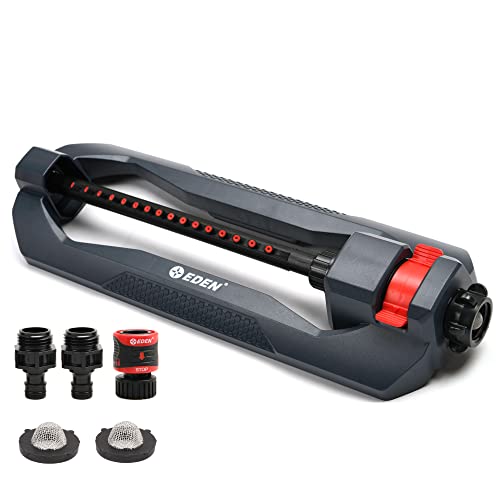
16 PRECISION NOZZLES- Provides even, consistent watering coverage for lawns and gardens up to 3,600 sq. ft..

20 precision nozzles provide maximum coverage up to 4,500 sq. ft. for healthy grass and growing gardens

EVEN WATERING COVERAGE: Covers up to 2,800 sq. ft with 16 precision nozzles that provide consistent watering
Mark Trench Path & Locate Utilities Before Sprinkler Installation
Before you start digging, call 811 at least two business days in advance; the free service will have utility companies mark any underground lines—electric, gas, water, sewer, irrigation, or lighting—within your planned trench area. First, outline the trench path with a solid or dashed line using spray paint or flags; this visual cue tells locators the exact work zone. Hire experienced locators to trace and stake all utilities that intersect the line. When they finish, Review utility marker color codes—red for electric, yellow for gas, blue for water, orange for sewer, green for irrigation, and purple for lighting—to confirm each line’s location. Record the marked boundaries on a site plan, then verify clearances before any excavation begins. Tri-State Waterworks can also mark private irrigation systems such as sprinkler heads to protect them during installation. Properly securing the riser with a torque wrench helps prevent future leaks.
Dig Trench & Lay Main Poly Pipe for Sprinkler System
Once the trench path is marked and utilities are cleared, begin digging to the required depth—10‑12 inches for the main line and 6‑8 inches for laterals—using a shovel for small sections or a trencher for larger stretches, and keep the soil slightly moist to ease removal. Lay the black poly pipe along the trench, cutting clean, square ends with a specialized cutter. Remove any kinked sections, then join ends with a coupler, barb fitting, and crimp clamp. Position the pipe on one side of the trench while you backfill with soil on the opposite side, compacting gently to avoid excessive soil compaction that could restrict flow. After the pipe is laid, perform a leak test, then verify pressure regulation before proceeding to the next phase. Ensure the system is fully depressurized before starting any work to prevent accidental spray from sprinkler head pressure. Replace a sprinkler head using the proper torque settings to avoid overtightening. Follow safety guidelines when handling tools and water pressure.

APPLICATION: RectorSeal pipe repair kit is a cost-effective pipe repair system; stops leaks on all rigid pipes in a variety of applications; knitted fiberglass cloth in...
Set Up Valve Box & Anti‑Backflow for Sprinkler Installation
You’ll start by selecting a valve box that matches the number of valves and pipe size—12 × 17 inches for a typical 2‑4‑valve residential manifold, 15 × 22 inches for larger setups, or a round 7‑ or 10‑inch box for master valves and drip zones. Dig a hole larger than the box at the highest point of the layout to keep water out; a 17 × 12‑inch opening works for a two‑valve manifold. Remove turf, then add a 3‑4‑inch gravel base, leveling it before setting the box. Place the box so the valve box location is accessible and the lid sits flush with grade. Install the backflow device on the main supply, using brass adapters and positioning it near the box for easy maintenance. Connect the manifold, verify all fittings, and cover with gravel and soil. Ensuring the valve box is level with the surrounding ground helps prevent dirt buildup and protects the pipe. Properly adjusting the sprinkler head’s arc setting ensures even water distribution and reduces overspray. Verify that the pop‑up sprinkler head’s sprinkler stem is fully seated before back‑filling to avoid damaging the riser. Choosing the right battery type can also affect the longevity of any battery‑powered equipment you use on the job.
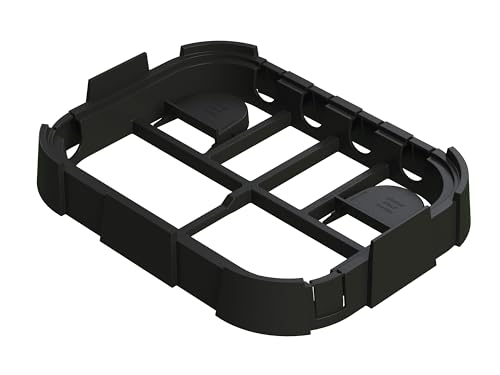
Quick Installation: Pre-made knockout slots eliminate cutting and sawing; remove by hand for easy pipe placement

UNIVERSAL SPRINKLER BOX LID: The Underhill VL-6T-24 and VL-6-24 VersaLid models fit round valve boxes for residential and commercial grade sprinkler systems; available in Green, Tan, or Purple colors

𝗙𝗜𝗡𝗗 𝗛𝗜𝗗𝗗𝗘𝗡 𝗦𝗣𝗥𝗜𝗡𝗞𝗟𝗘𝗥 𝗩𝗔𝗟𝗩𝗘𝗦 — NO DIGGING REQUIRED Makes buried irrigation valves rapidly click so you can hear and pinpoint their location, even when valve boxes are missing or covered by turf.
Attach Risers & Position Sprinklers for Head‑to‑Head Coverage
After the valve box is set and the backflow device installed, attach the risers to the lateral pipe outlets and position the sprinkler heads for head‑to‑head coverage. Screw each riser into its T‑fitting, then hand‑tighten a swing‑joint riser so you can tweak height and angle later. Thread the sprinkler head onto the riser, keeping the top ¼‑½ in. above soil and at least 4 in. from sidewalks or concrete edges. Adjust each head perpendicular to the ground, then set spacing so the spray of one head reaches the base of the next, creating an interlocking pattern. Use triangular or square layouts to achieve uniform sprinkler pattern optimization, ensuring overlap and eliminating dry spots across the zone. Head‑to‑head coverage is essential for even water distribution and prevents dry spots. Assess water distribution before finalizing head placement. Selecting the appropriate timer type based on your lawn size and climate can further improve water efficiency.
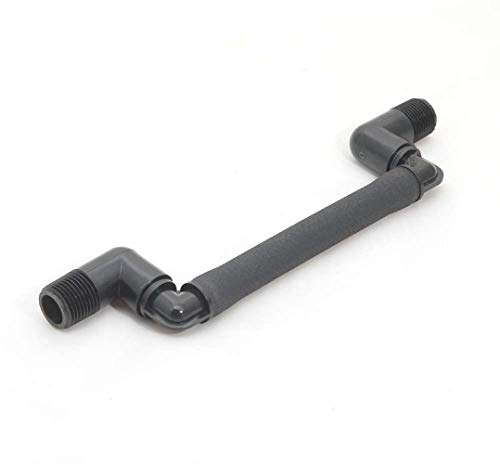
Swivel ells for versatility.
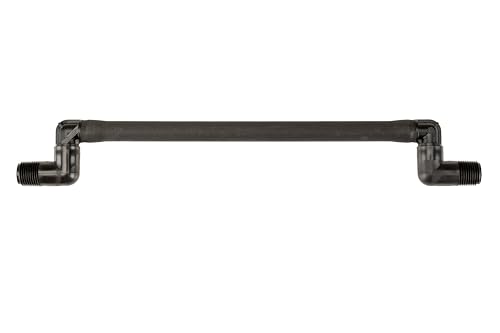
ADJUST SPRINKLER HEIGHT FAST: Fix buried or low sprinkler heads without digging or cutting pipe. Align easily with grass, mulch, or new landscaping for proper spray coverage.

【Adjustable Connector】- This product features a adjustable connector, designed to provide optimal functionality and durability. Made from premium materials, it ensures a strong and long-lasting performance.
Test, Flush & Adjust Sprinkler System Before Backfilling
How do you verify that your sprinkler system is ready for backfilling? First, pressurize the line slowly to protect pipe integrity and check pressure regulation at the main valve. Use a 5‑gallon bucket and measuring cup: time how long it takes to fill the bucket, then calculate GPM (300 ÷ seconds). Next, test each zone for leaks, spray coverage, and proper function. Remove the end‑of‑zone head, attach a flush cap, and run water for 15‑20 seconds to perform pipe flushing and clear debris. If a cap isn’t available, run each sprinkler without its nozzle for 5‑10 seconds. Inspect and unclog nozzles, replace damaged heads, and adjust spray patterns for head‑to‑head overlap. Finally, verify the backflow preventer is sealed and re‑pressurize slowly before covering the lines. If you notice low pressure at the far end, the line may be clogged. Loose fittings can also cause rotation problems, so ensure all connections are tight before backfilling. Regularly check the system for clogged heads to maintain optimal performance.