

Turn off the main water supply, power down the controller, and set it to manual mode. Wear eye protection and keep clear of active heads. Connect a compressor rated 50‑60 PSI (no higher than 80 PSI for PVC) and 20‑50 CFM to the blowout port, then open the ball valve to isolate the lines. Starting with the zone farthest from the compressor, pressurize until the water stream turns to mist, shut that zone, and move sequentially toward the compressor. Close all valves, release residual pressure, and check for leaks—more details follow if you keep going.
Irrigation System Blowout: Safety, Water Shut‑Off, Valve Setup
Before you start the blowout, shut off the main water supply and power the controller, then set the system to manual mode so you can activate each zone individually. Wear eye protection and stay clear of active heads; never leave the compressor unattended. Connect the compressor hose to the blowout port with the proper adapter, then relieve pressure by opening the farthest sprinkler. Perform a quick drainage inspection to verify all water has cleared before proceeding. Set the compressor to 50‑80 PSI for PVC or ≤50 PSI for flexible piping, and increase pressure gradually. Close all manual drain valves after water drains, then open each zone one at a time via the controller. Validate backflow preventer settings, and conduct compressor maintenance after the job to guarantee longevity. Remember to cap the pipe before removing the sprinkler head to prevent soil erosion. Check riser alignment before tightening the new head to ensure proper flow. Correct trench depth prevents damage to buried pipes and ensures stable head placement.

Universal Brass Adapter with Common NPT Fits: Crafted in heavy brass, this winterize sprinkler system blow out adapter supports 1/4″, 3/8″, 1/2″, 3/4″, and 1″ MNPT plus FNPT connections, compatible with most residential and RV irrigation systems. No more guessing which thread size is needed
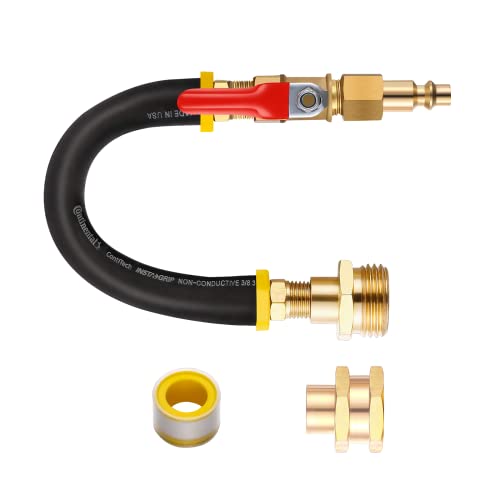
MULTIPURPOSE:The winterizing kit with shut off valve come with 3/4 male and female garden hose connector,When with male garden hose end is typically used to winterize recreational vehicles(RV), watercraft, garden hose, camper, boat and travel trailer. The fitting with female garden hose end is typically used to winterize sprinkler systems, garden hoses, and outdoor plumbing.
Irrigation System Blowout – Let the System Drain Naturally
When you shut off the main water supply and isolate the irrigation lines, the system will begin to empty on its own, allowing bulk water to drain before you introduce compressed air. Follow the natural drainage steps: turn the ball valve perpendicular, open the mainline hose bib, and set backflow test cock valves to a 45‑degree angle. Open isolation valves similarly to let air replace water, then close backflow valves after a few minutes. Catch runoff in a bucket to prevent overflow. Inspect each zone for remaining moisture; only when all pipes are dry should you move to the next winterization procedures. Proper drainage guarantees water‑logged sections are eliminated, reduces freeze‑damage risk, and ascertains a clean baseline for the compressed‑air blow‑out. Use a thick extension cord to power the 4‑horsepower electric air compressor safely. Regularly checking the state of charge can help you identify early signs of battery degradation before they affect system performance. Additionally, applying a sealant to any minor leaks found during inspection can prevent water loss and future damage. A proper slope ensures water flows toward the drainage points without pooling.
Irrigation System Blowout – Choose a Compressor (PSI, CFM, Pipe Rating)
Choosing the right compressor hinges on matching pressure (PSI), airflow (CFM), and pipe rating to your irrigation layout. Aim for 40‑80 psi, but keep it at 50‑60 psi for most systems; exceed 80 psi on rigid PVC or 50 psi on polyethylene or prevent cracking. Compute CFM by dividing each zone’s GPM by 7.5; a 20 GPM zone needs ~2.7 CFM, while a 225 GPM system calls for 30 CFM. A 20‑gallon rotary‑screw or reciprocating unit delivering 20‑50 CFM at 45‑50 psi fits average yards; larger properties may require tow‑behind units with regulated high CFM. Perform regular compressor maintenance, check regulator settings, and address troubleshooting problems promptly to avoid pressure spikes that could damage pipework. Reciprocating compressors require higher pressure than rotary‑screw units. Properly adjust spray radius to match lawn dimensions for even coverage. Selecting the appropriate sprinkler type based on garden size and soil type can further reduce water waste. Understanding zone spacing guidelines helps ensure each head delivers optimal coverage without overlap.

Precision and stability: manufactured with advanced techniques and meticulous attention to detail, the clamp maintains its shape and strength under consistent pressure, ensuring dependable performance,flow control tubing clamps,laboratory tubing clamp


Provide effective air supply upto 18 feet of depth.
Blow Out Each Zone (Farthest First) for Irrigation System Blowout
Start with the zone farthest from the mainline or compressor connection, because the air pressure will be strongest at the entry point and will gradually drop as it travels through the pipe network. Begin by opening the farthest valve—manually or via controller—and crack the ball valve before engaging the compressor. Initiate system pressurization, keep the air flowing until the water stream turns to mist, then shut the zone off. Run each zone about two minutes, watching for the fine‑mist shift; drip zones may need a few extra seconds. Proceed sequentially toward the compressor, maintaining zone sequencing to guarantee full clearance. After the closest zone finishes, close the compressor shut‑off valve and power down the controller. Use a 6‑gallon compressor to ensure sufficient airflow for the entire system. Remember to relieve residual pressure before starting to prevent water damage. Ensure you have the proper adjustable wrench on hand to loosen and tighten sprinkler heads without causing damage. Properly aligning the sprinkler heads helps achieve uniform lawn coverage and prevents over‑watering.

6 GALLON CRAFTSMAN AIR TOOL: 6 Gallon pancake style electric air compressor. 120V 1.0 HP, perfect for home, shop, or workshop projects
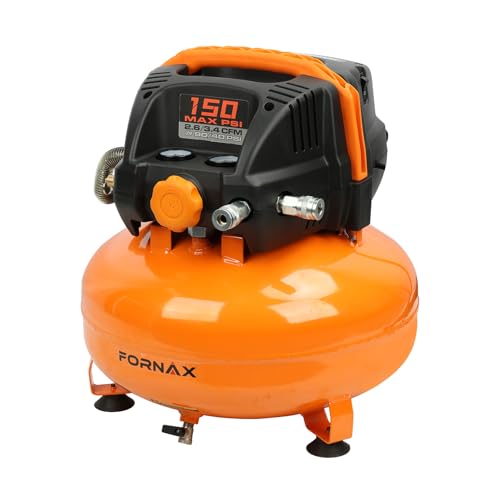
[VERSATILITY] The FORNAX compressor is designed as two couplers, it can simultaneously run two air tools or nailers.

[Inclusions]: This ECOMAX air compressor come with 1*1/4 in x 25 ft pvc air hose, 1* thread seal tape, 1* 1/4 fntp ball foot air chuck, 1* 1/4 npt auto plug, 1* 1/4 npt auto plug, 1* 1/4 npt auto coupler, 1* tire pressure gauge, 1* nozzle, 1* high performance blow gun and 1* sleeve.
Monitor Spray → Mist → Stop Point in Irrigation System Blowout
After clearing the farthest zone, keep a close eye on the spray pattern as you move inward. Begin zone monitoring by noting the heavy spray that appears first; this solid stream confirms air is displacing water in the pipe. As the spray thins, a fine, clear mist signals that water is nearly depleted. Listen for a hissing tone—this indicates residual system pressure is still present but low enough to stay under pipe‑material limits (≤50 PSI for polyethylene, ≤80 PSI for PVC). When only mist exits the heads and the spray disappears, stop the air flow immediately and close the valve. This stop point prevents over‑pressurization, protects sprinkler heads, and confirms the zone is fully cleared. Pressure regulation ensures the air pressure stays within safe limits for the system. A common cause of leaks after shutdown is a faulty valve that fails to seal properly. Properly torque the sprinkler head to manufacturer specifications to avoid damage and ensure optimal performance. Regularly inspect the system for clogged heads to maintain consistent water distribution.
Post‑Blowout: Close Valves, Release Pressure, and Verify
If you finish blowing out a zone, immediately turn its valve to the closed position—ball valves should sit perpendicular to the pipe—to stop any residual air flow. Close each zone valve, then the main supply valve, positioning each ball valve 90° to the pipe to guarantee valve closure integrity. Open the low‑point release valves with a flat‑head screwdriver, allowing trapped water to exit while you crack the ball valves a quarter turn for drainage pressure equalization. Drain the backflow preventer by removing test cock screws and leaving its ball valves slightly open; collect runoff in a bucket to spot leaks. After all water is gone, inspect every connection, confirm no water remains in the bucket, and leave isolation valves quarter‑open to accommodate freeze expansion. Freezing temperatures can cause significant damage to sprinkler systems. Proper timing of pre‑emergent application is crucial to avoid harming newly sown grass seed during overseeding.