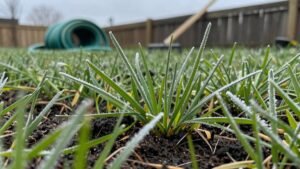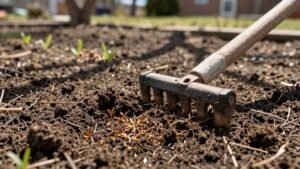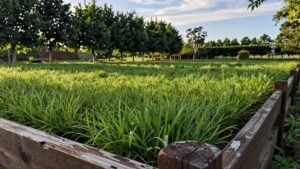

You should water your lawn 2‑3 times a week, aiming for about one inch total per week. Split the irrigation into short, deep cycles—typically 15‑20 minutes each—so the water penetrates the root zone without runoff. Adjust the frequency for temperature: cut it in half below 40 °F, increase to three sessions above 85 °F, and keep an eye on soil type, using impact heads for deeper infiltration. If you keep an eye on these factors, you’ll uncover how to fine‑tune the schedule for ideal health.
What’s the Ideal Lawn Watering Schedule? (2‑3 Times/Week)
A solid lawn‑watering schedule hinges on delivering about one inch of water each week, split into two to three deep applications. You’ll set timers for 18‑minute cycles, watching for runoff to fine‑tune duration. For sandy soil, increase frequency to three sessions because drainage speeds loss; over time, address soil amendment needs to retain moisture longer. Choose drought tolerant grass options to lower water demand—warm‑season varieties thrive on one or two deep applications, while cool‑season grasses may need three during hot months. Adjust for seasonal shifts: maintain the one‑inch baseline in spring and fall, boost to 1.5‑2 inches in summer, and cut back when temperatures fall. Early‑morning watering limits evaporation, and a rain gauge helps you subtract natural precipitation from each cycle.
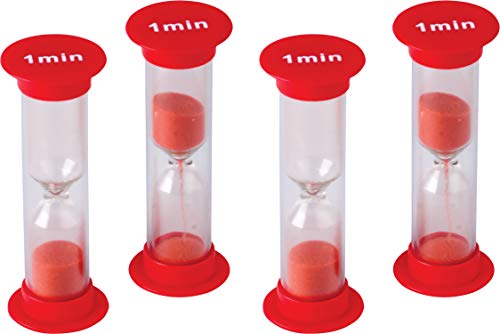
Miniature Design: 1 Minute Sand Timers are compact, measuring just 1" x 2½", making them portable and convenient for various settings.
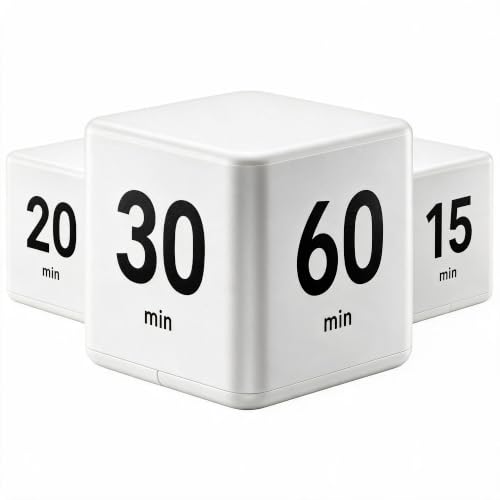
Minute Timer: 15, 20, 30 and 60 minutes for time management. Excellent timer for home, school and office.

TIME MANAGEMENT — The 2-hour visual timer helps improve time management and learning productivity. The desktop timer helps to assist with task organization and concentration – ideal for individual use or small groups
How Do I Calculate My Lawn’s Weekly Water Need?
How can you pinpoint the exact amount of water your lawn needs each week? Start by identifying your grass species characteristics—cool‑season varieties like Kentucky bluegrass demand 1‑1.5 inches, while warm‑season types such as Bermuda need 0.5‑1 inch. Use soil moisture monitoring to verify that the top 6‑8 inches stay damp but not soggy. Place a rain gauge or tuna can in each zone, run the sprinkler for 15 minutes, measure depth, then multiply by four to get the hourly application rate. Input that rate, along with grass type and local ETo, into an online calculator. Subtract recent rainfall, adjust for soil texture, and split the runtime into multiple starts to avoid runoff, achieving the precise weekly water need. Consider the impact of soil infiltration rate when planning your watering schedule. Properly sizing sprinkler heads based on coverage area ensures uniform distribution and prevents over‑watering. Choosing the right sprinkler type helps match water delivery to your garden’s specific needs.
How Does Temperature Influence My Watering Frequency?
You’ll notice that temperature drives how often you need to water because it directly affects evaporation and root uptake. When daytime highs dip below 40°F, the cold weather impact forces you to cut watering in half, or stop entirely, because root absorption slows and freezing risk rises. In contrast, heat wave adjustments raise the schedule: above 85°F you should apply 0.5 inches every 2–3 days, and if soil temperature exceeds 75°F, increase to 1–2 inches weekly. Target early‑morning runs (5‑9 a.m.) to reduce loss, and pause if a freeze is forecast within 24 hours. Adjust duration for soil type—clay retains longer, sand needs slightly more frequent, shorter cycles. This calibrated approach keeps moisture balanced across seasons. Avoid mowing during extreme heat periods to protect the lawn’s health. Consistently moist soil is essential for seed germination and healthy root development. Properly adjusting pop‑up sprinkler heads ensures uniform coverage and prevents dry spots that can stress the lawn.
Which Sprinkler Type Gives the Deepest Water Penetration?
Typically, the deepest water penetration comes from impact sprinklers, which require at least 50 PSI to generate enough force for water to infiltrate the soil profile. You’ll find that impact sprinklers for deep penetration deliver high‑velocity jets that force water past surface tension, reaching the root zone quickly. Their integrated regulation valves maintain consistent flow, reducing runoff and wind drift. By contrast, bubbler and stationary sprinkler systems flood a small area, allowing water to soak slowly and saturate soil uniformly, but they lack the kinetic energy to push water deep under high‑pressure conditions. When designing a system for deep infiltration, prioritize impact heads on zones demanding robust root development, and reserve bubbler stations for spot‑watering or low‑pressure applications. This balance maximizes efficiency while preserving soil structure. Regularly inspect sprinkler heads for loose fittings to prevent rotation issues that can disrupt uniform water distribution. Properly aligning each head’s spray radius ensures the overlap needed for consistent coverage.
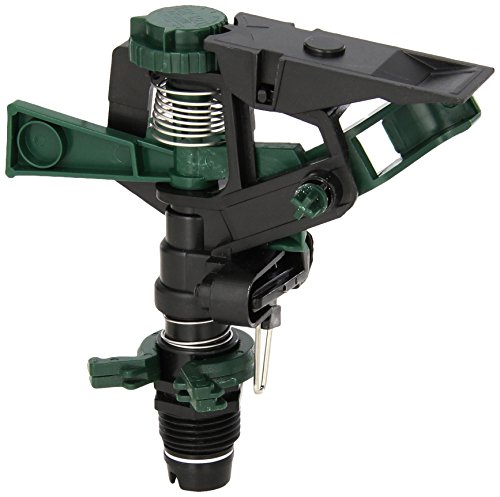
LARGE-AREA COVERAGE: Sprays up to 90 ft. in diameter, covering 6,360 sq. ft. when set to a full circle.
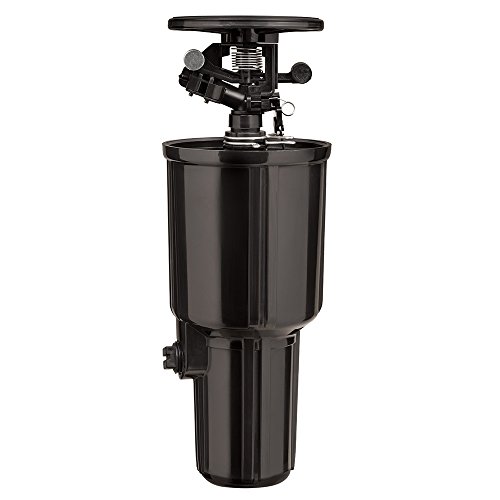
For watering areas with up to 35 feet of spacing between sprinkler heads; 3-inch pop-up riser height ensures that the nozzle clears medium grass
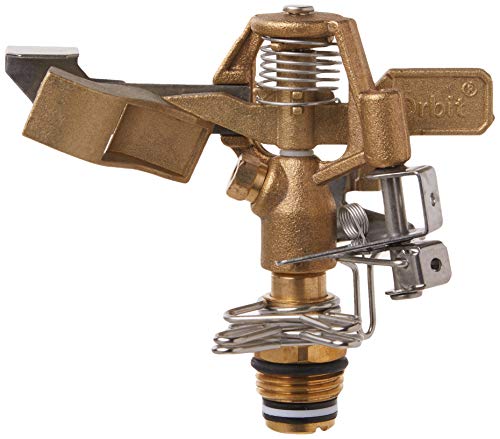
LARGE-AREA COVERAGE: Sprays up to 90 ft. in diameter, covering 6,360 sq. ft. when set to a full circle.
How Long Should Each Watering Session Run?
A typical watering session lasts 20‑30 minutes, delivering roughly half an inch of water per run; the exact duration hinges on sprinkler type, soil composition, and grass species. You’ll set sprinkler operation settings to match those parameters, adjusting run time for soil drainage factors. For spray heads, 20‑minutes meets the half‑inch goal; rotary heads need 30‑minutes. Clay soils, which retain water longer, may require a single 13‑minute cycle with 30‑minute soak intervals, while sandy soils demand 40‑45 minutes to achieve deep infiltration. Cool‑season grasses like Kentucky bluegrass thrive on three 15‑minute sessions weekly, whereas warm‑season varieties tolerate fewer, longer runs. Balance efficiency and runoff by calibrating each zone to its specific drainage profile and plant water demand. The evaporation data shows that the lawn needs about 2 inches of water per week to stay healthy. Proper post‑mowing watering also reduces disease risk by helping the grass recover from stress. Adjusting the nozzle angle can optimize spray uniformity across uneven terrain. Proper head placement ensures that the spray reaches all parts of the lawn without excessive overlap.
How Can I Measure Water Depth With a Tuna Can?
Place a few empty tuna cans across the sprinkler zone, then run the system for the prescribed test time—15 minutes for spray heads, 30 minutes for rotors, or 7 minutes for stationary nozzles. Use flat‑bottomed cans, mark each at the ½‑inch line, and distribute them both near and far from heads to assess uniform water coverage. After the run, measure the water depth in each can with a ruler. Record each can depth measurement, then compute the average by summing the values and dividing by the number of cans. Compare individual readings; large deviations signal nozzle or pressure adjustments. Multiply the 15‑minute average by four (or the 30‑minute average by two) to estimate inches per hour, guiding irrigation scheduling for consistent, efficient watering. This method ensures that only about 1/2 inch of water is applied per session, preventing runoff and conserving water. Properly adjusting spray pattern helps achieve uniform distribution across the lawn. Adjustable caps can further fine‑tune flow to match the measured depth.
What Signs Show My Lawn Needs More Water?
Ever wonder why your lawn looks tired? When blades turn bluish‑gray or straw‑like, that’s the first cue of drought stress. Check for lingering footprints; if they stay indented, turgor pressure has dropped, indicating dehydration. Observe curling or wilting—blades roll inward to reduce surface area, a classic sign you need more water. Conduct soil moisture testing: a screwdriver should penetrate 6–8 inches easily; resistance at 3–4 inches means the root zone is dry. Finally, note growth recovery: slow post‑mowing regrowth, thin brown patches, or crunchy texture signal insufficient hydration. By monitoring these visual and tactile indicators, you can time watering precisely, supporting ideal grass stress recovery and a resilient lawn. Properly adjusting sprinkler heads ensures even coverage and water efficiency. A faulty valve can cause water to leak when turned off and waste resources. Remember to relieve pressure before any maintenance to avoid accidental spray.
Early Morning or Evening: Which Is Best for My Lawn?
When you notice the drought‑stress signs—bluish‑gray blades, lingering footprints, or slow post‑mowing regrowth—you already know watering is overdue, but the timing matters just as much as the amount. Early‑morning watering (6‑10 a.m.) maximizes watering efficiency: cooler air, calm winds, and low evaporation let water reach the root zone before daytime heat. Blades dry quickly, cutting lawn disease risks. Evening watering leaves moisture on foliage overnight, raising humidity, encouraging fungal growth, and increasing disease probability. Although night retains moisture, the prolonged wetness outweighs any evaporation savings. Designers of irrigation schedules should prioritize the morning window, automate delivery, and avoid the 10 p.m.–6 a.m. period to protect root health and reduce disease threats. Calm wind conditions further improve water absorption. Adding a zone map during setup ensures each area receives the right amount of water.

【Easy Programming Program】Through the Sprinkler Timer to program, you can set the Start Time, Watering Duration is 1min-3h59min, Watering Frequency from 1h to 12h or 1 day to 7 days, so you can customize your watering time, and can be more accurate.

Effortless Watering Automation: The Orbit Mechanical Water Timer helps manage lawn and garden irrigation with a reliable mechanical water timer design and hose faucet timer control

【Easy to Program】Rotate the dial and press the buttons to set clock, how often (watering frequency), how long (watering duration), start time, auto, and off. Watering Frequency from 1Min to 23h59Min or 1 to 7 days, each Watering Duration is 1min-23h59min. The sprinkler timer can customize your watering time to meet your flexible watering needs.
How Should I Adjust My Schedule During Rain or Drought?
How can you keep your irrigation system efficient when the weather swings between rain and drought? Use rainwater harvesting systems to capture recent storms and feed a buffer tank, then let soil moisture sensors dictate real‑time watering. If rain falls twice a week, shut off sprinklers entirely; if none for seven days, schedule two 53‑minute cycles on Monday and Thursday. Shorten runs to 20‑minute soak‑then‑pause intervals during intermittent rain to prevent runoff. Adjust for local restrictions by dropping frequency to one or two days per week when forecasts predict rain within 48 hours. In drought, increase depth with three weekly sessions, monitoring sensor feedback to avoid over‑watering. Aerate and raise lawn height to improve infiltration and distribute captured water evenly. Ensure the sprinkler head is properly sealed to prevent leaks. Properly set the spray radius on each pop‑up head to match the zone’s coverage area. Adjust the head screw to fine‑tune the spray pattern for uniform coverage.
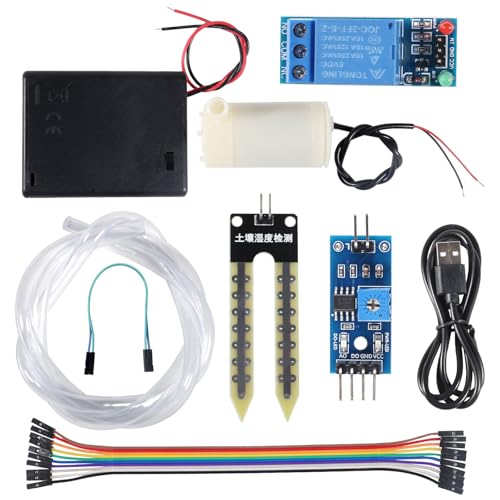
Automatic Irrigation DIY Kit: LM393 Soil Moisture Detect Sensor,Mini Water Pump, Tubing, Battery Case,One Channel 5V Relay Module and Jumper Wires in One Plant Watering System, It Can Water Plants and Flowers Automatically ,According to Monitor the Soil Moisture
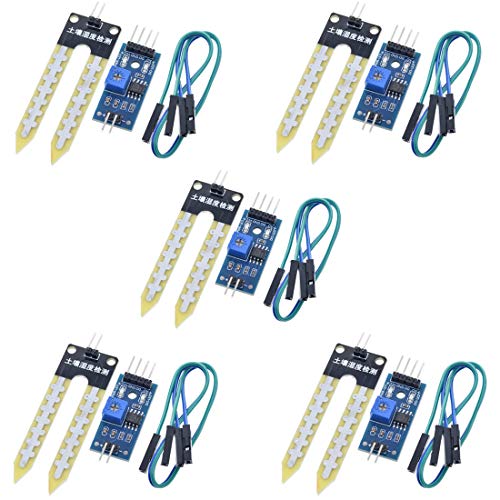
This is a simple moisture sensor can be used to detect soil moisture, when the soil water shortage, the module outputs a high level, whereas the output low.

A soil meter designed specifically for AC Infinity AI Controllers to help monitor and maintain soil saturation.