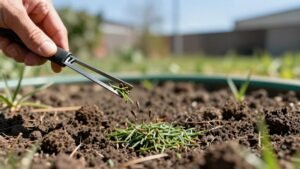

Plant cool‑season grass in late summer‑early fall (mid‑August to early November), aiming for soil temperatures of 50‑65 °F; early‑spring seed when soil hits 50‑65 °F and daytime air reaches 60‑75 °F; warm‑season varieties need 70‑90 °F soil, about three‑to‑five weeks after the last frost. Check a frost‑date calculator for your zip code, pull a two‑week buffer for cool‑season seedings, and protect seedlings with blankets if a snap threatens. Keep the seedbed moist with a soil‑moisture meter, aerate, and loosen topsoil, and time fertilization to boost root growth before dormancy. Follow these steps and you’ll uncover even more detailed tactics.
Late‑Season Seed Timing: Why Fall Is Best for Cool‑Season Grasses
Why wait until spring when you can seed now? You should aim for late August through early November, with early‑mid‑September as the sweet spot. Check that soil at two inches reads 50‑65 °F and daytime air sits at 60‑75 °F; these numbers guarantee germination and strong root growth. Track frost risk monitoring daily—once the first frost hits, crabgrass and goosegrass die, but your seedlings need a solid establishment window before freeze‑thaw cycles arrive. The cooler temps and higher moisture reduce stress, letting seedlings develop persistence during establishment without excessive irrigation. Reduced weed pressure means you won’t need herbicides during this critical phase, and the resulting root system will survive winter, delivering a thick, vigorous lawn come spring. Optimal soil moisture levels further enhance seed‑to‑soil contact, accelerating germination. Consistently moist soil during the first two weeks is crucial for rapid root development. Planting in the fall also takes advantage of extended daylight hours that promote photosynthesis before winter sets in.

This pack of lawn seeds is ideal for new lawns, overseeding and lawn repair

APPLICATION: Apply this sun and shade grass seed in the spring or fall to grow a new lawn or overseed an existing lawn to thicken grass and help crowd out weeds

PERFECT FOR FALL SEEDING - Our cool-season grass seed mix is formulated for successful fall seeding projects. The grass seed varieties are bred to perform especially well when seeded during the fall planting season of mid-August through mid-October.
Early‑Spring Seed Timing: When and How to Seed Cool‑Season Lawns
If you’re forced to seed in early spring, start as soon as soil reaches 50‑65 °F and daytime air hits 60‑75 °F, then follow a tight schedule: prepare a firm, weed‑free seedbed, apply the highest recommended seed rate, and water consistently to keep the top inch moist without drowning the roots. Check the seedbed for compaction; lightly rake to expose clean soil, then roll to firm the surface. Use a calibrated spreader to hit the exact rate—over‑seeding is futile, under‑seeding invites gaps. Water in ¼‑inch increments daily until germination, then taper to twice‑weekly deep soak. Monitor for crabgrass emergence; pre‑emergent herbicide can protect seedling establishment. Anticipate summer heat stress by mulching lightly and avoiding late‑season fertilizer spikes that could scorch young roots. Stay vigilant, record temperature trends, and adjust irrigation to keep seedlings thriving until the cooler months arrive. Proper soil aeration enhances root penetration and promotes uniform germination. Improved water infiltration helps prevent runoff and ensures seedlings receive adequate moisture. Regularly aerate the lawn to increase oxygen availability for deeper root growth.

OPERATION: Adjustable arm support on this seed, salt and fertilizer spreader helps provide maximum comfort

64-OUNCE BOTTLE: high-capacity poly bottle with a wide opening and easy screw top, quickly remove the lid to add your preferred seed, salt, fertilizer, etc. and simply screw back into place

NO ASSEMBLY REQUIRED: Scotts spreader comes pre-calibrated and ready-to-use with a fold-down handle for easy storage; use it year-round including as an ice melt spreader or salt spreader for snow
Warm‑Season Seed Timing: Ideal Late‑Spring to Early‑Summer Planting Dates
Three to five weeks after the last frost, when daytime highs stay consistently above 65 °F and soil warms to 70–90 °F, is the sweet spot for planting warm‑season grasses. You’ll aim for a planting window that gives you at least 90 days before the first fall frost, so schedule sowing in late spring to early summer. Check the year round temperature trends for your USDA zone; zones 5‑10 can start in mid‑April, while zones 7‑11 may wait until early May. Keep soil moisture requirements in mind: the soil should be moist but not soggy, maintaining a steady 70‑90 °F range to promote germination. Hydroseeding works well in this period, and you must avoid planting after mid‑summer to prevent heat stress and uneven establishment. Warm‑season grasses reach peak growth in late spring and early summer, making this timing crucial for strong establishment. For best results, ensure the herbicide residue has dissipated by waiting 7–14 days after any prior Roundup application. Adding a thin layer of organic mulch after seeding can further retain moisture and protect seedlings. Seed viability can decline sharply after several weeks of drought, so occasional misting is essential to keep the seed dormant yet ready to germinate.

HEAT TOLERANT GRASS SEED - Our cool-season grass seed mix contains tall fescue and Texas bluegrass. This turfgrass mix performs best in full sun to lightly shaded growing conditions and has the ability to tolerate heat up to 100°F.

HIGH TRAFFIC GRASS SEED - It's great for backyards, sports fields, curb strips, or anywhere aggressive foot traffic from athletes, children, and pets occurs. Our cool-season grass seed mix contains tall fescues and perennial rye turfgrass varieties.

This lawn seed is great for areas getting 4 to 6 hours of sun
Measuring Soil Temperature for Accurate Seed Timing (50‑65°F & 70‑90°F)
When you measure soil temperature at a two‑inch depth, you can tell exactly whether the ground is ready for cool‑season grass seed (50‑65 °F) or warm‑season seed (70‑90 °F). Insert a calibrated soil thermometer straight to the 2‑inch mark, avoiding surface debris that skews temperature measurement accuracy. Record the reading at the same time each day; consistency reveals trends hidden by daily air fluctuations. Note soil insulation factors: air‑filled pores, water content, and thatch layers each dampen heat exchange, delaying the rise toward target ranges. If the reading stays below 50 °F, postpone seeding; once it steadies within 50‑65 °F for cool‑season or 70‑90 °F for warm‑season, you’ve hit the ideal window. This precise method eliminates guesswork and maximizes germination success. Coastal properties often experience slower soil warming due to the nearby cold ocean, making soil temperature rise more gradually in spring. Maintaining soil moisture within optimal range further accelerates germination.
Calculate the Latest Safe Seeding Date Using Frost Forecasts
Knowing the exact soil temperature tells you when the ground’s ready, but the real deadline hinges on the forecasted frost risk. First, pull your zip code into a reputable frost‑date calculator; note the average last‑frost window for your USDA zone. Next, examine the daily forecast for the next 10‑14 days, focusing on low‑temperature probabilities. If the forecast reliability exceeds the historical 30‑50 % risk, treat that day as the cut‑off. Adjust for microclimate considerations—urban heat islands, elevation, or nearby water bodies can shift the safe date by a few days. Subtract two weeks for cool‑season grasses, then schedule seeding no later than the adjusted date. This precise method maximizes germination while avoiding frost damage. Frost blankets can further protect emerging seedlings from unexpected cold snaps. Understanding soil moisture levels helps ensure the seed has enough water to germinate without being washed away. Choosing the proper seed‑to‑soil depth for your grass type is essential for successful establishment.
Manage Moisture: Use Natural Rainfall & Irrigation for Seed Success
If you time the soil consistently moist after sowing, the seedlings will germinate quickly and stay healthy, so rely on natural rain when it’s reliable and supplement with light, frequent irrigation when it isn’t. Check the forecast; late‑spring rain usually suffices for warm‑season grass, while fall showers support cool‑season seed. Light, daily watering prevents drying without creating puddles; aim for a fine mist at noon, avoiding footprints. Before seeding, loosen the top 2‑3 inches and meet aeration requirements, then add a thin topsoil layer for nutrient optimization and better water retention. Plant in plugged aeration holes to lock moisture in, and monitor soil temperature—45‑65 °F for cool‑season, 65‑70 °F for warm‑season—to align with natural moisture windows. Watering frequency should be adjusted based on temperature and rainfall to keep the soil consistently moist. Choosing the right power source can reduce noise and lower emissions during the seeding process. Proper soil absorption rates help prevent runoff and ensure water reaches the root zone. Using a soil moisture meter can help you fine‑tune irrigation timing and avoid over‑watering.

Kindly NOTE: This soil tester can not be applied to test pH value of any other liquid. If the soil is too dry the indicator will not move, and water it before testing.
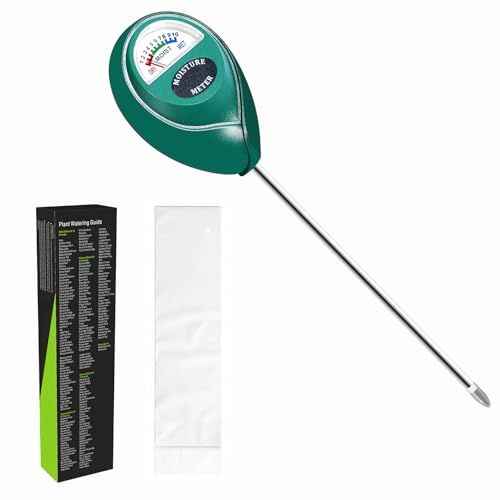
Trusted Since 2015: Become one of the many plant lovers who rely on the proven accuracy of XLUX. Established in 2015, our soil moisture meter has earned over 60,000+ verified ratings for its consistent performance. While many many newer brands come and go, we provide the long-term reliability and quality that American households have trusted for over a decade.

Accurate Soil Moisture Detection: The XLUX Soil Moisture Meter can tell you if the soil deep inside your pot or garden is dry, moist or wet; whereas your eyes and fingers can only determine the moisture level of the soil surface. The probe is 5.5 inches (14 cm) longer than regular styles, allowing it to measure the soil moisture at the bottom of larger and deeper flower pots.
Outpace Weeds: Timing Seeding to Reduce Competition
Keeping the soil consistently moist after sowing helps seedlings sprout quickly, but the real edge comes from planting when weeds are weakest. You should schedule seeding for late summer through early autumn—mid‑August to mid‑October—when broadleaf weeds and crabgrass naturally die back. Apply liquid weed control at least a month before planting, then till and aerate to break up any remaining weed mats. This creates a loose seed bed that favors ryegrass and Kentucky bluegrass germination while starving weeds of light and nutrients. By the time you begin late season seedling care, the turf will be thick enough to outcompete spring‑emerging weeds, eliminating the need for aggressive early spring weed control. Follow this timing precisely for ideal competition reduction. Understanding the mode of action of systemic herbicides helps predict how quickly they will suppress weeds after application. Pre‑emergent timing is critical because it must align with soil temperatures that reach the germination threshold for target weeds. Pre‑emergent herbicides block seed germination by inhibiting root development before weeds emerge.
Prioritize Root Development Over Blade Growth During Fall Plantings
When you seed in late summer, warm days and cool nights shift the plant’s energy into root growth rather than blade elongation, so you’ll end up with a turf that’s both thicker and more drought‑resistant. Aim to plant 45 days before dormancy, ideally around Labor Day, and stop at October 15. Loosen the top quarter‑inch, rake in seed to a half‑inch depth, and aerate to eliminate compaction. Thatch removal benefits become evident as roots encounter unobstructed soil, and a light layer of weed‑free topsoil improves anchorage. Water daily until germination, then keep the upper half‑inch moist every 2–3 days for two weeks. Apply post seeding fertilization at planting to supply nitrogen for root hardiness, and avoid any blade‑focused growth stimulants. This schedule guarantees a deep, resilient root system ready for spring. Cool‑season climate zones extend the optimal seeding window into early fall, allowing the grass to establish before winter.
Choosing the Right Species for Your Timing: Perennial Rye, Kentucky Bluegrass, Bermuda
Three key grasses dominate fall seeding decisions: perennial rye, Kentucky bluegrass, and Bermuda. You must match each species to its optimal timing and climate. Perennial rye germinates in 3‑7 days, so plant it 6‑8 weeks before the first hard frost; its rapid root development makes it ideal for overseeding dormant Bermuda or Zoysia. Kentucky bluegrass takes about two weeks to sprout, so sow it early to mid‑September, preferably before October 15, to guarantee winter survival. Bermuda, a warm‑season grass, stays dormant in winter; schedule an overseeding of ryegrass in fall to keep a green lawn year‑round. For a balanced species composition, blend fine fescues with rye and bluegrass in the Northeast, and use a rye‑overseeded Bermuda schedule in Zone D. This precise timing maximizes germination, root depth, and winter resilience. Cool, wet coastal conditions favor grasses that resist lawn disease.

These winter rye grass seeds for lawn are ideal for overseeding southern lawns for green winter grass

REGENERATING PERENNIAL RYEGRASS SEED BLEND: Combines innovative RPR technology and elite perennial ryegrass varieties to create a beautiful outdoor space year-round
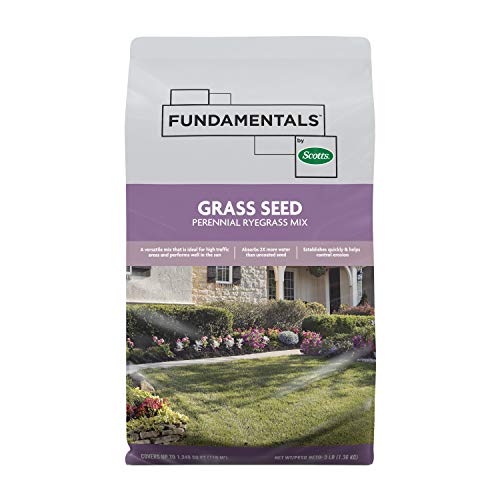
Grow a lawn in sunny and high traffic areas with Fundamentals by Scotts Grass Seed Perennial Ryegrass Mix