

Pre‑emergent herbicides stop weeds before they break the soil surface by halting cell division in germinating roots, creating a low‑solubility barrier that stunts root and shoot growth. They’re effective on species like crabgrass, foxtail, and chickweed when applied before the germination window and followed by adequate soil moisture. However, they won’t kill plants that already have an established shoot‑root system, and environmental factors can degrade the barrier. If you keep going, you’ll uncover how timing, moisture, and product choice dictate lasting control.
Science of Pre‑Emergent Weed Control
Pre‑emergent herbicides work by halting mitosis in the roots of germinating weed seedlings, so they never develop into mature plants. You apply them as dry granules or liquid spray, then water them into the top inch of soil, creating a barrier that intercepts sprouting roots. The chemicals remain near the surface because of low solubility, and their efficacy hinges on timing: you must treat before seed germination, when ideal temperature triggers—approximately 55 °F for five consecutive days—initiate the process. Once activated, the herbicide blocks cell division, stunting root and shoot growth. Soil microbial degradation gradually reduces concentration, limiting residual activity to roughly eight to twelve weeks. Even coverage is essential; missed spots allow seedlings to escape inhibition. Apply in late March to ensure the barrier is in place before spring germination begins. For cool‑season grasses, timing the application for when soil temperature consistently reaches 55 °F maximizes control. Waiting at least 48 hours after application before mowing helps prevent chemical runoff and protects grass health. The speed of weed kill can vary, with systemic products often showing visible effects within a few hours of uptake.

Designed to prevent weeds; will not aid in eliminating existing weeds. Prevents grassy and broadleaf weeds, including crabgrass, poa annua, goosegrass, henbit, and more.
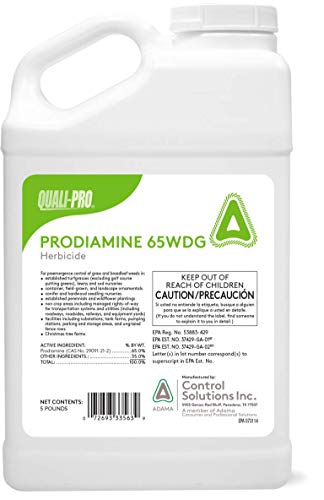
PRE-EMERGENT HERBICIDE: Quali-Pro's Prodiamine 65 WDG provides pre-emergent grass and broadleaf weed control. Flexible application allows for both spring and fall use providing season long crabgrass control. Available in a 5 pound bottle.

Snapshot 2.5 boasts more control than any other pre-emergent herbicide on the market
What Weeds Are Stopped Before They Sprout?
When you apply a pre‑emergent herbicide, it creates a chemical barrier that stops the germination of several common weeds, including crabgrass, annual bluegrass, foxtail, goosegrass, and chickweed, by inhibiting mitosis in their emerging roots and shoots. You’ll see crabgrass suppression when you treat in early spring, typically March‑April, and annual bluegrass control with fall applications in September‑October. Foxtail and goosegrass are halted by the same early‑spring barrier, while chickweed requires a September‑November window. Alternative application methods—such as drip‑irrigation or broadcast spray—can improve uniformity, but the importance of seeding timing remains paramount; aligning herbicide placement with the target weed’s germination window maximizes pre‑emergent efficacy. Timing is crucial because pre‑emergent effectiveness depends on applying the herbicide before weeds begin to sprout. Understanding the grass seed distribution in a lawn can help you target the most problematic areas for pre‑emergent treatment. Proper soil moisture after application promotes herbicide activation and enhances weed control.
Why Pre‑Emergents Can’t Kill Existing Weeds
You’ll find that pre‑emergent herbicides simply can’t eradicate weeds that have already sprouted because their mode of action is limited to the soil surface barrier that blocks cell division in emerging roots and shoots. The barrier targets germinating seeds; once a seed has produced a functional root‑shoot system, the chemical matrix offers no toxicity to established tissue. Consequently, perennial or annual weeds with established roots survive untouched. Barrier disruption—caused by digging, pet traffic, or moles—creates gaps where existing plants can bypass the mat, while environmental factors such as sunlight penetration and moisture fluctuations accelerate barrier degradation. These conditions prevent the herbicide from reaching the crown or root zone, leaving mature weeds unaffected and necessitating post‑emergent treatments for control. Foliar activity is required to affect weeds that have already emerged. Understanding soil absorption helps optimize timing and effectiveness. Proper timing and dosing of pre‑emergents can also protect desirable crops from accidental injury. Selecting the appropriate application window ensures the barrier forms before weed germination begins.
When to Spray: Spring vs. Fall Timing Explained
Because pre‑emergent herbicides can’t affect established weeds, timing the application becomes the decisive factor for effective control. In spring, you spray before soil consistently reaches 55 °F—late February to early April in most zones, earlier in the South. Use a soil thermometer a few inches deep, then apply seasonal application rates that match the targeted weed groups, chiefly summer annuals such as crabgrass, lambsquarters, and pigweed. In fall, act when temperatures fall below 70 °F but remain above 55 °F, typically mid‑September to early October. This window targets winter annuals—poa annua, henbit, chickweed—using the same calibrated rates. Adjust timing regionally; early applications prevent germination, while late sprays miss the critical emergence window. Creating a barrier in the soil helps block weed seeds from sprouting. Soil microbes can also influence herbicide persistence, affecting how long the chemical remains active. Proper label instructions ensure the product works as intended and protects desirable plants. The waiting period after application varies with herbicide type and environmental conditions.

STOP WEEDS BEFORE THEY START: This pre-emergent herbicide targets weed seeds just as they're germinating; Say goodbye to troublesome weeds like crabgrass, chickweed, and spurge before they take over your lawn or garden

Easy-to-read green, yellow, and red tick marks for easy monitoring
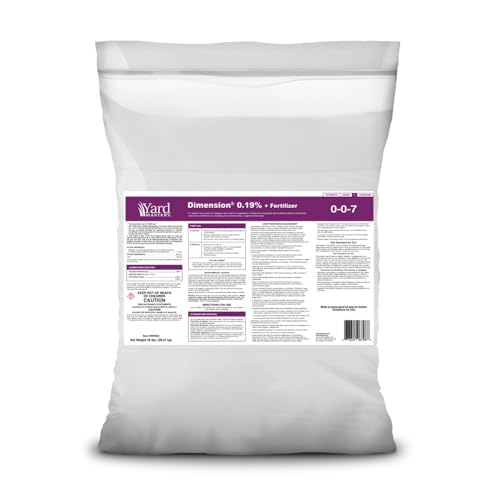
Prevents crabgrass and broadleaf weeds before they appear with Dithiopyr
How Long Do Pre‑Emergents Stay Effective? A Product Comparison
Typically, pre‑emergent herbicides remain active for 6 to 12 weeks, though some formulations can extend control up to 2–6 months depending on rate, weather, and soil microbiology. Prodiamine products such as Barricade reach up to 8 months at high rates, but practical control averages 5–6 months; a second fall application 6–8 weeks later mitigates residual control challenges. Dithiopyr (Dimension) delivers 3–4 months, with a single dose lasting about 12 weeks; two applications stretch the window, yet microbial breakdown still limits longevity. Pendimethalin holds for 6–8 weeks, often requiring a follow‑up spray; its shorter span reflects factors influencing breakdown like rainfall and soil temperature. Organic alternatives like corn gluten meal persist only 1–2 months, degrading rapidly due to natural composition, and present pronounced residual control challenges. Effective weed control also requires proper timing to ensure the barrier is in place before seed germination. Applying pre‑emergents during the optimal growth window of target weeds maximizes uptake and prevents early establishment. Proper soil testing can help determine the soil pH range that best supports herbicide efficacy.

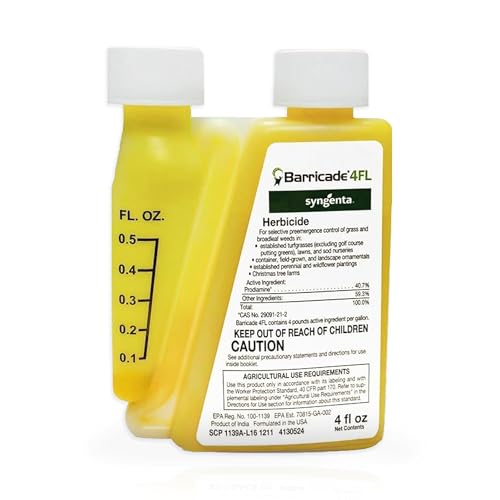
PREVENT WEED DEVELOPMENT: Barricade 4FL controls the growth and development of weeds before they germinate. Barricade 4FL will not control weeds after they have germinated. This product is labeled for use in a broad range of areas such as vegetation sites, turf species, weed control, grass, broadleaf weeds, established turfgrasses, lawns, sod nurseries, and Christmas tree farms.
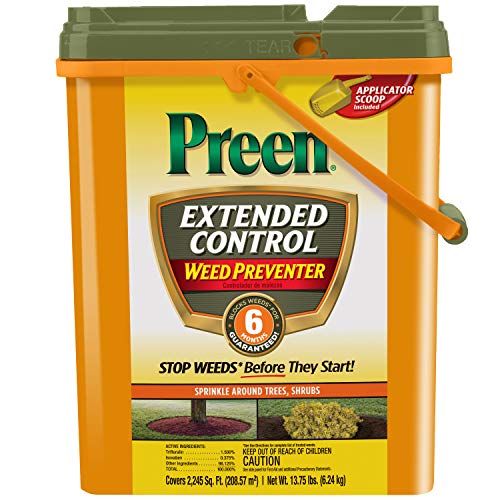
Coverage - Preen weed preventer 13.75 lb. drum provides large-area coverage and pre emergent weed control for 2,245 sq. ft. of garden space; prevents over 125 weeds in residential landscapes, garden areas, landscaped spaces and established plantings
How Timing and Soil Moisture Decide If the Herbicide Works
Pre‑emergent herbicides only become effective once they dissolve into the soil solution, so the timing of rain or irrigation after application is as important as the product’s residual lifespan. You must secure 0.25‑0.75 in of water within 5‑7 days; most labels demand at least 0.5 in within 21 days. Ideal soil moisture levels hover around 25‑31 % for atrazine and EPTC, while Amiben thrives linearly up to 37 % and trifluralin declines. Excess moisture creates anoxic conditions that accelerate microbial degradation and leaching, especially for highly soluble chemistries. Temperature effects on activity are critical: soils at 54‑55 °F for 3‑4 days trigger crabgrass germination, dictating the rain window. Dry surfaces demand more water to mobilize the herbicide; insufficient post‑activation moisture binds it to colloids, reducing efficacy. The study found that soil moisture at 31 % maximized atrazine and EPTC performance. Proper soil preparation before application can further improve herbicide distribution and effectiveness.
Managing High Seed Banks: Layering, Re‑Application, and Complementary Tactics
A dense seed bank demands a proactive, multi‑stage strategy—first, apply a pre‑emergent to target early germinators, then follow with a second layer 8‑10 weeks later to capture later‑emerging weeds. Layering extends control; products such as oxyfluorfen or flumioxazin retain activity through the interval, while prodiamine + isoxaben suppresses flexuous bittercress for eight weeks before seeding. Re‑apply in late summer or early fall to intercept perennials’ mid‑late seed release; repeat every 8‑10 weeks in high‑density nurseries, but rotate chemistries to avoid microbial buildup. Use strategic irrigation timing—at least 0.5 in of water post‑application to move granules into the top inch and facilitate solubility for trifluralin. Monitoring application timing lets you align follow‑ups with weed emergence, while complementary tactics—pre‑emergent weed removal, competitive cropping, rate adjustments for organic matter, and corn gluten meal—reduce residual seed bank pressure. Sufficient moisture is essential for activating the herbicide in the soil. Consistent soil moisture helps maintain herbicide effectiveness during germination. Applying herbicide to wet grass can dilute the product and reduce efficacy. Proper sprinkler head adjustment ensures even water distribution, supporting optimal herbicide activation.
Avoiding Resistance in Pre‑Emergent Programs
Managing a dense seed bank with layered pre‑emergent applications sets the stage for resistance avoidance. You should rotate and tank‑mix herbicides that span distinct modes of action, ensuring at least two pre‑emergent MOAs are present at planting. Apply the first residual at seeding, then follow with a second residual that activates with moisture, creating overlapping control windows. Keep weeds small by scouting frequently and treating post‑emergence escapes promptly, which lowers selection pressure and curtails seed return. Integrate cultural tactics—crop rotation, cover crops, strategic tillage—to dilute resistant genotypes. Clean equipment, use weed‑free seed, and employ harvest‑weed‑seed control. This layered, timing‑driven approach forms the core of integrated resistance management. Regular scouting a week after application helps differentiate poor control from resistance. Weeds compete for nutrients, water, and sunlight, which can weaken grass and promote a dense seed bank. Store fertilizers in a cool, dry place to preserve potency and prevent degradation. Multiplying soil health practices can further suppress weed emergence.
Checklist for a Successful Pre‑Emergent Treatment
Because timing is the linchpin of pre‑emergent success, you must first verify that soil temperatures are still below 50‑55 °F for spring weeds (or schedule a fall application for winter species) before any seed germination begins. Then, follow this checklist: identify target weeds, choose product selection considerations—broad‑spectrum options like Dimension 2EW for crabgrass or prodiamine‑based Kade 4L for warm‑season turf—and confirm label compatibility with soil type. Remove existing weeds, calibrate sprayer, and mix 1–2 gal solution per 1,000 sq ft. Apply using targeted application techniques: fine‑turf water 0.10 in, rough or sports‑field water 0.25 in, then irrigate 0.5 in within 21 days. Schedule split applications every 3 months, integrating mulch and hand‑weeding for ideal control. Use a high‑quality soil surfactant to improve water infiltration and reduce runoff.

One application prevents crabgrass all season long

WEED PREVENTION: Scotts Halts Crabgrass & Grassy Weed Preventer prevents the germination of listed lawn weeds so you can enjoy your lawn

Mesotrione, a potent herbicide, immediately absorbs and starts working upon application, yet it may take 2-3 weeks for full weed death. Activation requires water; if no rainfall occurs within 10 days, apply 0.15 inches of water.