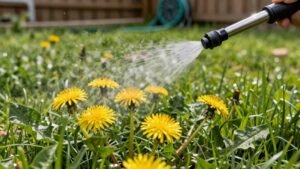

Contact herbicides act almost instantly, wilting weeds within hours because their droplets rupture cell membranes and block chlorophyll synthesis. Systemic products take longer: you’ll see initial yellowing or wilting in 2‑6 hours, but full death usually requires 5‑14 days, depending on the active ingredient and environmental conditions. Residuals work pre‑emergence, binding to soil and preventing germination for 2‑3 weeks. Factors like temperature, humidity, soil pH, and spray droplet size all affect speed, and proper application—calm weather, uniform coverage, and appropriate pressure—maximizes rapid kill. Continue and to learn how to fine‑tune each factor for ideal results.
How Fast Is the Herbicide Speed of Contact Products?
Contact herbicides act almost immediately after application. You’ll notice injury symptoms within hours because the active ingredients rupture cell membranes and block chlorophyll synthesis, delivering a rapid speed of reaction that halts weed growth in minutes to days. To preserve this immediacy, droplet size optimization is critical: medium droplets lose 45 % coverage when you increase tractor speed from 4.5 to 9.5 MPH, while very coarse droplets maintain deposition at higher speeds. Choose a nozzle and pressure that generate coarse droplets, adjust boom height, and keep travel speed low enough to limit drift. This guarantees the herbicide lands directly on foliage, maximizes contact, and achieves visible control in 24–48 hours, with plant death typically occurring within 7–14 days. Faster travel speeds cause net forward movement of droplets, so using a coarser spray can help maintain deposition. Moreover, selecting a low‑toxicity formulation can reduce environmental impact while still providing rapid weed control.

Pack of 6 - TeeJet Brass Full Cone Spray Tip. 0.19 GPM @ 40 PSI. Pressure Range: 20-60 PSI. Provides coarse spray with full cone pattern. Used frequently for tobacco plant sucker control. More precise flow and distribution patter. Direct replacement for plastic hollow-cone, low-drift nozzles. Large orifice reduces clogging. Very large droplets.

Poly adjustable nozzle (181822), poly cap nut (181804), Viton flat seal (181812), low volume foaming nozzle assembly (180266), high volume foaming nozzle (182187)
What Is the Herbicide Speed Timeline for Systemic Products?
Systemic herbicides work their way into the foliage and then travel through the plant’s vascular system, so you’ll see effects unfold over days rather than minutes. You’ll notice initial wilting within 2‑6 hours for glyphosate, but most systemic products show visible distress after 5‑14 days. Glyphosate typically kills a weed in 7‑14 days; glufosinate stops growth in one day and can finish in two days to two weeks; triclopyr or picloram cause desiccation up to a month; flumetsulam reaches 20 % death at 30 days and near‑complete kill by 90 days. Temperature, growth stage, and humidity accelerate translocation, shortening the Duration of kill effects. Longer term ecosystem impacts include reduced seed set and root elimination, limiting future weed pressure and altering soil‑plant dynamics. Salt‑based solutions can also enhance desiccation, providing a complementary non‑chemical approach. Soil microbial activity can further accelerate degradation of systemic herbicides, reducing their persistence in the environment. Vinegar can cause rapid leaf wilting within 30 minutes to several hours, offering a fast‑acting, non‑systemic alternative for surface weeds.
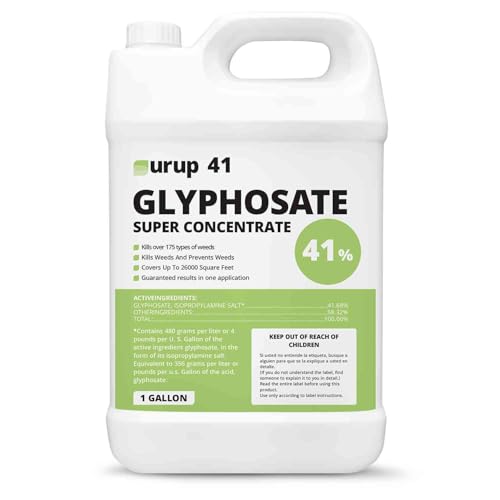
Powerful Weed Control:Effectively kills over 130 types of weeds and grasses, reaching down to the roots to prevent regrowth. Perfect for driveways, sidewalks, fences, and garden areas.
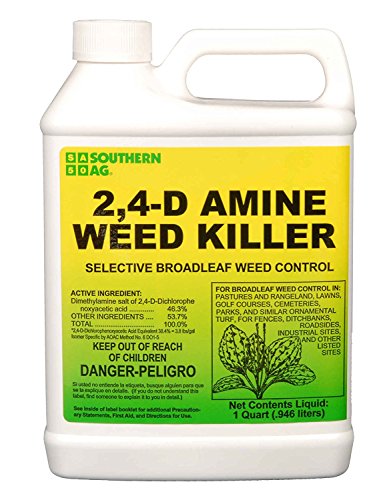
Low, economical use rate of 1 to 4 pints per acre

POSTEMERGENCE GRASS KILLER - Grass Getter controls grassy weeds in bedding plants, ornamentals, ground covers, shrubs, and vegetables.
How Do Residual Herbicides Keep New Weeds From Emerging?
How do residual herbicides keep new weeds from emerging? You apply them pre‑emergence, then rain or irrigation triggers activation time, dissolving the granules and allowing the chemical to bind to soil particles. Once activated, the herbicide remains in the soil for weeks, providing soil persistence that intercepts germinating seeds. As a seed imbibes water, the herbicide is absorbed through the seed coat, root, and shoot, disrupting cell division at the single growing point. This prevents emergence for 14‑21 days. Overlapping applications within that window maintain continuous coverage, and extended‑residual products prolong control against late‑germinating weeds. By targeting the earliest life stage, you suppress weed pressure and reduce the need for later post‑emergence sprays. Their effectiveness can vary with soil type and moisture levels, influencing how long the herbicide stays active. Proper timing of application is crucial to maximize herbicide uptake and ensure consistent weed control.
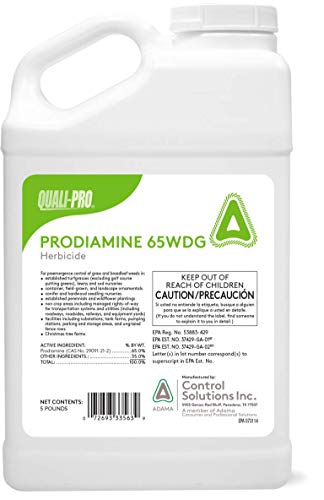
PRE-EMERGENT HERBICIDE: Quali-Pro's Prodiamine 65 WDG provides pre-emergent grass and broadleaf weed control. Flexible application allows for both spring and fall use providing season long crabgrass control. Available in a 5 pound bottle.
Prodiamine .58%

What Factors Influence Herbicide Speed and Effectiveness?
The speed and effectiveness of a herbicide depend on a blend of environmental conditions, weed physiology, soil characteristics, water quality, and application practices. Temperature governs cuticle development and translocation; above 30 °C accelerates absorption for many modes, while below 60 °F delays symptoms. Humidity and rainfall affect droplet drying and leaching, altering herbicide persistence over time. Weed stress—drought, frost, nutrient deficiency—slows respiration and translocation, reducing efficacy. Soil moisture impacts on efficacy are critical: adequate moisture enhances uptake, but waterlogging limits oxygen, slowing metabolism. Soil texture, pH, and organic matter modify availability; sandy soils and high pH diminish glyphosate action. Hard‑water cations and turbidity bind active ingredients, lowering performance. Wind, light, and microclimate further influence drift and volatilization, shaping overall speed and control. Using bleach as an herbicide can cause rapid leaf burn but may not provide lasting control.
How to Apply Herbicides for Maximum Speed and Kill?
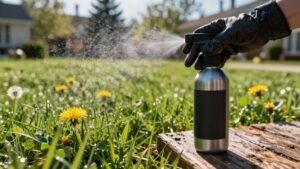
Because temperature, humidity, and wind already dictate how quickly a herbicide moves through a plant, aligning your application method with those conditions is key to achieving rapid kill. You should spray on calm days (3‑10 mph wind) when temperatures exceed 60 °F and relative humidity is high, avoiding dew and rain within 30 minutes. Use a poly sprayer positioned two feet off the ground, set to low pressure, and apply until foliage is uniformly wet but not dripping. For spot treatments, hold the nozzle 15 inches from the weed and work from the perimeter inward with overlapping passes. Maintain herbicide dose control and application timing precision by calibrating the sprayer, selecting systemic post‑emergent products matching soil pH, and monitoring weather to prevent drift and runoff. Bruising leaves improves herbicide uptake by breaking the cuticle and allowing faster systemic absorption. Applying heat can also accelerate herbicide activity by disrupting cellular processes in the targeted weeds.

Designed for homeowners and professionals: reduce mess and speed up lawn care with a wide‑mouth, translucent 48‑ounce tank that makes refilling and fluid‑level checks simple. The seals and gaskets work with all common lawn and garden, weeds and pest chemicals

UNIQUE DRIFT/DRIP GUARDS-allows for a more controlled spray when applying chemicals to the areas you need
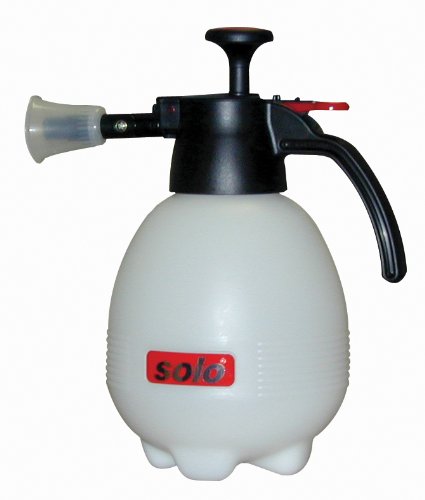
UNIQUE DRIFT/DRIP GUARDS-allows for a more controlled spray when applying chemicals to the areas you need