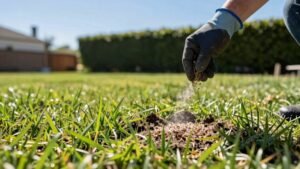

You’ll get a green lawn fast if you pick a fast‑germinating ryegrass blend—perennial ryegrass sprouts in 4‑7 days and annual ryegrass in 5‑10 days, giving you dense, fine‑textured turf quickly. Mix in tall fescue for shade tolerance and durability, or add Kentucky bluegrass for resilience and spreading via rhizomes. Keep the top inch of soil consistently moist, use starter fertilizer, and plant when soil reaches 55‑70 °F. Follow these steps and you’ll uncover even more tricks for a lush, year‑round lawn.
Top Fast‑Growing Grass Seeds for Quick Lawn Green‑Up
When you need a lawn to green up fast, start with ryegrass—perennial varieties sprout in 4‑7 days, while annual ryegrass takes just 5‑10 days and delivers the quickest emergence for overseeding and repairs. Annual ryegrass offers the fastest quick spreading characteristics, making it a top lawn revival option for bare patches. Perennial ryegrass adds durability and fine texture, germinating in 4‑7 days and holding up under foot traffic. Fast‑grow mixtures blend annual ryegrass with other species, achieving 7‑10‑day coverage and filling worn turf quickly. Kentucky bluegrass blends, when mixed with ryegrass, inherit its speed while contributing carpet‑like resilience, germinating in 7‑14 days. Choose the seed that matches your climate, shade level, and desired durability for the fastest green‑up. Fast‑growing grass seeds can germinate in as little as 5 days. Proper moisture and temperature can accelerate germination and ensure healthy seedling development. Maintaining consistent moisture during the first weeks is crucial for uniform growth.
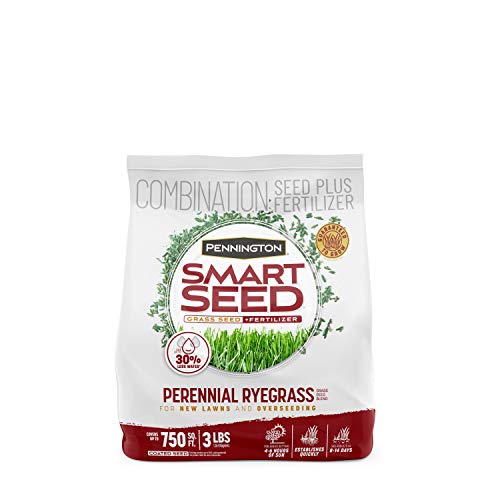
This lawn seed is great for areas getting 4 to 6 hours of sun

These winter rye grass seeds for lawn are ideal for overseeding southern lawns for green winter grass

PREMIUM GRASS SEED BLEND: Expertly formulated with perennial ryegrass, fine fescue, and Kentucky bluegrass for a fast-growing, dense, sun and shade lawn. Great for climates in central and northern regions. Lush Green Grass in Weeks!
Fast‑Growing Grass: Germination Speed & Shade Tolerance
If you want a lawn that turns green quickly and still thrives in shade, focus on two key factors: germination speed and shade tolerance. Fast‑germinating seeds like Scotts Turf Builder Rapid Grass Sun & Shade Mix or Tall Fescue Mix cut germination to 5‑30 days; pre‑soaking for 24 hours and using starter fertilizer boost germination triggers, shaving days off emergence. Keep the top inch of soil consistently moist—mist twice daily—to guarantee moisture retention without puddling. After sprouting, maintain the top 2 inches moist until the grass reaches 3 inches, then allow slight drying between waterings. Shade‑tolerant varieties such as Tall Fescue perform well under partial cover, especially when starter food supports thickness in low‑light zones. This data‑driven routine maximizes rapid green‑up and dense shade coverage. Pregermination dramatically shortens the time to leaf emergence. Properly seedling hardening before transplanting ensures higher survival rates and uniform growth. Using a seed spreader helps achieve even distribution of mixed varieties across the prepared soil. Selecting a seed with the appropriate soil pH range further accelerates germination and promotes strong root development.
Fast‑Growing Grass for High‑Traffic Areas & Quick Repair
Quick‑germinating, wear‑tolerant grasses keep a high‑traffic lawn looking green and intact. Perennial ryegrass establishes in 5‑10 days, delivering fast ground cover and strong root systems that resist compaction—perfect for quick repair and high traffic durability. Kentucky bluegrass fills in over 14‑21 days, spreading via rhizomes to self‑repair damaged spots and maintain a dense, resilient sod. Bermudagrass, a warm‑season option, spreads through stolons and rhizomes, forming thick turf that tolerates heavy foot traffic on athletic fields. Tall fescue offers robust wear tolerance and blends well for pathways, dog runs, and play areas, ensuring dog‑friendly recovery. Commercial mixes like Scotts High Traffic and Jonathan Green Black Beauty Heavy Traffic combine rapid germination with deep root development, delivering uniform texture and lasting durability. Proper soil preparation, including pH testing and loosening the top layer, maximizes seed‑to‑soil contact for optimal germination. Knowing the exact seed‑per‑acre rate helps avoid under‑ or over‑seeding, ensuring an even, healthy lawn. Accurate seed‑rate calculation prevents waste and promotes uniform coverage.

HIGH TRAFFIC GRASS SEED - It's great for backyards, sports fields, curb strips, or anywhere aggressive foot traffic from athletes, children, and pets occurs. Our cool-season grass seed mix contains tall fescues and perennial rye turfgrass varieties.
WHEN TO APPLY : This lawn seed mix of Kentucky bluegrass seed, perennial ryegrass, and fine fescue grass seed germinates best when daytime temperatures are between 60°F and 80°F with no danger of frost

HIGH TRAFFIC GRASS SEED - Our cool-season grass seed mix contains tall fescues and perennial rye turfgrass varieties. It's great for backyards, sports fields, curb strips, or anywhere aggressive foot traffic from athletes, children, and pets occurs.
Cool‑Season vs. Warm‑Season Fast‑Growing Grass: Which Suits Your Region?
Because your climate dictates which grass will thrive, you’ll want to match the seasonality of the species to your region’s temperature pattern. Cool‑season grasses—tall fescue, fine fescue, Kentucky bluegrass, perennial ryegrass—grow fastest in 50‑80 °F windows, germinate quickly on cool nights, and tolerate frost and low light. They excel in northern and transitional zones where winter lows dip below 32 °F, offering strong climate adaptability and rapid seedling establishment when planted early spring or late summer. Warm‑season grasses—Zoysiagrass, Centipede, St. Augustine, bermudagrass—peak at 80‑95 °F, use C4 photosynthesis, and develop deep roots for drought resistance. They suit southern areas above 75 °F, need late‑spring planting after the last frost, and avoid winter kill. Choose the type that aligns with your regional temperature pattern for ideal growth and resilience. Proper timing is crucial, as soil temperature must reach at least 55 °F for optimal germination. Maintaining soil moisture within the ideal temperature range further speeds up germination and supports healthy seedling development.

QUICKLY GROWS TURF - This rapidly establishing grass seed mixture grows quick-turf for problem areas. It's designed to fill in troubled areas in lawns or grow an entirely new lawn quickly. It germinates in 7 -10 days

SHADE TOLERANT GRASS SEED - Our grass seed mix has shade-tolerant grass seeds designed for areas where the penetration of sunlight is limited. Perfect for lawns with big trees, large shrubs, or areas shaded by houses or other permanent structures.
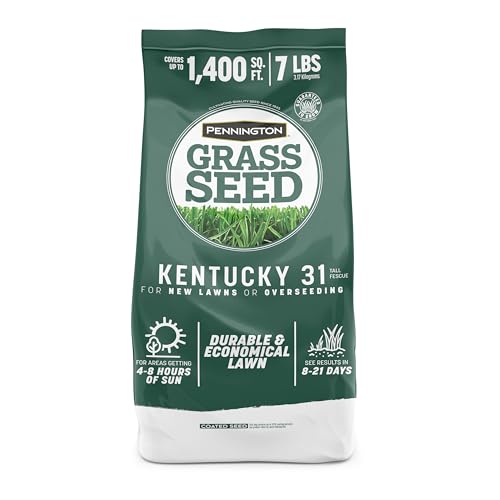
A grass seed for lawns that grows thick blades of grass that stand up to hot summers and heavy rains
Blend Fast‑Growing Grasses for Year‑Round Lushness – Then Plant Right
When you blend fast‑growing grasses, you create a lawn that fills gaps within days while the slower, permanent species take root, delivering year‑round density and resilience. Use annual ryegrass for 7‑10‑day germination, pair it with perennial ryegrass as a nurse plant, and add tall fescue for drought tolerance. Include fine fescue when shade is a factor. This mix facilitates the shift from warm season grasses by providing immediate ground cover options for fast growing grass, then lets Kentucky Bluegrass establish over 14‑21 days for lasting density. Plant in soil 55‑70 °F, keep moisture consistent, and apply starter fertilizer. Overseed in fall or spring, avoid >75 °F, and guarantee 4‑6 hours of sun for ideal root development. Proper seed‑to‑soil contact is essential for rapid germination and soil moisture maintenance. Regularly check soil compaction before sowing to ensure optimal aeration.

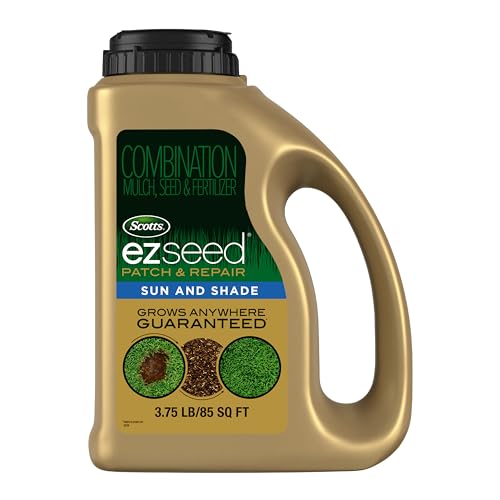
LAWN BARE SPOT REPAIR: Scotts PatchMaster Lawn Repair Mix Sun + Shade Mix is a combination mulch, seed, and lawn fertilizer product specifically designed to provide all-in-one bare spot repair and grass patch repair for lawns

This pack of lawn seeds is ideal for new lawns, overseeding and lawn repair

Establishes quickly
Fast‑Growing Grass Planting Tips for Maximum Germination Success
Three simple steps—soak, plant, and water—will give your fast‑growing grass the best shot at rapid, uniform germination. Soak seeds 3‑5 days, changing water every 12 hours to maintain pre germination water quality. When sprouts appear, plant immediately at a shallow ideal seeding depth (¼‑½ in.) on a firm, weed‑free seedbed. Guarantee soil temperature matches your grass type—50‑65 °F for cool‑season, 65‑70 °F for warm‑season. Light, frequent watering keeps seeds moist without waterlogging; reduce frequency after roots establish. Aerate soil, remove debris, and amend based on testing for nutrient balance. Consistent moisture, proper depth, and immediate planting maximize germination rates and speed lawn establishment. Pre‑germinating seeds for 2‑3 days yields the highest germination success. Maintaining consistent soil moisture during the early weeks prevents seed desiccation and promotes uniform growth. Understanding seed dormancy helps you avoid prolonged periods without water that could reduce viability.

SUN AND SHADE GRASS SEED: This combination lawn seed, grass fertilizer, and soil improver thrives in a variety of conditions

CREATE YOUR PERFECT LAWN: Growtrax Grass Seed fabric contains Seed, Fertilizer and Mulch in one easy to use ‘roll out’ growing system. "Every Seed Perfectly Placed" at over 100% of its recommended planting rate. Each Growtrax Bermuda Rye Grass Seed roll contains the latest in grass growing technology, inclusive of high-quality seed from leading Oregon growers.

Thicker Lawn: With Scotts Turf Builder Thick'R Lawn Sun & Shade, you can get up to a 50% thicker lawn, subject to proper care (results may vary based on the current condition of your lawn)