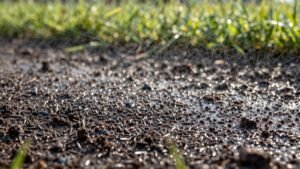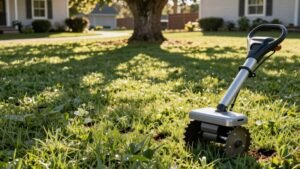

First, test your soil’s pH and nutrients, then loosen the top 3‑4 inches and mix in 2 inches of compost plus a starter fertilizer. Mow the existing grass to about 2 inches, dethatch, and calibrate your broadcast or drop spreader to the seed’s recommended rate. Spread the seed in a cross‑hatch pattern, walk at roughly 3.5 mph, and keep the spreader closed when turning to avoid gaps. Lightly rake the surface, then roll or press to ascertain good seed‑soil contact. Water lightly and frequently until germination, then taper to deeper, less frequent irrigation. Mulch or apply straw and starter fertilizer for protection, limit foot traffic for 3‑4 weeks, and raise mower height after 2‑3 weeks before the first cut. Continue for the guide for deeper details.
How to Seed a Lawn: Step‑by‑Step Guide
How do you prepare a lawn for seeding? First, run a soil testing kit to gauge pH and nutrient levels; adjust with lime or sulfur if needed. Loosen the top 3–4 inches using a tiller, then clear rocks, debris, weeds, and roots. Rake the surface smooth, eliminating clods and leveling high spots. Incorporate two inches of compost into the top 4–6 inches, then firm the bed by walking in multiple directions. Apply a starter fertilizer, avoiding high‑nitrogen formulas that could burn seedlings. Choose a seed mix suited to your climate and soil test results; avoid over‑application. Use a calibrated broadcast spreader, dividing seed into two batches and crossing north‑south with east‑west passes. Lightly rake seed to a 1/8–1/4‑inch depth, then broom and tamp for firm contact without compaction. Water gently with a mist spray, mist daily for two weeks, then shift to regular watering. Proper drainage is essential for seed germination and soil aeration promotes healthy root development. For accurate coverage, consult a seeding rate chart based on lawn size and grass type.
Choose the Right Grass Seed for Your Lawn
Because the success of a new lawn hinges on matching seed to site conditions, start by evaluating climate zone, sun exposure, shade tolerance, and soil type before selecting a blend. If you’re in a cool‑season zone, choose Kentucky bluegrass, tall fescue, or perennial ryegrass; for warm‑season areas, opt for Bermuda, Zoysia, or St. Augustine. Match sun exposure: full‑sun spots take Zoysia or Centipede, while light‑shade tolerates Zoysia and fine fescues. Prioritize shade tolerance: fine fescues (creeping red, chewings) thrive under 3‑4 hours filtered sun, and a tall fescue‑perennial ryegrass mix handles denser shade. Check soil requirements: sandy soils suit St. Augustine or Bahiagrass, acidic compacted soils favor Centipede, and well‑drained sites work best for Zoysia. Select a blend that satisfies all four parameters to guarantee uniform germination and long‑term vigor. In the Transition Zone, tall fescue and Zoysia are especially reliable choices.

PERFECT FOR FALL SEEDING - Our cool-season grass seed mix is formulated for successful fall seeding projects. The grass seed varieties are bred to perform especially well when seeded during the fall planting season of mid-August through mid-October.

This pack of lawn seeds is ideal for new lawns, overseeding and lawn repair
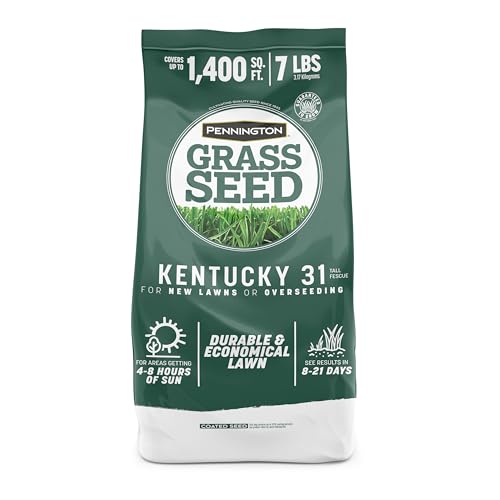
A grass seed for lawns that grows thick blades of grass that stand up to hot summers and heavy rains
Set Up Your Seeder for Accurate Lawn Seeding
A properly calibrated seeder guarantees every seed lands at the right depth and spacing, so start by mowing the lawn to two inches or less, clearing debris, and dethatching to expose a clean seed bed. Attach the seeder to your tractor with a quick‑hitch, ensuring a secure three‑point connection that meets your equipment selection criteria. Load the seed box only after confirming the calibration chart matches your seed type and per‑acre rate. Use the seed calibration tray to weigh the sample, then adjust the flow‑control lever to the low‑dispersion setting; halve the rate for dual‑direction passes. Set the front rollers at a 0° angle for shallow aeration, and verify the chute opens fully to avoid clumping. Conduct a test run, capture a seed sample, and check slicing depth—aim for a ¼‑inch deposit. Follow the manufacturer’s maintenance requirements: inspect gears, end sprocket, and rollers before each session, lubricate moving parts, and replace worn rollers promptly. The rear packer roller provides consistent seed delivery across uneven terrain, and thegate lever controls seed exposure for precise rates. Remember to check for leaks after each pass to prevent water damage to the equipment. Proper timing of seeding is crucial because optimal germination temperature varies with grass species and regional climate. Applying a thin layer of ¼‑½ inch peat moss over the seeded area helps retain moisture and protect the seed.

OPERATION: Adjustable arm support on this seed, salt and fertilizer spreader helps provide maximum comfort

NO ASSEMBLY REQUIRED: Scotts spreader comes pre-calibrated and ready-to-use with a fold-down handle for easy storage; use it year-round including as an ice melt spreader or salt spreader for snow

VERSATILE ALL-SEASON SPREADER: Designed to handle salt, fertilizer, grass seed, and feed, this broadcast spreader transforms your UTV or ATV into a multi-purpose landscaping tool for year-round applications across farming, groundskeeping, and property maintenance needs.
Apply Seed With a Broadcast or Drop Spreader
After calibrating your seeder, load the broadcast or drop spreader and set the hopper opening per the seed‑type guidelines. Begin at the lawn edge, walking at a steady 3.5 mph, and keep both wheels grounded. Use a spreader calibration setting of 50 percent for most grass seeds, adjusting only if the bag directs otherwise. For a broadcast spreader, maintain a 12‑foot arc; effective coverage will be about nine feet, so space each pass accordingly and overlap by 10‑15 percent to avoid gaps. Employ a cross‑hatch pattern: run one pass north‑south, then rotate 90 degrees and repeat. Close the spreader when turning, and perform broadcast spreader maintenance—clean the rotating disc and check hopper seals—after each session to preserve consistent flow. The field was plowed and harrowed the previous day to create a fine, even seedbed. Optimal germination occurs when soil temperature reaches 15 °C during the spring planting window. Choose a spreader with a wide coverage capability to reduce the number of passes needed on larger lawns. Adjust the seeding rate based on the specific grass species, as seed per acre requirements can vary significantly.

IDEAL FOR SMALL TO MEDIUM LAWNS: 85 lb hopper capacity covers up to 14,000 sq ft or approximately 1/4 acre to help simplify seasonal lawn care applications
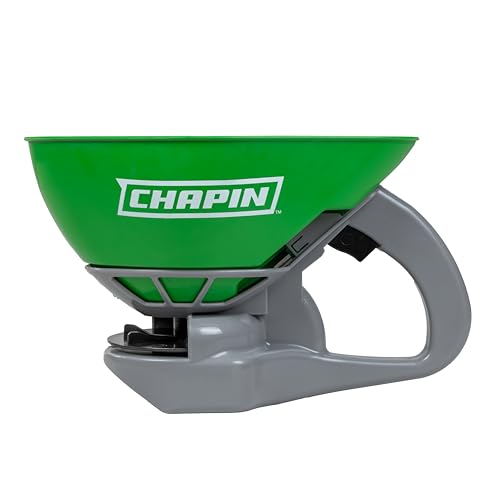
Chapin Garden Spreader: Designed for all your residential lawn and garden seed, pest control and fertilizer spreader need, this 0.3 Gal hand held broadcast spreader is weather-resistant, has a green poly hopper and ideal for smaller spaces

Robust Capacity: The EarthWay 2050P seed spreader boasts an 80lb capacity, making it ideal for extensive lawn care tasks. Perfect for homeowners and professionals seeking a grass seed spreader for large areas.
Rake and Press Seed for Better Soil Contact
Rake the lawn to strip away loose debris and thatch, then lightly work the topsoil into a fine, even tilth without digging too deep, ensuring the surface is smooth and free of air pockets before you press the seed. Perform multiple‑direction rakes to achieve even surface preparation, then inspect for residual clumps. After broadcasting, attach a roller or press‑wheel to your seeder. Advance the roller at a steady pace; its weight should compact the seedbed to ideal soil firmness without crushing the seed. Test firmness by dropping a seed—if it bounces, reduce pressure. Maintain a uniform roll overlap of 30 % to eliminate air pockets and promote moisture transfer. This precise press step maximizes germination and prevents seed desiccation. Use a larger landscape rake to distribute the seeds evenly across the planting area.
Water Your Newly Seeded Lawn Consistently
How often should you water your freshly seeded lawn? Start with an irrigation schedule that delivers ⅛‑¼ inch of water in 5‑10 minute mist sessions right after seeding. Use a fine‑mist or oscillating nozzle to keep seeds in place. For the first two weeks, follow watering best practices by running a gentle sprinkler 2‑4 times daily, 10‑15 minutes each, early in the morning or early evening. Adjust to 2‑3 times on hot, windy days, and avoid late‑day watering to reduce disease risk. Once seedlings appear, cut back to twice weekly deep soaks of 6‑8 inches, then shift to a weekly 1‑inch heavy watering once the lawn is established. Maintain consistent moisture without over‑saturating the soil. Consistent watering is essential for establishing a healthy lawn, especially on larger areas without an irrigation system. Consider the soil type when determining watering frequency, as sandy soils may require more frequent, lighter applications than clay soils. Proper soil moisture management during germination helps prevent seed rot and promotes robust root development.
Protect Seedlings With Mulch, Straw, or Starter Fertilizer
A thin layer of mulch, straw, or starter fertilizer applied right after seeding creates a protective micro‑environment that retains moisture, moderates temperature, and shields seeds from birds and erosion. For ideal mulch application, spread a ¼‑inch layer of compost‑type mulch evenly over the seeded area and water it in; this holds three times its weight in water and moderates soil temperature. If you prefer straw, use one bale per 1,000 ft², loosened without clumps, and keep the depth at ⅛‑inch to avoid smothering. For proper starter fertilizer use, broadcast biodegradable pellets over ¼ of the area, water until they darken, and let them decompose into organic matter. Re‑apply material as it breaks down, but never exceed the recommended thickness, and check for pests or weed seedlings regularly. Mulch also suppresses weeds by blocking sunlight and reducing seed germination. Covering seed with a thin layer helps maintain a stable soil temperature during early growth. Proper seed‑to‑soil ratios are essential for uniform coverage. seed‑to‑soil ratio should be consulted for each grass type.

Organic compost starter speeds up the composting process and is ideal for outdoor compost piles

Protects and Holds Seed in Place - Grass Seed Starting Mulch for lawn and garden covers grass seed, protecting it and keeping it in place and in contact with the ground, helping promote germination

FEED YOUR PLANTS: Burpee's All-Purpose Organic Plant Food is formulated to keep your plants growing and happy throughout the season. Major nutrients as well as calcium, minor nutrients, and some of the beneficial microbes that help keep the soil and plants healthy are released immediately and continue to feed your plants for up to 3 months.
Keep Foot Traffic Low and Mow at the Right Time
After laying mulch or straw to protect seedlings, your next priority is to keep foot traffic low until the grass has rooted. Limit access for at least three to four weeks, especially in cool‑weather zones where sprouting occurs in two weeks but root development needs longer. Install stepping stones, mulch paths, or pavers to Redirect traffic patterns away from seeded areas, and use low fences or hedges as barriers. Select appropriate grasses such as Bermuda, Kentucky bluegrass, or tall fescue for high‑traffic zones, and blend perennial ryegrass for rapid recovery. Raise mower height to encourage deeper roots; wait until the lawn shows firm, dry soil and 2‑3 weeks of growth before the first cut. Mow gently, avoiding sharp turns and scuffing, to preserve young shoots. Light walking on the new grass has been shown to cause no noticeable damage. Avoid planting toxic grass seed varieties that can cause illness in pets. Consider using bird‑repellent sprays to deter birds from pecking at the fresh seed.
Troubleshoot Common Lawn‑Seeding Issues
If you notice thin spots, uneven growth, or seedlings that never seem to take hold, you’re likely dealing with one of four common seeding pitfalls—poor soil preparation, incorrect seeding density, inadequate seed protection, or improper watering. First, conduct proper soil testing; amend compacted zones with aeration and organic matter to improve drainage and nutrient balance. Use a calibrated spreader to achieve the recommended seed‑to‑soil contact and rate—dense enough to avoid gaps but sparse enough to prevent competition. Cover seed with a thin layer of peat moss or mulch, avoiding excess that raises acidity. Finally, follow effective watering schedules: apply light, frequent irrigation twice daily until germination, then taper to deeper, less frequent cycles as seedlings mature, preventing both drought stress and seed washout. Fall is the optimal time to plant grass seed. Aeration also reduces soil compaction and enhances root development. Proper seed‑to‑soil contact is essential for maximizing germination rates. Aerating before seeding improves water infiltration and creates a healthier root environment.

64-OUNCE BOTTLE: high-capacity poly bottle with a wide opening and easy screw top, quickly remove the lid to add your preferred seed, salt, fertilizer, etc. and simply screw back into place

Lawn fertilizer spreader for evenly distributing grass seed, fertilizer, salt, and ice melt in outdoor areas

PRECISE & EFFICIENT COVERAGE – Handheld seed spreader perfect for distributing grass seed, lawn food, fertilizer, salt, or ice melt evenly across your lawn or driveway for consistent results without waste. Helps create a healthy, green lawn without clumps or patchy spots.