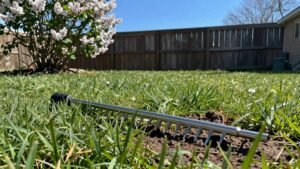

You should fertilize your Bermuda lawn during its active growing season, roughly late spring through late summer, aiming for applications every 4‑6 weeks between April and September. Use a balanced, slow‑release fertilizer at 1‑2 lb of nitrogen per 1,000 sq ft, and time each dose with rain or irrigation for best uptake. Avoid fertilizing in dormancy, late fall, or winter, and keep the lawn well‑watered but not soggy. Proper mowing, aeration, and soil testing will boost results, and the next sections reveal even more details.
Spring Fertilizer Timing for a Thriving Bermuda Lawn
If you wait until the soil consistently hits 65 °F and the lawn shows about 50 % green coverage, you’ll hit the ideal window for spring fertilizing. At that point, dormant season considerations fade and the grass enters active growth, so you can apply a balanced, slow‑release nitrogen product. Aim for 0.5–0.75 lb N per 1,000 sq ft. in early April, then a second dose of ½ lb N per 1,000 sq ft. by early May. This post‑frost application timing avoids premature nitrogen stress and limits weed encouragement. Use a soil test to verify phosphorus needs, and choose a formulation that releases nutrients over 6–8 weeks. Keep rain forecasts clear for 24 hours to prevent runoff. Cool‑season fertilizer is not recommended for Bermuda lawns. For best results, follow a soil preparation routine that includes aeration and pH adjustment before planting.
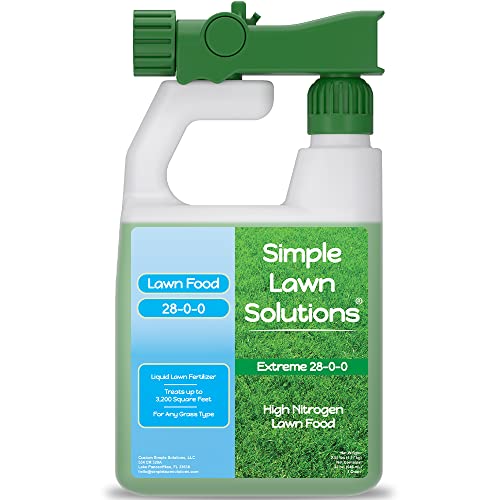
Easy to Use: Our 28-0-0 Lawn Fertilizer Food comes with an attached sprayer that applies the perfect ratio of product for lawn applications. Covers up to 3,200 square feet, when using the attached sprayer

Super-fine particles provide even distribution, with twice the number of particles per square foot

2 PACK FOR EXTENDED LAWN COVERAGE - Includes two 16 lb bags, each covering up to 4,000 sq ft—ideal for larger lawns or multiple applications.
Summer Bermuda Lawn Fertilization Schedule for Peak Growth & Heat Tolerance
Now that the soil’s consistently above 65 °F and the lawn is fully green, shift focus to the summer schedule. Apply nitrogen‑rich fertilizer every 4–6 weeks from June through August, delivering 0.5–1 lb N per 1,000 sq ft each time. Early summer, after May green‑up, use ½–1 lb N; mid‑summer, add a high‑potassium blend (e.g., 15‑0‑15) with ½–1 lb N; late summer, before August 15, repeat the same rate. Choose slow‑release granules or liquid feeds every 3–4 weeks, and include micronutrient supplementation to support enzyme function. Maintain irrigation for drought stress management, and avoid applications during extreme heat or dry spells to prevent burn and disease. Proper soil pH is crucial for nutrient uptake, and a soil test can confirm optimal levels before fertilizing. Selecting a variety with strong heat tolerance ensures the turf remains vibrant throughout the season. Conduct an aeration assessment before fertilizing to maximize root exposure and nutrient absorption.

SOUTHERN GRASS FERTILIZER: Scotts Turf Builder Southern Lawn Food is a pesticide-free lawn fertilizer specially formulated for Southern lawns

28-0-0 Liquid Lawn Food: High Nitrogen lawn fertilizer. Nitrogen helps in the formation of chlorophyll where plants get their green pigment. The addition of Nitrogen can encourage plant vigor for a thicker, greener, and more attractive lawn

✔️ Deep Green Color Without Excess Growth Contains iron and Nutrace micronutrients to deliver a bold, dark green lawn—without pushing top growth.
Fall Bermuda Lawn Fertilization: Low‑Nitrogen, High‑Potassium Strategies
When soil temperatures stay above 65 °F and the lawn remains green, shift to a fall regimen that emphasizes potassium over nitrogen. Apply a low‑nitrogen, high‑potassium fertilizer such as 12‑0‑24 or 0‑0‑50 about 4–6 weeks before the first frost, delivering about 1 lb K₂O per 1,000 sq ft. Limit nitrogen to the minimum indicated by a recent soil test; avoid any quick‑release N exceeding 0.5 lb / 1,000 sq ft. Pair the potash with micronutrient applications—iron, magnesium, zinc—to sustain color and disease resistance. Incorporate organic soil conditioners like humic acid or sea kelp to boost microbial activity and nutrient uptake. Follow these steps while the turf stays actively growing, and you’ll strengthen roots, improve cold hardiness, and set the stage for a vigorous spring green‑up. seedling emergence typically occurs within 7 to 14 days after planting under optimal warm conditions. Zoysia grass thrives best when seeded in late spring after soil temperatures consistently reach 65 °F. Proper soil aeration before fertilizing can further enhance nutrient absorption and root development.
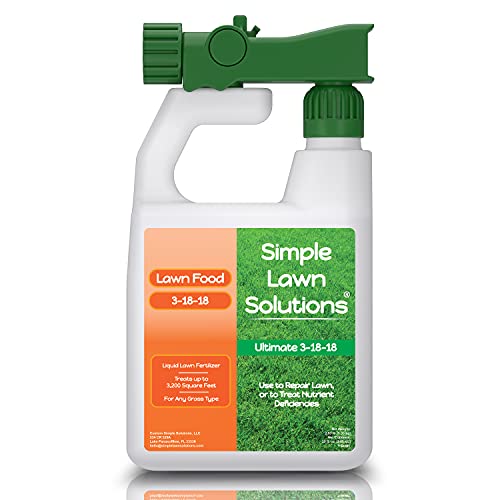
High Phosphorus, High Potassium Lawn Food: If your lawn is showing symptoms of a Phosphorus and Potassium deficiency or if you want to maintain lawn health then this is the correct fertilizer for you!
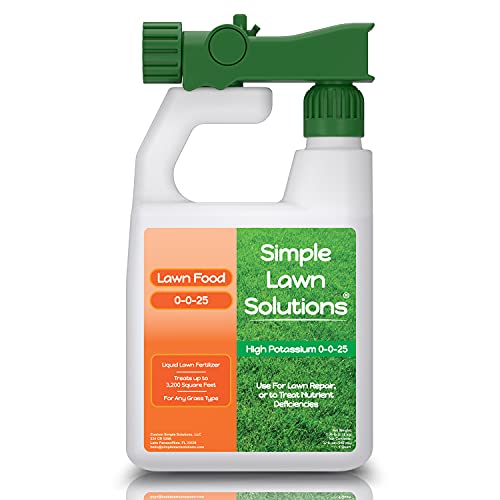
Plant Hardiness: Potassium Promotes Turf Grass Hardiness, Helping Lawns Prepare For Temperature Change and Stressful Conditions. Potassium Deficient Lawns Can be Less Resistant to Stress. Great to use in the Summer and Fall.

15-0-15 Lawn Fertilizer To Promote Greening, Growth And Turf Hardiness: The Power Of Nitrogen & Potassium Blended With Humic, Fish And Seaweed. Intensify Green And Growth While Providing Key Nutrients For Turf Hardiness.
Bermuda Lawn Nitrogen Rate Calculations: Pounds per 1,000 sq ft
A healthy Bermuda lawn needs 4–5 lb of actual nitrogen per 1,000 sq ft each year, and you can break that total into monthly applications based on lawn condition. For a thin lawn, aim for 1.0–1.5 lb nitrogen per 1,000 sq ft each month; a mature lawn needs only 0.5 lb per month. Use fertilizer ratio guidance to translate nitrogen goals into product weight. A 32 % N fertilizer requires 3 lb per 1,000 sq ft for 1 lb nitrogen, while 46 % urea needs about 1.08 lb. Adjust for slow‑release formulas (1.5 lb N per application) or soluble inorganic limits (1 lb N per application). These calculations meet annual bermuda nitrogen needs while preventing over‑application. Proper fertilization also soil health by supplying essential nutrients that support root development and overall turf vitality. Apply fertilizer during the optimal growth window to maximize nutrient uptake. Understanding soil pH is essential for selecting a fertilizer that will be most effective for your specific lawn conditions.

Complete NPK Lawn Food: 16-4-8 is the perfect blend of key macronutrients. This lawn liquid food turf fertilizer also contains Seaweed & Fish.

WHERE TO USE: Lawn fertilizer for grass can be used on any grass type

7-in-1 Complete Lawn Care Formula: Forget the hassle of mixing multiple products! Neighbor’s Envy by PetraMax Garden Fertilizer combines 7 key nutrients for deep green color, root strength, stress resistance, and long-lasting health—all in one easy, powerful formula.
Bermuda Lawn Soil‑Testing Fundamentals: pH, Phosphorus, Potassium & Amendments
After setting nitrogen rates, you need to check the soil’s chemistry to guarantee those nutrients are usable. Measure pH first; Bermuda thrives at 5.8‑6.8, and values below 6.0 limit phosphorus and risk aluminum toxicity, while above 7.0 curb micronutrient uptake. Use a Bray I extraction if pH < 7.2, otherwise Olson P. Aim for a phosphorus index of 65, with 30‑37 ppm preferred and 50‑75 lb/acre normal. Potassium should also read 65, with 100‑200 ppm ideal and 200‑250 lb/acre typical. Test before planting and every 3‑5 years thereafter. Apply lime only when pH < 6.5, limiting to < 50 lb per 1,000 sq ft, and schedule sulfur amendments to lower pH as needed. Timely soil amendment prevents micronutrient deficiencies and maintains balanced nutrient availability. Proper soil testing ensures you can adjust nutrient applications before deficiencies develop. For accurate budgeting, calculate seed quantity using the seed rate conversion from pounds per square foot to pounds per acre.
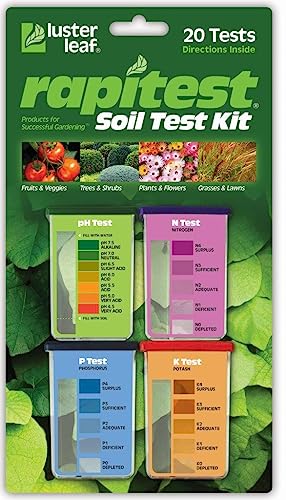
Quick, at home results for Soil pH, Nitrogen, Phosphorous and Potash Innovative and inexpensive soil test kit features an easy-to-use capsule system and patented color comparators

Kindly NOTE: This soil tester can not be applied to test pH value of any other liquid. If the soil is too dry the indicator will not move, and water it before testing.

KNOW BEFORE YOU GROW | Grow the healthiest, sustainable lawn and garden with the most accurate and easy to use professional soil test kit on the market
Common Mistakes That Kill Bermuda Lawn Health
If you water Bermuda grass too often, the soil stays constantly wet, which quickly leads to chlorosis and weak root development; shallow, frequent irrigation never reaches the 6‑inch root zone, promotes fungal diseases, and reduces drought tolerance. Overwatering practices also cause yellowing blades and lower drought resilience. Another frequent error is improper fertilization timing. Applying high‑phosphorus blends like Milorganite outside recommended windows or during drought stresses limits nutrient uptake and can yellow the lawn. Spraying a 30‑0‑5 mix without matching service routes to soil needs wastes nutrients and harms sod. Skipping pre‑emergent applications invites weeds, while mowing below 3 inches or delaying cuts beyond seven days stresses the turf. Each mistake compounds stress, leading to thinning, disease, and eventual death. Adjusting watering frequency based on soil moisture can significantly improve root depth and drought resistance. Properly timing irrigation to match soil absorption rate helps prevent water runoff and ensures deeper root growth. Using a sprinkler cap can further control water distribution and reduce excess moisture.