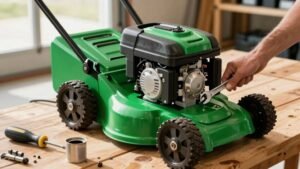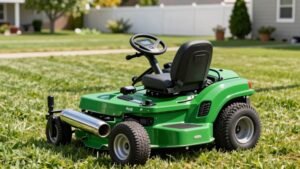

First, check the oil level and top it off if needed. Engage the safety bar and stand with a stable stance. Press the primer bulb a few times, then set the choke for a cold start. Pull the starter cord firmly until the engine catches. Once it fires, let it run briefly, then adjust the choke to idle. After that, inspect the blades, fuel lines, and store fuel safely. Keep reading to uncover troubleshooting tips for failed starts.
Check Oil Level Before You Start a Gasoline Lawn Mower
Before you fire up a gasoline lawn mower, make sure the oil level is correct. Park the mower on a flat surface, let the engine cool, then clean the area around the oil cap. Locate the cap by its oil‑can symbol or “fill” label; it’s usually on the engine’s top and may be yellow. Unscrew the cap, pull out the dipstick, wipe it clean, and reinsert it fully. Remove it again to read the level; it should sit between the “full” and “add” marks. If it’s low, add a little oil at a time, rechecking until it’s near full but not overfilled. When you finish, properly dispose used oil and compare to manufacturer’s recommendations for the right type and amount. The dipstick is yellow and has an oil can symbol on the side. Most residential mowers require about 1 quart of oil for optimal performance. Regular oil checks help prevent engine wear and extend mower lifespan, especially when operating under heavy usage conditions.

SAE 10W-30 MOTOR OIL FOR SMALL ENGINES: One 32 fl oz bottle of STP Premium Synthetic Blend 4 Cycle Small Engine Oil SAE 10W-30, formulated for small engines in lawnmowers, generators, tractors, snow blowers, and other outdoor power equipment

HIGH-ZINC FORMULA: Contains 2X the zinc of OEM and competitor oils, delivering unmatched wear protection for small engines

【Broad Compatibility】- Tailored for versatility, our oil dip stick facilitates EY20 gasoline engines, generators, lawn mowers, water pumps making it a universally accessible tool.
Engage the Safety Bar and Adopt a Safe Stance
One quick step before you pull the trigger is to engage the safety bar and assume a stable stance. Push the bar up until it clicks against the handle; this prevents the engine from running if you release the throttle. Plant your feet shoulder‑width apart on firm ground, knees slightly bent, to maintain proper footing. Grip the handle firmly with both hands, keeping wrists neutral to guarantee handle grip stability. Keep your body centered over the mower, avoiding leaning forward or backward. Check that the bar stays engaged as you start; if it slips, the engine will shut off. By locking the safety bar and adopting this balanced posture, you reduce the risk of sudden movement and protect both yourself and the machine. If the mower’s cable is stuck, you may need to replace it with a compatible Husqvarna part such as 532130861. Always read the user manual before operating any mower to ensure you understand all safety features. Wearing protective gloves helps prevent injuries from debris and mower blade contact. Properly aligning the blade’s edge at the recommended cutting angle ensures efficient cutting and prolongs blade life.
Prime the Engine for a Quick Start on Your Gasoline Lawn Mower
If you want the engine to fire up instantly, press the primer bulb three to four times right after you’ve checked the fuel level and oil. First, confirm the tank holds fresh gasoline, tighten the cap, and wipe any spills. Perform fuel line preparation by pulsing air through the hose to the fuel filter, then apply light pressure to confirm flow. Next, verify primer bulb function: each press forces air into the carburetor throat, pushing gasoline from the bowl into the combustion chamber. Avoid over‑pressing; three presses deliver enough fuel without flooding, while ten presses can cause hard pulls. After priming, inspect the spark plug and oil level, then pull the starter cord confidently for a quick start. The gas tank is empty, so fill the tank before attempting to start. Remember to drain excess fuel safely before storage to prevent fire hazards. A weak battery can also prevent the starter from cranking fast enough, so check the battery voltage before you begin. Proper storage temperature can significantly affect battery lifespan, so consider keeping the mower in a cool, dry place to preserve battery health.

Compatibility: Our primer bulbs are compatible with a range of popular models, including Walbro 188-12, 188-12-1, 49-020, 615-811.

Package includes: you will receive 4 pieces 694395 primer bulbs, an enough quantity for your replacement or use as a backup

Manufacturer Part Number: 9001080A 50073805 73805 universal fuel line Suitable for Carburettor and low pressure fuel systems
When and How to Adjust the Choke for a Cold Start
When the mower has been sitting for a while, you’ll need to engage the choke to give the cold engine a richer fuel‑air mix for a smooth start. First, push the throttle lever fully to the choke position; this aligns the throttle hole with the carburetor plate. Loosen the throttle‑cable clamp with a Phillips screwdriver, pull the cable tight, then retighten the clamp. Set the throttle to idle, slide the cable to an approximate position, and snug the clamp. Advance to full throttle, adjusting until the linkage bottoms out, then fully tighten the clamp. Verify proper choke positioning by confirming the choke closes completely at maximum throttle. Release the choke slowly after the engine fires, moving it gradually toward the normal operating position to keep the cold engine operating smoothly. The choke also provides more fuel when the engine has been idle for several hours. If the starter cord is jammed, clear the jam before attempting to start the mower.

Wide application: Universal for most lawnmowers, Non original aftermarket part.

Carburetor replaces for Honda # 16100-Z0Y-M42 (Bb75f B),16100-z1l-854 16100-Z8B-841 16100-Z0L-871 16100-Z0L-872 16100-Z0L-874 16100-Z0L-876 16100-Z0L-875

Part Number: Choke cable for Bay Boy 054-8017-00, replacement for Stens 290-610. The manual choke cable kit included 1x 60 3/4" choke cable for lawn mower
Pull the Starter Cord to Start Your Gasoline Lawn Mower
After setting the choke, grab the pull‑cord handle and give it a firm, steady yank to fire the engine. First, check proper cord alignment: the starter pulley should be wound to its limit, and the pull‑cord hole must line up with the outer housing hole. Insert a screwdriver through the slots to lock the pulley in place while you thread the new rope through both holes. Pull the cord until the pulley winds itself back up, then fish the remaining rope through the handle eyelet and tie a tight knot. Trim excess rope and melt the knot with a lighter for extra security. Finally, secure starter housing by reinstalling the bolts with a socket wrench, ensuring everything is tight before you move on. Secure the pulley with a small screwdriver to prevent it from spinning while you work. Also, inspect the recoil spring for any signs of wear before re‑installing the cord. Follow the safety precautions outlined in the replacement guide to avoid injury while handling the spring.
What to Do Right After the Engine Fires Up
Do you feel the engine humming? Once it starts, let it idle for 15‑30 seconds at the proper speed. Monitor smooth idling before you touch the throttle; any wobble or backfiring means you should lower the RPM slowly. Keep the mower stationary, check that the deck and muffler are clear of dry grass, and avoid refueling while it’s hot. If the engine stalls, suspect old fuel or a clogged vent. Allow gradual engine cooldown by keeping the throttle low and letting the fan run. When the idle steadies, you’re ready to engage the blades. Remember, a stable idle prevents fuel‑pumping issues and protects the carburetor. Check the spark plug for wear before the first use. Inspect the spark plug for fouling or wear before the first use. Use the correct torque when tightening the new spark plug to avoid damage.
Inspect Blades, Fuel Lines, and Store Fuel Safely
Before you fire up the mower, give the blades, fuel lines, and fuel storage a quick, thorough check. Visually inspect each blade for cracks, bends, or dullness; tighten any loose bolts and replace damaged blades immediately. Turn off the engine, disconnect the spark‑plug wire, and look under the deck for debris that could cause imbalance. Next, examine all fuel hoses and clamps for leaks, cracks, or bulging sections; listen for hissing when you loosen the tank cap, which signals pressure problems. Replace damaged components before you start. Store gasoline in a UL/DOT‑certified red container, filled to no more than 50 % and kept in a well‑ventilated, shaded area away from ignition sources. Use fresh, ethanol‑free fuel and a stabilizer if you’ll store it longer than a month to maintain fuel system health. Dispose of used oil according to local regulations to prevent environmental contamination. Remember to remove hazardous batteries before disposal to avoid soil contamination. Properly drain fuel from the mower before storage to avoid engine damage in cold weather.
Troubleshooting a Failed Start on a Gasoline Lawn Mower
Why won’t your mower start? First, confirm the basics: fresh fuel, a clean spark plug, an unobstructed carburetor, and a clear air filter. Drain old gas, add fresh fuel with stabilizer, and replace a worn plug. Clean the carburetor bowl and ports; spray a little gasoline into the throttle bore to verify flow. Inspect the air filter and replace if it’s clogged. Check safety switches and the ignition key; a dead battery will prevent an electric start. If the engine still won’t fire, examine engine timing issues and perform valve adjustments as needed. Proper timing and valve clearance guarantee the combustion cycle completes, allowing the mower to start reliably. Fuel line issues can also prevent fuel from reaching the carburetor. Clogged fuel filter can restrict fuel flow and should be inspected regularly. Regularly cleaning the air filter helps maintain optimal airflow and engine performance. Continuity testing with a multimeter can quickly reveal a faulty coil before disassembly.
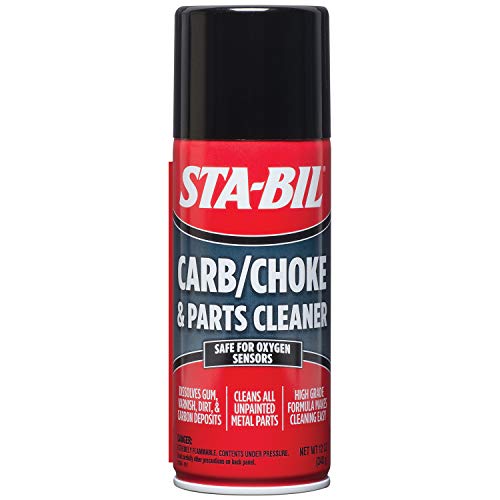
Quickly cleans and dissolves gum, varnish, dirt, lead, and carbon deposits, aiding in faster starts and smooth idling

DEEP FUEL SYSTEM CLEANING Helps restore lost power, smooth out rough idle, recover lost MPG, and overcome other common engine problems by cleaning the entire fuel system. Cleans fuel injectors, carburetor restrictions, and chamber areas. Add Sea Foam to your fuel tank every 3,000 miles.

This is a 12V fuel pump with fuel filter kits, universal for gasoline and diesel (exclude alcohol) engine, fit for all 12 volt cars, trucks, carburetor, lawn mower, boats & generators