
You’ll need about 5‑inches of water per week for a cool‑season lawn, so run each zone for roughly 15‑20 minutes at 20‑30 psi, then adjust up or down based on temperature, soil texture, and the tuna‑can test results. In hot weather (90 °F +) increase to three or four short cycles; in cooler periods (≤60 °F) you can cut back to one or two. Fine‑tune the time until the cans show a uniform depth, and you’ll avoid runoff and under‑watering. Keep the schedule early‑morning to reduce evaporation, and the next section shows how to calibrate for seasonal changes.
Determine Your Lawn’s Weekly Water Need
When you calculate your lawn’s weekly water need, start with the base requirement of 1 – 1.5 inches for most cool‑season grasses and adjust for species, temperature, and soil type. Identify your grass category: cool‑season varieties (Kentucky bluegrass, perennial ryegrass, tall fescue) need 1–1.5 inches, while warm‑season types (Bermuda, Zoysia) require 0.5–1 inch. Modify the volume according to temperature—60 °F or lower, irrigate 1–2 times weekly; 70–80 °F, 3 times; 90 °F+, 3–4 times. Factor soil texture: sandy soils demand frequent, low‑volume runs; clay soils allow deeper, less frequent applications. Apply the total depth in evenly spaced sessions to meet lawn water requirements and achieve an ideal watering strategy without runoff. Consider local evapotranspiration rates when fine‑tuning your schedule. Avoid operating a mower on wet grass to prevent electrical hazards and engine damage.
Choose the Right Sprinkler Type for Your Schedule
If you balance your lawn’s water‑use schedule with the sprinkler’s delivery pattern, you’ll match the system to your terrain and timing constraints. Choose a sprinkler that mirrors your plot shape: oscillating units for rectangular beds, rotary heads for circular or irregular zones, impulse models for large 90‑ft‑diameter areas, and pop‑up emitters for moderate home lawns with curvilinear edges. Guarantee proper sprinkler placement to avoid puddling on clay and to keep spray within target boundaries. Adjust sprinkler rotation speed or radius to fine‑tune coverage and reduce runoff, especially when pressure is weak. Pair the device with a digital timer for consistent cycles, and use smart‑compatible controllers to pause during rain or drought. This alignment maximizes efficiency while preventing over‑watering. Use a hose or spray can to wet spot and verify that each area receives uniform moisture. Properly raising the sprinkler head can also improve spray uniformity by adjusting the nozzle height. Regularly check the spray pattern for uneven distribution and adjust the nozzle type if necessary.

[Upgraded Brass Nozzle] - Lawn sprinklers garden hose sprinklers is 18.3 x 5.5 x 3.5 in, with 18 brass nozzles for superior coverage up to 3600 sq ft., and an extra-large base can with stand any element and weather conditions for added stability and durability in the yard and garden

FULL-SIZE COVERAGE– Get the power of a full-sized oscillating sprinkler in a space-compact form—covering up to 4,000 sq. ft. to easily water large lawns, gardens, and newly seeded areas.

FULL-SIZE COVERAGE IN A COMPACT DESIGN: Get the power of a full-sized oscillating sprinkler in a space-saving form—covering up to 4,000 sq. ft. to easily water large lawns, gardens, and newly seeded areas.
Calculate Zone Run Time With the Tuna‑Can Test
You’ll start the Tuna‑Can Test by arranging five to ten identical cans in a grid across the zone, then running the sprinkler for the prescribed interval (typically 15 minutes for spray heads or 30 minutes for rotors). After the run, measure each can’s water depth to the nearest 1/8 inch. Add the depths and divide by the number of cans to get average coverage consistency. Multiply the average by four for inches per hour (15‑minute test) or use the 10‑minute formula (need × 10 ÷ average = run time). Compare individual can readings; variations beyond 25 % reveal non uniform application patterns. Adjust the zone’s run time until the average meets your target depth, then record the new schedule. Sprinkler tips can be changed to fine‑tune water output if the average depth is off target. Proper trench depth minimum pipe slope helps maintain consistent pressure throughout the zone. Loose fittings can cause uneven distribution and should be inspected before testing.

PREVENT WATER BACKFLOW - Our automatic anti-siphon valve with an atmospheric vacuum breaker protects your irrigation system and culinary system from water contamination.

Package length :7.25"
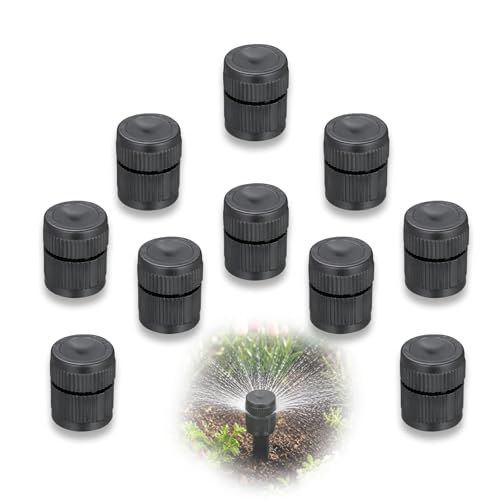
【Adjustable Flow for Precise Watering】Each mushroom bubbler sprinkler head features an adjustable flow control, allowing you to fine-tune water output based on the needs of your garden, trees, or shrubs. These versatile irrigation sprinkler heads help reduce water waste while ensuring every plant receives the ideal amount of moisture.
Pick the Right Sprinkler Head for Your Yard
Which sprinkler head suits your yard depends on size, shape, and pressure. For small to medium rectangular lawns or flower beds, choose a fixed spray head; it operates at 20‑30 PSI, delivers a steady stream, and offers full, half, quarter, or three‑quarter patterns for an efficient sprinkler pattern. If your lawn exceeds 30 ft², has irregular boundaries, or slopes, a rotor head works better—requires >30 PSI, rotates to cover 15‑50 ft, and lets you adjust patterns for uniform overlap. Large, uneven areas benefit from impact sprinklers that handle high pressure and long throws, though they’re noisier. Match head type to soil, pressure, and zone precipitation rates, install pop‑up models where appropriate, and integrate a sprinkler maintenance schedule to check nozzles, pressure regulators, and head‑to‑head alignment regularly. Proper zone design also depends on head spacing guidelines to ensure even coverage and avoid water waste. To guarantee optimal coverage, you should first assess water distribution before setting head spacing. Understanding soil water retention helps you choose the most efficient sprinkler system for your garden.

Approved for sale/meets pressure regulation legislation requirements in: CA, CO, HI, VT, MA, ME, NY, OR, RI, WA, and Washington DC

ADJUSTABLE ARC & SPRAY DISTANCE: Includes a preinstalled 3.0 GPM nozzle with an arc that adjusts from 40° to 360°, ideal for both full and part circle coverage. Delivers a spray distance of approximately 22 to 52 feet, with optional nozzles (sold separately) allowing further customization.

Approved for sale/meets pressure regulation legislation requirements in: CA, CO, HI, VT, MA, ME, NY, OR, RI, WA, and Washington DC
Set Early‑Morning Watering Schedules to Reduce Evaporation
Because evaporation peaks between 10 a.m. and 4 p.m., scheduling irrigation for the early‑morning—preferably before 5 a.m.—captures the most water before the heat and wind intensify. You should program each zone to start between 4:30 a.m. and 5:00 a.m., then finish by 5:00 a.m. This timing leverages nighttime irrigation benefits such as lower temperatures, reduced wind, and higher humidity, which together cut evaporative loss to roughly 15 % versus daytime 30 % loss. By delivering 1 inch of water early, you actually retain about 0.85 inch, creating clear water conservation opportunities. Use head‑to‑head sprinkler placement, avoid high‑pressure misting, and keep pressure low enough to prevent drift while ensuring uniform coverage. This approach maximizes efficiency and minimizes waste. Proper watering is critical because 2 inches per week dramatically improves lawn health over 1 inch. Accurate zone mapping helps ensure each area receives the right amount of water without over‑ or under‑watering. Adjustable caps can be installed on sprinkler heads to fine‑tune flow and prevent excess water usage.

【Easy Programming Program】Through the Sprinkler Timer to program, you can set the Start Time, Watering Duration is 1min-3h59min, Watering Frequency from 1h to 12h or 1 day to 7 days, so you can customize your watering time, and can be more accurate.

Waters daily when the sun comes up

【Easy to Program】Rotate the dial and press the buttons to set clock, how often (watering frequency), how long (watering duration), start time, auto, and off. Watering Frequency from 1Min to 23h59Min or 1 to 7 days, each Watering Duration is 1min-23h59min. The sprinkler timer can customize your watering time to meet your flexible watering needs.
Adjust Watering for Seasonal Temperature & Rain
When temperatures rise or rain patterns shift, you’ll need to tweak your sprinkler schedule to match the season’s water demand. In spring, start with 2‑3 days per week, using short runtimes and monitoring rainfall measurements before increasing frequency. As daytime highs climb, move to summer settings: run 2‑4 times weekly, extending duration when forecasts exceed 90 °F and applying a 130 % or higher seasonal adjustment. Use rain sensors to pause irrigation during precipitation, integrating accumulated rain data to avoid oversaturation. In fall, gradually reduce the adjustment percentage and frequency, watching for transitional rainy days that lower water needs. Throughout, perform routine system maintenance—clean heads, check sensors, and verify controller settings—to guarantee accurate dosing and reliable operation. For quick fixes, consult a sprinkler head replacement guide to keep the system running smoothly.
Fine‑Tune Your Sprinkler Schedule for Soil, Wind, and Grass
After adjusting for seasonal temperature and rain, you now need to align your sprinkler run times with the specific soil type, wind conditions, and grass species in each zone. Use zone management to match soil density: sandy zones get 15‑20 min bursts, clay zones 30‑45 min, loam zones 20‑40 min, aiming for 0.5‑1 inch per session measured with catch cans. Factor wind by adding 10‑20 % time on windy days and run low‑angle heads at 4‑6 AM; separate high‑wind zones to avoid simultaneous loss. Tailor grass needs: cool‑season lawns require 1‑1.5 inches weekly, split over 2‑3 days; warm‑season grasses need 1.5‑2 inches, with more frequent cycles for new sod. Apply seasonal adjustments monthly, using 15‑minute test runs to calibrate flow and prevent runoff. Properly adjust the spray arc to eliminate dry spots and overlapping coverage. Check head pressure before each season to ensure consistent performance. Adjust the shut‑off screw to fine‑tune the spray distance for each head.
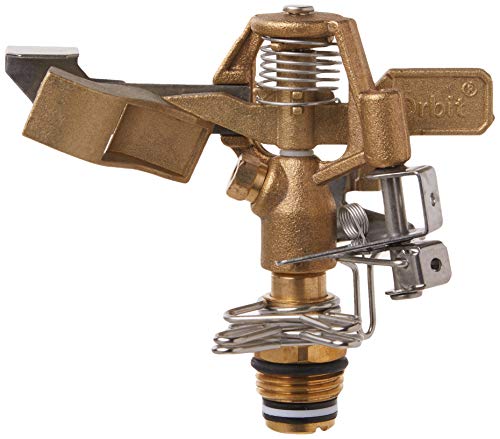
LARGE-AREA COVERAGE: Sprays up to 90 ft. in diameter, covering 6,360 sq. ft. when set to a full circle.

For watering areas with up to 15 feet of spacing between sprinkler heads; Professional-grade pop-up spray body in 2, 3, and 4-inch riser stem heights

For watering trees, shrubs, perennials, or annuals of various heights
Identify and Fix Common Over‑/Under‑Watering Symptoms
Spotting over- or under-watering signs early lets you correct the issue before the lawn deteriorates. When soil stays spongy, pools, or leaves footprints for minutes, cut back watering and aerate to improve drainage; this also prevents nutrient leaching that masks common fertilizer deficiencies. If grass turns gray, bluish, or crispy and footprints linger over half an hour, increase frequency or duration, then check that you’re mowing at proper mowing heights to reduce stress. Look for mushrooms, brown patches, or moss—these indicate excess moisture and may require deeper watering cycles. Adjust irrigation based on soil moisture readings, then re-apply balanced fertilizer and maintain recommended mowing heights to restore root depth and uniform color. A leaking sprinkler head can also cause unintended watering, so inspect the valve seal regularly. Before removing a sprinkler head, always depressurize the system to avoid sudden pressure release.