
A high‑lift mower blade is a pronounced‑curved cutting edge that forces air upward, creating a low‑pressure zone that lifts tall or wet grass for a clean, efficient cut. The 1‑1.⅛‑inch curve boosts airflow about 15 % compared with a 0.75‑inch curve, and at 3400‑3600 RPM it generates enough suction to lift dense, upright turf like bluegrass or St. Augustine. It demands more power and can increase noise, so you should avoid it on sandy, dry, or low‑cut lawns where abrasive particles and dust will clog the deck. If you keep the blade sharp, balanced, and properly installed, you’ll enjoy superior bagging and mulching performance. Continue for detailed comparisons, power specs, and installation steps.
What Is a High‑Lift Mower Blade?
A high‑lift mower blade is a cutting element that creates a strong upward airflow to lift tall or wet grass, ensuring an even cut and efficient discharge of clippings. You’ll notice its pronounced angle on the corners and an upward curve of 1 – 1 ⅛ inches at each end, which generates a vacuum that pulls grass into the deck. This design yields higher lift than medium‑lift OEM blades and demands more horsepower, but it improves cut quality on thick turf. When you follow the mower maintenance schedule, inspect the blade’s fin and “meat” for wear, and sharpen the edges to preserve suction. Although not a mulching blade, its airflow can support mulching capabilities if paired with a compatible deck, allowing recut clippings to be redistributed evenly. High‑lift blades are especially effective in wet conditions, where the suction helps move clippings into the bag more efficiently. Selecting the right blade also depends on grass type and terrain, as different conditions benefit from varying lift levels.

Cub Cadet XT1-LT42 and XT2-LX42 models use different blade center holes; our blades are 6-Point Star mounting pattern ONLY (fits OEM 942-04308A), please verify your original blade before ordering as other patterns will not fit.

Replaces OEM Parts: Husqvarna 138971, 127843, 138971X431, 532138971, 532127843, 532138498, 134149, 532134149, 138498, 531005085, 424752, 532424752, Craftsman 138971, 532138971

How the Upward Curve Generates Suction and Lift
The pronounced angle at each blade edge creates an upward curve of 1 – 1 ⅛ inches, and as the blade spins this curvature forces air upward, forming a low‑pressure zone that pulls grass blades toward the deck. You’ll see that the curve’s height—measured on a flat surface—directly correlates with suction strength; a 1‑1.1875‑inch lift produces roughly 15 % more airflow than a 0.75‑inch curve. Cut angle optimization guarantees the edge angle maximizes this airflow without exceeding blade manufacturing tolerances, which typically stay within ±0.02 inches. At 3400‑3600 RPM, the high‑angling edge circulates air, creating a vacuum that lifts tall or wet grass, separates clippings, and improves cut uniformity while keeping power draw within design limits. Low lift blades require less power and generate less dust, making them suitable for sandy terrain. Maintaining sharp blades ensures the suction effect remains consistent and prevents uneven cutting. A consistently sharp blade also reduces fuel consumption by allowing the mower to cut more efficiently. Regularly checking blade sharpness can prevent premature wear and extend the mower’s lifespan. blade maintenance is essential for optimal performance.
Choosing High‑Lift Blades for Wet or Tall Grass
When you mow wet or tall grass, high‑lift blades can boost airflow enough to lift clippings for discharge, but the same lift that helps with tall, dry turf becomes a liability in damp conditions—wet grass clings to the deck, increasing clog risk and engine load. For wet grass limitations, switch to low‑lift or mulching blades; they reduce suction resistance and keep engine strain under control. In contrast, effective tall grass mowing exploits the steep angle and strong upward draft of high‑lift designs, which stand tall blades upright and achieve even cuts above 3.5 inches. Guarantee your mower’s horsepower matches the demand; otherwise, you’ll see bogging and uneven discharge. Regularly clean the deck when operating in wet tall conditions to prevent buildup. Mulching blades recut clippings into smaller pieces for use as fertilizer. Properly balanced blades also extend blade life and maintain consistent cutting performance. Maintaining the one‑third rule helps promote dense, resilient turf and reduces stress on the mower. Check mower blade sharpness before each session to ensure clean cuts and prevent tearing.

Compatible with OEM Part Numbers Toro 62-7700, 62-7700-03
Standard vs. Extra‑High‑Lift vs. OEM Blades: Key Differences
Switching from wet‑grass precautions to blade selection, you’ll find three distinct high‑lift categories—standard, extra‑high‑lift, and OEM—each defined by curvature, suction, and horsepower demand. A standard blade curves 1–1 ⅟ ⅟ inches, delivers moderate upward draft, and meets most specific cutting needs on flat, dry terrain while minimizing environmental impact through lower fuel use. Extra‑high‑lift blades exceed 1 ¼ inches, generate the highest suction, and excel on tall, compact grass, but they tax engine horsepower and increase emissions. OEM blades match standard curvature yet incorporate proprietary geometry that maximizes airflow and clipping dispersion, offering precise cuts for commercial mowers without extra fuel draw. Choose based on lawn density, mower capacity, and desired ecological footprint. The back end of a blade experiences the most wear due to sand‑blasting from grass. Proper blade balancing after sharpening ensures even wear and extends mower life. Always wear safety glasses when handling a sharp blade. Follow the five‑step method to safely remove the blade before any maintenance.
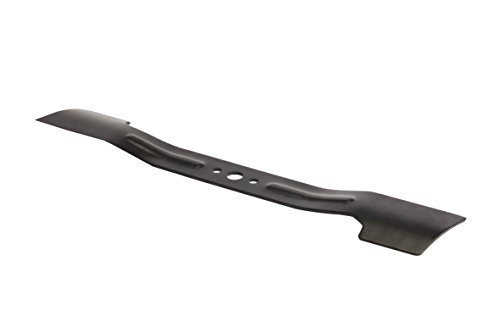
Enhance the bagging efficiency of your 21" EGO Power plus lawn mower
Power Requirements for High‑Lift Mower Blades
High‑lift mower blades typically demand 15‑30 % more horsepower than medium‑lift equivalents, and extra‑high‑lift models can push that requirement to nearly double the original engine load. You must verify that the engine power requirements meet the 1‑to‑1‑3/16‑inch lift range; otherwise, the mower will bog under tall, dense grass. Fuel consumption rises proportionally, with gas‑powered units using up to 20 % more fuel per hour. Battery‑powered mowers experience a pronounced battery life impact, depleting up to 30 % faster when operating a high‑lift blade. Match the mower’s rated horsepower to the blade’s lift height—low lift under ¾ inch suits low‑horsepower engines, while extra high lift (≥ 1‑¼ inch) demands maximum output to maintain airflow and cutting efficiency. RPM drop is especially noticeable on hills when using high‑lift blades. The higher torque of brushless motors can help offset the increased load of high‑lift blades, improving performance under demanding conditions. Hydraulic systems provide smooth cutting pressure that further reduces strain on the engine during demanding mowing.
Best Bagging & Side‑Discharge Conditions for High‑Lift Blades
If you want ideal bagging and side‑discharge performance, set the blade lift between 1 in and 1‑3/16 in and keep the bagger at roughly 60‑70 % capacity; this range maximizes suction without choking airflow, while the strong upward draft lifts dense or tall turf upright for clean side ejection. For bagging, operate on compact, thick turf such as bluegrass or St. Augustine; the high suction pulls clippings into the bag, preserving mulching capabilities when the bag is partially filled. For side‑discharge, target upright grass that stands straight after the lift, ensuring consistent clipping dispersion and preventing recirculation. Maintain a clean bagger, use a mower with adequate horsepower, and match OEM blade dimensions to keep airflow excellent and cut quality high. Blade condition can significantly affect suction and cut quality. Regularly checking the blade for sharpness helps ensure optimal performance. Properly aligning the blade using a blade‑balancing jig prevents uneven wear and maintains consistent lift.

[Who is 942-04308 Blades for?]: Designed for homeowners with Riding Mower/ RZT Mowers/Lawn Tractors/Zero-Turn Mowers with a 42-inch Cutting Deck, (1997 - ).Brands:Cub Cadet Troy-Bilt, MTD, Craftsman, MTD Gold, Bolens, White Outdoor, Yard Machines, Yard Man and Huskee

Replaces OEM Parts: Husqvarna 532180054, 180054, 532173920, 173920, 539107519, 575938201, 588811002, Craftsman CMXGZAM110149, AYP 532180054

【Replacement】Scag: 48111, 481708, 481712, 482879, 48304, 483318, A48111, A48304; Simplicity: 5022808ASM, 5104045SYP; Ferris: 1520842, 1520842S, 5020842; Bobcat: 112111-03, 112243-03, 2722543-03, 42180B, 72039B, WM142180B; Gravely: GDU10232; Wright Standerd: 71440003, 1520842
When Not to Use a High‑Lift Blade (Sandy, Dry, Low‑Cut)
When the terrain is sandy, dry, or you’re cutting at very low heights, a high‑lift blade quickly becomes a liability: its strong suction pulls abrasive particles into the deck, accelerates blade wear, and overloads airflow, leading to engine bogging and uneven cuts. In sandy soils the blade’s suction entrains sand, which sands the blade sails to a paper‑thin state and erodes the deck paint. Dry conditions amplify dust lift, creating a turbulent vortex that clogs the discharge chute and reduces cut quality. At low‑cut heights the airflow demand exceeds engine capacity, causing bogging and straggler grass. Switching to a low‑lift blade reduces particle intake, preserves blade edge sharpness, and maintains consistent airflow, keeping performance stable under these adverse conditions. Using the wrong blade can also overwork the engine and reduce fuel efficiency and can lead to tearing of grass, browning, and disease. Boiling water can be an effective, chemical‑free method for killing weeds, providing instant thermal shock to plant tissue. Proper tilling before mowing can also disrupt weed root systems and improve soil aeration.
How High‑Lift Blades Differ From Low‑Lift and Mulching Blades
Because the blade’s geometry dictates airflow, a high‑lift blade, a low‑lift blade, and a mulching blade each produce distinct cutting dynamics. A high‑lift blade features a pronounced trailing‑edge curve that creates strong upward suction, lifting grass upright for clean cuts and efficient bagging. This design raises power consumption and can increase noise levels due to higher engine load. A low‑lift blade has minimal curvature, generating weak suction that avoids pulling debris and reduces horsepower demand, resulting in lower noise and power consumption while still discharging grass quickly. A mulching blade adds notches and extra cutting edges, recirculating airflow to pulverize clippings; it draws more power than low‑lift but less than high‑lift, and its noise profile sits between the two. Lifting blades are also referred to as 2‑in‑1 or standard blades and are not suitable for mulching. When selecting a mower, consider the cutting mechanism to match your lawn’s size and terrain. Efficient mowing also depends on using the proper mowing pattern to reduce overlapping passes and save fuel.
Maintenance Tips to Prevent Wear and Debris Build‑Up
Regularly inspecting and cleaning your mower blade—ideally every ten hours of operation—keeps wear, debris, and deformation within manufacturer‑specified limits. Follow a strict routine inspection and cleaning schedule: detach the blade, hose off or scrape grit, wipe dry, then re‑attach with torque per the manual. Use a durable file or bench grinder after each cleaning, preserving the original edge angle and balancing the blade to avoid vibration. Apply proper storage techniques: keep the blade in a dry, climate‑controlled area, protected from moisture to prevent rust. Increase inspection frequency in sandy soils or when mowing tall, sticky grass, as abrasive particles accelerate edge wear. Document each inspection, noting dullness, cracks, or lift measurement deviations, and replace the blade when wear exceeds sharpening limits. Harder blades require more careful sharpening to avoid damaging other components. Sharpening blades once a season helps maintain optimal cutting performance and prevents uneven wear. Remember to wear protective gloves while handling sharp components to reduce injury risk.
Step‑by‑Step Installation of a High‑Lift Blade
If you follow the safety checklist and prepare the mower on a level surface, you can remove the old blade and install the new high‑lift blade in just a few steps. First, disconnect the spark plug wire, engage the parking brake, and jack the deck until the spindle is accessible. Secure the spindle with a wood block, then loosen the 14 mm bolt counter‑clockwise. Remove the washer, support, and old blade, cleaning the shaft afterward. Next, verify blade quality considerations such as material grade and balance, then align the new blade’s center hole with the spindle, ensuring the curved side faces the housing and the sharp edge points forward. Perform blade angle adjustment by checking that the blade sits at the manufacturer‑specified 45° angle relative to the deck. Thread the bolt by hand, torque to spec, repeat on the opposite side, reinstall the deck cover, reconnect the spark plug, and conduct a test run. Ensure the mower’s engine is cooled before starting any work.

(6) Pack of Super High Lift Mower Blades Replaces Scag Part #'s A48304, 48304 & 481712 (3) Required for 61" Cut Blade Length: 21" Center Hole: 5/8" Width: 3" Thickness: .203" Oregon Part # 91-628