
Set your soil pH to 6.0‑6.5, using lime if it’s below 6.0 or sulfur if above 6.5, and test it every few years. Loosen the top 4‑6 inches, rake away debris, and add sand or compost for a friable seedbed. When the soil reaches 68‑72 °F, spread 1 lb of zoysia seed per 1,000 ft², rake lightly to embed it no deeper than ¼ inch, then water 2‑3 times daily for 10‑15 minutes, tapering as seedlings appear. Keep mowing at 2‑3 inches and fertilize a few times a year; the next steps will show you how to fine‑tune maintenance.
What Soil pH Does Zoysia Need and How to Get It Ready?
If you want Zoysia to thrive, keep the soil pH between 6.0 and 7.0—ideally around 6.0‑6.5. This Ideal soil pH range maximizes zinc and manganese uptake, prevents color loss, and supports vigorous root development. First, test the lawn using a kit or send samples to a lab; repeat every three to four years. If results show pH below 6.0, raise it by spreading granular lime according to the lab’s recommendation, preferably in early fall. For pH above 6.5, lower it with pelletized sulfur—about five pounds per 1,000 sq ft—when temperatures stay under 75 °F. Re‑test three months after amendment to verify Adjusting Adjusting soil pH for z youia before sowing. Properly balanced pH also helps suppress weed germination by creating less favorable conditions for many common lawn weeds. Understanding the optimal seeding window ensures the grass establishes quickly and avoids temperature stress. Observing the lawn’s color intensity can reveal early signs of nutrient deficiencies.
Prepare the Soil Bed for Zoysia Seed
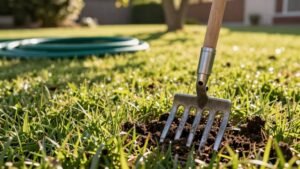
Because a clean, well‑prepared seedbed is the foundation of a vigorous Zoysia lawn, start by stripping away all existing vegetation, removing debris, and loosening the soil to a depth of 4–6 inches. Use a sod cutter or shovel to extract roots completely, then scrape away dead grass and weeds. Rake out sticks, rocks, and thatch to guarantee solid seed‑soil contact. Till the area with a power rake or metal rake, creating a friable surface and breaking up compaction. Incorporate amendment types: blend coarse sand at a 1:3 ratio, add 2–3 inches of compost, and mix in peat moss or aged manure as needed for moisture retention and nutrition. Level the bed, pre‑irrigate to a 6‑inch depth, and let it settle before seeding. Aerating also helps incorporate the amendments evenly throughout the soil. Regular core aeration improves root growth and nutrient absorption. Improved water infiltration further supports seed germination and establishment. Manual lawn aeration can be performed with a garden fork to create additional channels for air and water.

[8oz Covers 300 Sq Ft] Get over 300,000 high-germination Emerald Zoysia grass seeds in every 8-ounce bag — enough to cover up to 300 square feet for new lawns, bare-spot repairs, or overseeding existing turf. Enjoy uniform, dense growth and a seamless, professional-grade finish across your entire yard.

Improves soil health, lawn health, plant health, and reduce the use of fertilizers

You will receive 80000 Zoysia grass seeds, ideal for covering small to medium garden areas
Schedule Planting for Maximum Germination Success
Now that the soil bed is clean and loose, you can focus on timing the planting to hit the ideal temperature window. Aim for the ideal planting schedule when soil reaches 68‑72 °F, preferably 70 °F, because Zoysia seed germinates best at those suitable soil temperatures. In USDA zones 5‑8, plant between mid‑April and early August, adjusting the start date to your local climate: Zone 5 May 15‑Aug 1, Zone 6 Apr 21‑Aug 4, Zone 7 Apr 15‑Aug 8, Zone 8 Mar 21‑Aug 12. Zones 9‑11 allow year‑round sowing. Target late‑spring (May‑June) after the final frost to exploit warm, moist soil and avoid midsummer heat stress. Maintain daily temps stay in the 70s for consistent germination. Cool‑season grasses require cooler soil temperatures for optimal germination. Bermuda grass typically shows initial sprouting within 7 to 14 days when soil temperature stays above 70 °F and moisture is adequate. Proper mulching can suppress weeds while preserving soil moisture during germination.
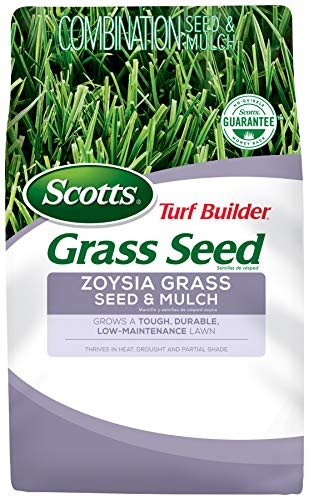
Zoysia grass seed & mulch is designed for full sun and light shade

Sun and shade grass seed for use in full sun to medium-shaded areas

Dense, Carpet-Like Turf – Zoysia Emerald produces a lush, fine-blade grass that forms a thick, soft lawn surface ideal for barefoot comfort and aesthetic appeal. Its dense growth naturally crowds out weeds.
Spread Seed at 1 lb/1,000 ft² and Bury ¼‑in Deep
When the seedbed is ready, spread exactly 1 lb of Zoysia seed per 1,000 ft² using a drop‑type or Cyclone‑type broadcast spreader, then lightly rake or roll the area to embed the seed to a maximum depth of ¼ inch. Use a split‑application pattern—half east‑to‑west, half north‑to‑south—to keep distribution uniform and avoid push spreaders, which can miss the tiny seeds. Lightly rake just enough to cover the seed, then pass a light roller to press the seed into the soil, ensuring firm soil contact without burying it deeper than a quarter inch. This shallow depth maximizes light exposure, a critical factor for Zoysia germination, while maintaining the soil‑seed interface needed for consistent emergence. The seed’s protein content supplies essential amino acids that support early seedling development. Properly calculate seed quantity using a seeding rate chart to avoid under- or over‑seeding. Adjust the total seeding amount based on the acre conversion factor to ensure coverage for larger areas.
Water Daily Then Taper to Keep Zoysia Seedlings Moist
After you’ve seeded the lawn, water the area two to three times daily for 10‑15 minutes each, keeping the top inch of soil consistently moist without creating soggy conditions. Begin with a quick soak right after planting, then use morning and evening bursts to avoid midday heat. Continue this schedule for the first 1–2 weeks until seedlings appear; the soil should stay damp but not waterlogged. Once you see green shoots, taper to one or two 30‑minute sessions per day, shifting to deeper watering that reaches 4–6 inches. By day 12, reduce to a single daily application, encouraging root depth and conserving water during midsummer drought stress. This gradual cutback also supports winter dormancy management by preventing excessive moisture that could promote fungal problems. Avoid overwatering to prevent fungal growth. Adjust watering frequency based on soil temperature to maintain optimal moisture levels. For lawns with sandy soil, consider infiltration rate when planning watering intervals.

Effortless Watering Automation: The Orbit Mechanical Water Timer helps manage lawn and garden irrigation with a reliable mechanical water timer design and hose faucet timer control

Smart Automatic Watering Control: The Orbit Programmable Digital Hose Watering Timer transforms a faucet into an automatic watering system using a reliable single outlet hose timer

【Easy Programming Program】Through the Sprinkler Timer to program, you can set the Start Time, Watering Duration is 1min-3h59min, Watering Frequency from 1h to 12h or 1 day to 7 days, so you can customize your watering time, and can be more accurate.
Mowing, Fertilizing & Aerating After Germination
You’ll want to start mowing only once the zoysia blades reach about 2–3 inches, setting the mower to a 1–2‑inch height for the first cuts. Keep a consistent schedule—every 5–15 days depending on weather and fertilization—so the turf stays dense and you avoid cutting too low, which can stress seedlings. Use a reel‑type mower for clean cuts; sharpen blades regularly as zoysia’s stiff foliage dulls them quickly. Leave clippings on the lawn unless they form thick mats; they decompose fast and recycle nutrients. When removal is needed, collect them for clipping disposal or bag them for spring cleanup. Apply fertilizer 3–4 times per year, 1–2 lb per 1,000 ft², aligning with growth peaks, and perform light aeration in late spring to improve root penetration. Regular mowing is essential to prevent the turf from becoming too tall and difficult to cut. Cutting no more than one‑third of the blade length each time helps maintain healthy growth and reduces stress on the grass. Adjust mowing direction each pass to avoid uneven wear and promote a uniform appearance. Choosing the right mower can also reduce fuel consumption, especially when you use a low‑emission engine that meets modern efficiency standards.

Hand-push reel mower with 16" cutting width, 7-blade ball bearing reel, and 10" composite wheels; Durable steel side plate design
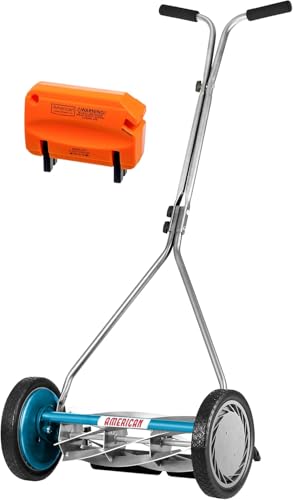
Precision 7-Blade Reel: Designed for fine-textured grasses like Bentgrass, Bermuda, and Zoysia for a clean, professional-quality cut.

The 16-inch cutting width and 7-blade reel deliver a clean, precise cut for a well-maintained lawn
Fix Common Zoysia Seed Issues Quickly
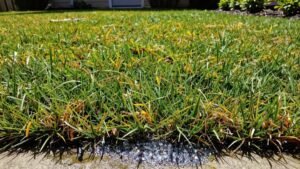
A few common zoysia seed problems—thatch buildup, brown patch, leaf spot, weed competition, and poor germination—can be tackled quickly with targeted actions. Keep thatch under half an inch by raking lightly after each mowing and limiting nitrogen fertilizer; this improves water, oxygen, and nutrient flow, reducing disease pressure. For brown patch, identify the fungal ring early, water in the morning after dew dries, and apply a fungicide if the ring expands. Leaf spot shows small lesions; boost fertilizer and deep‑water weekly to prevent it. Mow low to outcompete crabgrass and other weeds, and start a regular herbicide regime after seedlings are two weeks old. If germination stays low, scarify seeds with potassium hydroxide and keep soil cool and moist. Use integrated pest management to monitor and control insects that exploit stressed turf. Mowing the lawn to a height of 2.5–3 inches before winter helps protect the root system and reduces disease risk. Proper timing of dethatching in the spring can further improve soil aeration and nutrient uptake. Regularly inspect the lawn for soil compaction to maintain healthy root development.

CURES & PREVENTS LAWN DISEASES: Fungus Control for Lawns controls and prevents listed lawn diseases when used as directed; Can be used on all lawn types; Use only on lawns

DISEASE CONTROL & PREVENTION: Use Scotts DiseaseEx Lawn Fungicide, a fungus control for lawns, to prevent disease before it appears and control disease at the first sign of symptoms

CURES & PREVENTS LAWN DISEASES: Fungus Control for Lawns controls and prevents listed lawn diseases; Can be used on all lawn types; Use only on lawns