
First flush the line, screw the cap cap on the riser, and run water 15‑20 seconds. Then rotate the nozzle turret counter‑clockwise to the left stop, hold the right stop, and insert the plastic‑key end of a Hunter wrench into the adjustment socket. Turn the wrench clockwise to widen the arc (each 360° adds 90°) or counter‑clockwise to narrow it (each 360° subtracts 90°). Use the wrench’s Allen side to fine‑tune radius, keep pressure ≤50 PSI, and verify spray patterns; continue for deeper coverage tips.
Sprinkler Head Arc Adjustment – Quick Basics
When you begin adjusting a Hunter sprinkler head, first rotate the nozzle turret counter‑clockwise to the left stop, then clockwise to the right stop, keeping the right stop fixed for all subsequent changes. Use the plastic‑key end of the Hunter wrench, insert it into the adjustment socket, and hold the right stop. To increase the arc, turn the wrench clockwise; each full 360° rotation adds 90°, moving the setting from the factory‑set configurations of 40° (or 50° on PGP‑Ultra/I‑20) up to 360°. To decrease, turn counter‑clockwise, each full turn subtracts 90° until you reach the minimum arc ranges. Perform these steps with water on or off, and maintain the right stop position throughout. Always ensure the riser is not damaged during adjustments, as a secure connection helps maintain consistent water pressure. Before starting, depressurize the system to avoid accidental spray and protect the surrounding grass.

The Hunter adjustment wrench consists of a 3/32 allen key, two convenient finger loops for gripping

Hunter adjustment wrench for mp rotator nozzles
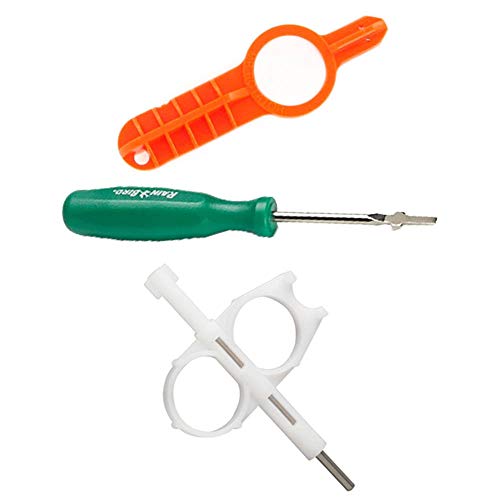
Hunter Key
Flush Lines & Set the Riser
Start by inspecting each riser: clear the surrounding soil with a trowel or sprinkler‑surround cutter, examine the body for cracks, lift the riser to check for damage, unscrew the nozzle, and rinse the filter basket under running water. Then, inspect riser condition and check filter basket cleanliness before proceeding. Screw a flush cap onto the riser, pull the riser up, and run water for 15‑20 seconds with the cap (or 5‑10 seconds without). Flush each sprinkler individually or in groups, removing the nozzle and filter basket if you lack a cap. After flushing, pull the riser up again, unscrew the cap, and install the new nozzle and filter basket using a ratcheting riser to align the spray pattern. Keep pressure ≤50 PSI, wear safety glasses, and secure all connections. Close all but one water line before blowing out water lines. Properly adjusting the arc ensures each head covers its intended sector without overlap or gaps. Measure spray radius to verify uniform coverage across the lawn. Assess water distribution before setting the radius to confirm even flow.
Widen the Arc – Step‑by‑Step
After flushing the line and reinstalling the nozzle, you’ll position the turret for arc widening. Rotate the nozzle turret counterclockwise to the left stop, then clockwise to the right stop and lock it. Insert the plastic T‑piece end of the Hunter wrench into the rotor head’s arc adjustment socket. Keep the turret fixed at the right stop while you turn the wrench clockwise; each full 360° turn adds 90° to the arc. Watch the plus sign indicator to confirm the direction of arc adjustment. Continue rotating until the arc measurement ranges reach your target, between 40° and 360°. When the wrench ratchets or stops, the arc is set. Verify by rotating the turret back to the right stop and inspecting the spray width. The right stop serves as the fixed reference point for all arc adjustments. Properly adjusting the head height also prevents water runoff and promotes even lawn coverage. Check the system’s water pressure to ensure it stays within the manufacturer’s recommended range for optimal performance. Use a sprinkler flow meter to confirm that each head delivers the correct amount of water.
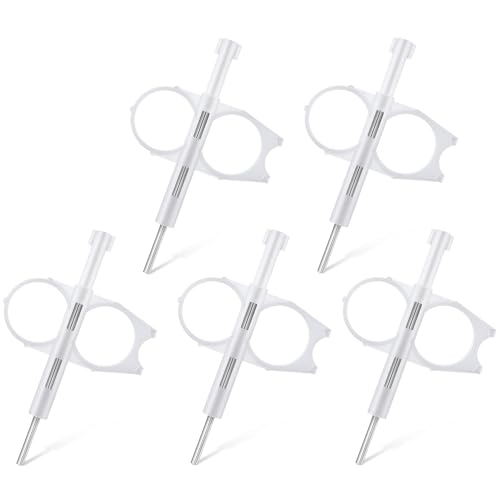
[Professional Sprinkler Adjustment Tool Set]This sprinkler head adjustment tool allows precise arc and radius tuning for lawn irrigation systems, helping improve watering accuracy and coverage

Bundle includes 4 x rotor adjustment tools, instructional insert, and LED keychain light

3 Pack of sprinkler adjustment wrenches consisting of a 3/32 allen key, two convenient finger loops for gripping and an opposite side arc adjustment key for your PGP, PGJ, I20, I25 and I40 heads. This tool is also compatible with some Toro & Rainbird Gear Drives.
Narrow the Arc – Precise Method
You’ll begin by turning off the water supply, then rotate the turret counter‑clockwise to the left stop and back clockwise to the right stop, holding it firmly. Insert the plastic‑key end of the adjustment wrench into the top rotor socket, ensuring the plus/minus markings align with the turn direction. While maintaining the right stop, turn the wrench counter‑clockwise; each full 360° rotation reduces the arc by 90°. Observe the dry turn limit—do not exceed the minimum 40° setting, which reflects typical user preferences for tighter coverage. Pause after each increment, then briefly run the zone to verify the left side stop aligns with the desired narrow arc. If the arc overshoots, reverse the turn clockwise and repeat until the pattern matches the specified coverage. The arrow on the sprinkler indicates the spray pattern direction and should be aligned with the desired coverage area. Additionally, you can reference the sprinkler adjustment screw guide to fine‑tune the radius for uniform water distribution. Trench depth must be sufficient to protect the pipe from surface damage and to maintain proper pressure. Back‑filling the trench should be done in layers to avoid soil settlement and ensure stable support for the pipe.

Universal Compatibility Mastery: Effortlessly fine tune your irrigation system with a kit are compatible with Rain Bird 5000 series and compatible with Hunter PGP rotors. This 4 piece set ensures your lawn receives precise hydration without the hassle

⭐【4 Pack Sprinkler Key Tool Set】This 4 pack sprinkler head tool set includes 1 pc rotor adjustment screwdriver and 3 pcs rotary sprinkler tool. Designed compatible with Rain Bird and compatible with Hunter, this sprinkler head adjustment tool kit helps you easily adjust rotor heads, replace nozzles, and maintain your sprinkler system with one convenient set

Package contains: 1* Sprinkler Head Tool Wrench Replace 42064 Sprinkler Head Wrench, Fits for Pop-up Impact Sprinkler LG-3 Mini-Paw AG-5 & 2045A Maxi-Paw
Verify the New Arc & Adjust Radius
Now that the arc is narrowed, verify the new spray pattern and adjust the radius to match the desired coverage. Activate the system and run a visual inspection; confirm that the coverage patterns align with the intended zones and that the head is straight. Use the Hunter adjustment wrench’s Allen side, align the raised arrow on the rubber cap for proper adjustment orientation, then turn clockwise to shrink the radius or counterclockwise to extend it up to a 25 % reduction. After each turn, re‑run the sprinkler and map the spray distance. If any dry spots or overspray appear, repeat the arc recheck and fine‑tune the radius until the pattern fully covers the target area without excess. The tool’s plastic T‑piece is used for arc adjustments when needed. Turn off the water before making any adjustments to prevent accidental spray. Check for leaks after re‑installing the head to ensure a secure seal. Proper cap selection helps conserve water and prevents over‑watering, supporting a healthier, more uniform lawn.
Fine‑Tune Coverage – Fix Dry Spots & Overspray
When you spot dry areas or overspray, first flag those zones, then run the system and map the gaps; monitor sprinkler run times and inspect valve box components while you do it. Rotate each nozzle turret counter‑clockwise to the left stop, then clockwise to the right stop, locking the right stop for all arc changes. Adjust the radius screw clockwise in 5‑turn increments, watching for reduced spray on sidewalks. After each tweak, flush the lines, activate the cycle, and check soil moisture to confirm the dry spot is gone and overspray is eliminated. If gaps persist, fine‑tune the arc or radius incrementally, re‑run the system, and repeat until coverage is uniform and waste‑free. The radius adjustment screw controls throw distance, allowing you to match the spray to the specific layout of your landscape. Loose fittings can cause erratic rotation, so verify that all connections are secure before making adjustments. A faulty valve can also cause leaks when the system is off, so inspect the valve for proper sealing.
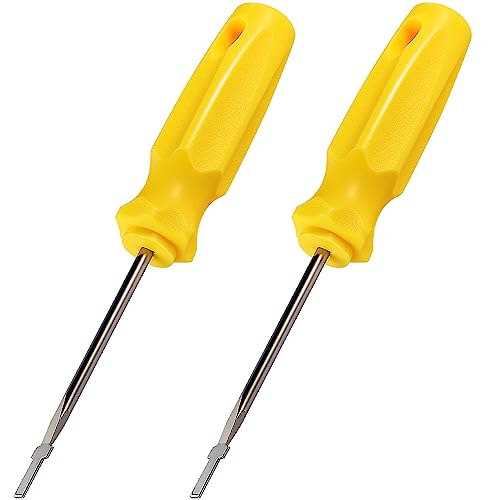
[SPRINKLER ROTOR ADJUSTMENT TOOL] This 2 pack sprinkler rotor tool is designed for adjusting arc and radius on compatible rotor sprinkler heads. A practical tool for lawn irrigation repair, seasonal sprinkler setup, and nozzle maintenance

3 Pack of Rain Bird Rotor Tool (Rotor Screwdriver / Pull-up Tool)
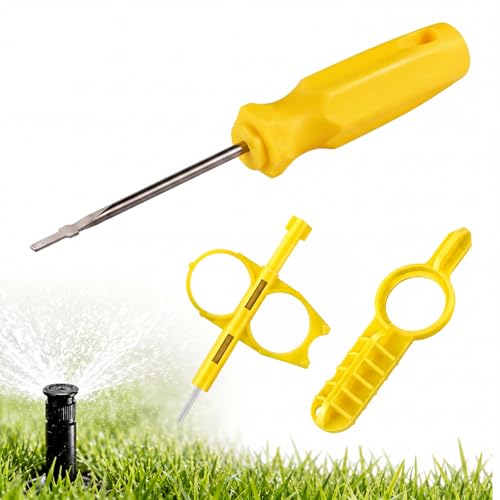
[COMPATIBLE WITH POPULAR SPRINKLER SYSTEMS] This sprinkler head tool is compatible with Hunter MP Rotator, PGP, PGH, PGM, I-20, I-25, I-40, I-60 rotors and PS series spray heads, as well as compatible with Rain Bird 3500, 5000, 5000 Plus, 5500, Falcon 6504, 7005, 8005, EAGLE 351B, 32SA, 42SA and 52SA series. Designed for common lawn irrigation repair, nozzle replacement, spray adjustment and routine sprinkler maintenance
Pick the Right Nozzle for Your Landscape
Choosing the right nozzle starts with matching its coverage pattern to the shape and layout of each zone: full‑circle heads for open turf, half‑circle for edges, center‑strip for medians, side‑strip for narrow linear areas, and adjustable‑arc for irregular or curved beds. Measure the farthest point in each zone, then select a radius that reaches it without exceeding zone capacity. Use fixed‑arc spray nozzles for uniform lawns to lower water use; apply variable‑arc or adjustable‑arc nozzles for corners and curved beds. Opt for high‑efficiency or MPR nozzles to keep precipitation rates consistent and boost sprinkler system efficiency. Perform pressure adjustment after installation to verify flow matches the nozzle’s design and prevents overspray or dry spots. Properly calculate the required flow rate for each zone based on sprinkler head spacing guidelines to ensure optimal water distribution. A well‑designed timer can further enhance efficiency by automating watering schedules according to climate and plant needs.

PRECISION ARC CONTROL FROM 0° TO 360°: Get pinpoint accuracy for any zone shape or edge. Whether you're watering a narrow walkway or full lawn circle, fine-tuned arc settings ensure no water is wasted.

PRECISION ADJUSTABLE ARC, 0° TO 360°: Set exact spray angles for any landscape layout, from tight corners to full circle zones, with simple top adjustment
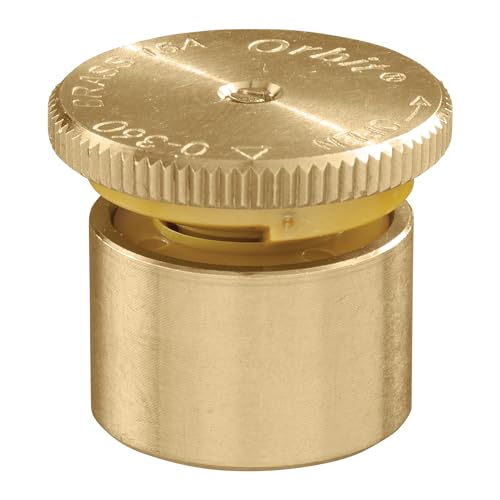
UNIVERSAL COMPATIBILITY: Designed to fit all major brands of pop-up spray heads, making it easy to replace existing nozzles and maintain your irrigation system. Delivers up to a 15-foot spray distance for efficient landscape watering (distance may vary based on PSI and other factors).