
Start fertilizing in early spring when soil temps hit 50 °F and new growth appears—use a slow‑release, balanced N‑P‑K at 0.5‑1 lb N per 1,000 sq ft. In late spring, apply a high‑phosphorus (10‑15‑5) slow‑release at 0.5 lb N per 1,000 sq ft once temps rise above 65 °F. Early fall (mid‑August‑early September) needs a nitrogen‑rich slow‑release at 1‑2 lb N per 1,000 sq ft; avoid feeding within two weeks of the first freeze. Adjust rates for sandy or clay soils, test before each application, and you’ll get a lush Colorado lawn.
Start Early‑Spring Fertilization Right for Colorado Lawns
Kick off your lawn’s spring recovery by applying fertilizer as soon as the soil warms past 50 °F and the grass begins to show new growth—typically mid‑March to early April for cool‑season species like Kentucky bluegrass, fescue, and ryegrass. Proper soil temperature triggers the start of gradual early spring feeding, ensuring nutrients reach actively growing tissue without diverting energy from root development. Use 0.5 lb N per 1,000 ft² for low‑maintenance lawns or 1 lb N for high‑maintenance bluegrass, adjusting down if you fertilized in fall. Choose a balanced slow‑release formula (N‑P‑K) and consider an iron supplement for greening. Apply only after the lawn shows fresh growth; avoid premature applications that can cause excessive top growth and leaching on sandy soils. Follow with a second 0.5 lb N dose four to six weeks later if needed.
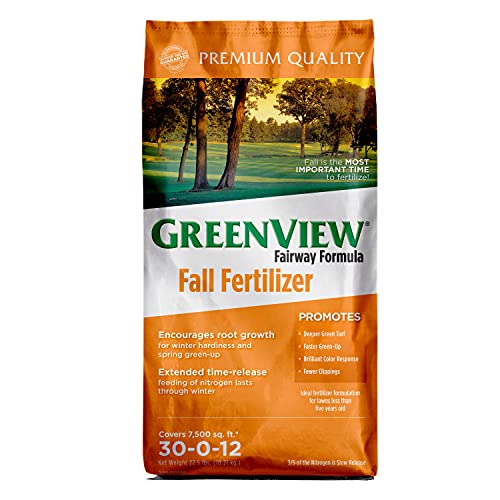
For Lawns: This grass fertilizer for lawns encourages deep root growth, brilliant lawn color, and thick lush growth

Long-Lasting Feeding with 15% Slow Release Nitrogen: Reduces the risk of nutrient burn and minimizes the need for frequent applications, keeping your grass green, thick, and vibrant throughout the growing season.
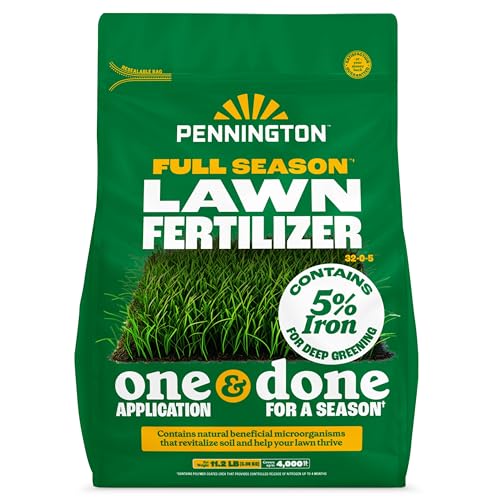
This spring lawn fertilizer is one application and done for a season
Time Late‑Spring Feed for Strong Colorado Lawn Roots
When late‑spring temperatures climb above 65 °F, you should apply a high‑phosphorus, slow‑release fertilizer to build root mass and carbohydrate reserves before the summer heat hits. Aim for a product with a 10‑15‑5 ratio, delivering phosphorus (P) at 15 % to strengthen roots. Apply at a rate of 0.5 lb per 1,000 sq ft, spreading evenly on moist, actively growing turf. Prior to feeding, amend soil nutrients with a balanced granular blend to correct pH and micronutrient deficiencies, ensuring the phosphorus is accessible. Water in lightly to activate the slow‑release matrix and avoid leaching. This timing maximizes root growth, improves drought tolerance, and prepares Kentucky bluegrass, perennial ryegrass, or tall fescue for the upcoming summer stress. Aerating in early spring can further enhance fertilizer uptake by reducing soil compaction. Cool‑season grasses benefit most from this schedule because they establish deeper roots before heat stress. Proper seed selection for each climate zone, such as fine‑leaf ryegrass for higher elevations, enhances establishment success.
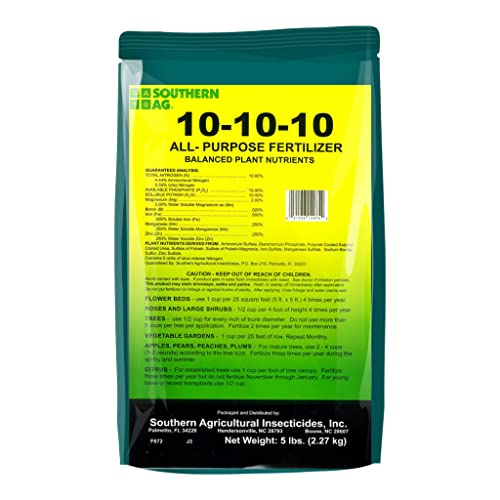

🌿 Balanced 10-10-10 Granular Fertilizer for Outdoor & Indoor Plants: All-purpose plant food with 10% Nitrogen, 10% Phosphorus, and 10% Potassium. Perfect for outdoor vegetable gardens, fruit trees, evergreens, shrubs, lawns, and flowers. Also great for potted plants and indoor gardening. One solution for all your plant needs!

CONTINUOUS RELEASE NUTRITION: Osmocote Smart-Release Plant Food Plus Outdoor & Indoor1 granular fertilizer contains 11 essential nutrients and feeds live plants up to 6 full months
Boost Early‑Fall Colorado Lawn Turf, Store Late‑Fall Nutrients
Because cool‑season grasses such as Kentucky bluegrass, perennial ryegrass, and fine fescue hit their peak growth in early fall, you should apply a nitrogen‑rich, slow‑release fertilizer between mid‑August and early September at higher elevations (or late September to early October at lower elevations). This fertilizer timing delivers 1‑2 lb of nitrogen per 1,000 ft², encouraging dense turf and vigorous root elongation before winter dormancy. The slow‑release matrix keeps nitrogen available as soil temperatures dip to 40‑50 °F, preventing premature blade growth that could freeze. Simultaneously, the application promotes nutrient storage in the root zone, building reserves of potassium and micronutrients that fuel spring green‑up. By aligning applications with the ideal temperature window and using a low‑phosphorus formulation, you maximize root hardiness, improve water uptake, and reduce the need for aggressive spring feeding. For best results, perform a soil test before fertilizing to tailor nutrient applications to your lawn’s specific needs. Proper soil testing ensures the fertilizer mix matches the lawn’s existing nutrient profile.
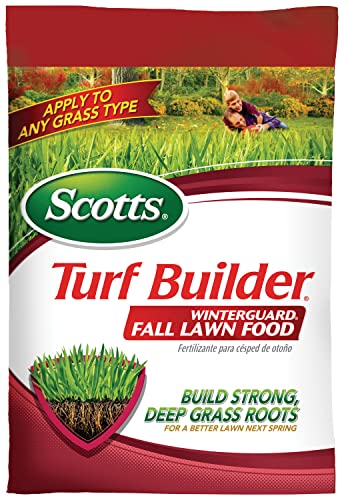
FALL LAWN FERTILIZER: Scotts Turf Builder WinterGuard Fall Lawn Food is a fertilizer that builds strong, deep grass roots for a better lawn next spring

GreenSmart Enhanced Efficiency Fertilizer - This fertilizer for grass provides continuous feeding for up to 8 weeks
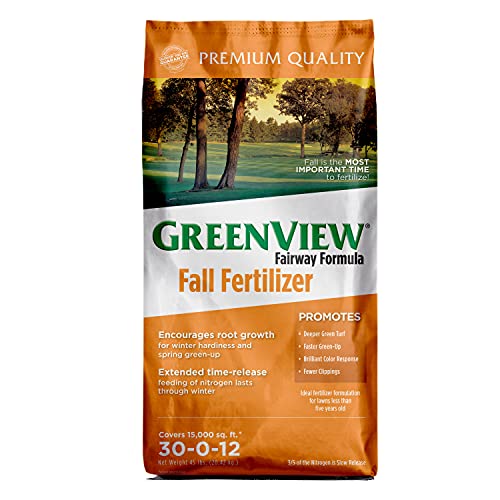
For Lawns: This grass fertilizer for lawns encourages deep root growth, brilliant lawn color, and thick lush growth
Schedule Colorado Lawn Fertilization for Colorado Springs Altitude
Typically, you’ll start Colorado Springs’ spring fertilizer regimen in late April to early May when soil temperatures consistently hit 55 °F, applying a balanced, pre‑emergent blend at 0.5–1 lb N per 1,000 sq ft for most cool‑season grasses. Because the 6,035‑ft altitude accelerates cooling, shift the midsummer feeding to mid‑August through early September, applying 1 lb N per 1,000 sq ft for high‑maintenance bluegrass or 0.5 lb N for low‑maintenance varieties. Adjust nitrogen timing for Colorado soil moisture by monitoring evapotranspiration; delay a dose if the soil stays dry for more than three days. Consider organic fertilizer options for Colorado lawns, such as composted manure or feather meal, which release nitrogen slowly and improve water‑holding capacity. Test soil before each application and avoid any fall feeding later than two weeks before the first freeze. Proper timing of seed planting can also boost lawn health, especially when following the optimal seasonal schedule for Michigan grass. Fall planting is especially effective in Connecticut’s cool, moist autumn climate, allowing grass seed to germinate before winter.
Adjust Colorado Lawn Fertilizer Release for Sandy vs. Clay Soils
If you’re lawn a Colorado lawn on sandy soil, you’ll need a slow‑release fertilizer that compensates for rapid drainage and nutrient leaching; on clay, the same product can be applied less frequently because the fine particles retain nutrients but may require aeration to prevent lockup. For sandy sites, prioritize soil drainage management by incorporating two inches of organic matter into the top six inches and choose sulfur‑coated or organic slow‑release blends that deliver nitrogen over 8‑10 weeks. Apply in early spring, late spring, and midsummer, then water 1/4 inch after each. For clay, focus on nutrient scheduling that avoids excess nitrogen; a single fall application of a balanced slow‑release formula suffices, followed by core aeration to enhance root access and prevent lockup. Adjust rates to ≤1 lb N per 1,000 sq ft per event. Adding a soil test before the first application helps tailor nutrient ratios to your lawn’s specific needs. Understanding nutrient leaching is essential for maintaining soil health on sandy soils. Proper seed‑to‑soil contact improves germination rates in sandy environments.
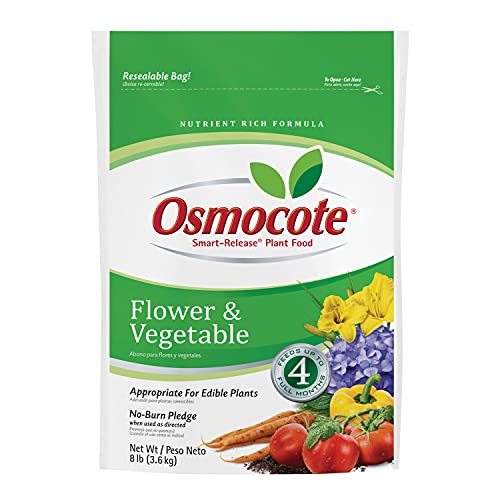
OSMOCOTE’S HIGHEST TOTAL NUTRIENT FORMULA: 14-14-14 NPK - favored for seasonal vegetables and perennials; use this plant food outdoors to promote strong roots as well as vigorous and bountiful above-ground growth.

NURTURE EVERY PLANT TYPE: Our all purpose plant food is designed for a wide range of plants, from productive vegetables to ornamentals. Whether you’re growing in any setup, this blend provides the essential nutrients for thriving plants

Scotts All Purpose Flower & Vegetable Continuous Release Plant Food promotes beautiful flowers and abundant harvests
Pick the Best Slow‑Release, Balanced N‑P‑K or Organic Fertilizer for Colorado Lawns
Choosing the right slow‑release, balanced N‑P‑K or organic fertilizer for a Colorado lawn hinges on matching nutrient ratios to local soil conditions and climate variability. Your soil test based formulations should target a 3‑1‑2 or 4‑1‑2 ratio—examples include 21‑7‑14 and 28‑7‑14—because they supply 20 % nitrogen with modest phosphorus and potassium, which matches most Colorado turf’s P‑K baseline. For sandy sites, prioritize extended release products such as sulfur‑coated granules or organic blends like Milorganite 6‑4‑0 to curb leaching. If your lawn is poor or needs a rapid boost, a full‑analysis 20‑20‑10 can be used sparingly, but revert to slow‑release, low‑P‑K formulas for regular maintenance. Opt for granular, extended release forms that last 6–8 weeks, reducing application frequency and mitigating weather‑driven nutrient loss. Timing is critical because Colorado’s short growing season means fertilization must align with soil temperatures above 55 °F to ensure nutrient uptake. Selecting the appropriate fertilizer type also helps prevent that growth in high‑sun exposure areas. Proper soil testing before application ensures the chosen fertilizer matches the lawn’s specific nutrient needs.

Balanced Nitrogen Fertilizer Formula: This slow release fertilizer contains 17-17-17 NPK to provide complete nutritional support for lush foliage and healthy plant growth and is suitable for various gardening and agricultural needs
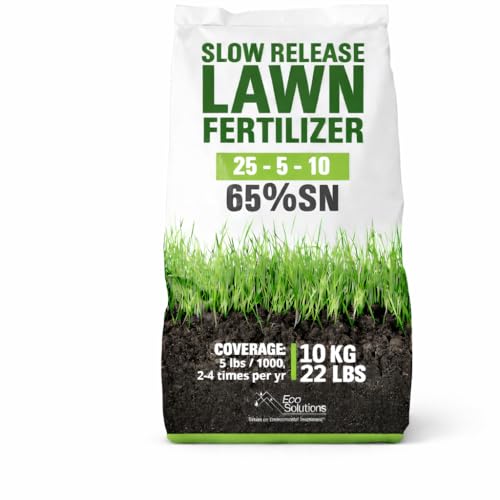
Feel Proud of Your Lawn: Slow release fertilizer packed with 65% granular nitrogen - this spring lawn fertilizer feeds up to 110 days for deep green grass and lush growth you’ll love coming home to

BALANCED 10-10-10 FORMULA: Delivers equal parts nitrogen, phosphorus, and potassium for all-purpose plant nutrition supporting roots, growth, and harvests.
Apply Nitrogen Pounds per 1,000 sq ft for Colorado Lawn Seasons
After selecting a slow‑release, balanced N‑P‑K or organic fertilizer, you’ll need to match nitrogen rates to each Colorado lawn season. In early spring, apply 0.5 lb N per 1,000 sq ft for low‑maintenance lawns and up to 1 lb for high‑maintenance bluegrass, unless a late‑fall feed was done. Late spring calls for 1 lb N per 1,000 sq ft for cool‑season grasses, or 0.5–1 lb based on health; warm‑season grasses receive 0.5–1 lb after soil reaches 65 °F. Summer limits nitrogen to 0.5–1 lb per 1,000 sq ft in July‑August, with a 0.75 lb split every 4–6 weeks for warm‑season lawns. Early fall, apply 1 lb N per 1,000 sq ft to support root growth, and late fall offers an optional 1 lb N feed before freeze. Adjust rates for your specific Colorado lawn soil types and follow Colorado lawn management practices for ideal results. Homeowners often avoid liquid fertilizers because they fear burning the lawn, yet liquid options can be applied accurately when the lawn size is measured in 1,000 sq ft sections. Proper nutrient balance also helps prevent weed invasion by promoting dense, healthy turf. Understanding the soil nutrient profile can further refine fertilizer selection and timing. Conducting a soil test before the first application ensures you address any nutrient deficiencies early.
Avoid Over‑Fertilizing, Bad Timing, and Leaching on Colorado Lawns
Typically, over‑fertilizing a Colorado lawn creates thatch, weakens roots, and raises disease risk, while mistimed applications—especially in summer for cool‑season grasses or after late September on sandy soils—lead to nutrient leaching and wasted inputs. To avoid this, limit nitrogen to the recommended 0.5–1 lb per 1,000 sq ft per season and split doses between early spring and early fall. Test soil before each application; adjust for organic matter to improve water retention and reduce leaching. Schedule fall fertilization two to three weeks before expected ground freeze, respecting altitude‑specific windows. Integrate pest management strategies that target weeds and insects early, preventing over‑growth that would otherwise demand extra fertilizer. Finally, incorporate aeration and core‑tilling for soil compaction prevention, ensuring root zones stay porous and nutrients stay where you need them. Apply Milorganite once per season to meet the recommended nitrogen levels without over‑application. Selecting the proper application timing maximizes nutrient uptake and minimizes environmental impact. Store fertilizer in a cool, dry place to preserve its potency and avoid nutrient degradation. Over‑fertilization can cause nutrient burn, leading to brown patches and stunted growth.
Monthly Tasks for a Lush Colorado Lawn
Wondering how to keep your Colorado lawn thriving month after month? In January, water only when temperatures exceed 40 °F, turn the compost pile, service equipment, and keep the surface clear of debris to manage lawn debris and prevent lawn disease. February continues equipment maintenance, minimizes foot traffic, and checks readiness for spring. March calls for pre‑emergent application, debris raking, and low mowing to eliminate dead grass. April you dethatch, core‑aerate, overseed, and start sprinklers with proper coverage. May involves regular mowing, deep watering, insect sprays, and a 3‑month slow‑release fertilizer. June raises mowing height, waters 1–1.5 inches weekly, and monitors pests. July and August keep mowing high, water deeply, treat grubs, top‑dress, and apply a second slow‑release fertilizer. September resumes normal height, applies fall fertilizer, lime, and pre‑emergent. October mows, rakes leaves, core‑aerates, and winterizes sprinklers. November reduces mowing, keeps leaves off, and applies final root‑storage fertilizer. December repeats winter watering, avoids snow piles, keeps debris off, and plans renovations. Early fall is the ideal time for aeration because soil is is warm and grass is actively growing.