
Start by testing your soil’s pH and nutrient levels to spot nitrogen, phosphorus, or potassium gaps and maintain a 6.0‑7.0 range. Choose a slow‑release nitrogen blend—25‑0‑5 for cool‑season grass in spring or 32‑0‑6 for warm‑season turf after dormancy—aiming for 0.5 lb N per 1,000 sq ft. Calibrate a rotary broadcast spreader to half‑setting, make two overlapping passes, and mow 3‑4 days before application. Apply again in late spring, mid‑summer, and fall with high‑potassium formulas, watching for burn or weak growth signs. Continue for to uncover seasonal timing tricks.
Why a Soil Test Matters Before Lawn Fertilizing
Why does a soil test matter before you fertilize? A soil nutrient analysis pinpoints nitrogen, phosphorus, and potassium gaps, letting you apply exact amounts that lawns benefit from. It reveals excesses that could cause burn or runoff, preventing over‑application that pollutes waterways. By measuring pH, the test shows whether soil is in the suitable 6.0‑7.0 range; if it’s off, nutrients lock up and grass turns yellow or brittle. Clay soils often lack key nutrients, so the analysis directs precise amendments for thicker, healthier turf. Testing every three years costs little yet saves money, as you avoid wasteful fertilizer rates that exceed plant needs. Ultimately, the data guides targeted fertilization, minimizes environmental impact, and secures sustainable lawn vigor. Look for thin or yellowing grass as a visual cue that a soil test may be needed. Regular testing also helps you determine the optimal application rate for your specific lawn conditions. Seasonal timing is crucial because applying fertilizer during the active growth phase maximizes nutrient uptake and promotes a denser, more resilient lawn.

✅ 1Dial & 1 LCD Screen - Replace/install all 3 batteries each time. Put button to %RH/°F to - Turn On, and put to LIGHT to - Turn Off. Read the LCD results in 3-5 mins. (Not Water Moisture Meter, so, please don't test liquid)

Kindly NOTE: This soil tester can not be applied to test pH value of any other liquid. If the soil is too dry the indicator will not move, and water it before testing.

Quick, at home results for Soil pH, Nitrogen, Phosphorous and Potash Innovative and inexpensive soil test kit features an easy-to-use capsule system and patented color comparators
Pick the Right Fertilizer for Your Season
Choosing the right fertilizer for each season starts with matching the nutrient release rate to your grass type and climate. In spring, select a slow‑release nitrogen source such as a 32‑0‑6 formulation for cool‑season lawns, applying it mid‑to‑late April to curb excessive shoot growth. Warm‑season turf should receive the same slow‑release mix after dormancy breaks, at roughly 32 lb per 2,500 sq ft. Summer calls for Milorganite, delivering 0.6 lb N per 1,000 sq ft for cool‑season grass every six weeks, while warm‑season varieties use 12.8 lb per 1,000 sq ft to supply 0.77 lb N. Fall fertilization relies on 25‑0‑5 or 32‑0‑6 slow‑release blends, timing applications early to mid‑September for favorable root development and density. Apply Milorganite after the last frost when daytime temperatures consistently reach the 60s for cool‑season grasses. Proper zone design also considers sprinkler head spacing to ensure even water distribution across the lawn. Soil testing before each application helps fine‑tune nutrient ratios for optimal lawn health.

This spring lawn fertilizer is one application and done for a season

You don’t have to worry about streaks, stripes, or accidentally burning your lawn when you use Milorganite fertilizer!
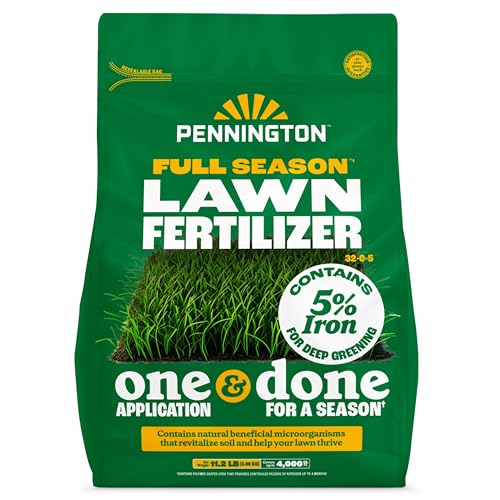
This spring lawn fertilizer is one application and done for a season
When to Fertilize: Spring, Summer, and Fall Timing
If you time to lawn health, you’ll apply fertilizer at three distinct windows: early spring (February‑April) when grass begins greening, mid‑summer (June‑August) to shield against heat stress, and fall (August‑November) to rebuild roots before dormancy. In early spring, target cool‑season grasses with 0.5 lb N per 1,000 sq ft; warm‑season varieties need a pre‑80°F application. Late spring to early summer—your early summer applications—follow 6‑8 weeks later, delivering a second nitrogen pulse to strengthen roots after winter. Mid‑summer timing intervals protect against drought; apply once between June and August, preferably in cooler morning or evening hours, and avoid high nitrogen on cool‑season turf. Fall fertilization, from August to November, uses high‑potassium formulas to repair summer stress and promote rhizome development, with a final September slow‑release nitrogen boost if you fertilize annually. Proper soil testing ensures optimal nutrient balance before each application. Consider a soil pH test to confirm acidity levels are suitable for your grass type.

Feel Proud of Your Lawn: Slow release fertilizer packed with 65% granular nitrogen - this spring lawn fertilizer feeds up to 110 days for deep green grass and lush growth you’ll love coming home to
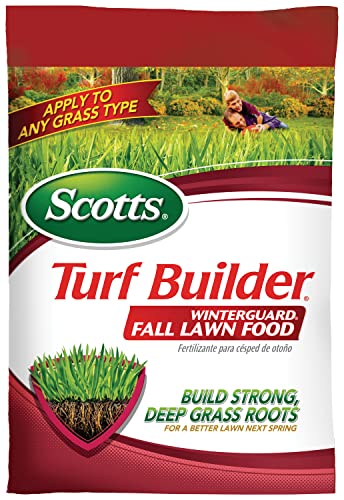
FALL LAWN FERTILIZER: Scotts Turf Builder WinterGuard Fall Lawn Food is a fertilizer that builds strong, deep grass roots for a better lawn next spring
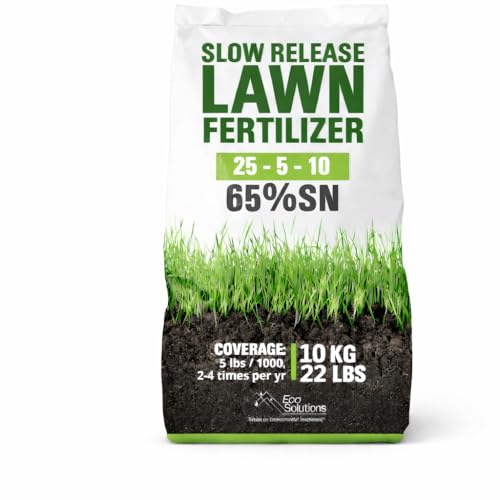
Feel Proud of Your Lawn: Slow release fertilizer packed with 65% granular nitrogen - this spring lawn fertilizer feeds up to 110 days for deep green grass and lush growth you’ll love coming home to
Apply Lawn Fertilizer Evenly: Tools, Rate Settings, and Quantity
When you spread fertilizer, the key to uniform coverage is matching the tool to the lawn size and calibrating the rate settings before you start. Choose a rotary broadcast spreader for large, established lawns; its spinning mechanism delivers wide, overlapping‑free strips. Perform proper spreader calibration by setting the lever to the bag’s recommendation, then halve the setting for two‑pass application. For smaller or oddly shaped areas, a drop spreader or handheld unit provides line‑by‑line precision; adjust the rate per the label and walk backward with a sweeping motion to avoid striping. Always mix fertilizer evenly in the hopper, then walk at a steady pace, overlapping each pass by only a few inches. This half‑rate, two‑direction technique guarantees consistent nutrient distribution without waste. Rotary spreaders are the recommended type of spreader for this method. Vinegar’s acetic acid can also act as a natural herbicide, though it is less effective at reaching deep root systems. Mowing should be delayed until the grass reaches a height of at least 3‑4 inches to avoid stress and promote deeper root growth.

OPERATION: Adjustable arm support on this seed, salt and fertilizer spreader helps provide maximum comfort

Lawn fertilizer spreader for evenly distributing grass seed, fertilizer, salt, and ice melt in outdoor areas

NO ASSEMBLY REQUIRED: Scotts spreader comes pre-calibrated and ready-to-use; use it year-round including as an ice melt spreader or salt spreader for snow
Spot Over- and Under-Fertilization Quickly
Spotting over‑ and under‑fertilization quickly relies on recognizing distinct visual, growth‑pattern, and sensory cues that appear shortly after application. You’ll see brown tips, scorched patches, or white crusty fertilizer residue on the soil surface as signs of excess nutrients. Rapid, weak growth, thin blades, and patchy bare spots indicate over‑application, while pale, light‑green turf with slow, uneven expansion points to under‑fertilization. Strong chemical odors, salt‑like residues, and discolored runoff confirm over‑fertilization; algae blooms nearby may also appear. Simultaneously, watch for recognizingizing overwatering symptoms—spongy, dark soil and excess runoff—because excess moisture can amplify nutrient burn. Finally, address managing soil compaction; compacted areas trap salts and impede recovery, worsening both burn and weak growth. Adjust irrigation and aerate promptly to restore balance. Properly timing fertilizer applications according to the turf’s growth cycle can further prevent these issues. Applying fertilizer when soil temperatures exceed 85 °F can cause nutrient burn and stress to the grass. Storing fertilizer in a cool, dry place extends its shelf life and maintains nutrient potency.
Year-Round Lawn Care After Fertilizing
After fertilizing, maintain a consistent, season‑adjusted care routine to maximize nutrient uptake and protect the lawn. Water the granules immediately, then irrigate for 20 minutes until the soil is moist 3–4 inches deep; wait 2–4 hours after liquid fertilizer before the first watering. Early‑morning irrigation reduces fungal risk and supports lawn rejuvenation after fertilization. Apply watering frequency adjustments: 1–2 times weekly in spring/early fall, 3–4 times weekly in summer, delivering about 1 inch per week in deep, infrequent bursts. Resume regular mowing 24 hours after liquid applications and after the granular mix has been absorbed. Conduct soil tests quarterly, follow label rates, and schedule seasonal fertilizations—cool‑season in spring and fall, warm‑season early spring—to sustain healthy growth year‑round. Mow lawn 3‑4 days before fertilizing to ensure optimal nutrient absorption. Proper soil nutrient balance is essential for promoting lush, green growth and preventing weeds. Applying fertilizer during the optimal autumn window helps the grass develop stronger roots before winter.