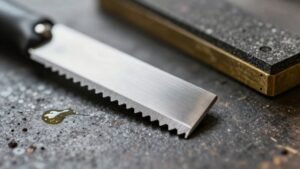

First, suit gloves, safety glasses, and long‑sleeve clothing, then secure the blade in a sturdy vise with the cutting edge up. Apply penetrating oil, loosen the retaining bolt, and remove the blade, checking for cracks or wear. Balance it using a nail or cone balancer; if it wobbles, trim the heavy side. Set a 45‑degree angle with a protractor or jig, then file the bevel evenly from tip to hub, keeping the angle steady. After filing, re‑balance, reinstall, and test the cut—more details await if you keep going.
Gather Safety Gear & Set Up Workspace for Sharpening Lawn Mower Blade
Before you start, put on protective gloves, safety glasses, and long‑sleeve clothing, then set up a stable workbench with a bench vise that locks the mower blade securely in place. Your personal protective equipment selection should include slip‑resistant gloves for a firm grip on oily metal, goggles or safety glasses that cover the entire eye area, and long sleeves and pants to shield skin from sparks and sharp edges. Secure the blade in the vise, avoiding body clamps that can shift. Verify that the workbench is flat and sturdy, then check the workspace ventilation requirements: keep a fan or open window running to disperse metal dust, and clear flammable objects. This setup minimizes injury risk and guarantees consistent sharpening angles. A consistent sharpening angle of about 30 degrees is essential for optimal cutting performance. Maintaining sharp blades also reduces weed seed spread and promotes a healthier lawn.

Best Feature: 15°- 45°Adjustable Angle for Both Straight and Standard Lawn Mower Blades, adjust the best angle according to your lawnmower blade's condition. It really improves efficiency.

✅ Specifications: Universal 4-1/2" bench vise has 3-3/4’’ max jaw opening, 2-11/32’’ throat depth, 5/8’’-1-7/8’’ pipe jaw range, 10.56lb overall weight, 3-1/4’’ (square) anvil dimensions. The 240° swivel base allows for flexible positioning of the tool, allowing you to work at any angle.

Built to Last: The swivel vise is forged from sturdy cast iron, with a powder coating on the surface for a rust-proof finish. High-quality nuts and screws increase durability. Replaceable serrated jaw plates are made of premium carbon steel for superior grip. Go above and beyond and knock out all those tough projects!
Safely Remove and Inspect Your Lawn Mower Blade
When you’ve finished the safety‑gear setup, disconnect the mower’s power source—turn the key to zero and remove the battery on electric models, or pull the spark‑plug wire on gas models—to guarantee the engine can’t start while you work. Place the mower on a flat surface, let the engine cool, then tilt it so the carburetor and air filter face up. Insert a 2×4 block between blade and deck, clamp it if needed, and apply penetrating oil to the retaining bolt. After a 5‑minute soak, loosen the bolt counter‑clockwise with a wrench or impact tool, then remove the blade, wearing heavy gloves. Inspect blade for replacement, checking for cracks, nicks, or severe wear. Clean, dry, and oil the blade, then store blade securely after removal. Proper blade removal ensures safety and protects the mower’s performance. Using a torque‑controlled wrench helps prevent over‑tightening when reinstalling the blade.
Check Lawn Mower Blade Balance (Pre‑Sharpen)
After you’ve removed the blade and inspected it for cracks or excessive wear, the next step is to verify that it’s balanced before you sharpen it. First, clean the blade and place it on a stable surface with the central hole facing up. Insert a nail horizontally through the hole into a wooden block; a balanced blade will hang level, while a heavier side will dip. If you need higher accuracy, set the blade on a cone‑style balancer, ensuring the hole is centered; any tilt reveals an imbalance. Use this test to understand proper blade balance and to detect signs of blade imbalance such as deck vibration or uneven grass cuts. Address any detected imbalance before proceeding to sharpening. Balanced blades reduce deck vibration. Even weight distribution is essential for a smooth and efficient cut.
Set the 45‑Degree Angle for Hand‑Filing the Blade
A 45‑degree angle is the steepest practical bevel for hand‑filing mower blades that encounter frequent rock or debris impacts, and it gives the cutting edge enough backing material to survive those hits. First, clamp the blade in a vise so the edge faces upward and the mounting surface is level. Use a protractor or a dedicated angle‑measurement jig to set the file at exactly 45 degrees relative to the blade’s flat side. Press the file against the bevel, feeling the teeth engage while you maintain the tilt. Slide the file along the entire edge, keeping the same tilt to achieve a consistent bevel. Verify the angle periodically with the measurement tool to prevent drift. This method guarantees the blade retains maximum strength for debris‑heavy mowing. Ragged edge indicates the blade needs sharpening before the first cut of the season. Regularly checking the blade for uneven wear helps prevent premature dulling and ensures consistent cutting performance. Using a blade‑balancing jig after sharpening can confirm that the blade is evenly weighted before reassembly. Maintaining optimal sharpness reduces the effort required to cut grass and promotes healthier lawn growth.


Made from tungsten steel. Fit for most vinyl cutter.

REPLACEMENT ROTARY CUTTER BLADES – Rolling blades are ideal for cutting along curves and intricate line work. Great for quilting, blanket mating, sewing projects, appliques, and more.
Hand‑File the Blade and Verify Sharpness: Strokes, Direction, Edge
Typically, you’ll make smooth, long strokes in a single direction, gripping the file with both hands and applying even pressure as the teeth engage the cutting edge. Begin on the top side, holding the blade in a vise, and push the file forward, lifting on the return. Keep the original bevel angle, and repeat four to five strokes before checking progress. Feel the edge; it should slice paper like a butter knife, indicating consistent sharpness. Flip the blade and run a horizontal file on the bottom side to eliminate burrs—one swipe often suffices. Verify both edges by visual inspection and a quick cut on grass. Maintain even pressure throughout to guarantee a uniform, sharp cutting edge. Regular sharpening helps maintain optimal cutting performance and reduces strain on the mower’s engine, especially when dealing with tougher grass types. A sharp blade also promotes even grass growth by preventing ragged cuts that can stress the turf.

High-Quality Diamond Sands: Industrial diamonds are electroplated onto steel base. It has higher durability and longevity

Package & Size: You will get 1pcs flat mill file, total length is 31.5 cm/12.4 inch.

【HIGH-QUALITY MATERIAL】- The files are made of premium material T12 carbon steel and the body hardness up to 62~66HRC. The teeth were deeply quenched and coated for durable filing performance
Re‑Balance the Lawn Mower Blade After Sharpening
A humming blade that wobbles on the mower deck signals an imbalance, and correcting it is indispensable before you return to cutting grass. First, seat the blade on a balancer cone or a nail pivot on a level surface. Observe which side dips; that’s the heavy side. Mark it, then file or grind a thin strip while preserving the original bevel. Re‑check after each pass with a bubble level until the blade hangs horizontally. Use a hacksaw blade clamped in a vise for precise centering if the hole is out of round. Repeat the process after every sharpening session to guarantee Proper blade balance techniques are applied consistently. Following this routine secures Maintaining balanced blades long term, preventing vibration, uneven cuts, and premature mower wear. A level surface is crucial for accurate balancing. Using a roller can also evenly distribute weight across the lawn, helping to smooth out any uneven terrain that might affect mower performance.
Reinstall the Blade and Test Cut Quality
When you finish re‑balancing, position the blade so its cutting edge follows the mower’s rotation, orient the wings upward, and make sure any markings face away from the deck. Slip the retaining bolt through the blade’s holes, place the washer with its concave side against the blade, and use a wooden block or C‑clamp to hold the blade steady. Tighten the bolt with a socket or breaker bar, consulting the manual for torque; then confirm bolt tightness by feeling resistance and checking for any play. Flip the mower upright, clean the underside of the deck, and apply a light silicone spray for airflow. Reconnect the spark plug wire, start the engine, and run a short test strip. Observe cut evenness, listen for vibration, and verify that the blade slices cleanly, confirming proper mower deck cleanliness and overall performance. A dull blade can cause uneven cuts and stress the mower’s engine. Regularly inspect the air filter to prevent debris buildup that could reduce engine efficiency. Check the fuel filter before each season to avoid clogs that can impair engine power.
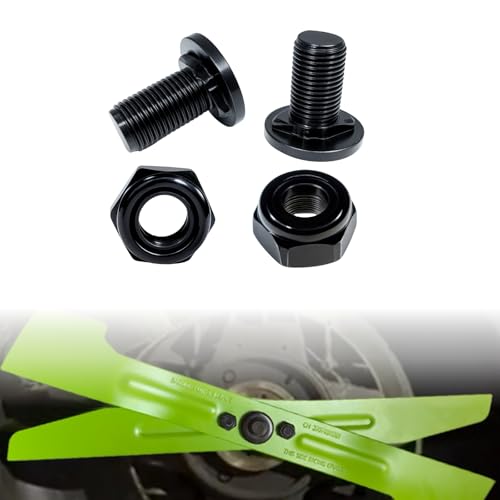
【Mower Blade Bolts and Nuts Kit】Lawn mower replacement parts include 5640321002 blade bolts and 5630351002 lock nuts,compatible with EGO LM2130, LM2133, LM2130SP, LM2135SP, LM2150SP & LM2156SP 21" mowers(Blades Not Included)

Lawnmower Blade Bolt Application Range: The bolt washer set is suitable for various riding and zero-turn mower blades fixing. Compatible with Husqvarna, Craftsman, AYP, Poulan, Poulan PRO, Weed Eater, Roper, Sears and other brands of lawnmowers.

Replacement Number:5328510-84,851084,851084,532851084,532851084;