

You’ll need a 12‑V battery for most walk‑behind and standard riding mowers; it’s the common voltage for 6‑V and 12‑V lead‑acid packs and reads 12.6‑12.8 V at rest. Larger decks, commercial units, or high‑torque applications typically require 24‑V (or higher) systems, often using LiFePO₄ cells that charge faster and run longer. The exact voltage depends on the mower’s motor and deck size, and the rest of the guide explains how to match chemistry, CCA, and Ah ratings.
How Many Volts Does a Lawn Mower Battery Need?
How many volts does a lawn mower battery actually need? You must match the mower’s design voltage—typically 12 V for most riding and zero‑turn units, 6 V for walk‑behind models, and 24 V for large commercial mowers. When choosing replacement lawn mower batteries, verify the printed voltage and amp‑hour rating; a 12 V lead‑acid should read 12.6‑12.8 V at rest, while a LiFePO4 equivalent reads 13.2‑13.4 V. For proper lawn mower battery installation, disconnect the negative terminal first, clean both terminals, and connect the positive last. Use a multimeter set to 0‑20 V DC, attach red to positive and black to negative, and confirm the voltage before charging. Avoid mismatched chargers—charging a 6 V battery with a 12 V charger will damage it. Load test the battery periodically to ensure it can sustain the mower’s starting current without excessive voltage drop. Regular maintenance can significantly extend battery life and overall mower durability. Proper storage temperature helps prevent capacity loss and prolongs performance.
12‑Volt vs. 24‑Volt Lawn Mower Battery Systems – Which Is Right for You?
You’ve already seen that a mower’s voltage must match its design, so let’s compare the 24‑volt platform to other options. A 24‑volt system delivers enough torque for 33 cm decks while keeping weight under 9 lb for lead‑acid and under 5 lb for lithium‑ion. Lithium 8.0 Ah cells extend lawn mower runtime needs by 30 % versus 4 Ah units, and they tolerate partial charges, simplifying battery charging strategies. Lead‑acid 4 Ah packs require 5‑7 hours to reach full capacity, whereas lithium 4 Ah packs charge in roughly 100 minutes with smart ECP protection. Higher‑voltage kits (48 V) add power for larger mowers but increase weight and complexity. Choose 24 V when you prioritize lightweight, interchangeable tools and predictable runtime, and switch to higher voltage only if your mower’s performance envelope demands extra wattage. Brushless motors provide higher efficiency and lower maintenance, enhancing overall mower performance. Considering the environmental impact of battery production and disposal can also influence the choice between electric and gasoline mowers. Hydraulic pressure systems enable smooth, consistent cutting across varied terrain.

LED POWER INDICATOR: Always stay informed of your battery's status

⚠️(Note: 24V ✅ is battery voltage. NOT charger's voltage. The charger's voltage is 24-30V. NOT for Neuton 36V ❌ version. Someone may have bought it by mistake. Please Check For Compatibility With Your Unit. Thanks.) World Wide Input Voltage 100-240VAC 50/60Hz.OVP, OCP, SCP Protection (OVP: Over Voltage output Protection. OCP: Over Current output Protection. SCP: Short Circuit output Protection). UpBright 30 Days Refund. 24 Months Exchange.

Starter kit includes (2) 4.0Ah USB batteries and dual port rapid charger to power any Greenworks 24V or 48V (2 x 24V) product
Voltage Ranges for Different Lawn Mower Battery Chemistries (Lead‑Acid, LiFePO₄)
When you compare battery chemistries, the voltage windows they operate in differ enough to affect performance and maintenance. Lead‑acid flooded cells sit at 12.6–12.8 V when fully charged, with a usable range of 12.4–12.5 V; dropping below 12.2 V signals under‑charge, and 11.9–12.0 V marks deep discharge. AGM variants shift slightly higher, 12.75–12.85 V at full charge, and 12.10–12.50 V across 25‑75 % SOC. LiFePO₄ packs charge to 13.2–13.4 V, but normal operation begins at 12.8 V and stays between 12.8–13.1 V; below 12.0 V requires immediate recharge. Maintaining ideal charge maintenance demands monitoring these windows, while regulating battery temperature prevents voltage drift and prolongs lifespan. Using the wrong oil type can cause excessive wear in a mower engine, especially when the oil’s viscosity rating does not match the engine’s design specifications. Proper storage in a cool, dry environment further reduces self‑discharge and extends overall battery longevity. Regularly checking the oil level ensures the engine stays within its optimal oil capacity range.

√ Dimensions: Length 7.68 inches, Width 5.12 inches, Height 6.22 inches, Total Height 7.09 inches; Weight: 21.5 lbs, Terminal Type: Square Hole Nut and Bolt, NB, Nut and Bolt, J; The positive terminal is on the left side of the battery; Cold Cranking Amps: 200CCA; Terminal: Left : Positive (+)-Red, Right: Negative (-)-Black.

UNIVERSAL FIT DESIGN: BCI Group U1 format with compact 7.68 x 5.12 x 7.09 inch dimensions ensures perfect size compatibility with leading brands like Toro, Cub Cadet, and Craftsman
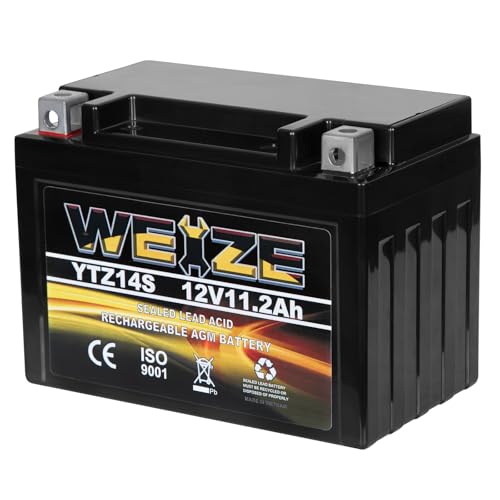
【Superior Cranking Power】: Delivers 230 Cold Cranking Amps (CCA) and 11.2Ah capacity for dependable starts in all weather conditions. Our enhanced plate and radial grid design ensures maximum power output and reliable performance for your motorcycle or scooter.
How to Measure and Interpret Resting Lawn Mower Battery Voltage
Precision matters when you assess a lawn mower’s resting battery voltage, because the reading tells you whether the cells are healthy, partially discharged, or in need of immediate recharge. First, turn off the mower, disconnect the battery, and let it sit for at least 60 minutes to eliminate surface charge. Wear safety gloves, clean the terminals, and place the battery on a non‑conductive surface. Set a multimeter to the 0‑20 V DC range, probe the positive then negative terminals, and wait 10‑30 seconds for a steady display. Record the exact voltage. For lead‑acid, 12.6‑12.8 V means full charge; 12.4‑12.5 V is usable but partially discharged; ≤12.2 V signals undercharge, and ≤11.5 V suggests failure. For LiFePO₄, 13.2‑13.4 V is full, 12.8‑13.1 V normal, 12.0‑12.7 V moderate, and <12.0 V requires immediate recharge. Compare the reading to your battery storage capacity and plan seasonal battery charging accordingly. Drain the oil before checking the battery to avoid contaminating the measurement. A proper spark plug check can also prevent unnecessary battery drain. Remember to replace the oil drain plug securely after the oil change to protect the engine and ensure safe operation.
CCA & Ah Ratings: How They Affect Lawn Mower Battery Performance
If you want your mower to start reliably and run long enough to finish the job, you must look at both the CCA and Ah ratings, because they measure different but equally critical aspects of battery performance. CCA quantifies cold‑cranking ability; a push mower needs 150‑250 CCA, while a riding mower typically requires at least 145 CCA, with larger engines demanding up to 300 CCA. Higher CCA improves battery chemistry performance in freezing weather, especially for lead‑acid cells. Ah, on the other hand, defines run time capacity considerations. Small mowers use 18‑24 Ah, whereas standard tractors benefit from 35‑50 Ah for extended mowing sessions. Remember that CCA and Ah are independent specs—one governs start‑up power, the other governs duration—so select a battery that meets both criteria for your mower’s engine size and usage pattern. Regular oil checks help maintain engine health, and oil change timing should be observed to ensure optimal performance. Check the oil level after warming to verify proper lubrication before each use. Properly draining fuel before storage also prevents gum formation and engine damage during winter.
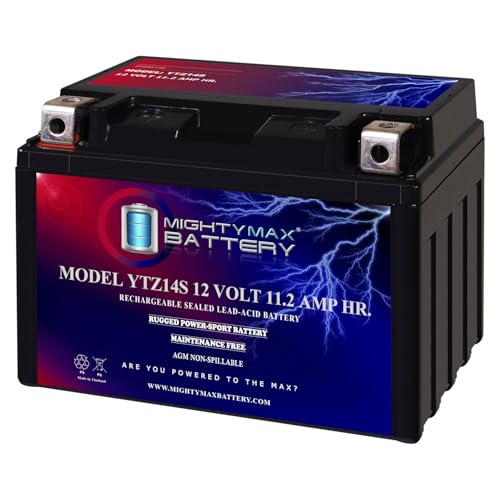
YTZ14S is a 12V 11.2AH 230 Cold Cranking Amps (CCA) Sealed Lead Acid (SLA) Battery

ML-U1-CCAHR is a 12V 320 Cold Cranking Amps (CCA) Sealed Lead Acid (SLA) Battery.
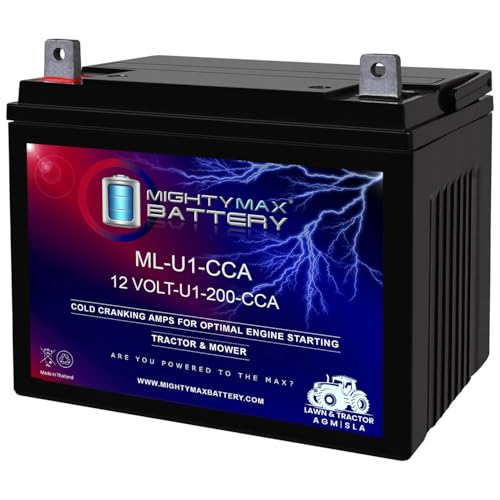
ML-U1 is a 12V 200 Cold Cranking Amps (CCA) Sealed Lead Acid (SLA) Battery
Choosing the Right Charger & Maintaining Healthy Voltage for Your Lawn Mower Battery
Choosing the right charger and keeping your mower’s battery within healthy voltage limits are essential for reliable starts and long run‑times. First, verify the battery’s label voltage—12 V or 24 V—and select a compatible charger wattage that delivers 1–3 A for typical 28–35 Ah lead‑acid units, never exceeding 10 A on smaller packs. Use an automatic charger that ceases current once the resting voltage reaches 12.6‑12.8 V (lead‑acid) or 13.2‑13.4 V (LiFePO₄). Before charging, measure resting voltage with a 20 V DC multimeter; if it reads below 12.0 V, the battery is considerably discharged. During charging, monitor battery temperature to avoid overheating; a rise above 45 °C signals excess current. After a full charge (4–8 h), disconnect immediately and clean terminals. Regularly repeat voltage checks and temperature monitoring to maintain ideal performance. Always wear insulated gloves and goggles when handling jumper cables to prevent accidental spark injuries. Follow the step‑by‑step safety checklist to ensure a smooth start. Remember to check fuel level before each use to avoid engine stalling.
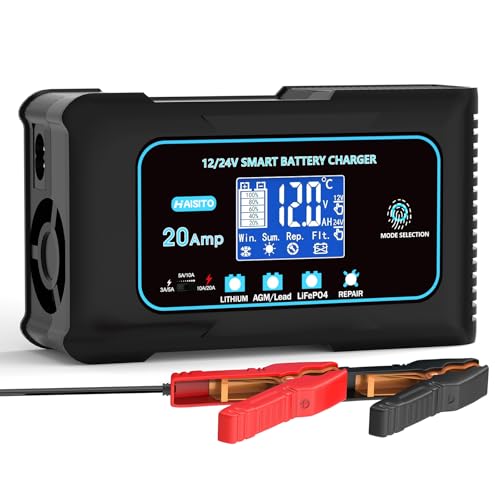
[20A RAPID CHARGE: 2X FASTER THAN COMPETITORS] Stop waiting all day. Haisito delivers a massive 20-Amp continuous current (for 12V) and 10-Amp (for 24V), charging your dead battery up to 200% faster than standard 8A/10A chargers. Essential emergency gear for large SUVs, Pickups, and Farm Tractors facing cold winter starts.

Intelligent Pulse Repair Charger: 3-in-1 Battery Charger (charging, repair/desulfurization, maintenance), upgraded intelligent detection LCD panel, providing visualization charging, bidding farewell to blind charging. Self stop when fully charged, automatically switch to float charging when fully charged, effectively preventing overcharging and protecting the battery from damage

【All-in-one Universal Charging Solution】It's an all-in-one solution: charger, maintainer, trickle charger, and desulfator. This 12V 20-Amp and 24V 10-Amp battery charger is ideal for fast charging and servicing lead-acid automotive, RV, deep cycle batteries including flooded, gel, AGM, SLA, GEL, on board battery chargers for boats, truck, SUV, farm vehicle, tricycle, motorcycle, lawn mower, lifep04 batteries etc.