
Lime doesn’t slay weeds instantly; it raises soil pH, making the environment hostile to many common lawn weeds while boosting grass nutrient uptake. The calcium carbonate neutralizes acidity, freeing nitrogen, phosphorus, and potassium, and dolomitic lime adds magnesium for stronger turf. Over weeks to months, a denser, healthier lawn outcompetes weeds for light and resources. Proper timing, depth, and rate are essential, and if you keep going you’ll uncover the exact steps to maximize results.
Does Lime Directly Kill Weeds? The Straight Answer?
A quick glance at the science shows that lime does not act as a herbicide; its abrasive particles may damage weed foliage and roots on contact, but this effect is superficial and short‑lived. When you spread lime as a fine powder, the particles scrape cell walls, causing localized dehydration and occasional wilting. However, field data reveal that Weed die off rates remain negligible unless you reapply after rain or irrigation. Because the abrasive layer erodes quickly, Lime application frequency must be high—often every 3–4 weeks—to sustain any measurable damage, yet even frequent applications fail to achieve true kill. Expert consensus from Washington State University and lawn‑care professionals confirms that lime’s primary function is pH adjustment, not herbicidal action. Correcting soil acidity can also improve nutrient availability for grasses, helping them outcompete weeds. The type of herbicide determines how quickly a weed is eliminated, with systemic chemicals acting within hours and contact products taking days or weeks. Mulching can further suppress weeds by blocking sunlight and reducing soil temperature fluctuations.

Package contains 6 pounds organic soil de-acidifier grains and is produced to avoid wasteful runoff, mess, hazards and smells

Raise Soil pH: If your soil pH is too low, plants are unable to absorb nutrients effectively. Earth Science Fast Acting Lime naturally raises soil pH to help plants.

OMRI Listed - Cz Dolomite Lime is an All-Natural mineral fertilizer listed by the Organic Materials Review Institute (OMRI). It may be used in certified organic production or food processing and handling according to the USDA National Organic Program regulations. (OMRI Certified 2024)
How Lime Changes Soil pH for Better Weed Control?
When you spread lime on acidic soil, its calcium carbonate reacts with hydrogen ions, raising the pH and neutralizing both active and reserve acidity. You’ll notice the reaction accelerates with moisture; rain or irrigation activates the lime, especially if you use a fine 100‑mesh grade. Target a pH around 6.5, because that range maximizes grass nutrient uptake and suppresses weed‑friendly acidity. Clay soils demand higher rates and may take years to fully adjust, while sandy soils respond within weeks. Track pH at 0‑2, 2‑4, and 4‑8‑inch depths to gauge progress and avoid delaying lime impacts. Apply split doses and prioritize optimizing annual applications to maintain the pH above the economic threshold and keep the lawn consistently hostile to weeds. Over‑fertilization can cause nutrient burn that weakens grass and encourages weed invasion. Proper timing of lime application in early spring can enhance nutrient availability for the upcoming growth season. Observing thin or yellowing grass after a rainstorm may indicate the need for additional lime to balance pH.
Nutrient Release From Lime Boosts Grass Over Weeds?
If you raise the pH of acidic soil with lime, the previously bound nitrogen, phosphorus, and potassium become soluble, allowing grass roots to absorb them efficiently. This chemical shift frees a nutrient trove, directly enhancing grass nutrient uptake and fostering improved soil tilth. Calcium from calcitic lime fortifies cell walls, while dolomitic lime supplies magnesium, both of which accelerate enzymatic processes that convert available nutrients into growth energy. As aluminum toxicity diminishes, root expansion proceeds unhindered, accessing a broader soil volume. The resulting dense, vigorous turf outcompetes weeds for light and resources, creating a self‑reinforcing canopy that suppresses weed establishment without herbicides. Consequently, your lawn gains resilience against drought, pests, and disease while maintaining a uniform, lush appearance. Proper aeration before lime application enhances soil penetration and maximizes nutrient distribution. Aeration also improves soil aeration by creating channels that help lime integrate more evenly throughout the root zone.
Lime’s Abrasive Effect on Weed Roots for Effective Weed Control?
Lime’s abrasive particles physically scour weed roots as they settle into the soil, breaking down cell walls and impairing water and nutrient transport. You should incorporate lime to a depth of 4‑6 inches, ensuring targeted root contact and effective soil aeration. The gritty particles puncture cortical tissue, compromising structural integrity and reducing hydraulic conductivity. Over weeks, the damaged cells lose the ability to transport nutrients, causing progressive wilting and root decay. When you apply 50‑100 lb per 1,000 sq ft, the abrasive action combines with pH adjustment to suppress germination of crabgrass and dandelion taproots. Re‑apply every 12‑18 months and pair with aeration to maintain open pore space, maximizing root exposure and sustaining long‑term weed control. Proper site selection and soil preparation, as described in pampas grass planting, further enhance the effectiveness of lime treatments. Table salt can also be used as a soil desiccant to quickly dry out shallow-rooted weeds. Using salt creates a high‑osmotic environment that dehydrates weed cells, accelerating their death.
Which Common Lawn Weeds Respond Best to Lime?
Although many weeds can be weakened by raising soil pH, broadleaf species such as dandelion, white clover, wild violet, oxalis, and henbit show the greatest response because they thrive in acidic conditions and their growth drops sharply once the pH reaches 6.5‑7.0. You’ll find that these weed species sensitivity profiles align with lime’s ability to shift pH toward 6.5‑7.0, especially in compacted soils where lime amendment penetrates slowly but raises alkalinity uniformly. In practice, applying lime to compacted lawns suppresses dandelion and white clover first, then wild violet, oxalis, and henbit follow as their root vigor declines. Monitoring pH after each application guarantees the amendment stays within the ideal range, maximizing weed suppression while preserving turf health. Dallas grass is also difficult to control, similar to other stubborn weeds. Effective lime application also reduces the competitive advantage of weeds by limiting nutrient availability for them. Proper cultural control such as regular mowing and deep watering further enhances lime’s effectiveness against spurge weed. The timing of lime application is critical, as applying it in early spring aligns with the optimal weed‑and‑feed window for maximum impact.

🌱 Rapid Soil pH Correction & Lawn Revival – Quickly raises low soil pH to optimal levels, unlocking nutrients for greener, thicker lawns and vibrant gardens. Our fast-acting pulverized lime enhances lawn fertilizer effectiveness, creating lush, healthy grass.

FOR USE ON: Use on flowers, vegetables lawns, trees or shrubs to correct acidic soil

Safe Odor Control for Chicken Coops & Stalls – Naturally reduces ammonia odors and moisture in chicken coops, barns, kennels, and animal bedding—safe for daily use.
Step‑by‑Step Soil Testing Before Applying Lime?
Raising soil pH can suppress those broadleaf weeds, but you won’t know how much lime to add without a proper soil test first. Begin with soil sample collection: divide the lawn into uniform zones based on color, texture, and previous amendments. In each zone, follow a zig‑zag pattern and extract 20 cores to a 3‑inch depth, mixing 10‑15 spots into a composite sample. Partially dry wet material, label the bag, and sketch a field map for reference. Send the composite to a certified lab for a standard test that reports pH, phosphorus, potassium, cation‑exchange capacity, and organic matter. When results return, perform soil test interpretation: compare water‑pH and buffer‑pH values to local calibration charts, calculate the exact lime rate, and verify that nutrient levels remain balanced before application. Use the recommended seeding rates to ensure the lawn receives the proper density of grass seed after liming. Understanding seed per acre helps you match the lime application with the appropriate amount of grass seed for optimal lawn health.

Quick, at home results for Soil pH, Nitrogen, Phosphorous and Potash Innovative and inexpensive soil test kit features an easy-to-use capsule system and patented color comparators

Comprehensive Soil Analysis: Liquid soil test kits offer a comprehensive analysis of essential soil parameters, including pH, ammonia, nitrogen, phosphorus, and potassium. Having all these measurements in one kit provides a holistic understanding of the soil's fertility and health.

Kindly NOTE: This soil tester can not be applied to test pH value of any other liquid. If the soil is too dry the indicator will not move, and water it before testing.
How Long Does Lime Take to Suppress Weeds?
If you apply lime to an acidic lawn, you won’t see weed kill within days; instead, the soil chemistry must first shift before any suppression occurs. Lime raises pH over 4‑6 months, with fast‑acting formulations reaching measurable change in 8 weeks. During this period, grass gains nutrient access, outcompeting weeds, but full suppression typically requires 12‑24 months of stabilized pH. A well‑planned lime application schedule—20‑40 lb per 1,000 sq ft for thatch, 25‑50 lb for disease or moss—ensures sufficient soil contact. Expect the first signs of targeted weed control after 6 months, when pH adjustment curtails new seed germination. Complete weed decline aligns with the 12‑month pH stabilization window, as the competitive advantage of healthy turf fully manifests. Maintenance liming is often done in November/December. Proper timing aligns with the optimal spring lawn fertilization window, which begins when soil temperature reaches 55 °F.
When and How to Incorporate Lime for Maximum Effect?
The lag between lime application and visible weed suppression means you must plan the timing and method of incorporation to maximize impact. Schedule lawn prep before lime in early spring or fall when soil warms but grass isn’t actively growing; avoid summer heat and frozen winter ground. Conduct a soil test, confirm pH 6.0‑7.0, then mow, clear debris, and aerate to improve penetration. Use proper lime application methods: a broadcast spreader for pelletized lime or a drop spreader for powdered lime, applying in a criss‑cross pattern at no more than 50 lb per 1,000 ft². Lightly water after spreading to dissolve and move lime into the top five inches. Split a 50‑100 lb dose between spring and fall for sustained effect. Proper fertilization timing is essential for a lush, healthy lawn. Mowing at the correct height further encourages dense turf and reduces weed competition.

OPERATION: Adjustable arm support on this seed, salt and fertilizer spreader helps provide maximum comfort

NO ASSEMBLY REQUIRED: Scotts spreader comes pre-calibrated and ready-to-use; use it year-round including as an ice melt spreader or salt spreader for snow
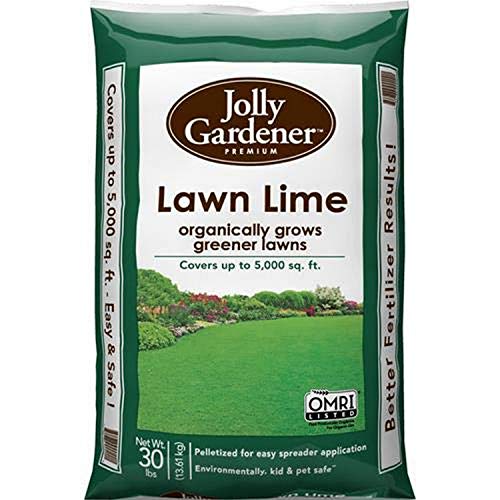
Adds calcium and magnesium nutrients essential for lawn and garden growth not available from fertilizers
How Lime Enhances Grass Growth While Suppressing Weeds?
When you apply lime to acidic turf, the soil pH shifts toward a neutral 6.0‑6.8 range, instantly freeing nitrogen, phosphorus, potassium and magnesium that were previously immobilized. This Balanced soil pH lets your grass absorb nutrients at peak efficiency, driving rapid blade elongation and root expansion. Simultaneously, the alkaline environment curtails acid‑loving weeds, so they struggle to germinate. Lime also loosens compacted particles, creating crumbly, aerated soil that improves drainage and root penetration, which in turn supports a Resilient lawn ecosystem. Beneficial microbes flourish, accelerating organic matter breakdown and further nutrient release. The combined effect is a denser, healthier turf that outcompetes weeds without chemical intervention. Proper aeration before overseeding enhances seed‑to‑soil contact, promoting quicker germination and a thicker lawn. This is especially effective when combined with lime, as improved soil structure allows nutrients and water to reach deeper root zones. Regularly checking soil compaction helps determine the optimal timing for aeration and lime application.
Common Lime Mistakes That Sabotage Your Weed Control
Lime can improve turf health, but missteps quickly erode its weed‑control benefits. You must test soil pH in multiple spots before any application; skipping this step leads to over‑ or under‑application, which distorts nutrient uptake and can cause magnesium or aluminum toxicity. Applying too much lime pushes pH above 7.6, killing beneficial microbes and preventing nitrogen, potassium, and iron absorption. Expecting instant weed kill is a mistake—lime only adjusts pH over weeks, and many weeds persist below a pH of 7.7. Avoid applying lime on winter‑only schedules without calibration, as uneven spread limits soil compaction and hampers proper aeration. Align lime rates with grass species preferences, monitor pH annually, and integrate aeration to maintain a balanced, weed‑resistant lawn.