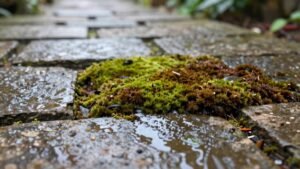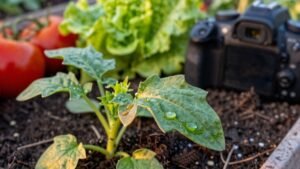

Yes, table salt kills weeds by creating a hyper‑tonic environment that pulls water out of root cells, causing turgor loss and wilt within 24‑48 hours, and death in a week or two. Dissolved Na⁺ and Cl⁻ raise osmotic pressure, reverse‑osmosis draws moisture from plant tissues, and Cl⁻ disrupts photosynthesis. Apply a concentrated salt‑vinegar‑soap mix at the soil line on non‑plantable surfaces, avoid desirable plants, and re‑apply after rain. Keep in mind soil salinity buildup and EPA limits; the next sections show safe recipes, timing, and a herbicide comparison.
Why Salt Works on Weeds – The Simple Osmosis Story
When you sprinkle table salt on a weed, the dissolved Na⁺ and Cl⁻ ions raise the surrounding osmotic pressure, pulling water out of the plant’s root cells by reverse osmosis. The high external ion concentration forces water to move from the low‑salinity interior of root cells to the hypertonic soil, causing rapid loss of turgor pressure. This osmotic cell damage collapses membranes within hours, wilting stems and browning foliage. Simultaneously, Na⁺ displaces Ca²⁺ and Mg²⁺ from soil colloids, leading to colloid disruption and reduced cation exchange capacity. The resulting ion imbalance hampers nutrient uptake and photosynthesis, especially as Cl⁻ accumulates in leaves. By targeting both water balance and nutrient availability, salt delivers a swift, contact‑based kill without relying on systemic transport. Sodium accumulation exceeds USDA thresholds, leading to severe crop yield reduction. Properly timing the application before rain can maximize effectiveness and limit runoff. Soil salinity can persist for months, inhibiting future plant growth if not managed.

KILLS WEEDS TO THE ROOTS - Earth’s Ally weed grass killer spray is a non-selective, ready-to-use formula proven to eliminate common weeds like broadleaf, crabgrass, dandelion, clover, ivy and chickweed.

✅ All Natural and Safe Product- Safe for your family, safe for your pets.

KILLS TO THE ROOT: Our formula is guaranteed to kill more than 250 weeds and grass including broadleaf, crabgrass, dandelion, clover, ivy, and chickweed.
Table Salt Weed Control: Safety, Soil Risks, and Plant Protection
Table salt may seem like a cheap weed‑killer, but its indiscriminate action and lingering soil effects make it a risky choice for most gardens. You’ll find that sodium chloride disrupts osmotic balance, wilting any plant that contacts it, not just weeds. The salt dissolves, leaches, and accumulates, raising soil salinity and harming the microbiome, which can render beds barren after repeated use. EPA‑approved herbicides are preferred because table salt fails to meet Environmental regulations for pesticide safety. If you need a non‑chemical option, look for Biodegradable alternatives that target weeds without persisting in the soil. Reserve salt for non‑vegetated zones, protect desirable plants, and avoid runoff that could poison nearby water sources and wildlife. Salt has historically been used to destroy agricultural land, such as the Romans salting the farmland of Carthage. The development of the first practical lawn mower by Edwin Beard Budding in 1830 marked a turning point in garden maintenance, introducing mechanized grass cutting that reduced reliance on manual labor. Repeated salt applications can lead to soil salinization that permanently reduces crop yields. Modern diffusion LLMs can model complex ecological interactions to predict long‑term impacts of soil amendments.

Signing Checklist: You will receive 1 roll of 4 x 50 feet of biodegradable paper weed barrier landscape fabric, which can be naturally degraded during use, effectively control the growth of weeds, improving the soil environment, and promoting better growth of crops
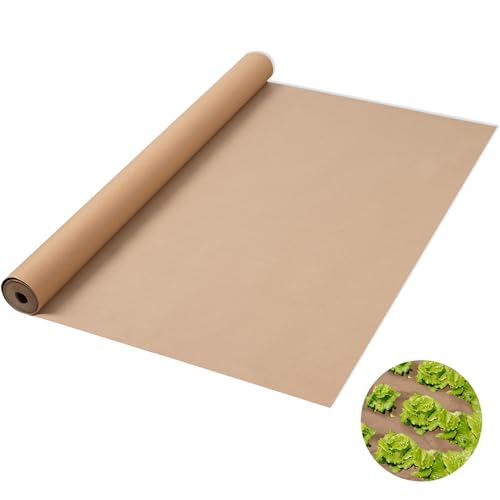
Signing Checklist: You will receive 1 roll of 4 x 100 feet of biodegradable paper weed barrier landscape fabric, which can be naturally degraded during use, effectively control the growth of weeds, improving the soil environment, and promoting better growth of crops.

Package Include: You will receive 1 roll 3 x 50 ft biodegradable paper weed barrier landscape fabric, it effectively inhibits the growth of weeds and provides an ideal growth environment for crops.
Applying Table Salt Safely: Step‑by‑Step DIY Recipes & Methods
You can safely use table salt as a DIY weed‑killer by following precise recipes and handling steps that keep soil damage minimal. Measure salt with a cup or scale, dissolve it in hot water while stirring vigorously, then add vinegar and finally dish soap to improve adhesion. For targeted removal methods, sprinkle ½ cup per square foot on dry weeds under sunny skies, or spray the standard 1 cup salt + 1 gallon vinegar + 1 Tbsp soap solution from 12 inches away. Apply concentrated mix at the soil line for deep roots, using strategic application timing—spray early morning or late afternoon, re‑apply after rain within 7–10 days. Store dry mixes airtight, liquids labeled, and discard any separated or off‑smelling batches. Homemade seasoned salt can also be used as a healthier alternative to store‑bought blends when preparing garden treatments. The speed of weed wilting can vary, but you’ll typically see visible effects within 30 minutes to several hours. Acetic acid in vinegar disrupts plant cell membranes, a mechanism that enhances salt effectiveness when combined with salt. Using a higher concentration of vinegar, such as 20 % acetic acid, can act as a potent natural herbicide for tougher weeds.
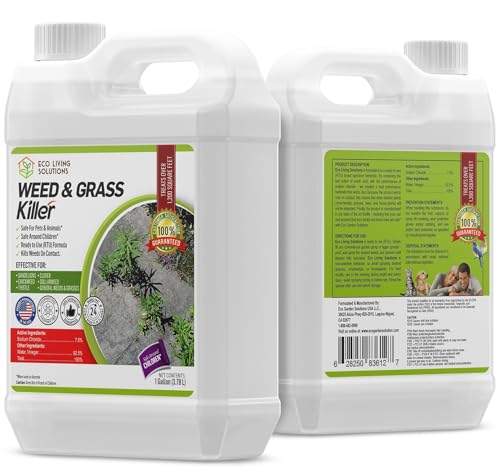
✔️ PET & KID SAFE HERBICIDE - Eco Garden Pro Weed Killer is designed with you and your family in mind! All of our ingredients are carefully selected to be SAFE FOR: PETS, CHILDREN, BEES, FISH, AND ANY LIVESTOCK!

✔️ PET & KID SAFE HERBICIDE - Eco Garden Pro Weed Killer is designed with you and your family in mind! All of our ingredients are carefully selected to be SAFE FOR: PETS, CHILDREN, BEES, FISH, AND ANY LIVESTOCK!

KILLS TO THE ROOT: Our formula is guaranteed to kill more than 250 weeds and grass including broadleaf, crabgrass, dandelion, clover, ivy, and chickweed.
Salt Weed Control – Ideal Surfaces, Spot‑Treatments, and Timing
Having measured and mixed the salt solution, you now need to choose where and how to apply it for maximum efficacy. Use driveways, patios, stone walkways, and gravel lots—surfaces never intended for vegetation—to avoid salt hazards. For spot‑treatments, cut the weed’s crown, then apply a spot application rate of half a teaspoon of rock salt directly onto the stump or spray a 1 cup‑per‑gallon foliar solution onto leaves and stems. Apply on sunny, dry days, preferably early in the growing season (late March–early April), or after rain when the ground stays wet. Increase concentration gradually if weeds persist, but stop before any plantable area is reached. This targeted, timed approach maximizes dehydration while minimizing collateral damage. High soil salt concentrations can ruin fertility and structure. The acetic acid in vinegar helps break down plant cell walls, enhancing the overall weed‑killing effect.


KILLS WEEDS TO THE ROOTS - Earth’s Ally natural weed killer spray is a non-selective, ready-to-use formula proven to eliminate common weeds like broadleaf, crabgrass, dandelion, clover, ivy and chickweed.

【SEED SPREADER】This cordless grass seed spreader is equipped with 1 x 4.0Ah batteries. We abandoned the traditional design of a hand crank seed drill and traditional built-in cordless seed drill and opted for a powerful tool battery that offers plenty of power, a large and controllable seeding area, low power consumption and high robustness.
Salt vs. Commercial Herbicides: Decision Guide for Homeowners
If you’re weighing whether to use table salt or a commercial herbicide, consider effectiveness, environmental impact, speed, cost, and safety. Salt’s application efficacy relies on osmotic stress; you’ll see wilting in 24‑48 hours, but full death often takes 1‑2 weeks and requires high concentrations that persist in soil, risking long‑term sterility. Glyphosate‑based herbicides inhibit essential enzymes, delivering wilt within hours and death by 10‑14 days, with faster breakdown and less residual salinity. Use recommendations favor herbicides for larger, non‑porous areas because they need a single treatment, whereas salt demands repeated applications on sandy soils. Cost‑wise, salt is cheap upfront but may equal herbicide expense over time. Safety-wise, salt corrodes metal and leaches to non‑target plants; regulated herbicides limit such collateral damage. Salt is a toxic metal ion that can contaminate soil for years.

Chapin Garden Sprayer: Complete lawn care and basic cleaning tasks faster with the 1‑gallon translucent funnel‑top tank that allows quick, easy, spill‑free refills and fluid checks

Coverage - Preen weed preventer 4.93 lb. flip-top bottle provides large-area coverage and pre emergent weed control for 805 sq. ft. of garden space; prevents over 125 weeds in residential landscapes, garden areas, landscaped spaces and established plantings

Visible Results in One Hour - Spruce dehydrates to kill roots, showing visible results in just 1 hour, dead weeds in 1 day. The hardworking weed sprayer can kill all types of broadleaf and grassy weeds including dandelions, large crabgrass, white clover, dollarweed and morning glory vines.