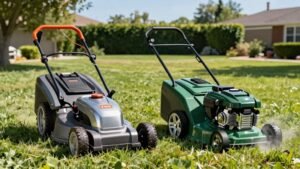

First, disconnect the spark plug and wear gloves. Inspect the belt for glazing, cracks, or twists, and check each pulley for wear or roughness. Loosen the tensioner bracket bolts, pull the bracket away from the spring to increase tension, then push it back about 1/8 inch for fine‑tuning while engaging the lever. Tighten the bolts, spin the blades to confirm smooth movement, and verify the belt’s midpoint deflection matches the manufacturer’s spec; a quick gauge check will confirm proper tension before you finish.
Inspect Lawn Mower Belt and Pulley
When you start inspecting the mower’s belt and pulley, first disconnect the spark plug for safety, then pull the belt away from the pulleys and examine the edge that contacts each pulley for any shiny, glazed, or burned spots—these indicate material breakdown and signal that the belt should be replaced. Use a flashlight to scan the entire belt length, checking for sidewall damage, fraying, cracks, or worn portions that could cause breakage. Next, verify belt path alignment by confirming the belt tracks centrally in each pulley groove and that no twists exceed a quarter turn. Inspect each pulley for wear, damage, or misalignment that might lead to belt slippage prevention. Clean debris from pulleys and belt with a brush or compressed air, then reassemble, ensuring proper tension before testing. Always wear protective gloves to reduce the risk of cuts when handling sharp edges. Properly leveled mower decks also depend on even cutting to maintain consistent performance.
Test Lawn Mower Belt Tension
How can you verify that your mower’s belt tension is within spec? First, locate the belt midpoint between the pulleys and apply the check belt deflection method: push the belt sideways until you feel a firm resistance and note the deflection distance with a reference string. Compare that distance to the manual‑specified deflection for your belt size and horsepower; a small sideways movement indicates proper tension. Next, use belt tension gauge for a quantitative readout. Set the gauge to the pound‑force value listed in the service manual, press it against the belt, and adjust until the gauge’s deflection span matches the reference line. If the reading falls within the specified range, the belt is correctly tensioned; otherwise, plan to adjust it. The deflection distance is measured using the large O‑ring on the gauge aligned with the inches scale. Proper belt tension also helps prevent premature wear and ensures consistent mower performance. Selecting the right blade type, such as a mulching blade, can further improve cut quality and reduce strain on the belt. Keeping blades sharp promotes a cleaner cut and healthier grass, which in turn reduces the load on the belt system.
Adjust Lawn Mower Belt Tensioner
You’ve confirmed the belt’s tension is within spec, so now you need to adjust the tensioner to maintain that setting. First, place the mower on a flat surface, disconnect the spark plug, and turn the front wheels straight. Lower the deck with the engagement lever, then locate the tensioner—usually on the left side of the deck near the PTO cable. Loosen the bracket bolts using a 10 mm or 13 mm wrench. Pull the bracket away from the spring to increase tension, then push it back roughly 1/8 inch for fine‑tuning while you engage the lever to test. Tighten the bolts, ensuring the spring stays compressed. Finally, rotate the blades by hand, inspect belt deflection, and monitor mower belt condition to diagnose belt tensioner issues before re‑engaging the mower. Check swing arm for free movement before starting the adjustment.
Tighten Lawn Mower Belt
Need to tighten the mower belt? First, inspect the belt midway between the engine pulley and idler pulleys; look for deflection, wear, or damage. Verify the belt keeper sits correctly to guarantee belt slippage prevention. Then, pull the tensioner arm outward to increase tension, and tighten the eyebolt attached to the tension spring just enough to eliminate noticeable slack. Use one‑to‑two‑pound finger pressure on the belt to confirm a slight give—neither overly loose nor overly tight. After securing the tensioner, retighten the bracket screws and ensure the spring‑loaded idler pulley remains properly positioned. Finally, rotate the blades manually to check smooth movement, and note the belt replacement frequency recommended by the manufacturer. A clean deck improves airflow and helps maintain consistent belt tension.
Verify Lawn Mower Belt Tension
Verifying lawn‑mower belt tension starts with a visual inspection: check the belt every month or after each 10 hours of operation for cracks, fraying, glazing, or any signs of wear such as a burning odor, and make sure the belt isn’t excessively slack. Next, perform a belt tension evaluation by measuring deflection. Place a reference string across the pulleys, press the belt midway, and note the sag distance; compare it to the proper tension range chart for your mower’s horsepower. If you have a tension gauge, set it to the manufacturer‑specified force, press it at the belt’s midpoint, and record the reading. Confirm the reading falls within the proper tension range; otherwise, adjust the tensioner, re‑measure, and repeat until the belt meets specifications. Clean debris and inspect pulleys before each measurement to avoid false readings. Loose drive belt can cause blade speed changes that lead to a wavy blade. Proper blade balance reduces vibration and ensures a smoother cut. Sharp blades provide a clean cut and reduce the load on the belt, helping maintain correct tension.
Maintain Lawn Mower Belt Safety
Even when you’re only mowing a small lawn, maintaining belt safety is essential; you must inspect the belt every few weeks, watching for fraying, cracks, glazed surfaces, uneven wear, or sagging. Clean the deck after each use—wipe away grass, debris, and rust, then blow out the underside to keep pulleys free of buildup. Follow the manual’s tension guidelines, rechecking after heavy mowing and adjusting to eradicate squeaking or slipping. Verify the drive engagement cable stays taut and that pulleys remain aligned. If you notice persistent slip, vibration, or damage, treat it as belt replacement necessity and install the OEM belt according to the routing diagram. Adhering to these belt maintenance best practices prolongs lifespan and safeguards safe operation. Regular greasing of spindles and idlers helps prevent bearing damage. Oil change frequency should also be monitored to ensure optimal engine performance. Proper storage during off‑season months reduces capacity loss and extends overall battery longevity.
Troubleshoot Common Lawn Mower Belt Problems
Typically, the first step in diagnosing mower belt issues is to verify tension, then systematically inspect for debris, faulty bearings, and worn tensioners before considering operating conditions or installation errors. Check that the belt flexes slightly without sagging; a loose belt will twist more than a quarter turn and must be replaced. Remove all grass, dirt, and stringy material from the deck and pulleys to reduce belt wear and prevent belt damage. Spin each pulley; listen for roughness and feel for heat, lubricating bearings if needed. Examine tensioner springs for breakage and confirm they apply consistent pressure. Finally, verify you’re using the correct belt size and that it’s installed without twists. Adjust or replace components as necessary to maintain ideal performance. Also, inspect the mower’s crankcase oil level to ensure it isn’t overfilled, which can cause excess oil to seep onto the belt and pulleys. Maintaining the proper oil capacity helps protect engine components and prevents oil from contaminating the belt system. Using the wrong oil type can increase engine wear and reduce belt lifespan.