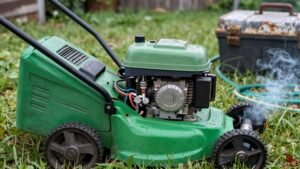

A typical walk‑behind mower needs about 15‑18 oz of SAE 30 oil, while most riding mowers hold 48‑64 oz (1½‑2 qt) of the grade the manufacturer specifies—usually 10W‑30, 30W‑40, or 15W‑40. Fill to the “full” mark on the dipstick, avoid overfilling to prevent leaks or smoke, and change the oil every 100 hours or yearly. Tilt the mower on a level surface to drain, clean the dipstick before each check, and replace the filter on riding models; the next sections will show you exactly how to do it.
How Much Oil Does a Walk‑Behind Mower Need?
How much oil does a walk‑behind mower actually need? You’ll need roughly 15‑18 oz for most Husqvarna models, but verify the exact capacity in the owner’s manual. Use SAE 30 oil, pour slowly through a funnel, and stop when the dipstick settles at the full mark. For Briggs & Strton engines, the listed capacity can be 20 oz, yet the dipstick often maxes out near 14 oz; remember about one‑third of the old oil stays after draining. Change oil every 100 hours or once a year—whichever comes first—to protect the engine and extend lawn mower lifetimes. When draining, tilt the mower on its side, rock it gently, and use a siphon pump if needed. Clean the dipstick before each check, and always retighten the cap before restarting to avoid leaks and excess smoke. Tilt mower on its side to use the dipstick tube as a drain. Park the mower on a level surface before beginning the oil change to prevent accidental spills. Follow the oil change steps to ensure a thorough and safe procedure. Regularly inspecting the oil’s color and viscosity helps detect wear early.
Riding Mower Oil Capacity and Required Types
After checking the oil on a walk‑behind mower, you’ll find the next step is to address the larger reservoirs in riding mowers. Most riding models hold 48 oz to 64 oz (1.5–2 qt) of oil; commercial units may reach 2 qt. Always reference the dipstick’s full‑and‑add marks and pour only a few ounces at a time to avoid over‑filling. Let the engine idle for a minute, shut it off, then wait a few minutes for oil to settle before rechecking the ideal oil fill level. Use the manufacturer‑specified grade—10W‑30 for Briggs & Stratton, 10W‑30 or 30W for Craftsman, 10W‑30 for John Deere gasoline engines, 15W‑40 for diesel. If you must use blend oil substitutes, verify they meet the viscosity and SAE rating, otherwise risk inadequate lubrication and premature wear. Regularly inspect for low‑oil warnings and replace the filter with each oil change. Viscosity differences are crucial because automotive oils are formulated for higher‑temperature, higher‑speed engines, while lawn mower engines operate at lower temperatures and speeds, requiring a thinner, more temperature‑stable oil. Before draining the oil, consult the owner’s manual for the exact oil drain plug location and any required safety steps.

SAE 10W-30 MOTOR OIL FOR SMALL ENGINES: One 32 fl oz bottle of STP Premium Synthetic Blend 4 Cycle Small Engine Oil SAE 10W-30, formulated for small engines in lawnmowers, generators, tractors, snow blowers, and other outdoor power equipment

10W-30 motor oil formulated to keep engines clean and responsive
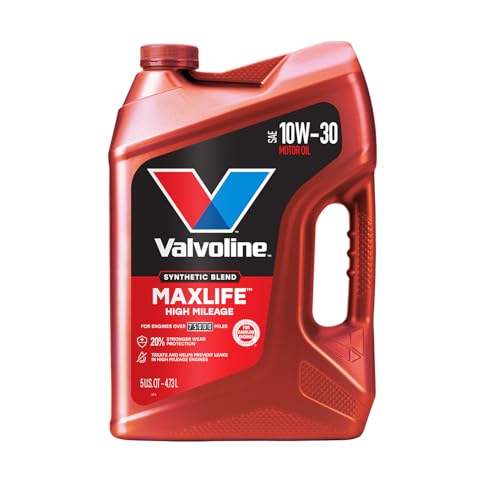
MaxLife Technology prevents engine breakdown with 40% better wear protection than the industry standard
Which SAE Oil Grade Is Recommended for Your Mower?
Wondering which SAE grade to pour into your mower? Match the oil to your climate and engine load to prevent wear and overheating. For warm months above 40 °F, SAE 30 is the standard seasonal oil selection—simple, reliable, and compliant with API SJ or higher. If you face temperature swings from 0 °F to 100 °F, choose a 10W‑30 multi‑grade; it eases cold starts but may consume more oil past 80 °F. In harsh winters below 40 °F, a synthetic 5W‑30 offers water‑like cold viscosity and lower consumption, covering –20 °F to 120 °F. Heavy‑duty or commercial mowers benefit from 15W‑50, handling high‑heat, continuous use and pressure washing. Always use high‑quality detergent oil (SF‑SH‑SJ or better) and avoid aftermarket additives. Proper mower oil viscosity options keep your engine safe and running smoothly. The oil drain plug should be inspected for wear before each oil change. Regularly check oil level before each use to catch low oil early. Follow the step‑by‑step guide in the Briggs & Stratton manual for safe disposal of used oil.

Advanced protection against the four main causes of engine breakdown: wear friction heat and deposits

HIGH-ZINC FORMULA: Contains 2X the zinc of OEM and competitor oils, delivering unmatched wear protection for small engines

How to Check and Fill Your Mower Oil – Step by Step
Choosing the right SAE grade sets the stage, but keeping that oil at the proper level is what actually protects your mower’s engine. First, consult the owner’s manual for the fill location and capacity, then gather a wrench, oil pan, funnel, and a clean dipstick. Warm the engine for 15 minutes, shut it off, and disconnect the spark‑plug wire. Tilt the mower with the air filter up, remove the drain plug, and let the old oil flow into the pan. After tightening the plug, insert the funnel and pour the specified amount in small increments, checking the dipstick each time. Keep the level between the “Full” and “Add” marks. Finally, replace the cap, run the engine briefly, re‑check the level, and look for leaks—these steps are essential mower oil oil change intervals and preventative maintenance tips. For the most accurate capacity, refer to the manufacturer’s specifications in the owner’s guide.

TRANSFER FLUID SMOOTHLY - Thorstone syringe style fluid evacuator comes with 0.24" OD and 0.32" OD extension tubes, up to 40 cm when connected, long enough to reach hard-to-reach locations for extracting and changing transmission fluid, power steering fluid, gear oil, anti-freeze and brake fluid.

REACH HARD-TO-ACCESS SERVICE POINTS: Some maintenance jobs are difficult because fill ports are hidden or located in tight spaces. FOUR UNCLES Fluid Transfer Syringe with flexible hose helps you reach challenging areas while making fluid extraction and refilling easier and cleaner.
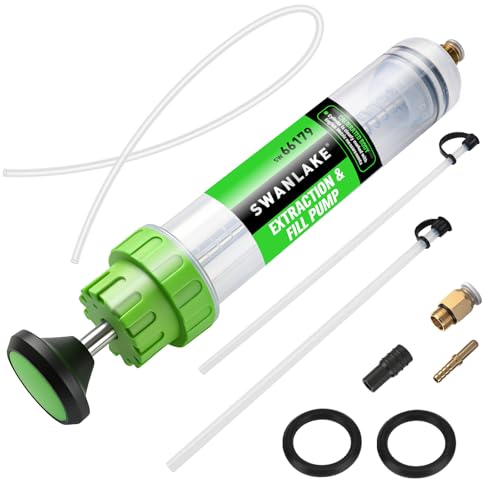
POWERFUL EXTRACTION - Delivers strong suction with its double-seal rubber rings, efficiently removing engine oil, transmission fluid, and coolant without leaks - perfect for car maintenance and lawn mower service with mess-free operation
Common Mistakes That Skew Mower Oil Capacity
Often the biggest source of mower‑oil trouble isn’t the oil itself but how you handle it. You overfill a 15‑oz engine by just a few ounces, and crankcase pressure will blow gaskets, bend rods, or even hydro‑lock the cylinder. Always read the oil level indicators before and after topping up, and use the dipstick to check measuring dipstick accuracy. Skipping that verification lets excess oil seep into the air filter, spark plugs, and carburetor, causing leaks, overheating, and fire risk. Low‑quality oil compounds the problem by degrading faster, while neglecting regular changes lets sludge build up, raising friction and wear. Finally, tilt the mower correctly—air filter up—so oil drains away instead of flooding the combustion chamber. Improper tilting can cause fuel leakage from the carburetor side. Using a safety glove while handling the blade reduces the chance of cuts and bruises. Proper body mechanics further prevent back strain during lifting.