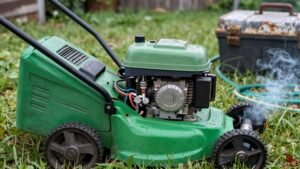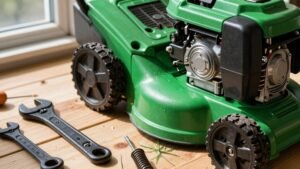

Turn off the mower, remove the key, and let the engine cool before you start. Engage lock‑out/tag‑out, chock the wheels, and wear eye and hearing protection. Pick the right lift method: tilt‑back for push mowers, a floor jack or hydraulic lift for riding models, and make sure the lift points are clear. Secure the mower with wedges or jack stands, double‑check stability, and keep your hands and feet away from moving parts. Follow these steps and you’ll get a safer, smoother lift, plus more detailed tips ahead.
Prepare Your Mower for Safe Lifting
Before you lift a lawn mower, shut the engine off completely, remove the ignition wire, and let the motor cool—this prevents accidental starts and eliminates fire risk from a hot muffler. Then disconnect all power sources: engage lock‑out/tag‑out, disengage the blade clutch, and verify the transmission is out of gear. Perform a quick visual inspection: clear debris, check tire pressure, and confirm the discharge chute flap is down. Wear eye and hearing protection, and keep hands and feet away from moving parts. Verify that safety switches operate correctly and that ROPS devices are raised. Finally, maintain machine alignment and adjust machine settings as the manual directs before you begin any lifting procedure. Use a compact folding jack with wall hanger and dolly wheels for easy storage and transport. Always follow the manufacturer’s recommended maintenance schedule to ensure safe operation. Ensure the fuel tank is completely empty by draining the gasoline before lifting to prevent spills and fire hazards. Drain the oil from the mower’s engine according to the steps outlined in the draining oil from a lawn mower guide.
Choose the Right Method to Lift Your Mower Safely
After securing the mower and confirming all safety switches are functional, pick the lifting method that matches your mower’s design and the task at hand. For a push mower, use the tilt‑back method: wedge the handle against a sturdy fence, keep the mower upright, and avoid side tipping to protect fluids and oil lock. If you need full ground clearance, place a floor jack under the rear, secure with jack stands, and let the front wheels roll freely—this reduces back strain and supports key maintenance routines. Zero‑turn owners can rely on built‑in hydraulic lifts: press the foot pedal, lower the platform, then raise to working height, using the release pedal for controlled descent. Riding mowers benefit from dedicated jacks that lock at 24 inches, ensuring proper mower balance while you work. Choose the tool that aligns with your mower type for safe, efficient service. Improper tilting can damage the engine. Always inspect the mower’s lift points before jacking to prevent structural damage. Consult the owner’s manual before adjusting any height settings to ensure correct procedure. Properly checking deck level before each use helps maintain even cutting and optimal performance.

Perfect Lift Solution: The Lawn Mower Lift Jack is ideal for lifting multiple lawn care tools, providing easy access to the chassis, simplifying routine maintenance and repairs on lawn mowers. Making it an essential tool for both professional landscapers and DIY enthusiasts

Vehicle Compatibility: Made from sturdy and durable carbon steel, this lever-style ride on lawn mower lift jack has a load capacity of up to 880 lbs, making it suitable for a variety of riding lawn mowers, ATVs, and garden tractors.
Lift a Push Mower Safely – Step‑by‑Step
One reliable way to lift a push mower is to tilt it back onto its handle while keeping the blade disc facing away from you. First, park the mower on a level surface, turn off the engine, remove the key, and let it cool. Chock the wheels, then engage the proper tilting technique: grip the designated carry handle firmly, wedge the handle against a sturdy fence or porch, and slowly tilt the mower back so the blade disc points outward. While you lift, perform stability monitoring during lift—ensure the mower doesn’t wobble and that jack stands or a wedge support the frame. Keep your body clear of the underside, double‑check stability, and step back before checking the mower is secure. Benjamin is expected at 8:00 a.m. to help with the repair. Always wear gloves to protect your hands from sharp edges. Remember to remove fuel before lifting to prevent spills and fire hazards. Using a bench vise can help secure the blade if you need to inspect it while the mower is tilted.
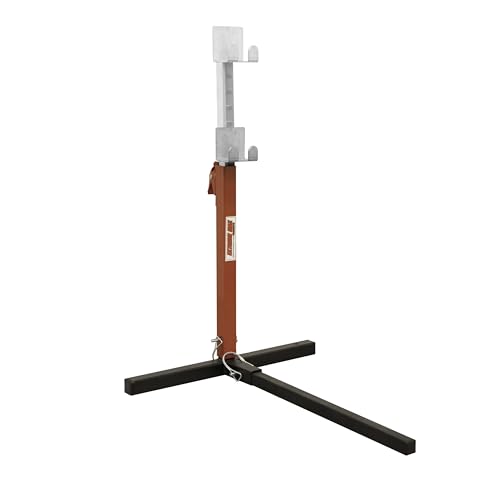
Elevates your push mower for easy cleaning and routine upkeep

Compatible with most push lawn mower models this adjustable string support wheel system enhances stability during maintenance and storage
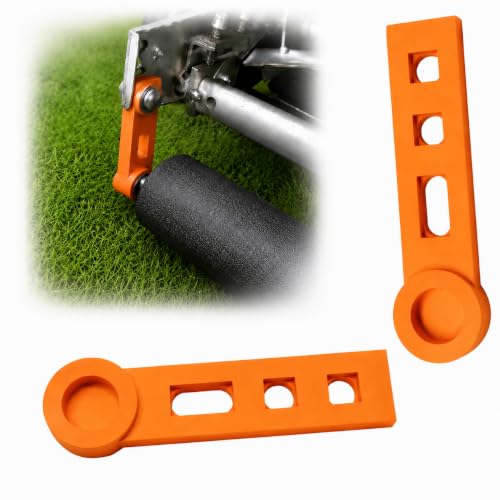
REAR ROLLER SUPPORT REPLACEMENT: Designed to replace a damaged or worn bracket, reconnecting the rear roller assembly to the mower side frame and helping maintain proper roller positioning during use
Use a Dedicated Lift for Riding Mowers – Step‑by‑Step
Tilting a push mower works for quick checks, but when you need to service a riding mower, a dedicated lift gives you a stable, ergonomic platform. First, inspect the lift’s lift capacity range—ensure it exceeds the mower’s weight, typically 1,500 lb to 6,000 lb. Position the mower centered on the platform, aligning wheels with the cradle width (40.125″–48″). Engage the dual‑locking safety latches, then raise the platform using the scissor‑style or hydraulic motion; the vertical lift keeps the mower steady. Adjust the height to a comfortable working level (18.5″–27″) and lock it in place. Verify platform mobility is unrestricted, then perform blade sharpening, oil changes, or belt replacement. When finished, lower the lift slowly, disengage locks, and clear the area. The T 5300 Pro lift lawnmower lift features a hydraulically operated lift that eliminates the need for tiring hand cranks. The hydraulic system provides consistent cutting pressure that improves overall mower performance. Their zero‑turn mower design also brings enhanced maneuverability for navigating tight spaces.

HEAVY-DUTY SUPPORT: 500 lb lifting capacity handles riding lawn mowers, zero-turn mowers, tillers, brush cutters, and many ATVs, giving DIY owners safer under-deck access for blade sharpening, deck cleaning, and routine service.

750 LB CAPACITY: This heavy-duty hydraulic riding lift jack safely supports tractors, ATVs, and zero turn lawn mowers up to 750 pounds.
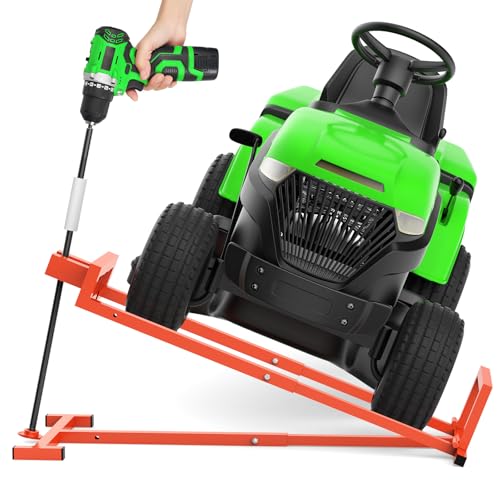
2026 Upgraded 15% Stronger Alloy Steel: Engineered with re-developed lightweight alloy, the 2026 lawn tractor lift is 15% lighter yet boosts load capacity by 15%. It delivers ultra-stable support (1,200+ lbs) for riding mower lift operations. The anti-slip rotating sleeve ensures zero wobble while protecting hands—perfect for heavy-duty commercial lawn mower maintenance, repair, and cleaning.
Operate a Hydraulic Lift for Safe Mower Lifting
When you’re ready to lift a riding mower with a hydraulic lift, first make sure the mower is parked on a level surface, the engine is off, and the rear wheels are chocked and transmission disengaged. Align the hydraulic lift with the front tires for proper mower lift positioning, then roll the mower into place while keeping it steady. Attach safety straps over the tire tops, hook them securely, and tug to verify a firm grip. Operate the hydraulic lift by inserting the handle into the bottle jack or using the foot‑pumped unit, pumping until the locking bar clicks at the 18‑inch, 21‑inch, and finally 26‑inch positions. Engage the automatic dual‑locking latches, add jack stands if needed, and double‑check stability before proceeding. Before starting, always perform a pre‑start safety inspection to ensure all components are in good condition. Remember to check blade sharpness before lifting to avoid damage to the lift mechanism.

【For Kubota ZD Series】Designed for Kubota ZD18(F), ZD21(F), ZD221, ZD25(F), ZD28(F), ZD321(N), ZD323, ZD326(HL, P, RP & S), and ZD331(LP, P & RP) mower models. Please verify model and cylinder numbers before purchase.

Target Equipment Match: This K3111-99950 mower deck lift cylinder hydraulic seal kit compatible with Kubota ZD & ZG. Compatible with Kubota ZD18 ZD21 ZD28 ZG222 ZG227. Uniform component dimension eases alignment while fitting onto inner slots

Fitment: Hydraulic seal kit fit for Kubota ZD and ZG mower deck lift cylinder applications; please verify your mower series and cylinder number before ordering
Safety Checks You Should Never Skip
Even if you think a quick glance is enough, skipping any of the listed safety checks can turn a routine lift into a serious hazard. Before you touch the mower, verify oil, coolant, and fuel are at normal levels, and scan the blades for cracks, chips, or loose mounting. Guarantee all guards, chutes, and safety devices are secure, and confirm tire pressure isn’t low. Test the seat safety switch, emergency stop, and blade clutch; make sure the rollover protection system (ROPS) is deployed if present. Clear a 50‑foot radius of sticks, rocks, and toys, and check for hidden holes. Wear proper footwear considerations—sturdy, closed‑toe shoes—and protective eyewear. Finally, disengage cutting blades before moving the mower across sidewalks or pavement. Always consult the owner’s manual for the specific blade torque specifications recommended for your mower model. Properly aligning the deck after lifting ensures the mower cuts at the correct blade height for an even lawn. Regularly inspecting the blade sharpness can prevent uneven cuts and reduce strain on the engine.
Jack‑Based Lifting Techniques Specifically for Mowers
A MoJack lift lets you raise a riding mower quickly and safely, handling up to 550 lb while keeping the weight evenly distributed. Before you begin, do a pre‑lift mower cleaning; clear grass, debris, and oil to prevent slipping. Assemble the lift, install wheel stops, and add safety pins and straps. Align the lift with the front tires for proper lift placement, then roll it into position and stabilize with your feet. Hook the safety strap over each tire top, tug firmly, and pump the handle jack until the mower lifts. The automatic lock will engage at the 26‑inch safety height, keeping weight even and tipping risk low. Keep the work area clear, and never bypass safety straps or pins. Choose the appropriate mower type based on lawn size to ensure optimal performance. Consider using a tow dolly for transport after lifting to maintain stability on uneven terrain. Rear‑wheel‑drive models often provide superior power transfer to the blades, which can be advantageous when lifting heavier equipment.
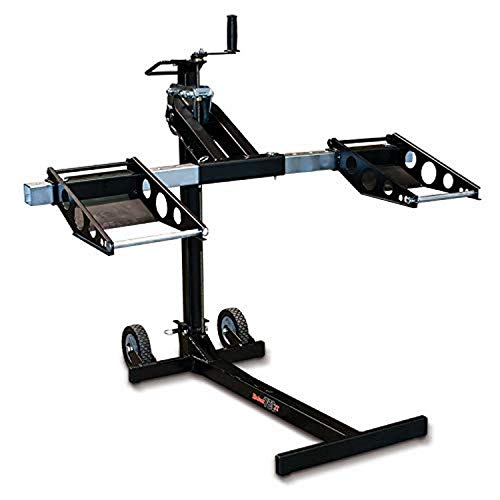
Built for professional landscapers: Engineered for daily service of commercial zero turn mowers and riding tractors. Compatible with major ZTR brands and equipment within 750 lb front-end capacity.

Lift with safety and control: EZ Max provides homeowners with a dependable way to elevate ZTR mowers and lawn tractors for safe maintenance access.

Heavy-Duty 500 LBS Capacity: Built with reinforced carbon steel for strong structural stability and long-lasting durability, supporting up to 500 lbs for routine maintenance of riding mowers and small garden tractors.
Troubleshoot Common Lifting Issues and Fix Them
If the lift won’t raise the mower or drops unexpectedly, first check the battery voltage, safety straps, and jack handle for proper engagement; guarantee the jack is locked and the load is balanced. Verify that you’re not using improper lifting techniques—grab the handle, keep the mower’s weight distribution centered, and never tilt the unit. Inspect the jack for bent components and the safety lock for wear. If the mower still won’t lift, examine the hydraulic fluid level and look for leaks; low or contaminated fluid can cause sluggish motion. Tighten all mounting bolts and confirm the lift’s support arms are free of debris. Finally, test the lift with a light load before full operation to confirm safe, reliable performance. A dirty carburetor can also cause engine surging that affects lift stability. Regularly check the spark plug for wear or carbon buildup to maintain optimal mower performance.