
Pick the mower that matches your yard size, then clear debris and level the grass. Check the deck, clean under it, and sharpen or replace dull blades. Fill the fuel tank or charge the battery, insert the safety key, and engage the start switch. Adjust the handle, raise the deck, and release the parking brake. Move forward with steady throttle, engage the blade lever smoothly, and follow a consistent pattern for an even cut. Afterward, clean, sharpen, and store the mower properly; the next steps will deepen your expertise.
Pick the Best Mower for Your Yard
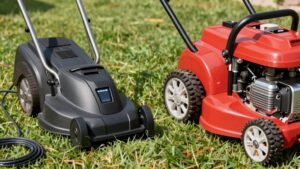
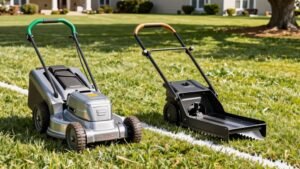
Choosing the right mower starts with measuring your yard. First, classify the area: up to ¼ acre calls for a push mower, ¼‑½ acre fits a self‑propelled walk‑behind, up to ¾ acre needs a self‑propelled deck 28‑42 in., 1‑3 acres suit riding or zero‑turn models with 38 in.+ decks, and over 3‑5 acres demand 46‑60 in. decks and 18‑27 HP engines. Match the deck width to the yard size to minimize passes and fuel consumption. Consider mower maintenance considerations: electric push units eliminate oil changes, while gasoline engines require spark‑plug inspection and fuel‑filter replacement. Apply lawn preparation tips before purchase—clear debris, level slopes, and verify terrain compatibility—to guarantee the selected mower operates efficiently and safely. Proper grass height measurement helps select the optimal cutting frequency and mower type. A self‑propelled mower also provides reduced physical strain when tackling uneven or steep terrain. Self‑propelled models can reduce user fatigue on larger or uneven lawns thanks to motor‑assist.

Battery-Powered Lawn Mower - Conquer large yards effortlessly with the 60V brushless motor and two 4.0Ah battery—delivering gas-like power for up to 3/4 acre per charge (performance varies by terrain/technique).

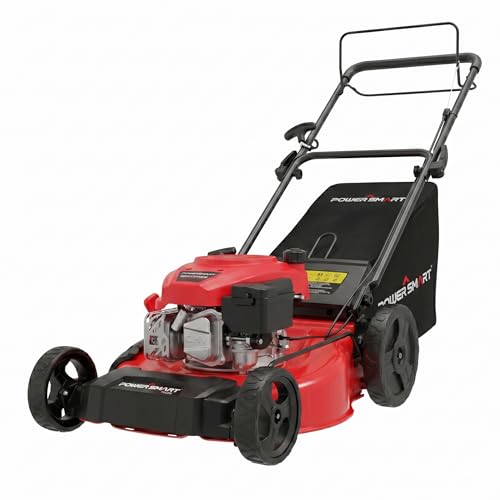
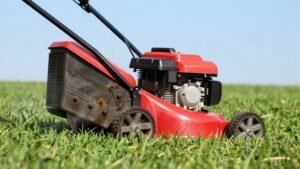
POWERED BY A RELIABLE OHV ENGINE: Equipped with a powerful 170cc OHV engine, known for its smooth start-up, consistent performance, and long-term durability—ideal for tough mowing jobs.
Prepare Your Lawn and Mower Before Cutting
Before you fire up the mower, assess the lawn’s readiness: measure the grass length, confirm it exceeds the recommended mowing height for your grass type, and make certain the blades are actively growing and not dormant. Verify that the grass is at least one‑third taller than the cut you intend; this guides your mowing frequency evaluation. Inspect the deck for debris, remove clippings, and clean under the deck to prevent fungal spread. Examine each blade for chips or dullness; sharpen or replace as needed, then perform a blade height adjustment according to the manufacturer’s chart. Check oil level, replace dirty oil, and confirm fresh fuel with stabilizer is in the tank. Finally, secure the gas cap and guarantee the mower is tilted safely for any interior cleaning. A sharp blade will reduce stress on the grass and prevent tearing. Maintaining clean cuts helps minimize weed seed dispersal and promotes a healthier, more attractive lawn. Sharp mower blades also decrease the workload on the engine, extending its lifespan. Properly tightening the blade after sharpening ensures safety and optimal performance.
Start Your Mower Safely (Gas or Electric)
Power up your mower by first inserting the safety key, then holding it while you pull the bail switch toward the handle; release the key once the switch clicks, confirming that all safety mechanisms are engaged before the blades can spin. Next, adjust the handle using the quick‑adjust lever, disengage the clamps, extend fully, then secure the clamps; the mower will not start unless the handle is fully extended. For gas models, locate the oil fill cap, add oil to the recommended level, then fill the fuel tank with fresh gasoline, checking for stale fuel. For electric models, engage the safety bar, press the start button, and keep continuous contact with the safety handle. Perform these steps methodically to overcome technical issues and maintain battery charge. Make sure the deck is properly raised before lowering it to the grass. Check voltage before connecting jumper cables to avoid sparks. Always verify that the fuel line is clear before attempting to start the engine. Inspect the recoil mechanism regularly to prevent the starter cord from jamming.

Don't wait for the day you can't mow because you can't find the safety key. Get your spare keys now.

Part Number: N835578

2-Pack Safety Keys – Two replacement keys with cords for backup or replacement.
Operate Your Mower in Three Simple Steps
Three clear steps get you from a stopped mower to a smooth, controlled cut: release the parking brake while pressing the brake pedal, push the accelerator to move forward, and engage the blade lever once the mower is on the grass. First, verify that the parking brake is fully disengaged before you press the brake pedal; this prevents unintended rollback. Second, control throttle settings by moving the accelerator to a mid‑high position, allowing the engine to warm for a minute, then adjust as needed for terrain and grass density. Maintain proper posture by keeping your back straight, elbows slightly bent, and hands firmly on the steering levers. Third, once the mower is on the grass, pull the blade lever smoothly, confirm blade engagement, and proceed with a steady, controlled pace. Engage the choke lever before pulling the starter handle to ensure a smooth start. Consider using a solarization tarp to eliminate weeds around the mowing area before you begin. Avoid operating the mower when the grass is excessively wet, as wet blades can cause engine strain and increase the risk of slipping. Wear protective gear to reduce the chance of injury from debris or accidental contact.

[80V 21” SELF-PROPELLED LAWN MOWER] - Get more done, faster, with Greenworks electric lawn mowers. This 80V lawn mower cuts up to 1/2 acre with a fully charged 4.0Ah battery (varies based on grass condition and operator technique)

Powerful & Efficient Performance - Covers up to 1 acre on a single charge with a 100-minute runtime for both batteries to be fully charged. Quick 80-minute recharge time with the included charger—less downtime, more mowing.

Powerful 201cc OHV Engine-Powered by a reliable 201cc 4-cycle OHV engine, this lawn mower delivers strong, consistent performance and long-lasting durability, making it ideal for tackling medium to large lawns with ease.
Use a Consistent Mowing Pattern for a Uniform Cut
A consistent mowing pattern is the key to a uniform cut, and you can achieve it by selecting a single layout—straight rows, checkerboard, circular, or zig‑zag—and sticking to it throughout the pass. Choose a layout, then set reference points such as fences or driveways to guide straight rows, or mark a central hub for circular passes. Maintain consistent speeds, adjusting only to slow before a turn to avoid sharp angles. Overlap each pass by a few inches to eliminate gaps, and keep blade height constant. Alternate direction weekly to prevent compaction, and switch between dynamic patterns on a rotating schedule for balanced wear. Use a striping kit or roller if you need visual confirmation of pattern fidelity. The circular pattern throws grass outward, avoiding re‑cutting clippings. Properly mow at the correct height helps the grass recover faster and enhances the visual contrast of the stripes. Consult the owner’s manual to verify the exact three‑inch setting before adjusting the mower.
Clean, Sharpen, and Store Your Mower After Each Use
While you’re still warm from mowing, promptly clean the mower’s exterior, clear debris from the deck, and prepare the blade for sharpening so that rust and buildup never accumulate between uses. Wipe the outer surfaces with a damp cloth, apply mild detergent to the fuel cap and oil reservoir, then dry thoroughly. Use a stiff‑bristled brush or leaf blower to remove grass from the deck, scrape stubborn pieces with a non‑metallic scraper, and blow out crevices with compressed air. Disconnect the spark plug wire, inspect mower parts for cracks or dullness, and sharpen the blade evenly before rebalancing. Drain and replace oil, clean the air filter and spark plug, spray corrosion protection on the deck, and finally store mower properly in a dry, ventilated shelter. Run mower until fuel is nearly empty before adding stabilizer. Remember to check blade balance before each season’s first use.

Brushless Motor for Powerful Performance: SporGain mower blade sharpener tool is equipped with a high-performance brushless motor, this lawn mower blade sharpener provides stronger power, lower noise, and longer lifespan than traditional motors, delivering smooth and efficient sharpening for lawn mower blades
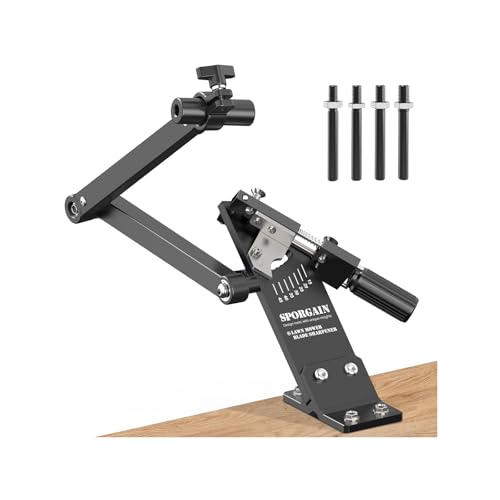
[ Updated ] Lawn Mower Blade Sharpener: SporGain mower blades sharpener suitable for Blades standard straight, mulching and high-lift mower.
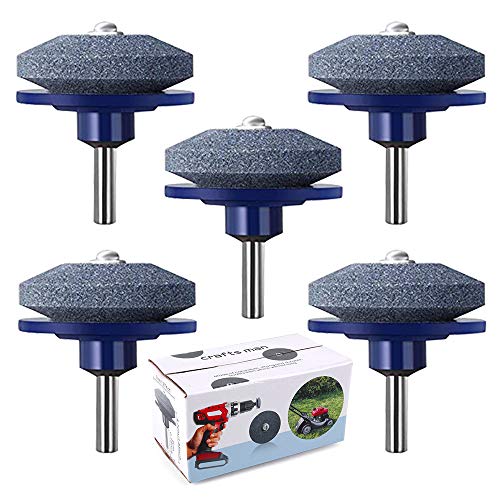
Lawn Mower Blade Sharpener : The new version of the Lawn Mower Blade Sharpener is Made of corundum, it solves the base wear caused by the excessive speed of grindstone, and effectively prolongs the service life and improves the use effect of the product. Our lawn mower blade sharpener is provided by the original factory, and it is guaranteed.