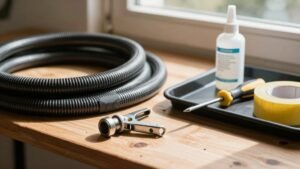

Warm the mower for five minutes, then shut it off and let the engine sit a minute; check the cold dipstick, confirm the fuel valve‘s off, and clean the oil filler cap. Place a drip pan under the mower, tilt it right with the fuel cap up, remove the filler cap and dipstick, and let the warm oil flow into the pan. If a filter’s present, locate it near the filler, remove the old one, and install a new filter, ensuring a tight seal. Refill with Honda‑specified SAE 10W‑30 (or 5W‑30 in colder weather) to the upper chevron on the dipstick, then verify the level and clean up. Continue and and you’ll uncover the finer details.
Warm the Honda Mower Engine and Gather Tools
One quick warm‑up does the trick: run the mower for about five minutes, then shut it off and let the engine sit for a minute. This ideal warm up duration thins the oil, ensuring it drains quickly and completely when you later extract it. After the pause, perform proper engine diagnostics: check the cold dipstick for level, confirm the fuel valve is off, and verify the oil filler cap is clean. Gather the tool set—oil extractor pump, gloves, drip pan, funnel, and rag—placing the pan on a cement surface to avoid grass damage. If ambient temperature is below 70 °F, extend the warm‑up by a minute to achieve the same viscosity reduction. These steps prepare the engine for efficient oil removal. Initial oil change removes engine wear particles that accumulate during the first 30 minutes of operation. Clogged fuel filter can also prevent proper oil circulation, so inspect it during this process. Properly storing the mower after oil change helps prevent fuel contamination during winter. Regularly checking the oil before each use helps catch early wear signs before they become serious.

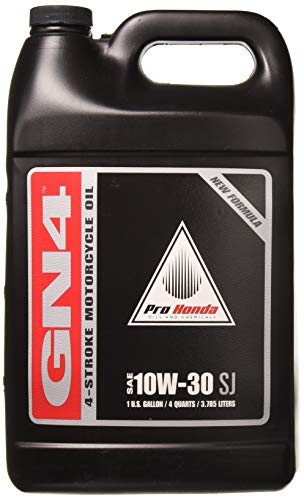
Genuine OEM Honda oil

MAINTENANCE FIT: Compatible with select Universal for mowers, tractors, snow blowers, and boats equipment. Confirm your model and engine fitment before ordering.
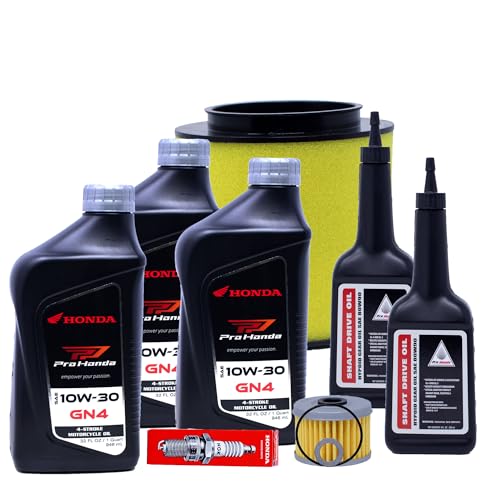
Edwards Bundle contains: 3 quarts of 10W30 oil
Tilt‑Drain the Old Honda Oil Safely
Where should you start? Begin by turning the fuel valve OFF and wiping the oil filler area clean. Warm the engine for five minutes, then place a cardboard sheet or drop cloth under the mower and a suitable container beside it. Tilt the mower to the right side with the fuel cap up, which helps you leverage gravity drainage while you avoid carburetor issues that arise from left‑side tipping. Remove the oil filler cap or dipstick just enough to create a flow path, then let the warm oil pour through the filler neck into the container. Keep the spout oriented toward you, pause for one to two minutes until flow stops, and re‑tighten the dipstick before returning the mower to upright. Use a tray or catch pan to catch any stray droplets. Gather necessary tools before starting the process. Ensure you are working in a well‑ventilated area and wear protective gloves to prevent skin contact with gasoline or oil. Dispose of used oil according to local regulations to protect the environment. Secure the blade with a wrench before beginning the oil change to prevent accidental injury.

Stores oil for changes with eliminate mess and clean up when changing oil using this reliable oil drain pan.

TAPERED END: This W4073 2.8 Qt. (2.64 L) Low Profile Oil Drain Pan features a low-profile tapered end to prevent messy spills while draining oil from lawn equipment and motorcycles.

10-PACK HONDA 94109-14000 engine Drain Plug WASHER 14MM 9410914000 OEM ~ OEM HONDA MADE IN JAPAN ~
Identify and Replace the Honda Oil Filter (If Present)
After draining the oil, check whether your mower actually has a filter—most HRR‑series engines do, while GCV200‑based models usually don’t. Locate the filter near the oil filler on HRR engines; this spot is often the hardest to access Honda filters, so you may need a 2×4 for stability. Identify unique oil filter designs by consulting the engine diagram in the manual; filter housing will have tabs or a clip. Remove the cover, wipe the area clean, then unscrew or unclip the housing. Pull out the old filter, dispose of it with the drained oil, and clean any residue. Install the new filter, snap the cover back, confirm tab alignment, and verify a tight seal before proceeding to the next step. Use a ratchet and socket to loosen the filter housing if it is secured with bolts. Remember to check the oil level after refilling to avoid over‑filling the crankcase. A common source of fuel leaks is a cracked fuel line that should be inspected during any maintenance. Inspect the spark plug before starting the mower to ensure proper ignition.
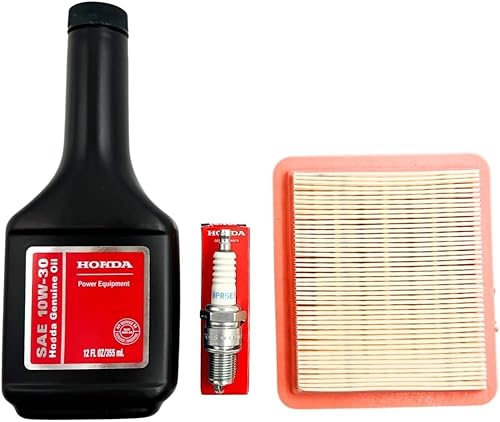
KIT INCLUDES: Genuine Honda 17211-Z8B-901 air filter, 98079-55846 Spark Plug, and 08213-10W30 12oz bottle of Honda 10W-30 Motor Oil

COMPLETE KIT: Genuine Honda maintenance kit includes air filter, spark plug, upper and lower blades, and 12 oz of 10W30 oil for HRN216 series lawn mowers

Refill With Honda‑Specified Oil to the Correct Level
Need to make the correct Honda‑specified oil into the mower before you start the engine. Place the mower on a level surface, remove the cap, and insert a funnel. Pour SAE 10W‑30 (or 5W‑30 if temperature demands) until the dipstick shows oil at the upper chevron mark. For a GCV190, aim for 0.55 L; for a GCV160, about 0.9 L. Wipe the dipstick, re‑insert without screwing, pull out, and verify the level stays between the minimum and maximum indicia. Tighten the dipstick, replace the cap, and record the fill in your maintenance log. Following this proper maintenance schedule guarantees engine longevity and complements any advanced filter options you may have installed. Check oil temperature before adding oil to ensure it is within the 5°C‑40°C range. Remember to dispose of used oil responsibly by taking it to a recycling center or an authorized collection point. Primer bulb operation should be verified before each start to ensure proper fuel delivery.

SAE 10W-30 MOTOR OIL FOR SMALL ENGINES: One 32 fl oz bottle of STP Premium Synthetic Blend 4 Cycle Small Engine Oil SAE 10W-30, formulated for small engines in lawnmowers, generators, tractors, snow blowers, and other outdoor power equipment

Honda genuine oil is engineered for today's high revving 4-stroke engines
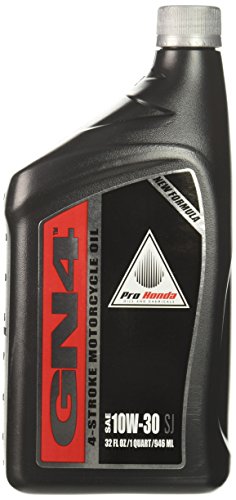
08C35-A5201M02
Double‑Check the Honda Oil Level and Clean Up
Now that the correct Honda‑specified oil is in the mower, you should verify the level and clean the dipstick area before running the engine. Locate the yellow dipstick near the crankcase, wipe the surrounding cap and threads with a clean cloth, and remove any debris. Unscrew the cap, pull the dipstick out without threading it back in, wipe it clean, then reinsert fully. Pull it again and read the oil line, ensuring it falls between the lower add mark and the upper chevron. Verify dipstick measurements accuracy by checking on a level surface and avoiding over‑tightening. After confirming the proper level, replace the cap, wipe any spills, and dispose of used oil properly according to local regulations. The GCV190 takes 0.55 liters of oil. Most residential lawn mowers require between 0.5 and 1 quart of oil, so be sure to check the manual for the exact capacity of your model. Warm‑up the engine briefly before checking the oil to ensure an accurate reading. Using the wrong oil can damage the engine because automotive oils have different viscosity grades and additive packages than those designed for small engines.
WE ARE AN AUTHORIZED HONDA DEALER


Pack of Four - 32oz bottles