

A typical 0.25‑acre lawn takes about 5‑10 minutes with a push mower, but real‑world conditions usually double that to roughly 15‑20 minutes. Self‑propelled mowers cut the time in half, while riding and zero‑turn models can finish the same area in 5‑7 minutes thanks to higher speeds and narrower decks. Steeper grades, obstacles, and tall grass add 25‑100 % more time. Adjusting speed, deck width, and maintaining sharp blades keeps efficiency near 90 %. The next sections show how to calculate your exact mowing time.
How Long Does a Small (≤ 0.25 A) Lawn Take to Mow?
How long does a small (≤ 0.25 A) lawn take to mow? Typically, a 100 m² (≈1,076 sq ft) lawn requires 5‑10 minutes with a push mower, assuming flat terrain, short grass, and minimal obstacles. If you operate at 3 mph (≈264 ft/min) with a 1.67‑ft cutting width, the theoretical coverage is about 24.7 minutes for a 0.25‑acre (≈10,890 sq ft) plot, but real‑world push mower proficiency often halves that figure, yielding 15‑37.5 minutes. Alternative grass types, such as dense fescue or coarse bermudagrass, can increase resistance, extending the cycle by 10‑20 %. Operator experience, blade sharpness, and overlap efficiency (≈0.9) further refine the estimate, while edge trimming and catcher emptying remain excluded from the base calculation. Choosing the appropriate mower speed and cutting width can significantly improve overall efficiency. Proper soil moisture levels also help reduce drag and maintain a smooth cut. Consistently maintaining a sharp blade ensures clean cuts and reduces the effort required per pass.

2 X 40V 4.0Ah Batteries Powerd Cordless Lawn Mower: 2 batteries double runtime to handle 1/4 acre (perfect for medium yards), 1 battery covers 1/8 acre (ideal for small lawns). No downtime with quick-swap design!

BOOSTED POWER & RUNTIME: This push lawn mower is backed by a brushless motor 2.0 for 40% more power and 10% longer runtime than first-gen brushless motors. Plus, 10X longer life than brushed motors.

GAS-LIKE POWER WITHOUT THE HASSLE – 50% more torque than 40V mowers & 3200 RPM blade speed (matches 150cc gas mowers)—zero fumes, noise, or maintenance!**
How Mower Type and Deck Width Influence Mowing Time
A small lawn’s mowing time hinges on the mower’s type and deck width, so after estimating the minutes for a 0.25‑acre plot, you should consider how the machine’s design changes the coverage rate. Push mowers cover 2,500‑3,500 sq ft/hr; a 21‑inch deck at 3 mph needs 1 h 55 min per acre, while a 30‑inch deck reaches 0.75 acres/hr. Self‑propelled units double that range (4,000‑6,000 sq ft/hr) and a 36‑inch walk‑behind at 3.3 mph mows an acre in 61 min. Riding mowers jump to 10,000‑15,000 sq ft/hr (≈35 min/acre for 42‑inch). Zero‑turns excel: a 42‑inch deck at 6 mph trims an acre in 29 min, and a 60‑inch deck hits 20 min. Mower design considerations—engine power, drive type, and deck width—directly affect passes and efficiency, delivering consumer focused mowing insights for ideal time management. Reel mowers provide a quiet, low‑emission cut that is ideal for small, flat lawns. Selecting the right mower also depends on terrain slope to ensure optimal performance. Hydraulic lawn mowers offer smooth cutting pressure that further improves consistency across varied terrain.

| Universal Fit Zero-Turn Mower Cover | - Measures 79" x 46" x 55" (L x W x H), Zettum lawn mower covers are designed to fit most brands' zero turn mowers up to 60" decks, including: Greenworks, Honda, Husqvarna, Cub Cadet, Toro, John Deere, Ryobi, Sun Joe, EGO, PowerSmart, Craftsman, LawnMaster, Snapper and more. For special zero turn mower models, please check the size carefully.

【Heavy-Duty Lawn Mower Cover】Crafted from 600D marine-grade tear-proof fabric, our cover is designed to withstand the toughest conditions, it's a testament to Himal Outdoors's commitment to quality
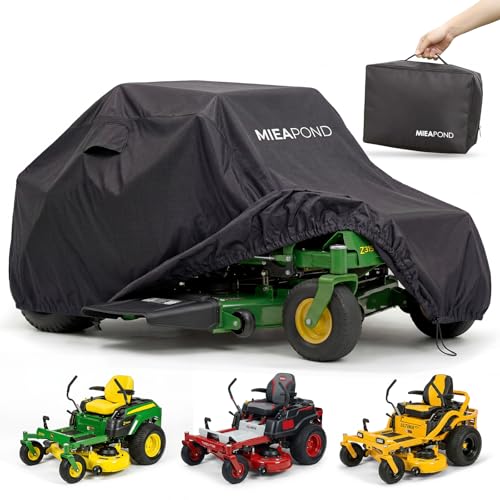
【ZERO TURN MOWER COVER】Universal fit for most zero turn lawn mowers. Our heavy duty waterproof zero turn mower cover provides complete protection for your equipment from sun, rain, dust, and snow. Compatible with John Deere, Toro, Cub Cadet, Husqvarna, Bad Boy, Kubota, Ariens, Craftsman, Troy-Bilt, Ferris and more
How Terrain, Obstacles, and Grass Height Add Extra Mowing Time
You’ll notice that slopes, obstacles, and tall or dense grass each add measurable extra time to a mowing job. Steeper grades force you to reduce speed, often doubling or tripling the pass time compared with flat terrain. Uneven or hilly ground introduces frequent adjustments, adding roughly 25‑50 % more duration. Obstacles such as trees, flower beds, sheds, and driveways compel precise turns; each maneuver cuts productivity and can increase total time by a similar 25‑50 %. Tall or overgrown grass demands multiple passes, inflating effort by 50‑100 % when combined with wet conditions. Dense turf further slows progress, especially on irregular shaped yards where density variations require careful coverage. Accounting for these factors yields a realistic estimate of the extra mowing time you’ll encounter. Proper seasonal timing ensures the grass remains healthy and reduces the need for extra passes. Adjusting mower height according to the growth cycle helps maintain lawn health while minimizing unnecessary work. Following the one‑third rule protects the grass and promotes a dense, resilient turf.

Efficient & Versatile Mowing Solution This 21-inch self-propelled lawn mower features a durable 3-in-1 steel deck with mulching, side discharge, and rear bagging options. The wide cutting path maximizes efficiency, while the no-choke, no-primer design ensures hassle-free starting—no manual adjustments needed.

Powerful 201cc OHV Engine-Powered by a reliable 201cc 4-cycle OHV engine, this lawn mower delivers strong, consistent performance and long-lasting durability, making it ideal for tackling medium to large lawns with ease.

Powerful & Durable Engine-The 201cc OHV 4‑stroke engine delivers reliable, long‑lasting performance, making it the ideal choice for large‑area mowing with consistent power and stability.
How to Calculate Your Own Mowing Time Using the Standard Formula
Start by plugging your lawn’s square‑footage into the standard formula: Estimated mowing time (hours) = Lawn area ÷ (Mower speed × Deck width × 0.9). Use the mower’s rated speed in mph and the deck width in inches, then multiply by the 0.9 factor to reflect mowing efficiency ratios that account for overlap and turning. Convert the result to minutes if you prefer finer granularity. For a 20,000 sq ft lawn at 9 mph with a 21‑inch deck, the calculation yields 117.58 minutes, assuming flat terrain and no obstacles. Apply optimum mowing patterns—parallel, consistent swaths—to maintain the 90 % efficiency assumption. Adjust the speed or deck width for different mower types, but keep the 0.9 multiplier constant for accurate estimates. Always wear protective gear such as sturdy shoes and eye protection to reduce the risk of injury. Keeping blades sharp ensures a cleaner cut and promotes healthier grass growth. Properly level the deck before mowing helps achieve consistent cutting height and prevents uneven wear on the mower.
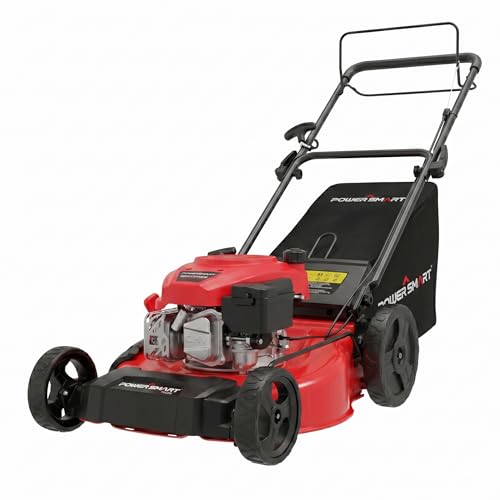
POWERED BY A RELIABLE OHV ENGINE: Equipped with a powerful 170cc OHV engine, known for its smooth start-up, consistent performance, and long-term durability—ideal for tough mowing jobs.

[80V 21” SELF-PROPELLED LAWN MOWER] - Get more done, faster, with Greenworks electric lawn mowers. This 80V lawn mower cuts up to 1/2 acre with a fully charged 4.0Ah battery (varies based on grass condition and operator technique)

Battery-Powered Lawn Mower - Conquer large yards effortlessly with the 60V brushless motor and two 4.0Ah battery—delivering gas-like power for up to 3/4 acre per charge (performance varies by terrain/technique).
How Zero‑Turn and Riding Mowers Reduce Mowing Time by Up to 75
When you switch to a zero‑turn mower, its independent rear‑wheel steering lets you pivot on a dime, eliminating the wide loops that traditional riding mowers must make around obstacles. This maneuverability cuts missed patches and reduces overshooting, allowing you to execute U‑turns at the speed of your intent. Zero‑turns achieve cutting speeds up to 13 mph, roughly double the rate of average mowers, and their wide decks process large areas in fewer passes. Consequently, mowing time can drop by up to 75 %, turning a 2.5‑hour job into under 2 hours 10 minutes. The #OperatorSkillsImpact is evident as precise steering translates directly into fewer passes, while #FuelEfficiencyAdvantages arise from reduced engine load and shorter operating hours, extending equipment life and lowering operating costs. Smaller deck models can further reduce mowing time by cutting a few minutes per pass. Their pivoting wheel design also minimizes soil compaction, preserving lawn health. Zero‑turn mowers are especially advantageous on lawns with complex terrain due to their superior maneuverability.

Cleaner, more even cuts than gas with constant 17K ft/min blade speed

24HP/726cc FR730 engine
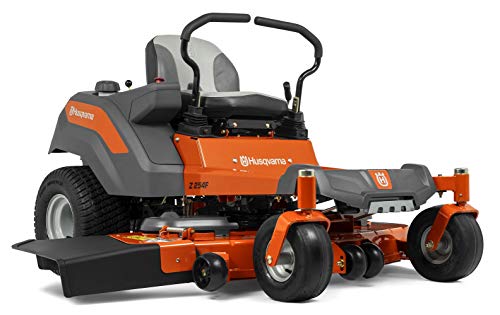
23 HP Kawasaki engine provides reliable startups and a max speed of 6.5 MPH
How Maintenance and Overlap Management Boost Mowing Efficiency
Fine‑tuning your mower’s maintenance routine and overlap strategy can shave minutes off every job while preserving turf health. You’ll keep blades sharp, clean the deck after each use, and apply graphite spray to prevent wet‑grass clumping; this reduces tear and disease risk. Use proper edging technique at the perimeter before interior passes, then apply a slight (≈10 %) overlap on each straight pass to eliminate missed patches. A consistent mowing schedule lets you follow the 1/3 rule, adjust deck height seasonally, and avoid over‑cutting wet turf. By grouping similar turf types, you minimize deck adjustments, maintain uniform height, and sustain an 80 % efficiency rating even through turns and obstacle zones. Remember to secure the blade with a bench vise before sharpening to ensure safety and precision. For the sharpest edge, consider a bench grinder that can quickly restore the blade’s cutting angle.